
Loading, please wait...
LOT 0777
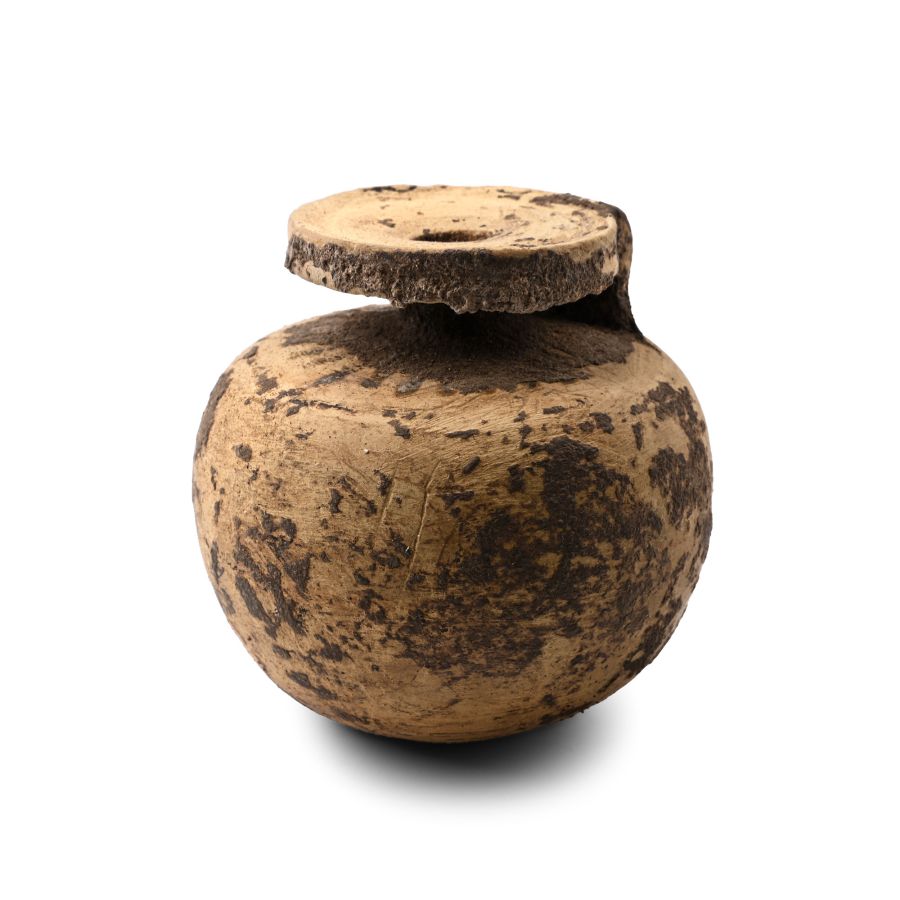
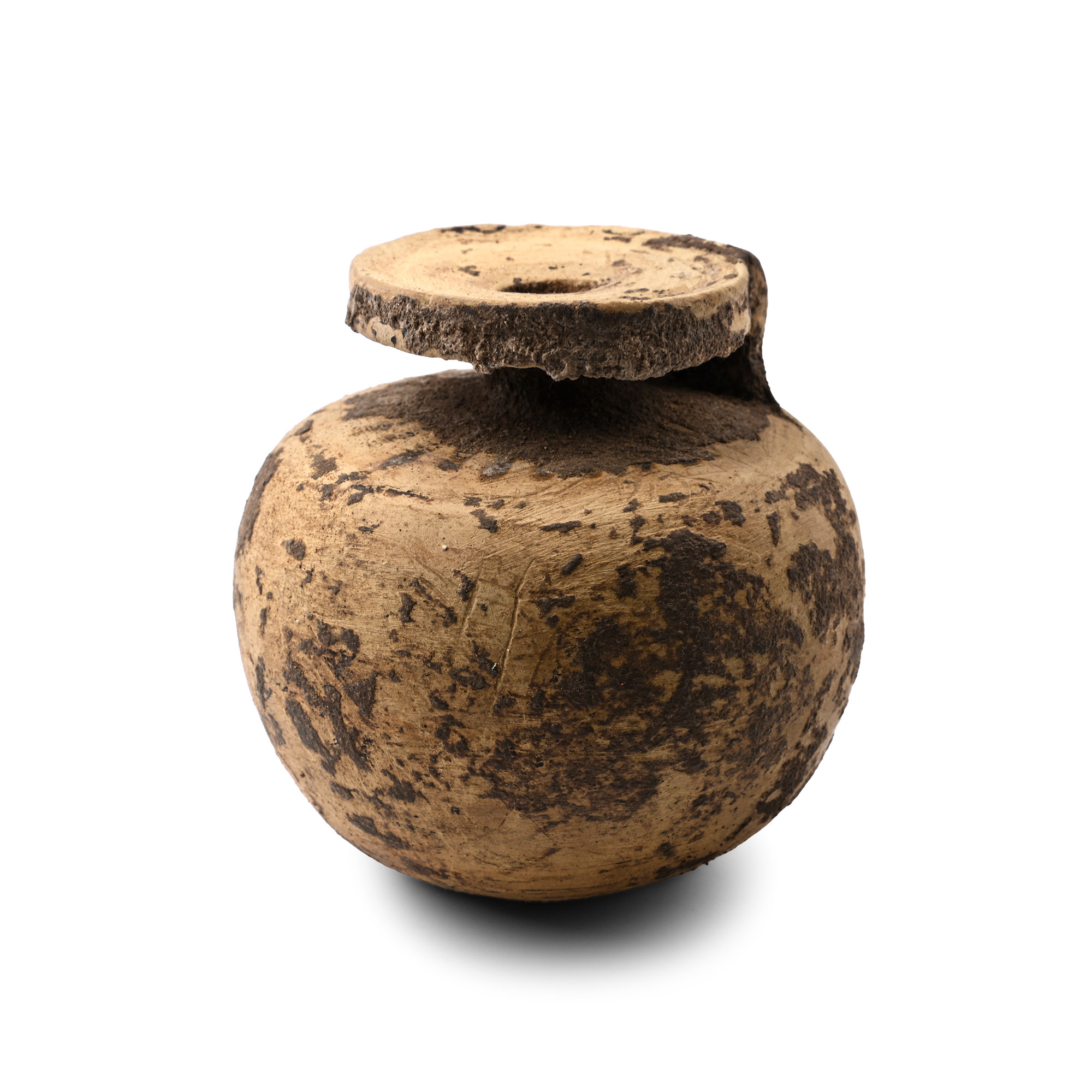
Greek Painted Pottery Aryballos
CORINTHIAN, CIRCA 6TH CENTURY B.C.
3 in. (212 grams, 75 mm).
With a narrow neck and a broad rim to the mouth, a short strap handle to the rear; painted concentric rings around the mouth.
ProvenancePrivate collection, acquired in 1994; thence by descent.
LiteratureCf. similar aryballos in the Department of Classics at the College of Art and Science of the University of the Colorado, inv.no.2006.37.T.; cf.also Bernhard, M.L., Corpus Vasorum Antiquorum Pologne-Fasc. 5: Varsovie-Musée National ii (Warsaw: Państwowe Wydawn, 1960), pl. 32 (1, 3, 4).
FootnotesFrom the 8th century B.C., Corinthian pottery vessels were exported to Greek colonies in South Italy and the coast of Asia Minor. They were used to hold perfumed oil, an essential item for the wealthy middle classes of the time. In Italy, especially in Etruria, local workshops produced imitations of Corinthian vessel types for a clientele of Greek settlers and local populations with a taste for Greek fashions.
CONDITIONTimeLine Auctions follows a vetting process to ensure the authenticity and legality of all items, reinforcing our commitment to integrity and responsible trading. Each antiquity, antique, and coin lot undergoes thorough examination by a vetting committee of at least ten external specialists, professional trade association members, scientists, and archaeologists: Our Vetting Process
AUCTIONS:
TimeLine is a leading auction house specialising in antiquities, ancient art, collectables, natural history, coins, medals, and books. Our auctions offer museums, collectors, historians, and enthusiasts the opportunity to acquire unique and historically significant pieces.
LOT 0777
Greek Painted Pottery Aryballos
Estimate £250 - 350€290 - 410 (for guidance only)$340 - 470 (for guidance only)
Opening Bid
£125 (EUR 145; USD 169) ‡+BP*
-
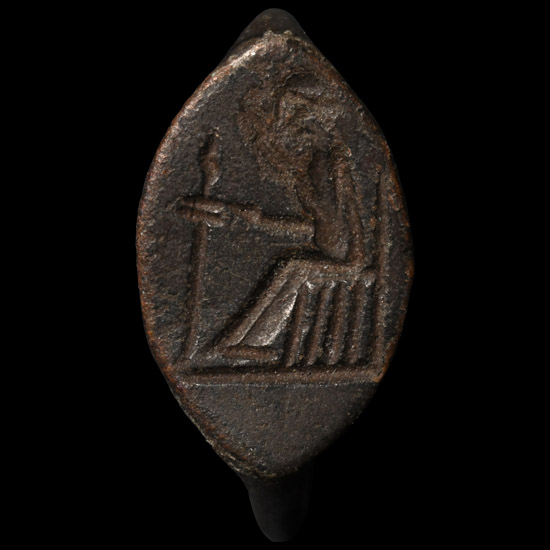
Large Greek Bronze Ring with Seated Figure
Circa 4th-2nd century B.C.Estimate: £100 - 140 (+bp*)
Opening Bid: £5
Featuring a slender round-section hoop and a large lentoid bezel with a seated figure holding a staff. 3.41 grams, 25.02 mm overall, 15.70 x 20.51 mm internal diameter (approximate size British O, USA 7, Europe 14.98, Japan 14)
From the private collection of a European gentleman (1942-2024), formed since the 1970s. -
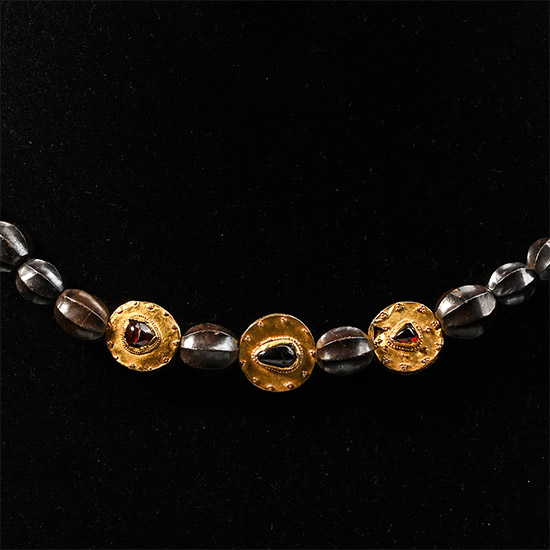
Graeco-Roman Necklace with Gold Beads
1st century B.C. and laterEstimate: £2,500 - 3,500 (‡+bp*)
Opening Bid: £1,250
Restrung group of fluted melon and other beads with three later hollow-formed gold drum-shaped panels, each with an inset cabochon garnet to the upper face, and granule clusters. 46.45 grams, 34 cm
Private collection, Jerusalem, assembled in the 1960s. with Holy Land Antiquities, Jerusalem. European private collection, acquired 2001. This lot has been checked against the Interpol Database of stolen works of art and is accompanied by search certificate number no.13141-246774.
In the Hellenistic and Roman periods there was a strong formal and chromatic diversity of glass beads used for necklaces and bracelets. The most common beads in forms were small biconical (lenticular), barrel-shaped, spherical and annular; the most common colours were dark blue, followed by green and yellow, and red. The succession of glass beads often imitates jewellery made of costly materials (gold, silver, semi-precious and precious stones). -
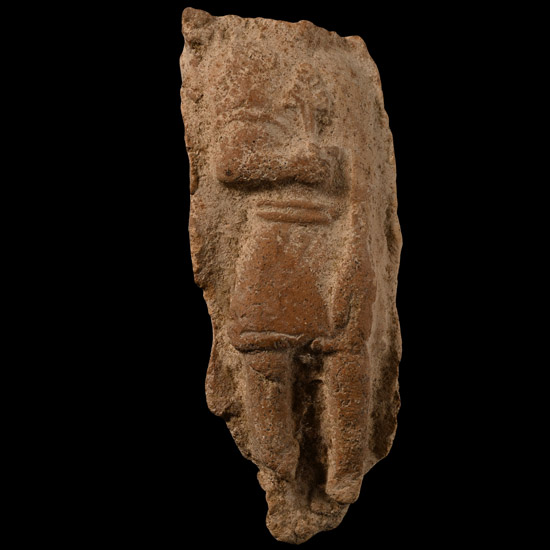
Parthian Terracotta Prince Torso
2nd century B.C.-2nd century A.D.Estimate: £50 - 70 (+bp*)
Opening Bid: £5
Moulded in low-relief, standing figure in knee-length short-sleeved tunic with belt and cloak over the left shoulder; right arm bent across the body, hand holding a frond. 61 grams, 90 mm
From the private collection of a European gentleman (1942-2024), formed since the 1970s.
