
Loading, please wait...
LOT 0538
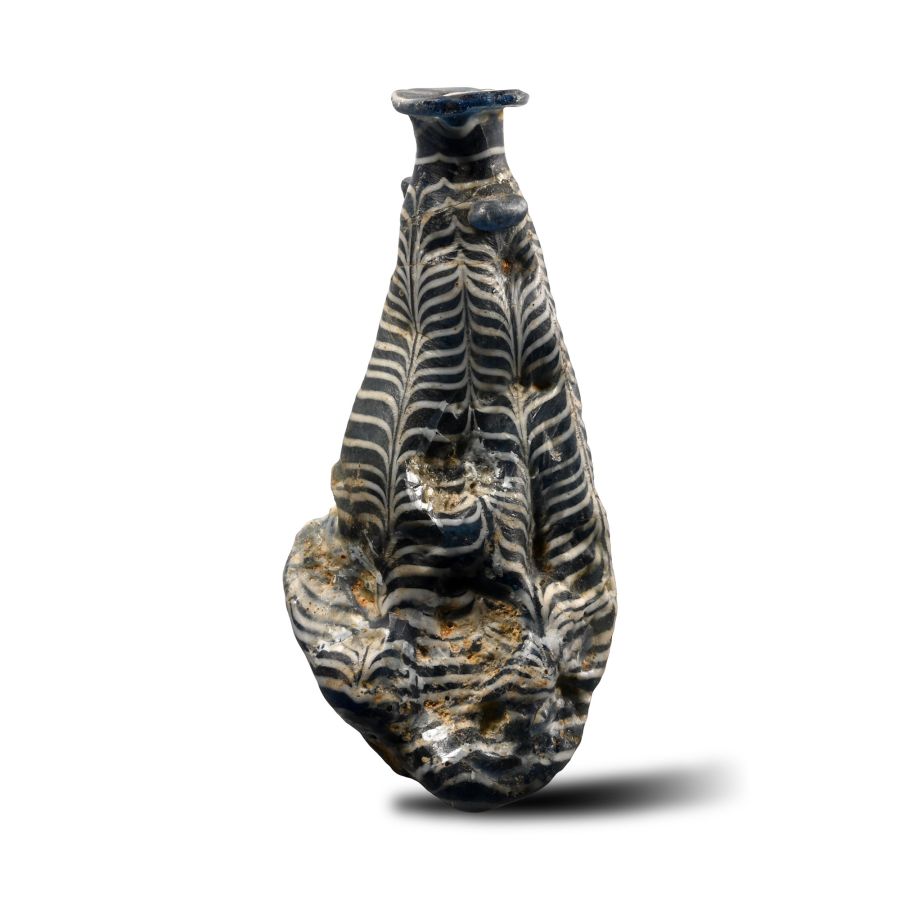
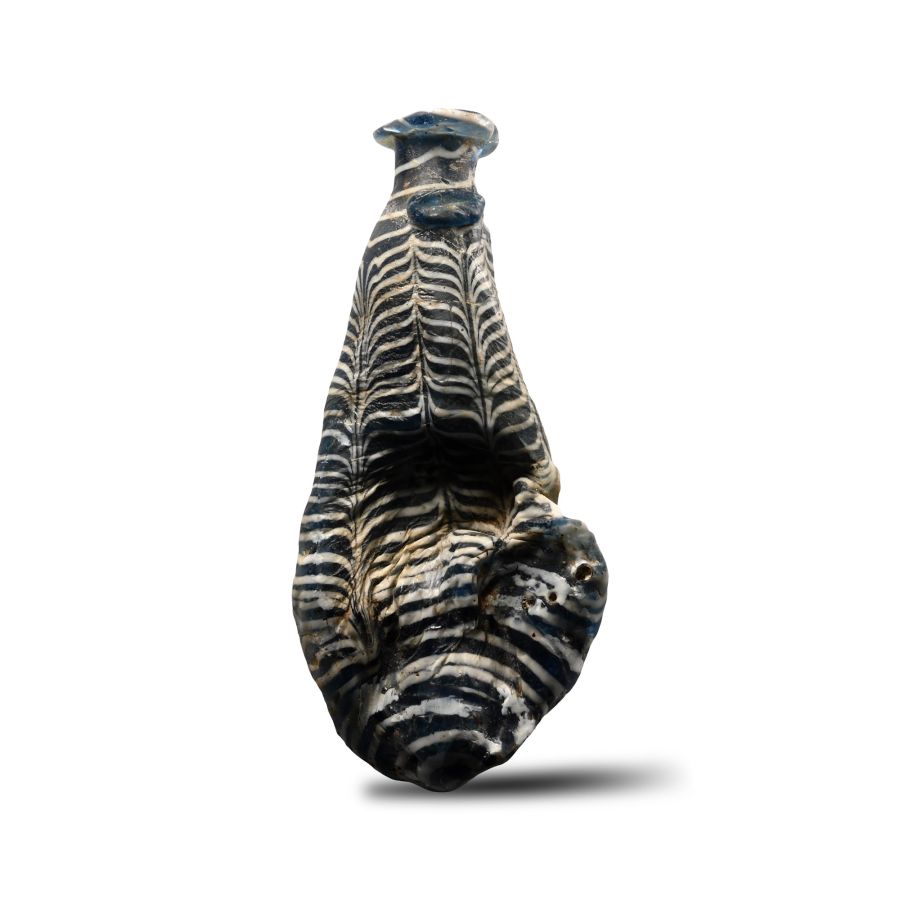
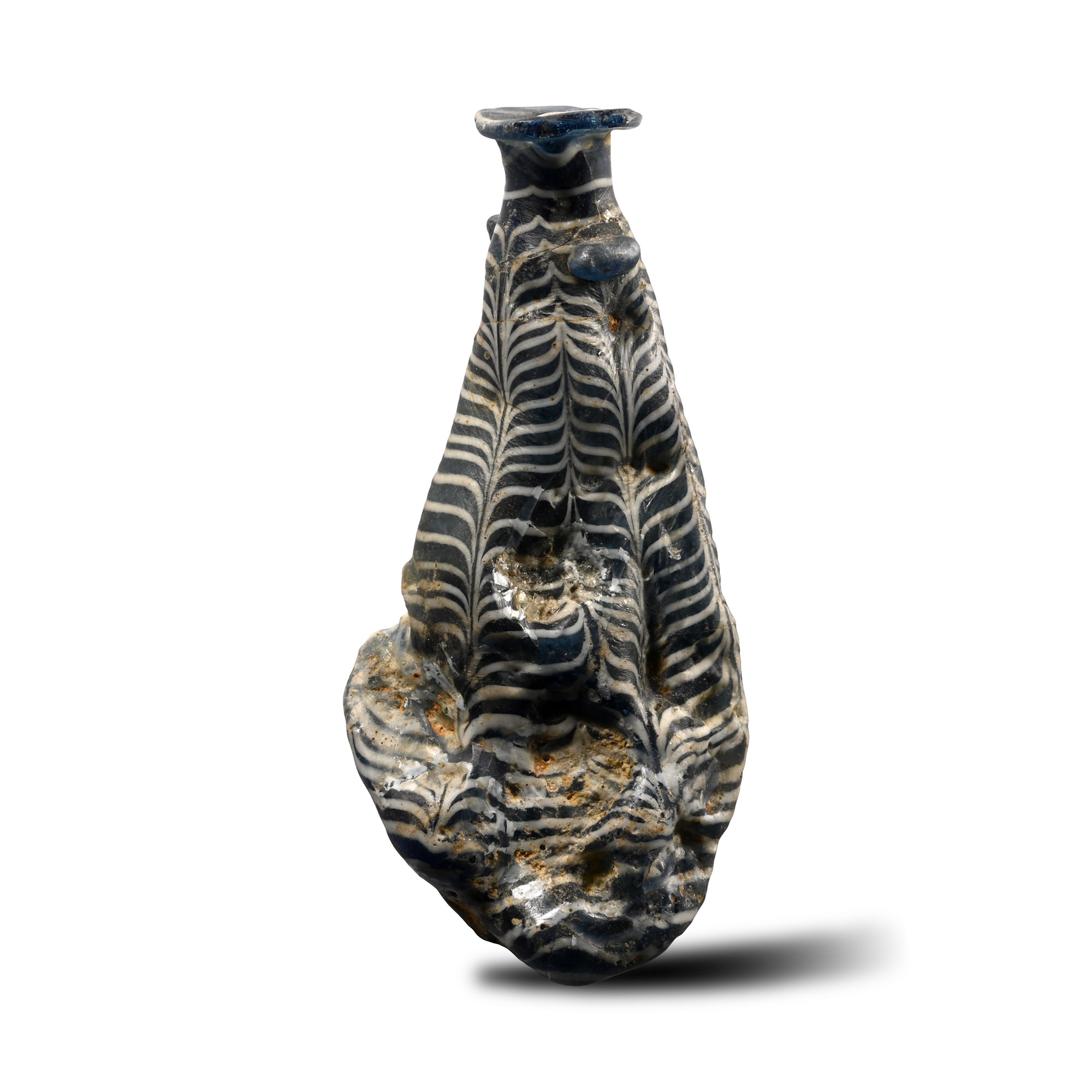
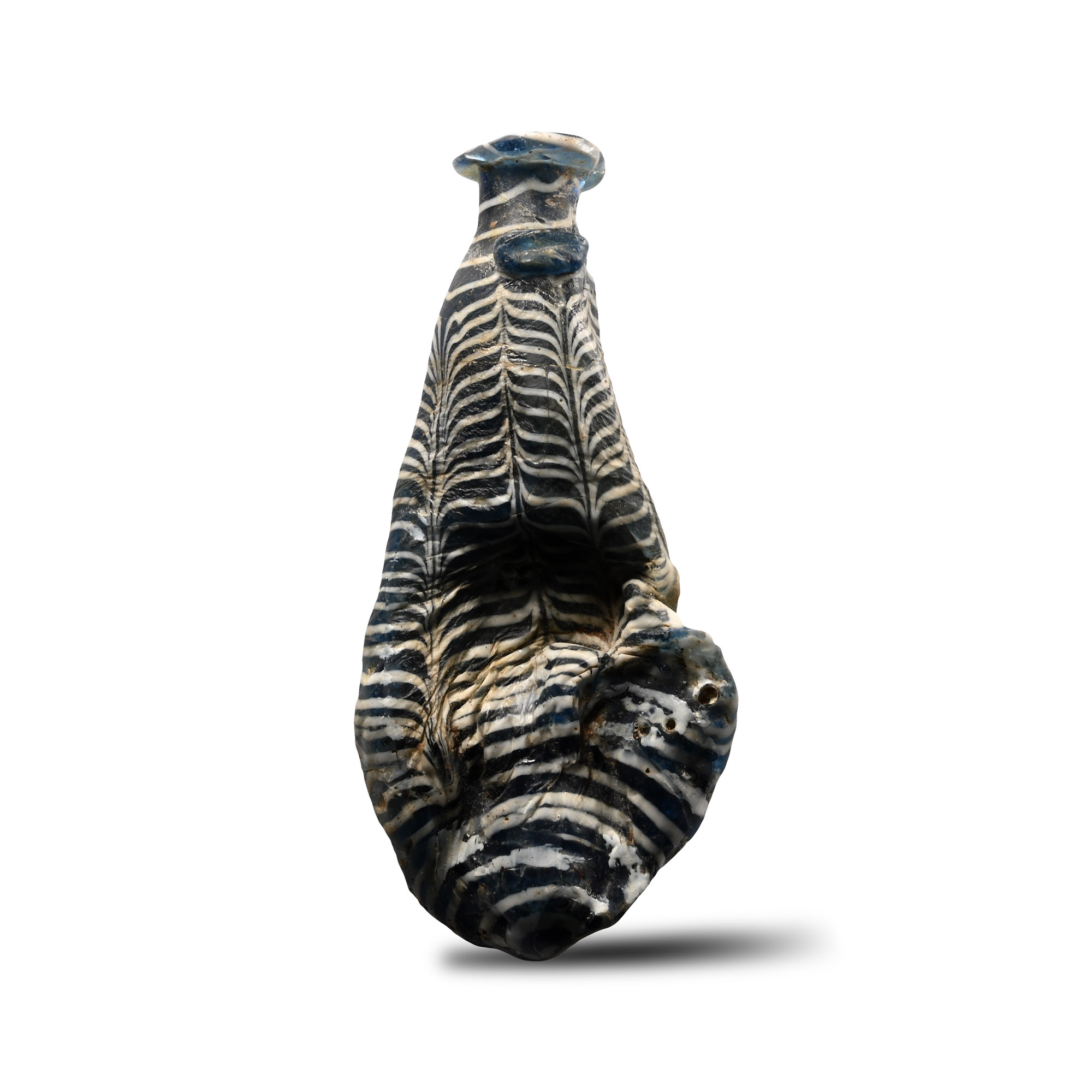
Greek Melted Core-Formed Glass Alabastron
4TH-3RD CENTURY B.C.
4 1/8 in. (46.9 grams, 10.5 cm).
With fusiform body, slender neck and broad flange rim, decorated with white and blue marvered feathering and spiralling trails; deformed, remains of attachment point for handle.
ProvenanceMr F.D. collection, acquired on the European art market, 1975 to present.
This lot is accompanied by an illustrated lot declaration signed by the Head of the Antiquities Department, Dr Raffaele D’Amato.
Cf. Auth, H., Ancient Glass at the Newark Museum, Newark, 1976, p.29, for similar.
FootnotesThe design of this vessel was applied in blue and white bands: it belongs to the Hellenistic vases that were core-formed, pre-blown. According to some scholars the feather pattern was not used before the 4th century B.C.
CONDITIONTimeLine Auctions follows a vetting process to ensure the authenticity and legality of all items, reinforcing our commitment to integrity and responsible trading. Each antiquity, antique, and coin lot undergoes thorough examination by a vetting committee of at least ten external specialists, professional trade association members, scientists, and archaeologists: Our Vetting Process
AUCTIONS:
TimeLine is a leading auction house specialising in antiquities, ancient art, collectables, natural history, coins, medals, and books. Our auctions offer museums, collectors, historians, and enthusiasts the opportunity to acquire unique and historically significant pieces.
-
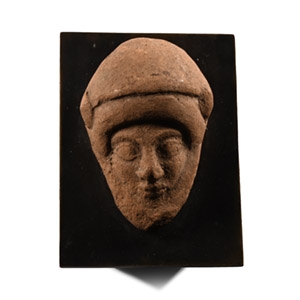
Cypriot Terracotta Mask with Helmet
6th-5th century B.C.Sold for (Inc. bp): £442
Modelled in the half-round with stylised facial features and wearing a large helmet; mounted on a custom-made display stand. 94 grams total, 50 mm (66 mm including stand)
with Hotel Drouot, Succession of Former collection Colonel W. Mutiaux, Paris, 5 September 1952, lot 66. Ex collection of Eugène Muriaux (1846-1925?). From the collection M.W., Paris, France, 1950-1970. Ex collection of Françoise and Claude Bourelier. This lot is accompanied by an illustrated lot declaration signed by the Head of the Antiquities Department, Dr Raffaele D’Amato.
The man's helmet is typically Phoenician-Cypriot. Therefore, it is possible to consider this terracotta as the portrait of a Cypriot warrior, with Greek and Phoenician elements. The artefact is part of ex-voto productions with Greek-Phoenician characteristics widespread throughout the Eastern Mediterranean. -
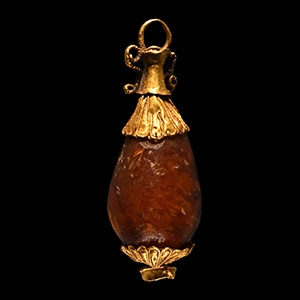
Hellenistic Gold Amphora-Shaped Pendant
3rd-1st century B.C.Sold for (Inc. bp): £585
Piriform carnelian centre with gold fittings, filigree loop handles. 3.64 grams, 30 mm
Acquired from the collection of Mrs L.G., an Italian noblewoman. European private collection. This lot is accompanied by an illustrated lot declaration signed by the Head of the Antiquities Department, Dr Raffaele D’Amato. -
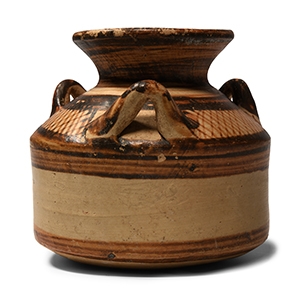
Mycenaean Straight-Sided Painted Alabastron
Late Helladic IIIB Period, 1300-1200 B.C.Estimate: £1,200 - 1,700 (‡+bp*)
Opening Bid: £600
Drum-shaped with a sloping shoulder, short neck, trumpet-style neck and mouth and a gently rounded base; three loop handles at regular intervals around the shoulder; reddish-brown painted geometric bands and cross-hatching against a cream slip. 190 grams, 93 mm wide
Ex private collection, Holland. Acquired from Royal Athena Gallery, 2003, stock no.LAE07/2500. Accompanied by an original Royal Athena label. This lot has been checked against the Interpol Database of stolen works of art and is accompanied by search certificate number no.11852-206835. This lot is accompanied by an illustrated lot declaration signed by the Head of the Antiquities Department, Dr Raffaele D’Amato.
