
Loading, please wait...
LOT 0064
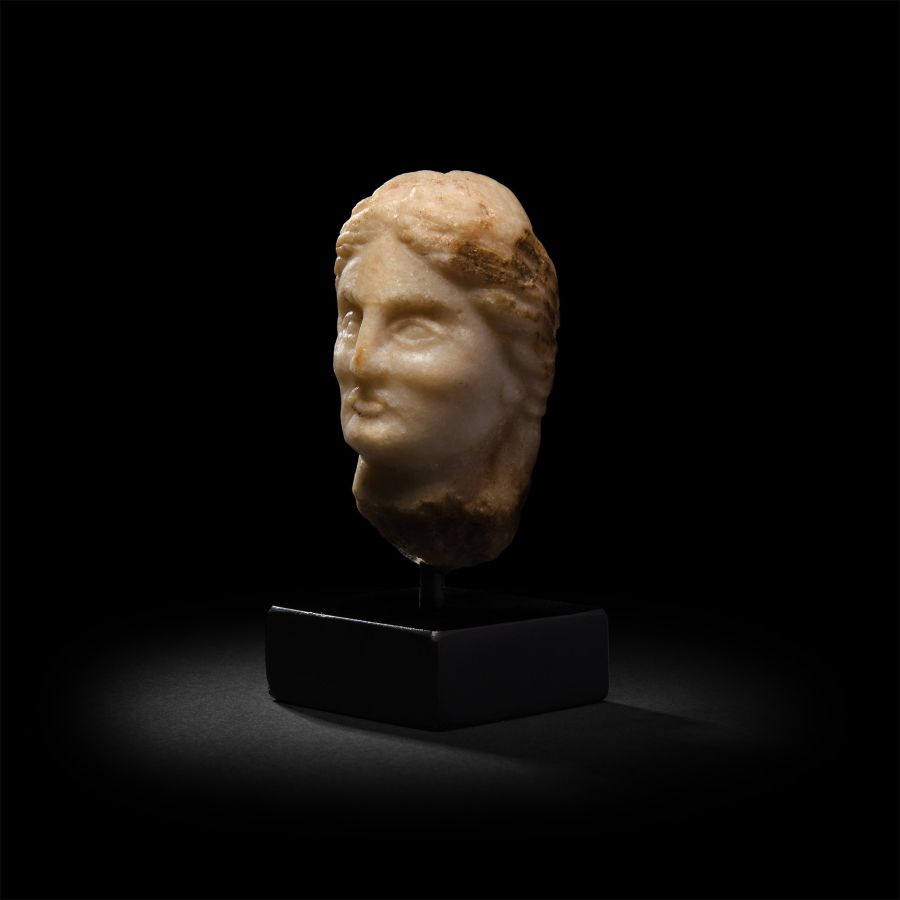
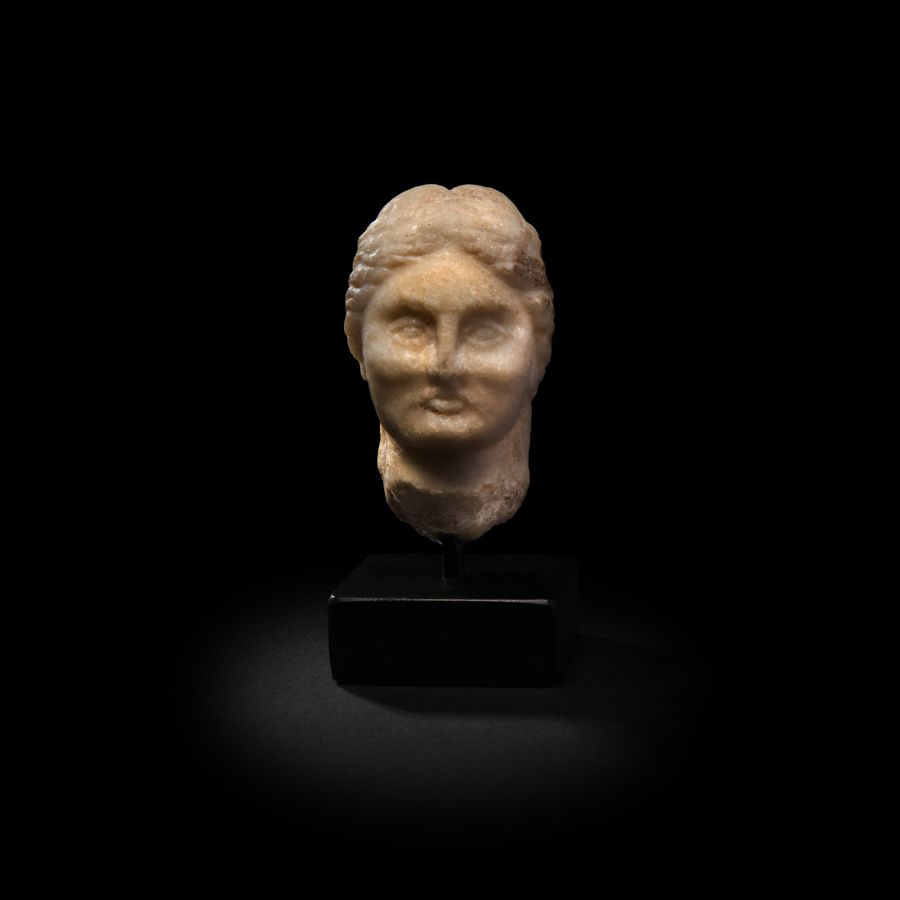
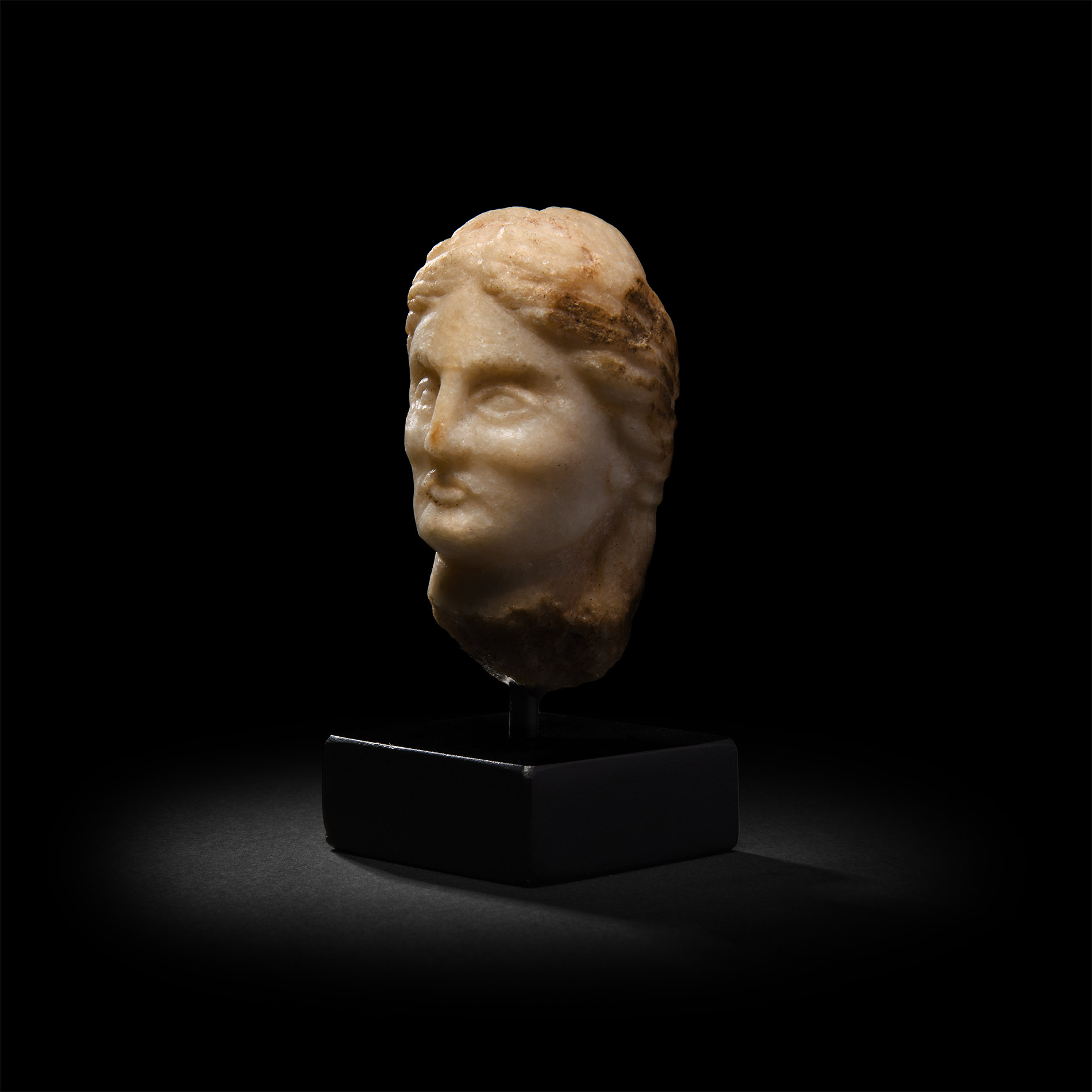
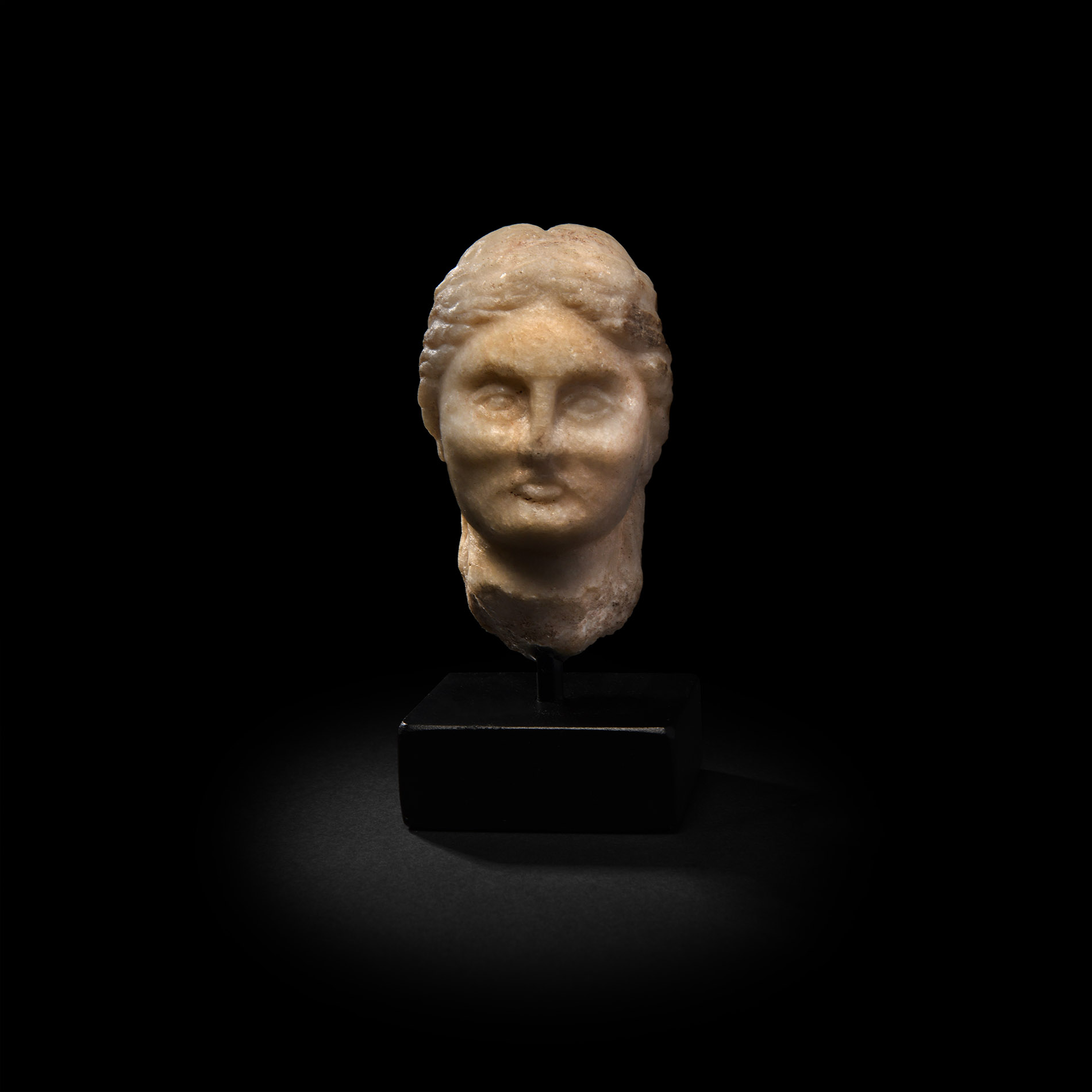
Greek Marble Head of a Woman
2ND CENTURY B.C.
4 1/4 in. (386 grams total, 11 cm high).
A marble head of lady carved in the round with semi-naturalistic, masculine facial features, severe facial expression, hair dressed with a central parting and tied in a chignon at the nape of the neck; mounted on a custom-made display stand.
ProvenanceAcquired in the 1980s.
Ex private German collection.
Cf. Aurenhammer, M., Sculpture in Roman Asia Minor, Proceedings of the International Conference at Selçuk, 1st–3rd October 2013, Wien, 2018, p.440, fig.3.
FootnotesProbably a votive statuette, of which only the head remains; it may also have been part of a high-relief made in the style of Asia Minor sculptures. The soft treatment of the hair, and the deep-set eyes in the narrow face, creating a soft effect, are among the characteristics known from the late Classical period. The arrangement of the hair in soft curls encircling the face, in a manner which provides a triangular form to the forehead, and then hanging downwards after being collected at the back of the neck, resembles the Kore types known from the early Hellenistic period.
CONDITIONTimeLine Auctions follows a vetting process to ensure the authenticity and legality of all items, reinforcing our commitment to integrity and responsible trading. Each antiquity, antique, and coin lot undergoes thorough examination by a vetting committee of at least ten external specialists, professional trade association members, scientists, and archaeologists: Our Vetting Process
AUCTIONS:
TimeLine is a leading auction house specialising in antiquities, ancient art, collectables, natural history, coins, medals, and books. Our auctions offer museums, collectors, historians, and enthusiasts the opportunity to acquire unique and historically significant pieces.
LOT 0064
Greek Marble Head of a Woman
Estimate £1,200 - 1,700€1,390 - 1,970 (for guidance only)$1,620 - 2,300 (for guidance only)
-
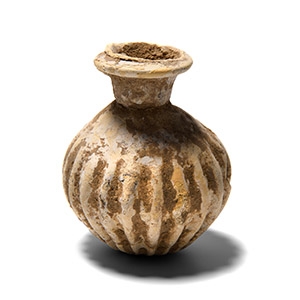
Greek Cream Glass Ribbed Bottle
Late 1st millennium B.C.Estimate: £200 - 300 (‡+bp*)
Opening Bid: £100
An opaque cream-coloured glass bottle with vertical ribbing around the globular body, trumpet-style neck and mouth with rolled rim. 76 grams, 73 mm high
Acquired early 1990s. Ex private American collection; thence by descent. Private collection since 1998. -
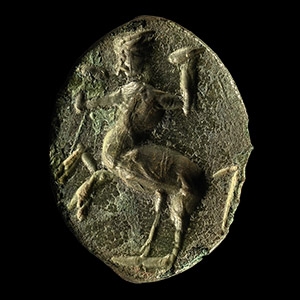
Greek Seal Ring with Centaur
4th-3rd century B.C.Sold for (Inc. bp): £221
A copper-alloy ring composed with a slender hoop with large elliptical bezel, engraved with a centaur rearing left. 5.80 grams, 24.33 mm overall, 20.62 mm internal diameter (approximate size British P, USA 7 1/2, Europe 16.23, Japan 15)
Acquired before 2000. From the collection of a European gentleman living in the UK. -
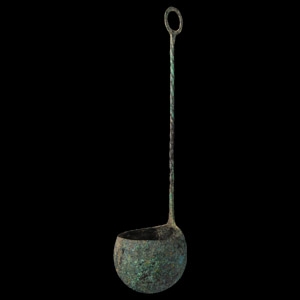
Greek Ladle with Twisted Handle
5th-3rd century A.D.Estimate: £300 - 400 (+bp*)
Opening Bid: £125
A bronze ladle with deep bowl, integral bronze handle twisted about it own axis, loop finial. 77 grams, 26.2 cm
UK private collection before 2000. UK art market. Property of a London gentleman.
