
Loading, please wait...
LOT 0574
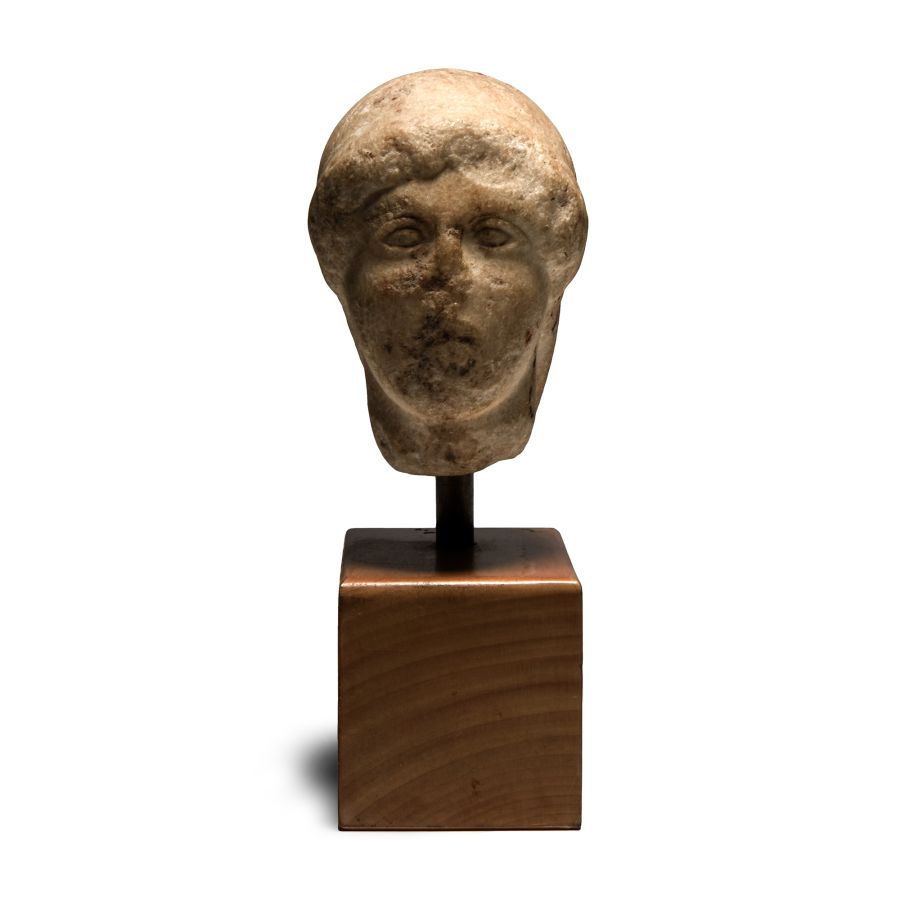
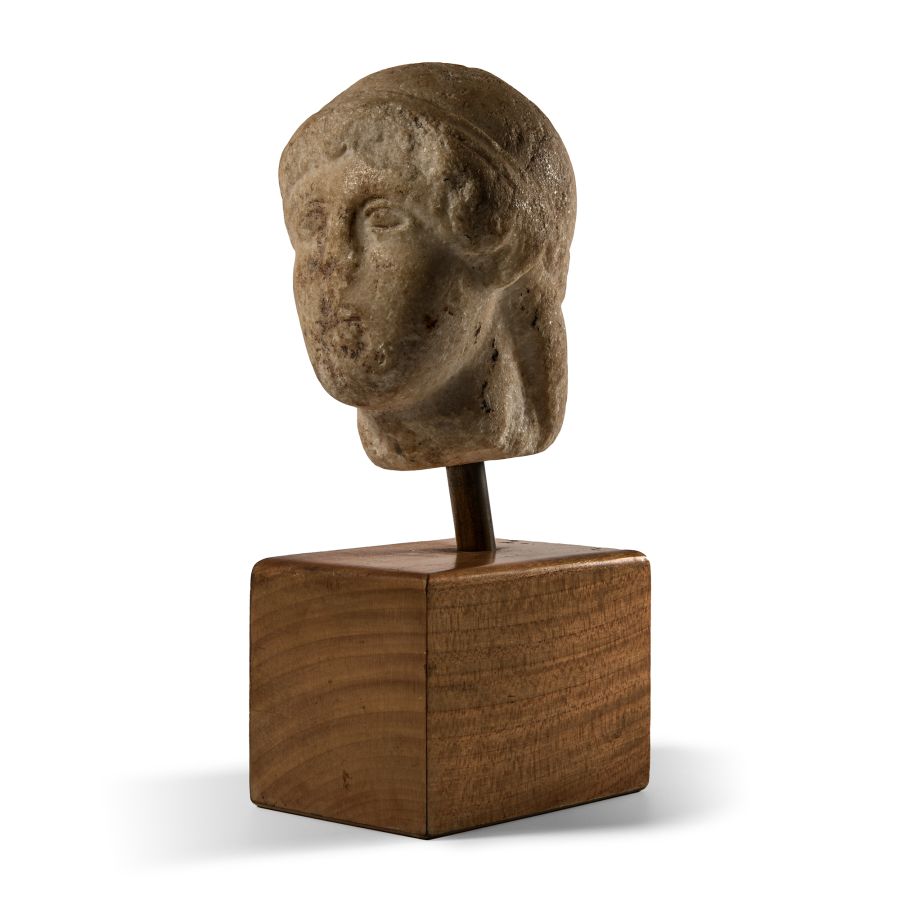
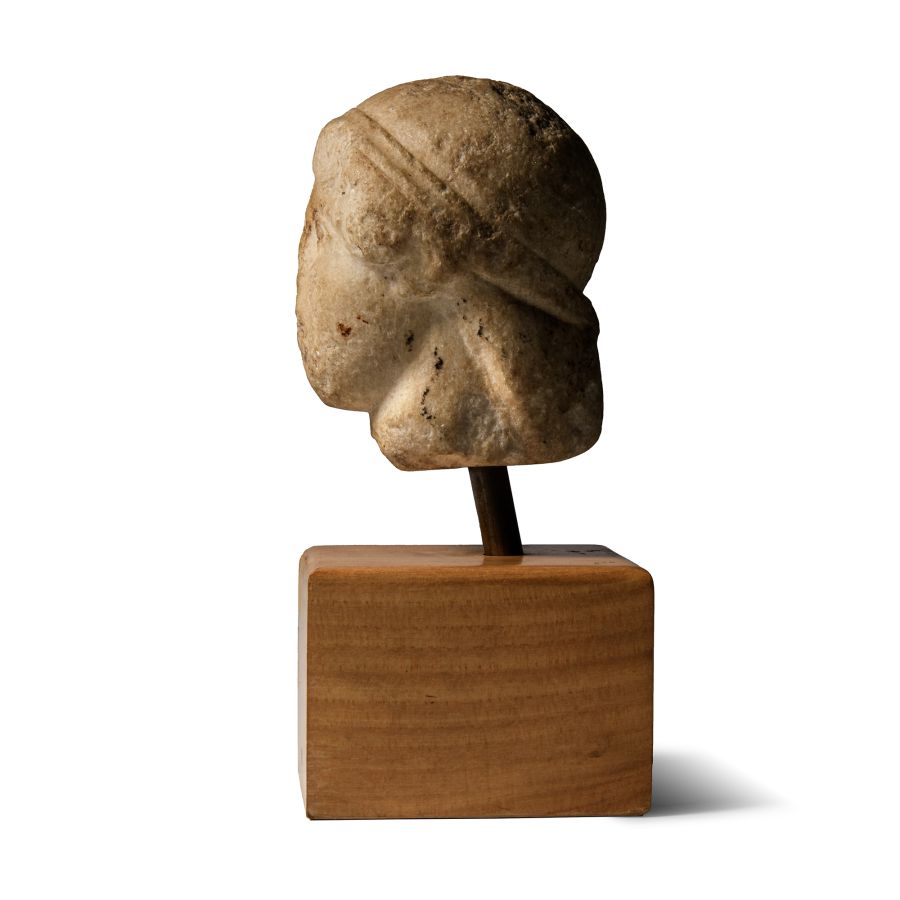
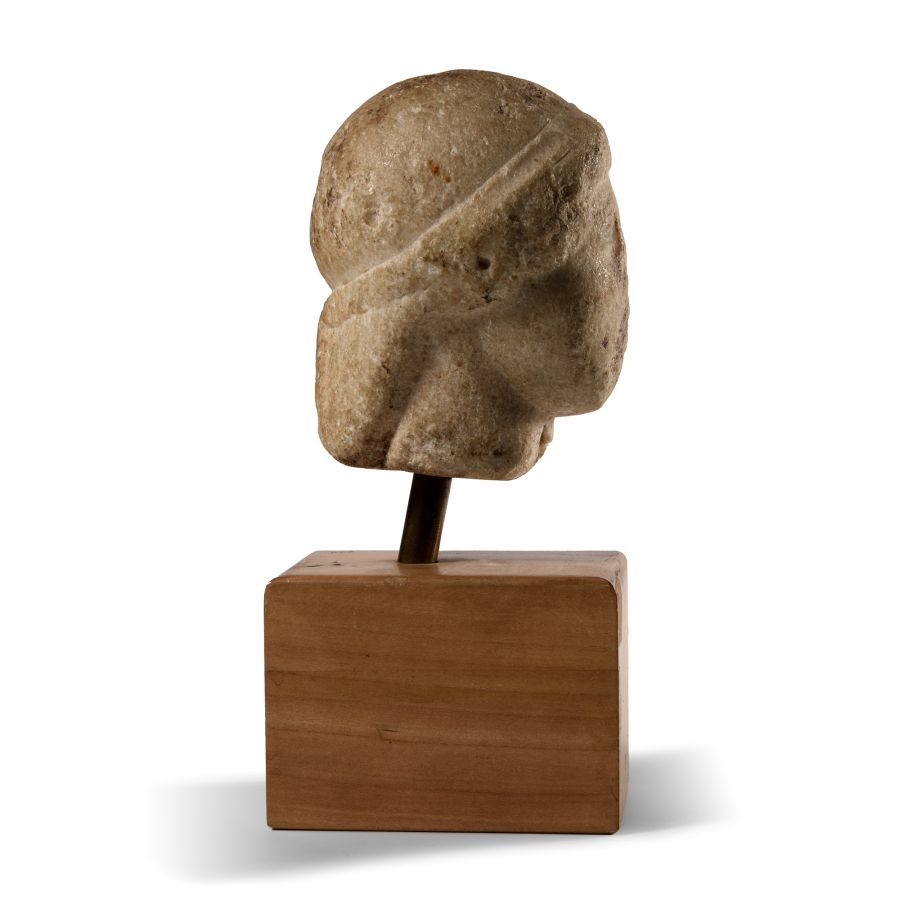
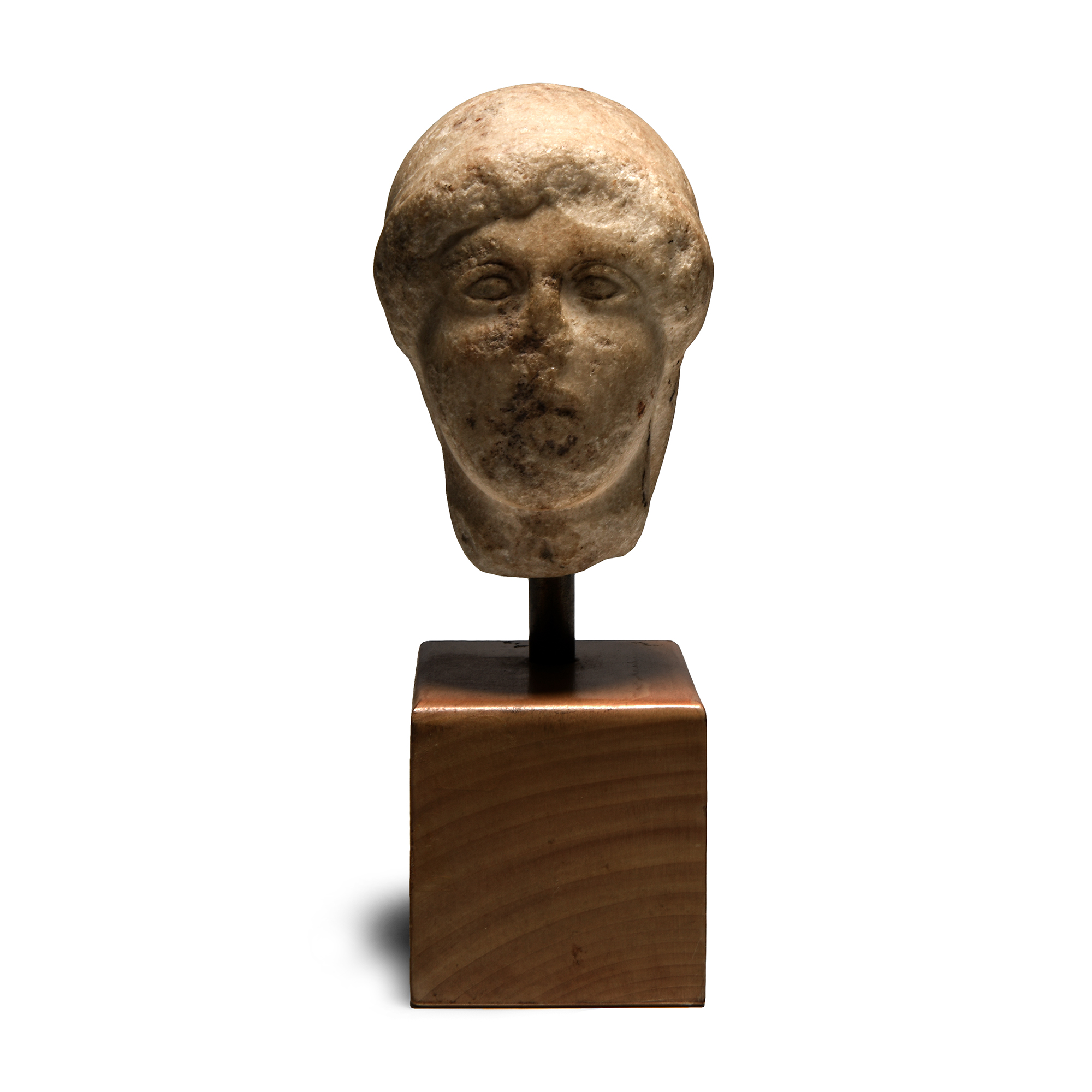
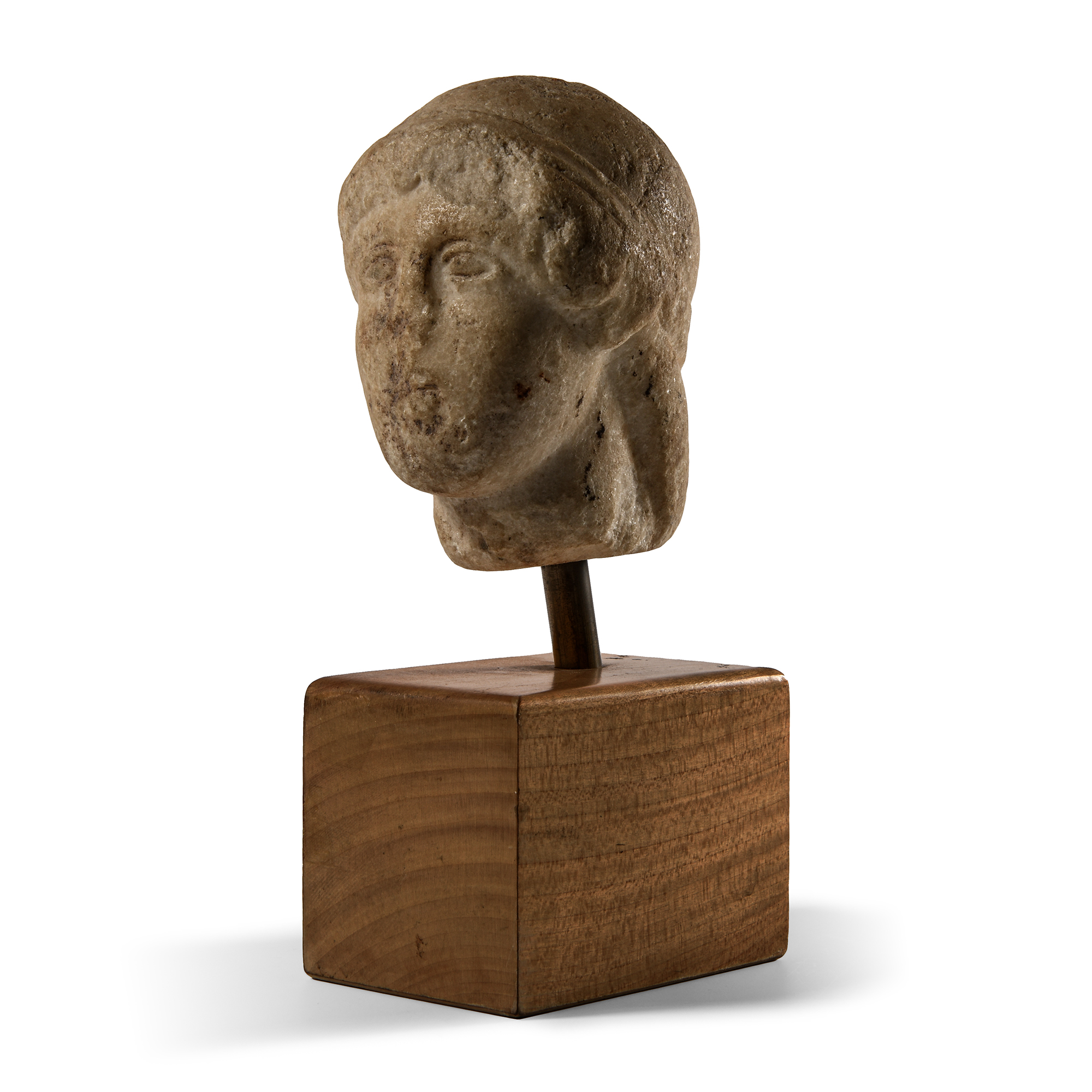
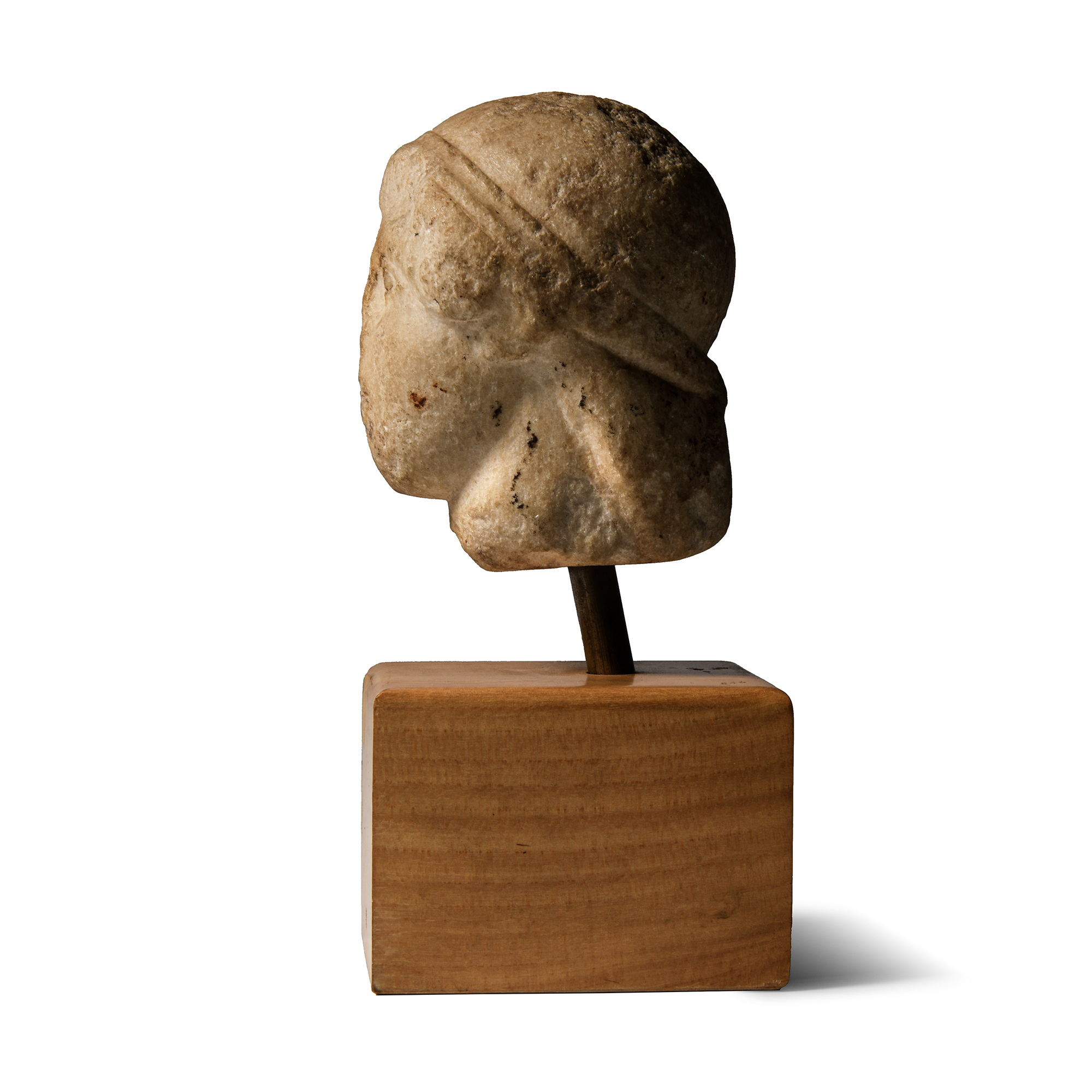
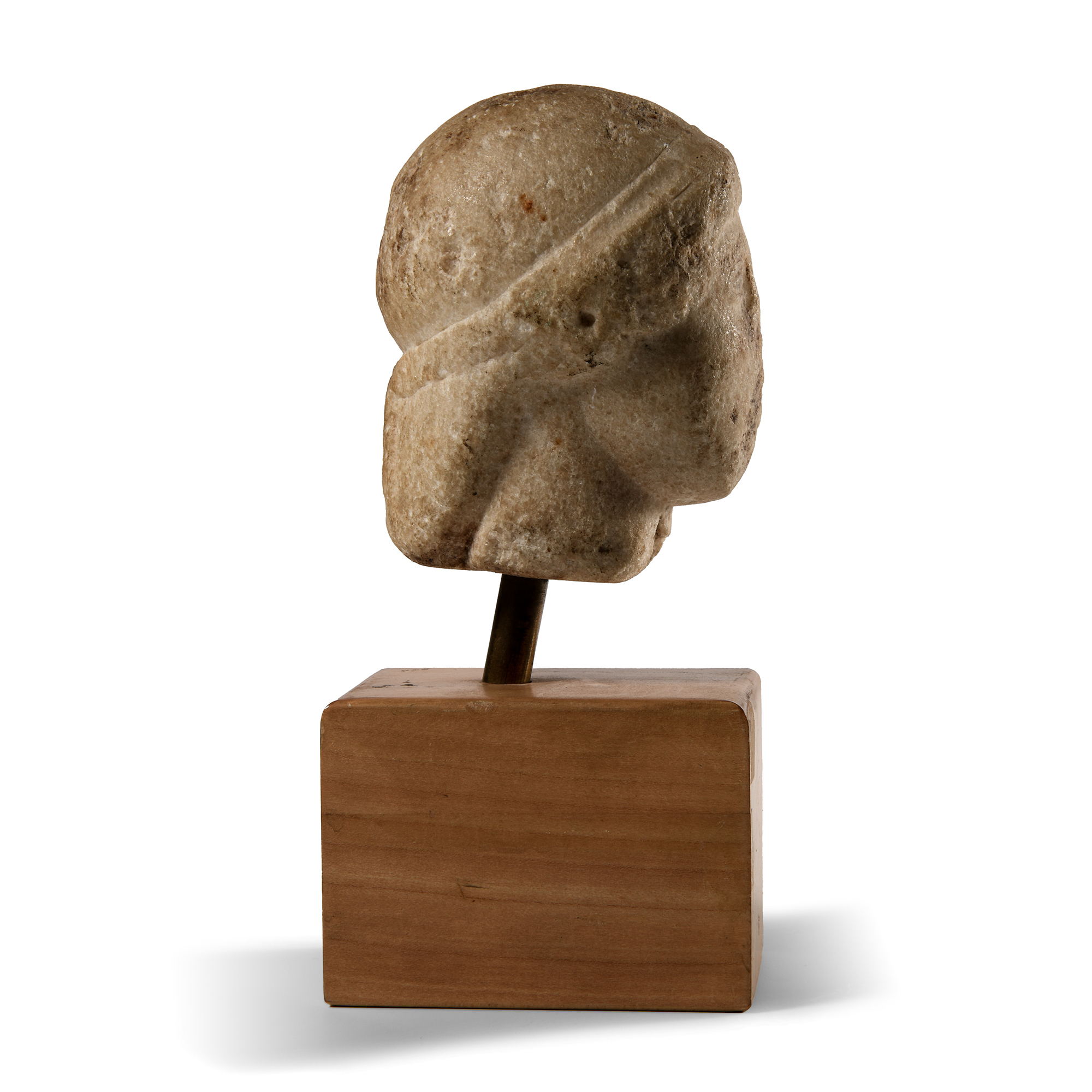
Greek Marble Head of a Kouros
EARLY 5TH CENTURY B.C.
7 1/8 in. (879 grams total, 18 cm high including stand).
Carved in the round; semi-naturalistic anatomic and facial detailing, hair gathered loosely at the neck and tied with a taenia knotted at the nape of the neck; mounted on a custom-made display base.
ProvenanceEx old European private property, by inheritance to the previous owner.
Ex Schuler Auktionen, Zürich, 10 December 2020, no.1211.
Accompanied by an academic report by Dr Raffaele D’Amato.
This lot has been checked against the Interpol Database of stolen works of art and is accompanied by search certificate number no.11817-206512.
This lot has been cleared against the Art Loss Register database, and is accompanied by an illustrated lot declaration signed by the Head of the Antiquities Department, Dr Raffaele D’Amato.
Cf. Metropolitan Museum of Art, accession no.1992.11.60, for a similar marble head of a Kouros, c.525-475 B.C., in Zimmerman, J.-L., Collection de la Fondation Thétis: Développements de l'Art Grec de la Préhistoire à Rome, Geneva, 1987, p.47, no.88; cf. also a slightly later head with tight, defined curls, likely to have come from a group within a funerary naiskos, no. 1972.118.111 at the Metropolitan Museum of Art, New York, in Von Bothmer, D. and d'Harnoncourt, R., Greek, Etruscan, and Roman Antiquities: An Exhibition from the Collection of Walter Cummings Baker, Esq. no. 59, p. 10, pl. 20, 1950, New York; see also Dörig, J., The Olympia Master and his collaborators, Leiden-New York-Köln-København, 1987.
FootnotesThe small statuette to which the head belonged was probably that of a naked youth, the so-called kouros, typical of archaic Greek sculpture from the 7th century B.C. onwards.
CONDITIONTimeLine Auctions follows a vetting process to ensure the authenticity and legality of all items, reinforcing our commitment to integrity and responsible trading. Each antiquity, antique, and coin lot undergoes thorough examination by a vetting committee of at least ten external specialists, professional trade association members, scientists, and archaeologists: Our Vetting Process
AUCTIONS:
TimeLine is a leading auction house specialising in antiquities, ancient art, collectables, natural history, coins, medals, and books. Our auctions offer museums, collectors, historians, and enthusiasts the opportunity to acquire unique and historically significant pieces.
LOT 0574
Greek Marble Head of a Kouros
Estimate £2,000 - 3,000€2,320 - 3,480 (for guidance only)$2,700 - 4,050 (for guidance only)
-
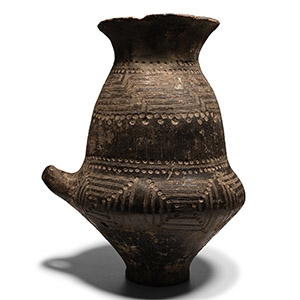
Large Villanovan Geometric Black-Glazed Vase with Handle
9th-8th century B.C.Sold for (Inc. bp): £2,080
Biconical impasto body with broad flaring rim, bell-shaped upper section with bands of incised geometric decoration and impressed roundels, lower section tiered and sharply funicular with narrow flat base, a lateral upturned loop handle; small hole beneath the carination, rim partly restored. 4.5 kg, 41 cm
Ex Feu Dr Gonik Et/Ou Feu Me Wirth, Genève. European private collection. Accompanied by an academic report by Dr Raffaele D'Amato. This lot has been checked against the Interpol Database of stolen works of art and is accompanied by search certificate number no.12205-222203. This lot has been cleared against the Art Loss Register database, and is accompanied by an illustrated lot declaration signed by the Head of the Antiquities Department, Dr Raffaele D’Amato. -
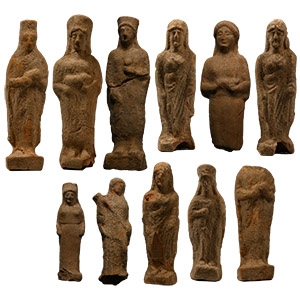
Greek Terracotta Female Figures
6th-5th century B.C.Sold for (Inc. bp): £1,690
Group of mould-made terracotta figurines comprising: three head protomes with polos or diadem; three standing figures; five seated figures; some with restoration, minor losses. 2.39 kg total, 13.5-20.8 cm
Ex M.M., 1960s. with Herbert A.Cahn, Basel. This lot is accompanied by an illustrated lot declaration signed by the Head of the Antiquities Department, Dr Raffaele D’Amato. -
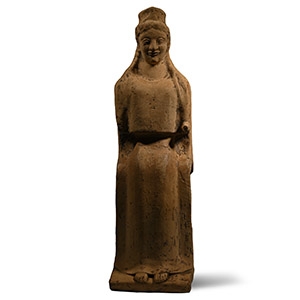
Massive Archaic Greek Terracotta Statuette of a Seated Goddess Demeter
Late 6th century B.C.Estimate: £4,000 - 6,000 (‡+bp*)
Opening Bid: £1,710
Seated on a high-backed throne, wearing a polos headdress with two long braids falling from underneath the headdress, wearing a long chiton fastened by a belt, the left arm raised, possibly once holding a dove; well marked facial features, slightly almond-shaped large symmetrical eyes with slightly raised eyelids, straight nose, strongly pronounced mouth with fleshy lips and shallow ears; traces of brown slip, repaired. 2.02 kg, 57.7 cm
with H.A.C., Basel, prior 1999. Accompanied by a thermoluminescence analysis report no.N125a51 from Oxford Authentication. Accompanied by an academic report by Dr Raffaele D'Amato. This lot has been checked against the Interpol Database of stolen works of art and is accompanied by search certificate no.12461-228712. This lot has been cleared against the Art Loss Register database, and is accompanied by an illustrated lot declaration signed by the Head of the Antiquities Department, Dr Raffaele D’Amato.
One of the most typical 6th century B.C. terracotta female figurines was that of a standing or seated woman wearing a chiton and a himation over it. It was a votive figure offered at the shrines or temples, usually representing the goddess Demeter. Attica was one of the principal centres of figurine production, but Corinth continued to produce solid standing or seated females with moulded fronts and flat backs. The mass production of such terracotta was also typical of Magna Graecia.
