
Loading, please wait...
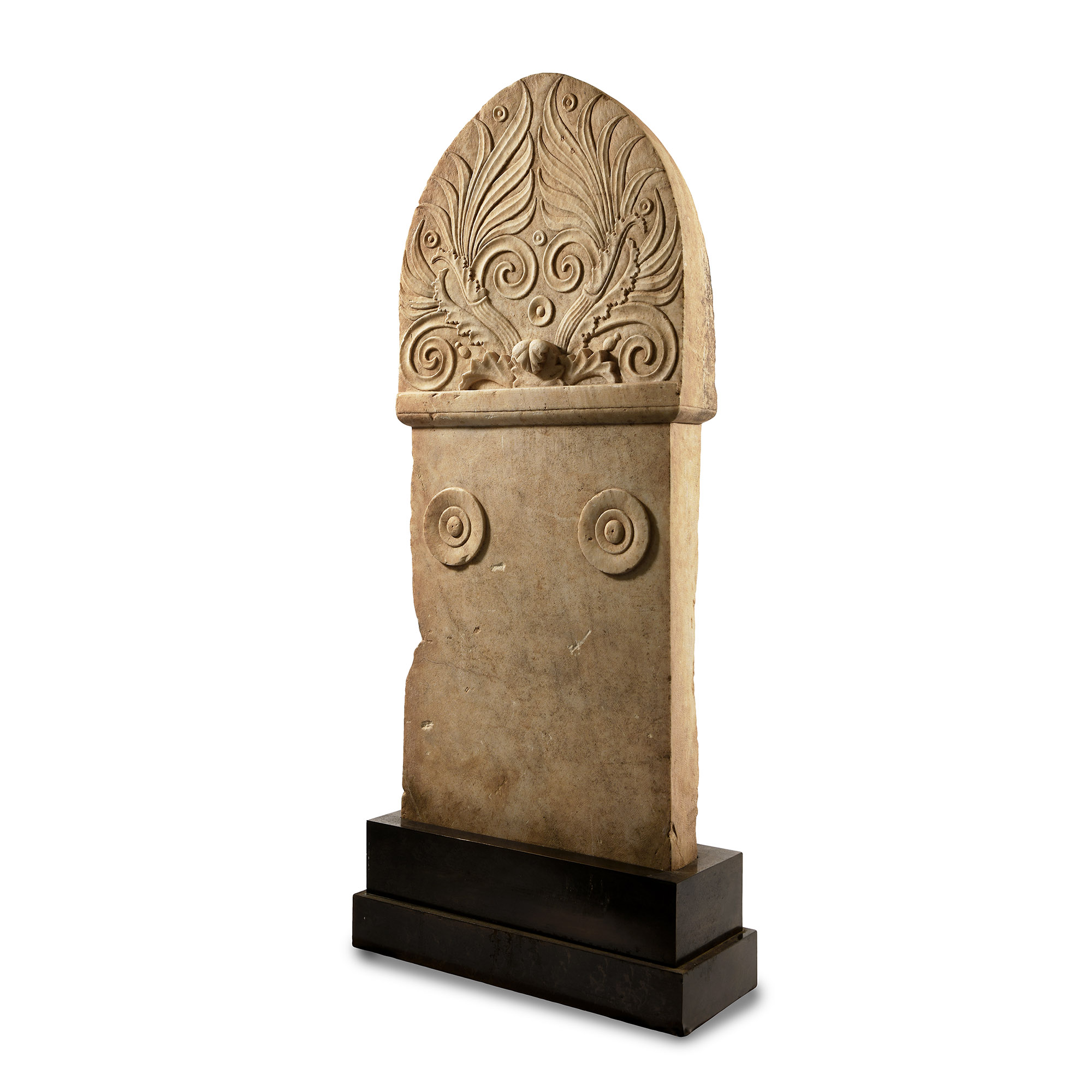
LOT 0058
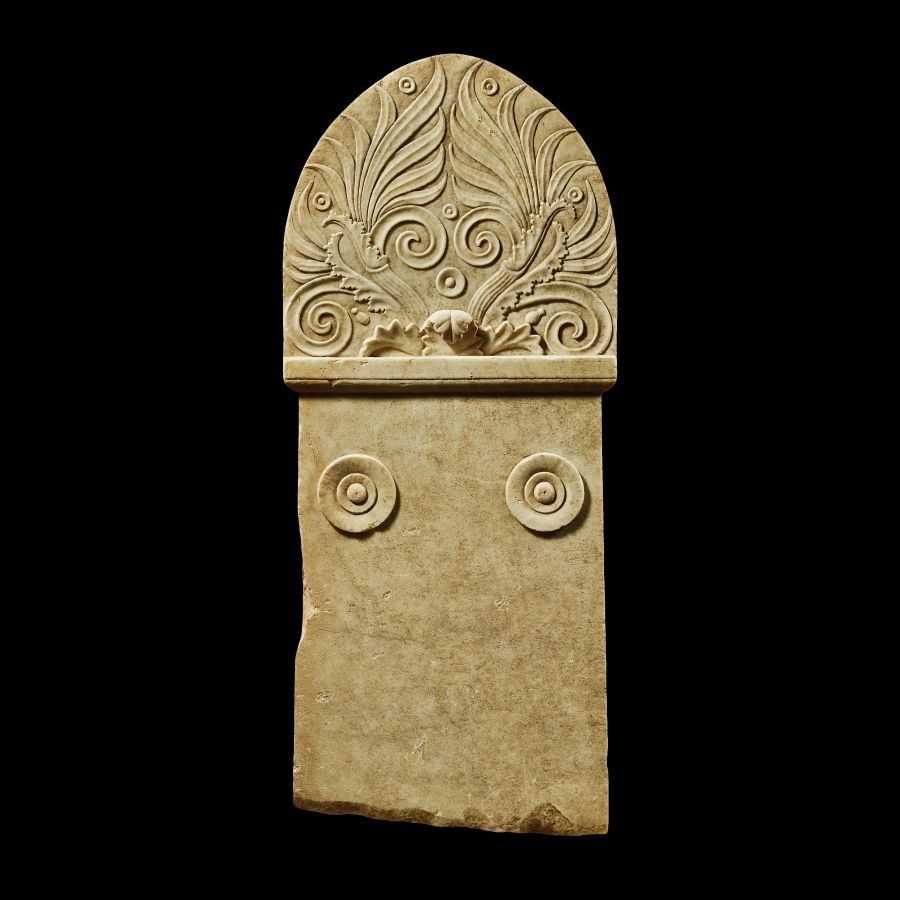
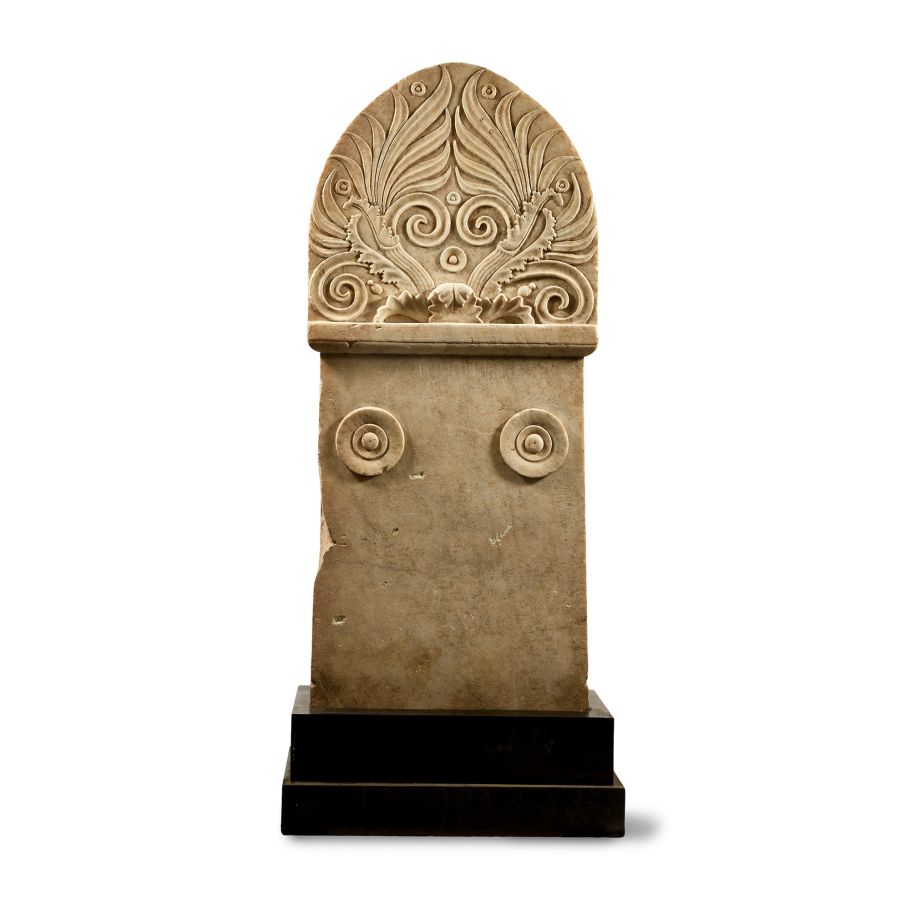
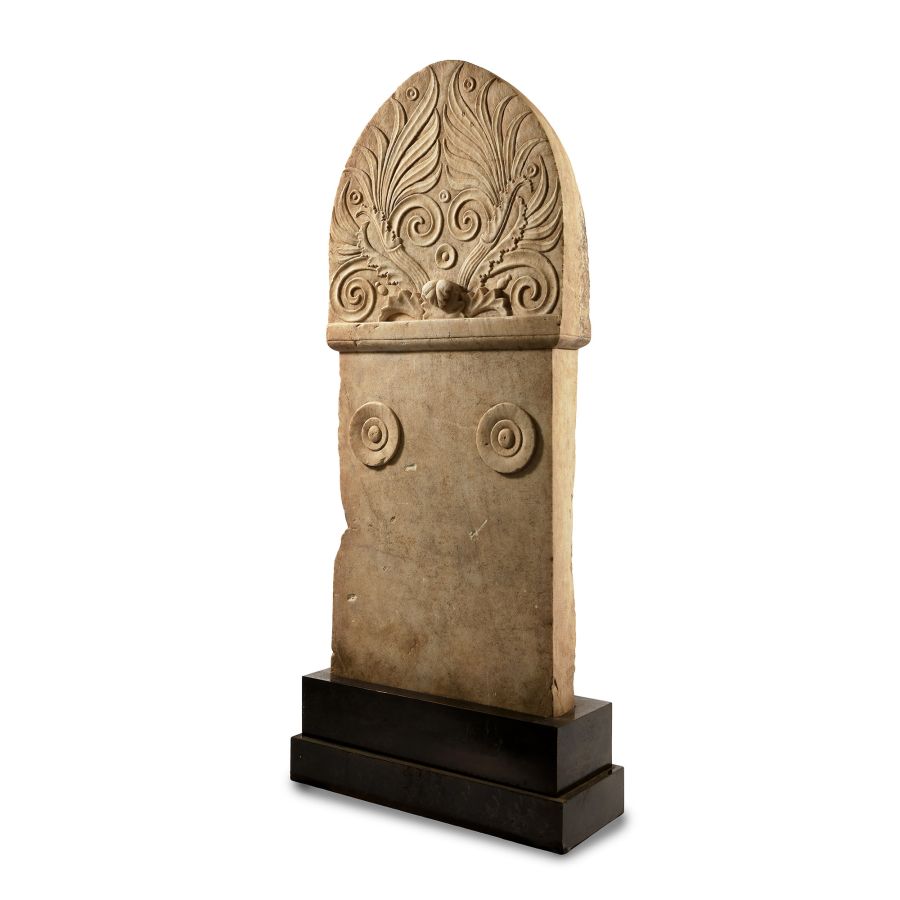
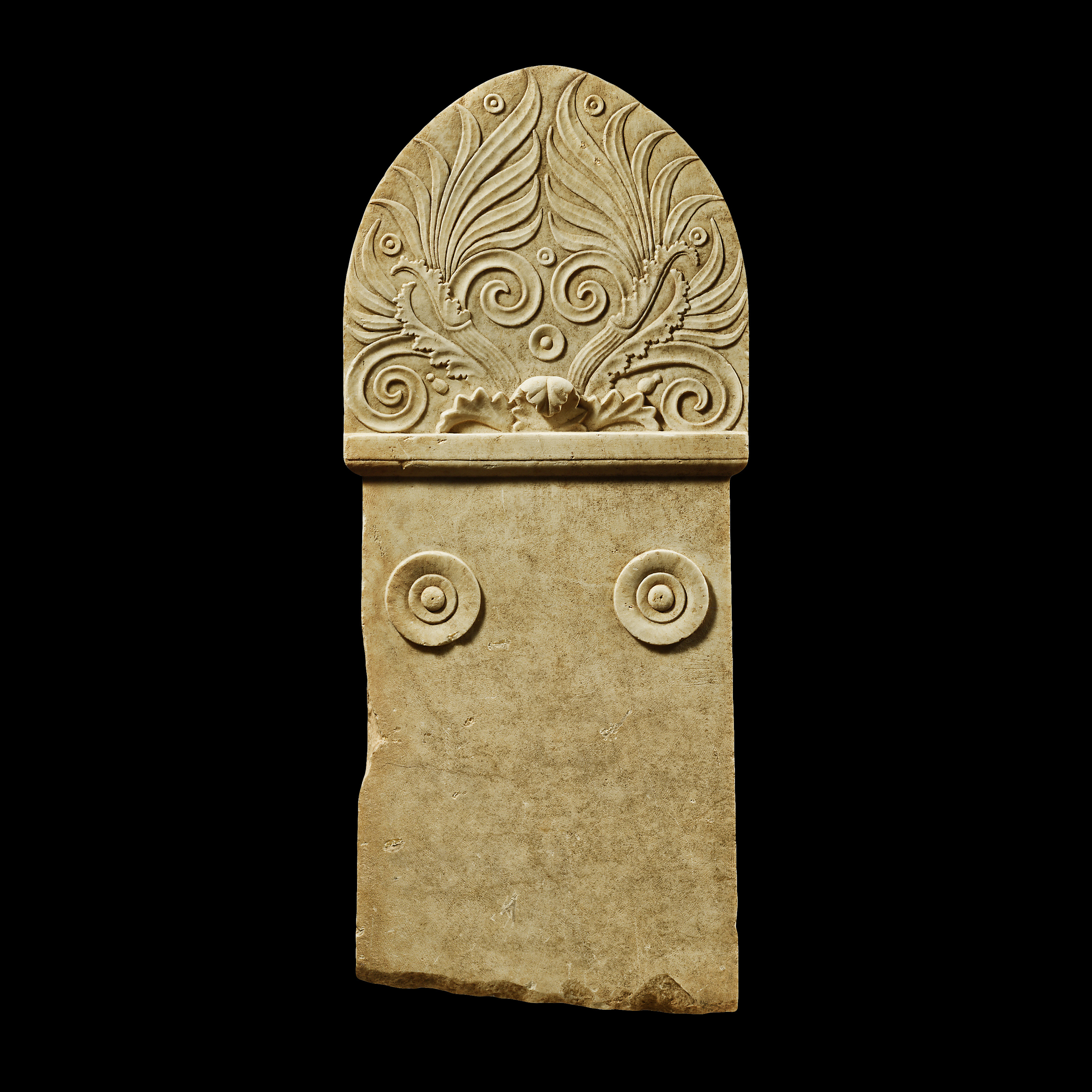
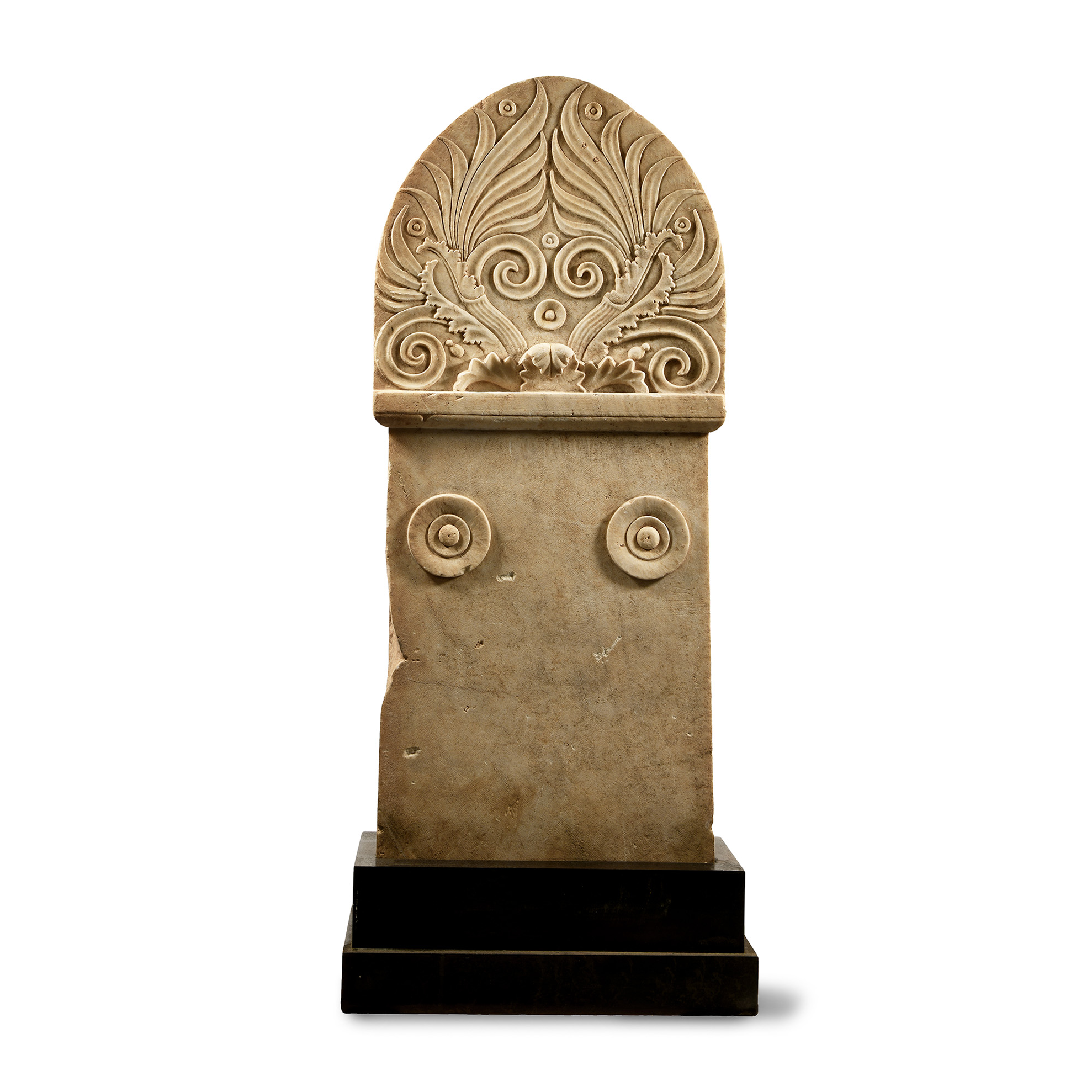
Greek Marble Funerary Anthemion Stele
4TH CENTURY B.C.
41 1/2 in. (37 1/2 in without stand) (55.6 kg total, 105.5 cm high including stand (95.2 cm without stand)).
Comprising a tall, plain body with two rosettes; crowned by an elaborate palmette and volute design with shallow acanthus stalks and small rosettes; mounted on a custom-made display stand.
ProvenancePrivate Swiss collection, acquired in the 1980s.
with Ward & Co., New York, 2014.
Private American collection, K.M., circa 2015-present.
Accompanied by a copy of an Art Loss Register certificate number S00114167, dated 2 June 2016.
Accompanied by an academic report by Dr Raffaele D’Amato.
This lot has been checked against the Interpol Database of stolen works of art and is accompanied by a search certificate number no.11776-204598.
Exhibited: Masterpiece, London, 29 June - 5 July 2017; TEFAF Maastricht, March 2018; Masterpiece, London, 28 June - 4 July 2018.
LiteratureSee Möbius, H., Die Ornamente der griechischen Grabstelen klassischer und nachklassischer Zeit, Berlin, 1929; Vedder, U., Untersuchungen zur plastischen Ausstattung attischer Grabanlagen des 4. Jhs. V. Chr.,Frankfurt, 1985; Riegl, A., Problems of Style: Foundations for a History of Ornament, Princeton, 1992; Clairmont C. W., Classical Attic Tombstones, Kilchberg, Switzerland, 1993; Grossman, J.B., Greek Funerary Sculpture: Catalogue of the Collections at the Getty Villa, Los Angeles, 2001; Brinkmann, W., Wünsche, R., Bunte Götter, die Farbigkeit Antike Skulptur, München, 2004.
FootnotesThese memorials, originally painted (see gravestone from Paramythion, cf. Brinkmann-Wünsche, 2004, pp.148ff.), were venerated by families, anointed with oil, decorated with ribbons, and graced with offerings of food. They rivalled each other in the increasingly ostentatious display of family status and wealth, so much so that by the end of the 4th century B.C., a sumptuary law was passed, abruptly ceasing their production. In their heyday, these stelae provided sculptors an opportunity to demonstrate their technical virtuosity with both ornamental and figural subjects. It was not unusual for the anthemion to be of higher quality than the figures sculpted and painted below it.
CONDITIONTimeLine Auctions follows a vetting process to ensure the authenticity and legality of all items, reinforcing our commitment to integrity and responsible trading. Each antiquity, antique, and coin lot undergoes thorough examination by a vetting committee of at least ten external specialists, professional trade association members, scientists, and archaeologists: Our Vetting Process
AUCTIONS:
TimeLine is a leading auction house specialising in antiquities, ancient art, collectables, natural history, coins, medals, and books. Our auctions offer museums, collectors, historians, and enthusiasts the opportunity to acquire unique and historically significant pieces.
-
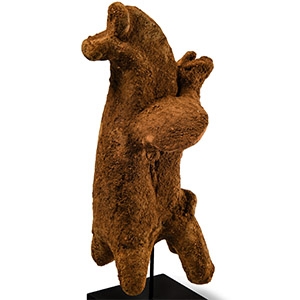
Archaic Greek Terracotta Figure of Mounted Warrior with Shield
7th-5th century B.C.Sold for (Inc. bp): £221
Modelled in the round, the stylised horse standing on stub legs, with a long neck and detailing to its eyes; the warrior holding a shield in his left hand, right hand and arm raised to eye level, wearing a crested helmet; restored and mounted on a custom-made display stand. 303 grams total, 17 cm high including stand
Acquired before 1990. From an old German collection. -
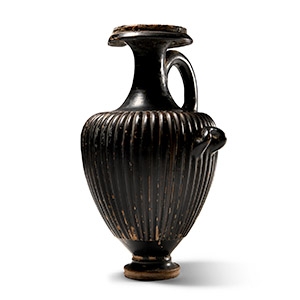
South Italian Black-Glazed Miniature Hydria
4th century B.C.Estimate: £2,000 - 3,000 (‡+bp*)
Opening Bid: £1,000
Decorated with ribbed fluting around the body and broad shoulder, slender neck with stepped and everted rim and mouth, two handles to the equator, a carry handle between neck and shoulder to the rear, discoid foot; repaired. 232 grams, 16.5 cm high
Private collection. Anonymous sale, Eve Auctions, Paris, December 11, 2013, lot 11. -
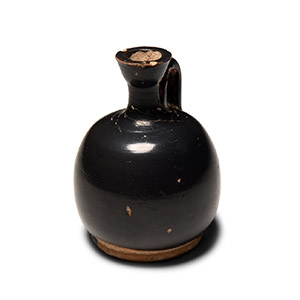
Greek Black-Glazed Lekythos
5th century B.C.Sold for (Inc. bp): £572
Squat-bodied with a slender neck, shaped neck and D-section handle. 47 grams, 66 mm
Acquired in Europe before 2001. European collection.
