
Loading, please wait...
LOT 1502
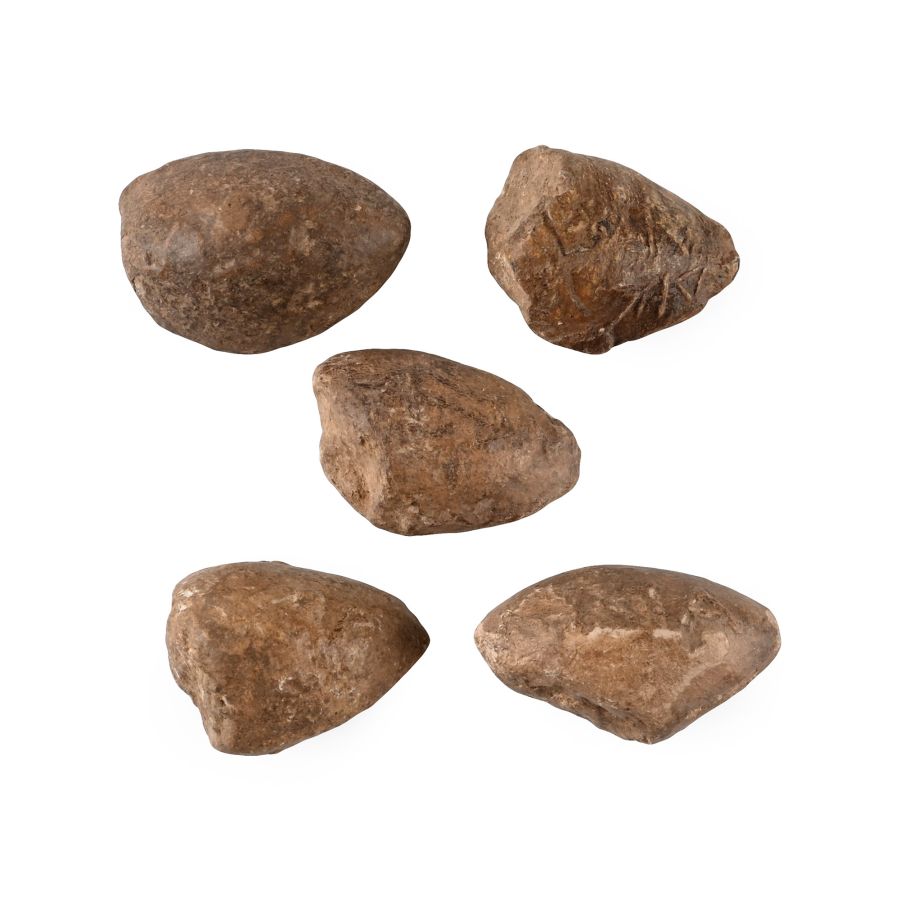
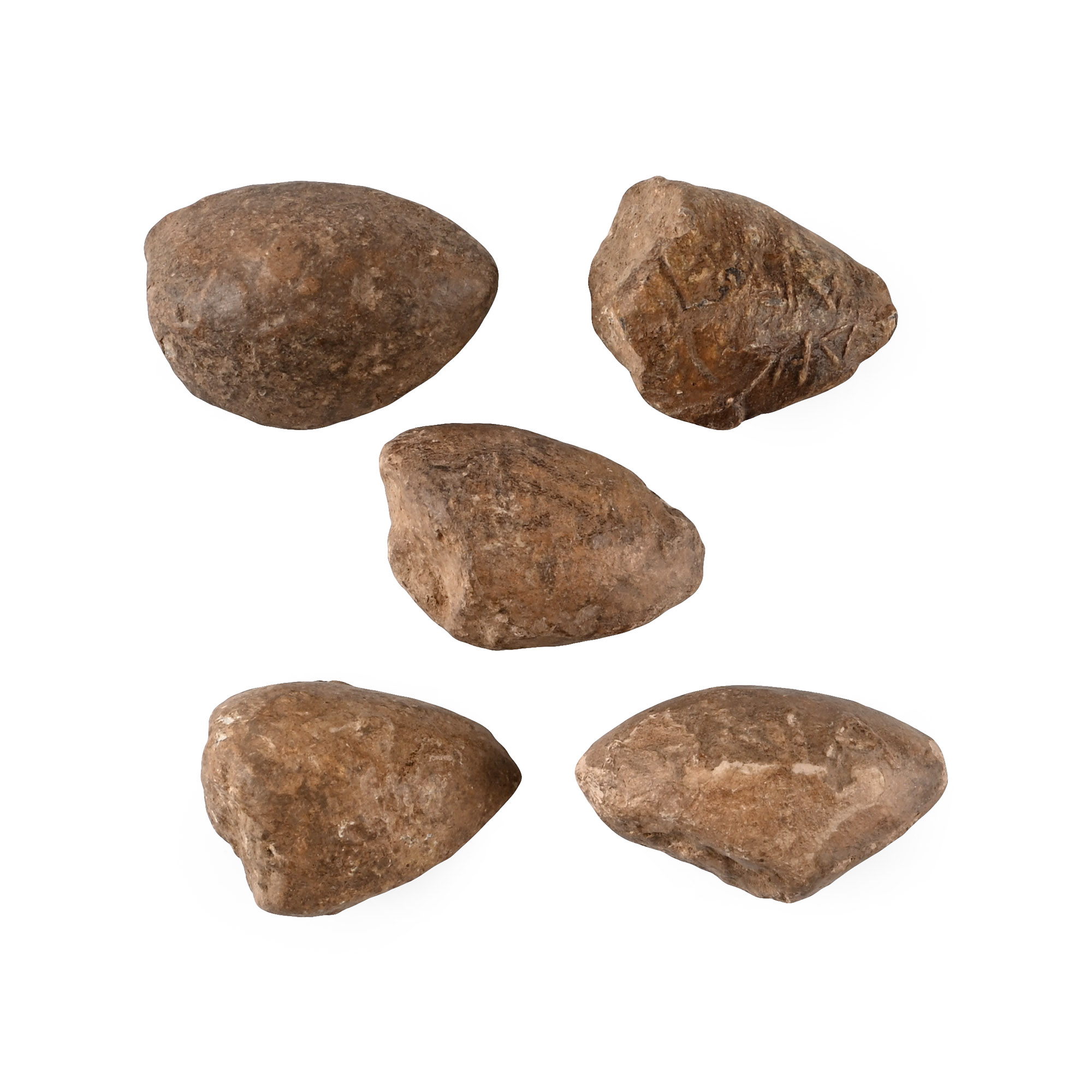
Greek Macedonian Lead Inscribed Impacted Slingshot Group
3RD-1ST CENTURY B.C.
1 - 1 1/8 in. (190 grams total, 24-29 mm).
Each biconical in form, some with reserved legends reading DEXAI 'take this', deformed by impact. [5, No Reserve]
ProvenanceEx German art market, 2000s.
Acquired from an EU collector living in London.
From the collection of a Surrey, UK, gentleman.
This lot is accompanied by an illustrated lot declaration signed by the Head of the Antiquities Department, Dr Raffaele D'Amato.
Cf. Schinco, G., Small, A.M., 'A previously unknown siege of Botromagno/Silvium: the evidence of slingshots from Gravina in Puglia (Provincia di Bari, Puglia)' in Papers of the British School at Rome, 2019, pp.1-52, fig.37, Volling type iib, for similar.
FootnotesThe leaden bullets, which were thrown from slings, were called in Greek Molivdainai (μολύβδαιναι), and in Latin glandes; the former indicating the material ‘lead’, the latter the shape ‘acorns’. These bullets, were cast in a mould and bore letters or devices, or both, on two sides or on only one. In form they were more like an almond than an acorn, but many are pointed at both ends.
CONDITIONTimeLine Auctions follows a vetting process to ensure the authenticity and legality of all items, reinforcing our commitment to integrity and responsible trading. Each antiquity, antique, and coin lot undergoes thorough examination by a vetting committee of at least ten external specialists, professional trade association members, scientists, and archaeologists: Our Vetting Process
AUCTIONS:
TimeLine is a leading auction house specialising in antiquities, ancient art, collectables, natural history, coins, medals, and books. Our auctions offer museums, collectors, historians, and enthusiasts the opportunity to acquire unique and historically significant pieces.
LOT 1502
Greek Macedonian Lead Inscribed Impacted Slingshot Group
Sold for (Inc. bp): £117
-
Bactrian Bronze Animal Axehead
13th-12th century B.C.Estimate: £1,800 - 2,400 (+bp*)
Opening Bid: £1,000
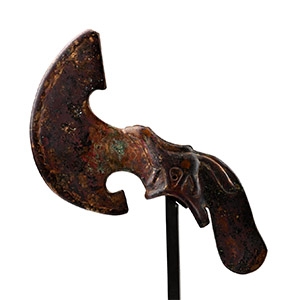
Featuring a low-relief depiction of a hunting dog on each side of the socket, lobed rear plate and broad, D-shaped blade with a raised, dentilled panel along the cutting edge; mounted on a custom-made stand. 780 grams total, 22 cm including stand
Private family collection, acquired in the 1970s. with a London gallery. with TimeLine Auctions, 24 February 2018, no.341. Private collection, London, UK. Accompanied by an academic report by Dr Raffaele D'Amato. This lot has been checked against the Interpol Database of stolen works of art and is accompanied by a search certificate number no.12841-240646. This lot has been cleared against the Art Loss Register database, and is accompanied by an illustrated lot declaration signed by the Head of the Antiquities Department, Dr Raffaele D'Amato.
Most of these axes are believed to have originated in Bactria, but some objects come from well documented contexts in Margiane (Gonur), Lut (Shahdad) and Kermanshah (Khinaman). According to Gernez they were made for ceremonial use. -
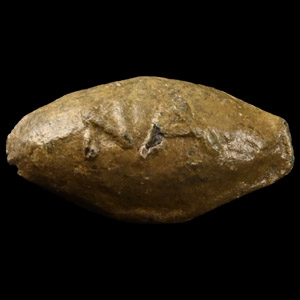
Greek Macedonian Lead Inscribed Slingshot
3rd-1st century B.C.Sold for (Inc. bp): £85
A biconical glans with an inscription 'MEP' to one side and 'NA' to the other. 27.5 grams, 28 mm
Ex German art market, 2000s. Acquired from an EU collector living in London. From the collection of a Surrey, UK, gentleman. This lot is accompanied by an illustrated lot declaration signed by the Head of the Antiquities Department, Dr Raffaele D'Amato.
The leaden bullets, which were thrown from slings, were called in Greek Molivdainai (μολύβδαιναι), and in Latin glandes- the former indicating the material ‘lead’, the latter the shape ‘acorns’. These bullets were cast in a mould, and bore letters or devices or both, on two sides or on only one. In form they were more like an almond than an acorn, but many are pointed at both ends; in size, they are generally about one inch and a half maximum length, and under one inch in maximum width. Bullets from Mecyberna possess the abbreviated inscription MER (obverse) and NA (reverse), which some scholar translated as Mecyberna. The presence of the Mecyberna inscription is expected, since the Polis of Mecyberna produced clay moulds, which suggests local production. Inscribed bullets with the name of a city may also denote the place of manufacture -
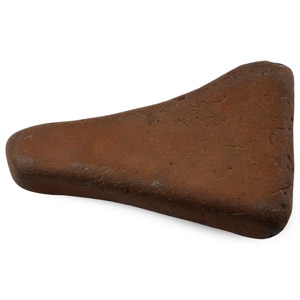
Viking Whetstone Blade Sharpener
8th-12th century A.D.Sold for (Inc. bp): £91
Triangular type with two flat faces, usage wear to edge. 364 grams, 11.4 cm
Found East Anglia, UK. This lot is accompanied by an illustrated lot declaration signed by the Head of the Antiquities Department, Dr Raffaele D'Amato.
