
Loading, please wait...
LOT 0538
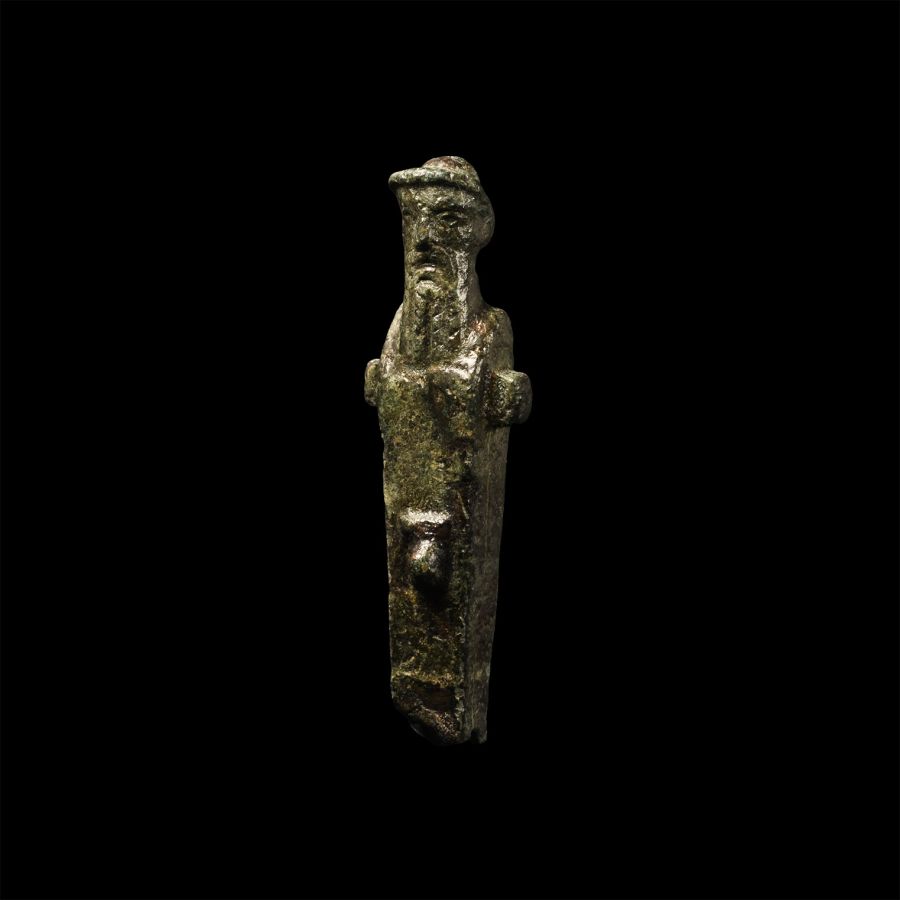
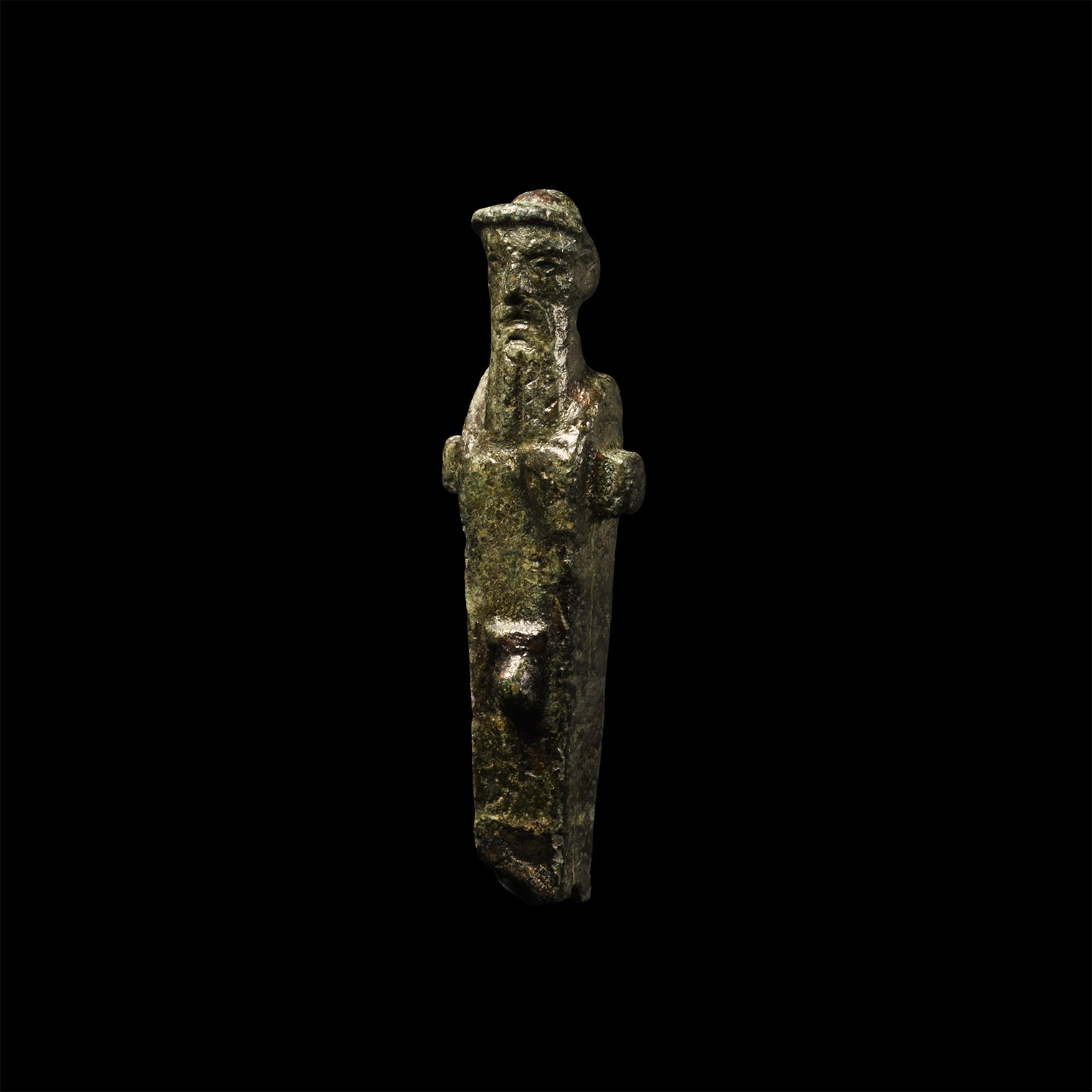
Greek Lock Plate Herm Figure
CIRCA 3RD CENTURY B.C.
2 1/8 in. (19.1 grams, 54 mm).
A lock plate formed as a herm figure with tapering square-section body, stylised head and genitals, stub arms. [No Reserve]
ProvenanceGerman art market, 1990s.
Mr A.H., a North American collector living in the UK.
TimeLine Auctions follows a vetting process to ensure the authenticity and legality of all items, reinforcing our commitment to integrity and responsible trading. Each antiquity, antique, and coin lot undergoes thorough examination by a vetting committee of at least ten external specialists, professional trade association members, scientists, and archaeologists: Our Vetting Process
AUCTIONS:
TimeLine is a leading auction house specialising in antiquities, ancient art, collectables, natural history, coins, medals, and books. Our auctions offer museums, collectors, historians, and enthusiasts the opportunity to acquire unique and historically significant pieces.
-
Greek Attic Lekythos
Circa 5th century B.C.Sold for (Inc. bp): £381
A ceramic lekythos oil flask composed of a piriform body, broad shoulder, narrow cylindrical neck, D-section handle and splayed foot, black glaze to body with band of polychrome radiating lines around the shoulder, geometric motifs below. 65 grams, 12.7 cm high
Fine condition, neck repaired.
Acquired 1970-1980s. From the property of a German collector. -
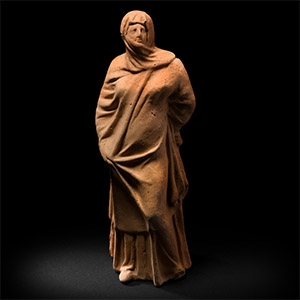
Hellenistic Terracotta Figure of a Veiled Woman
3rd-2nd century B.C.Estimate: £1,500 - 2,000 (‡+bp*)
Opening Bid: £750
A hollow-formed terracotta figure of Tanagra type depicting a standing female wearing a floor-length robe, veil and mantle; the right arm holding the mantle, one foot protruding; a circular opening to the reverse. 384 grams, 22 cm high
Acquired early 1990s. Ex private American collection; thence by descent. Private Swiss collection since 1998. -
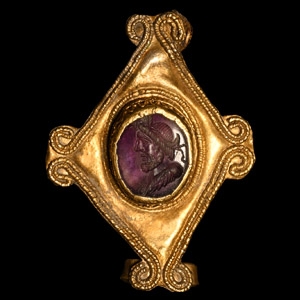
Greek Gold Brooch with Portrait Gemstone
3rd-2nd century B.C. and laterSold for (Inc. bp): £910
A lozengiform gold brooch with bifurcated corners picked out in filigree, catchplate to reverse; central oval cell with filigree borders, set with a intaglio gemstone displaying a male bust facing left. 9.55 grams, 41 mm
Acquired in the 1950s-1990s. Ex Mansees collection. Ex private Chicago, USA, collection, 1995. English private collection.
