
Loading, please wait...
LOT 0834
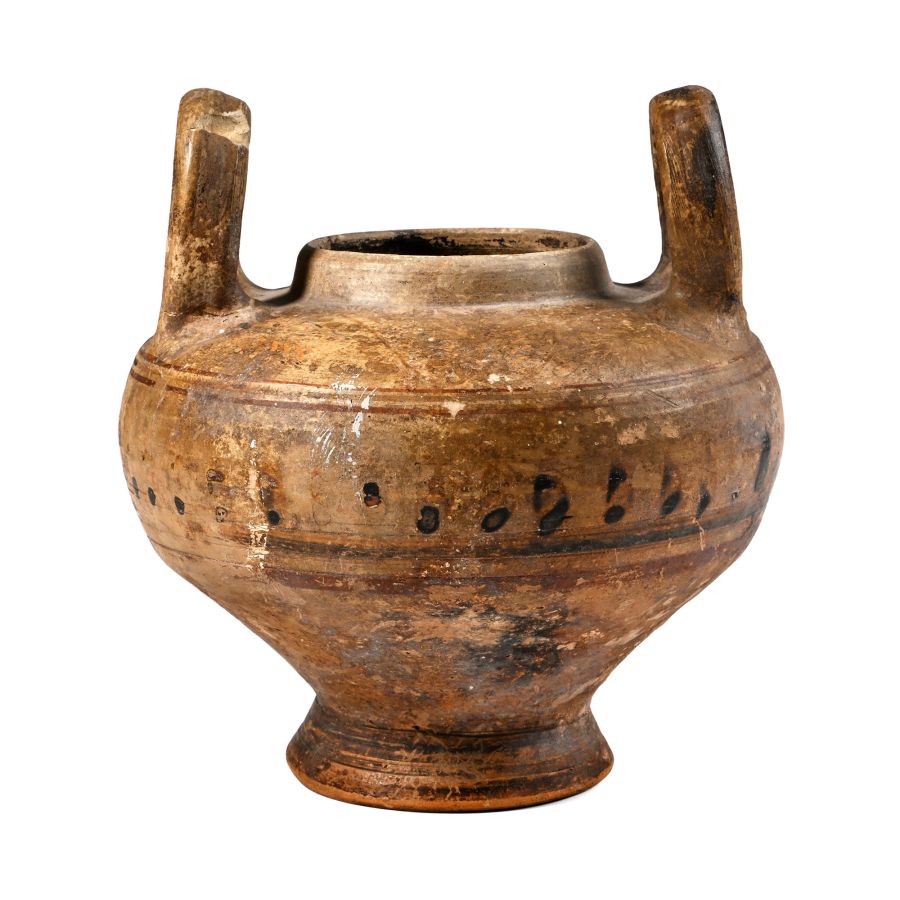
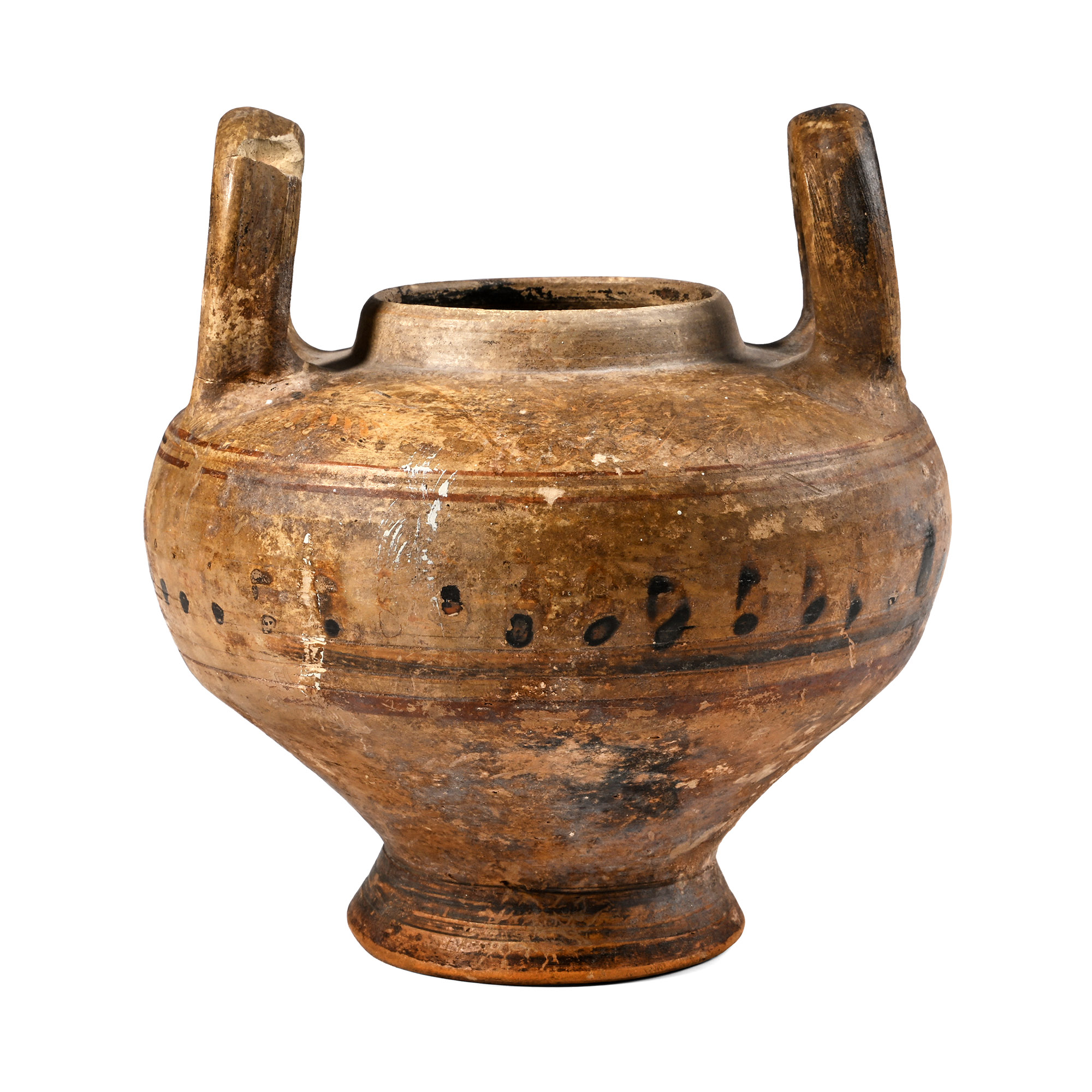
Greek Lebes Gamikos Vessel
CORINTHIAN, 4TH CENTURY B.C.
6 1/4 in. (530 grams, 16 cm high).
Comprising a conical body with flared foot, broad shoulder and low raised rim to the mouth; two lateral loop handles to the shoulder; circumferential red and black painted bands to the equator enclosing a band of vertical black strokes; repaired. [No Reserve]
ProvenanceAcquired by the vendor's father in London, circa 1960.
Acquired Cheffins Auctions, UK.
TimeLine Auctions follows a vetting process to ensure the authenticity and legality of all items, reinforcing our commitment to integrity and responsible trading. Each antiquity, antique, and coin lot undergoes thorough examination by a vetting committee of at least ten external specialists, professional trade association members, scientists, and archaeologists: Our Vetting Process
AUCTIONS:
TimeLine is a leading auction house specialising in antiquities, ancient art, collectables, natural history, coins, medals, and books. Our auctions offer museums, collectors, historians, and enthusiasts the opportunity to acquire unique and historically significant pieces.
LOT 0834
Greek Lebes Gamikos Vessel
Estimate £100 - 140€120 - 160 (for guidance only)$140 - 190 (for guidance only)
Opening Bid
£5 (EUR 6; USD 7) +BP*
-
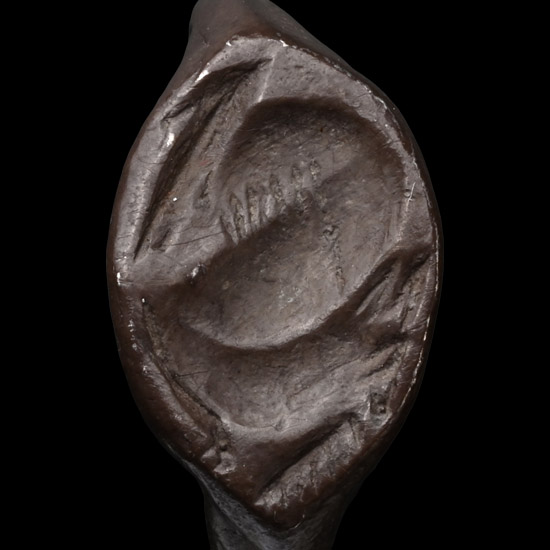
Greek Silver Ring with a Seated Ibex
5th–4th century B.C.Estimate: £150 - 200 (+bp*)
Opening Bid: £75
Comprising a keeled hoop and an elliptical bezel engraved in intaglio with a seated ibex, its head turned back across its body. 3.72 grams, 20.59 mm overall, 16.43 mm internal diameter (approximate size British L 1/2, USA 6, Europe 11.87, Japan 11)
Abelita family collection, acquired during 1980–2015. -
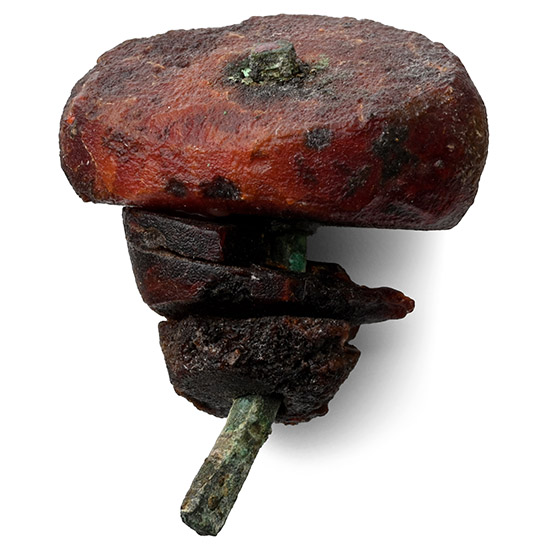
Etruscan Bronze Bracelet Fragment with Three Amber Beads
Etruscan or Italic, 7th-5th century B.C.Estimate: £70 - 90 (+bp*)
Opening Bid: £5
Comprising three irregular dark red amber beads on a square-section rod. 15.65 grams, 48 mm
Formerly in the Kuizenga collection, The Netherlands; the collection formed from the 1970s onwards. Acquired from Helios Gallery Antiquities, Wiltshire, UK. Property of a North Lincolnshire, UK, gentleman. Accompanied by a copy of the Helios Gallery Antiquities certificate of authenticity with stock no.H3955x6. -
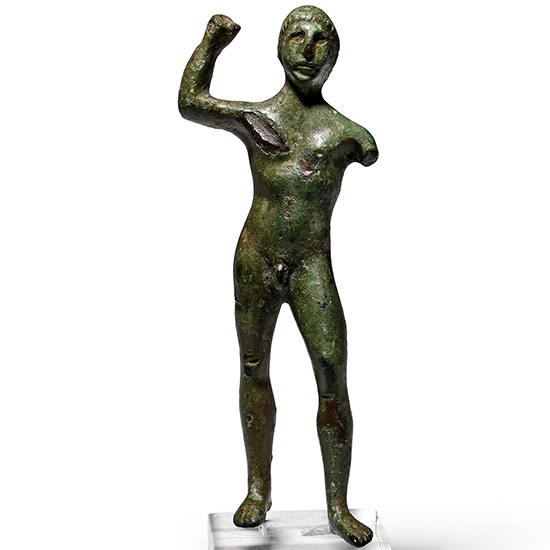
Sabellian Bronze Statuette of Attacking Herakles
8th-4th century B.C.Estimate: £400 - 600 (‡+bp*)
Opening Bid: £205
The nude hero depicted with a slender yet muscular body, the right arm angled and raised, the pierced hand probably once held a club, the left leg thrust forward energetically, lowering the hip line and emphasising the dynamic movement of the composition, the navel indicated by an engraved circular line, the knees marked by vertical incisions; the oval face characterised by eyes represented by triangular depressions, a narrow nose, a wide mouth whose slightly irregularly shaped lips separated by an incision, and a pointed chin; the short, cap-like hair detailed with fine incisions. 146 grams total, 12.6 cm high including stand
Ex Erika (1934-2025) and Jakob (1927-2025) Binkert, Binningen, Switzerland; inherited from Jakob's father, August Binkert-Textor (1896-1979), between 1940-1970, Basel. with Jean-David Cahn AG, Basel, Auction 2, 26 June 2000, no.239B; thence by descent.
Votive bronze from a Sabellian workshop in the typical local style. The Sabelli lived in the Samnium region (southern Apennines), where the cult of Heracles, as in Etruria, was widespread.
