
Loading, please wait...
LOT 1866
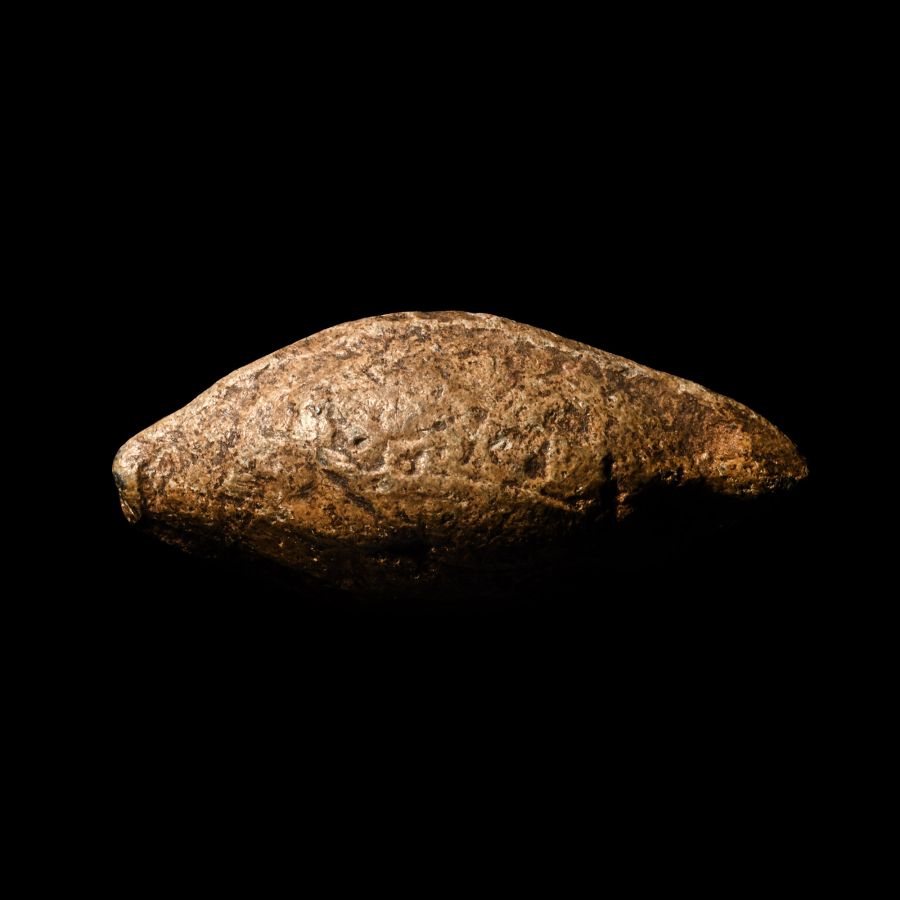
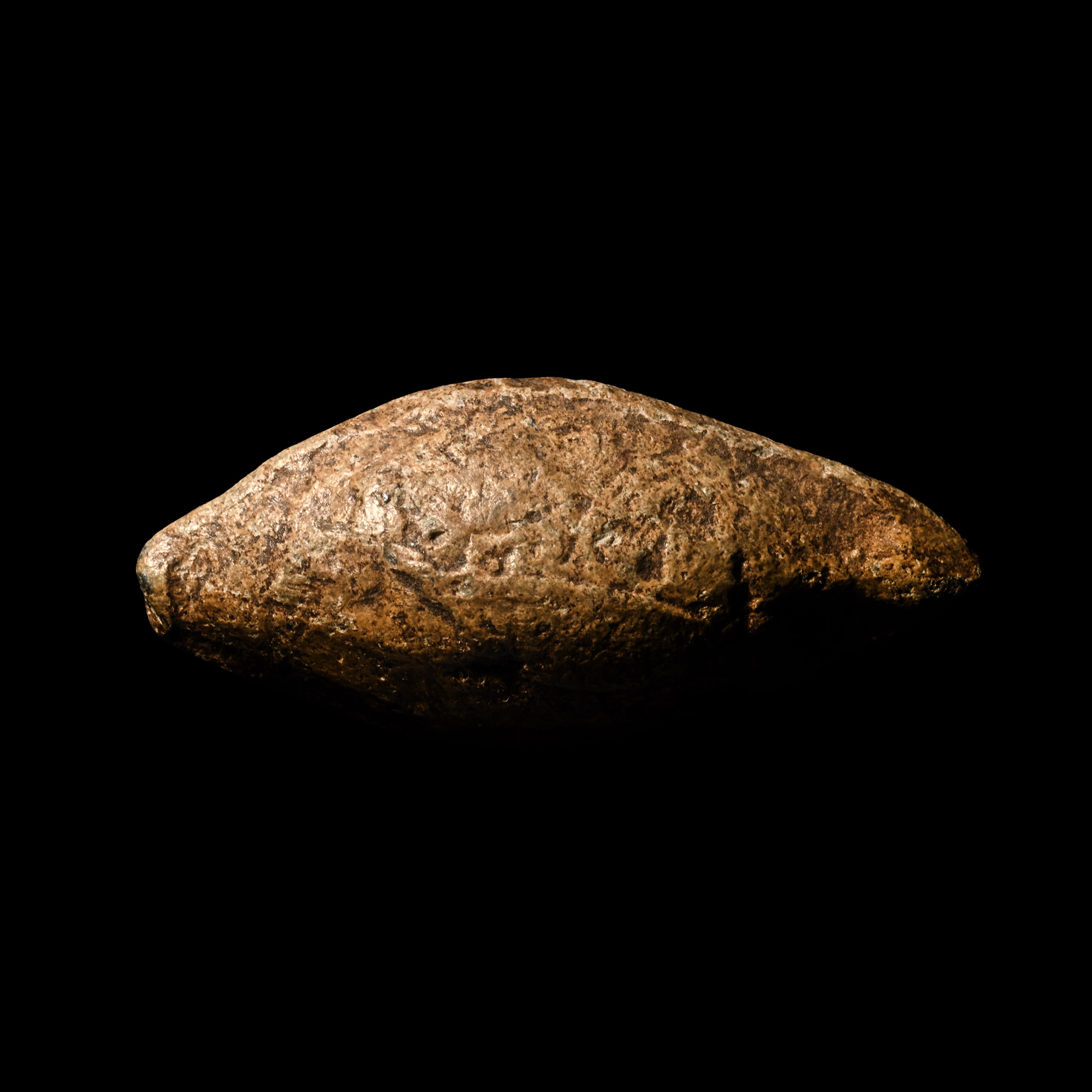
Greek Lead Slingshot with X
4TH-3RD CENTURY B.C.
1 1/2 in. (30.4 grams, 37 mm).
Biconical in profile with casting seam and Greek legend '...X...' to one face. [No Reserve]
ProvenanceEx German art market, 2000s.
Acquired from an EU collector living in London.
From the collection of a Surrey, UK, gentleman.
Cf. Schinco, G., Small, A.M., 'A previously unknown siege of Botromagno/Silvium: the evidence of slingshots from Gravina in Puglia (Provincia di Bari, Puglia)' in Papers of the British School at Rome, 2019, pp.1-52, fig.6, 37 (type Volling IIb).
FootnotesGreek bullets were cast in two-part moulds. Clay and stone moulds survive; metal moulds are much rarer in the archaeological records. The mould halves carry the negative of the bullet’s shape, often in rows, so that multiple bullets can be made at once. A narrow gate at the tip of each negative lets molten lead run into the cavity. After cooling, the caster opens the mould and breaks the sprue that links the bullets.
CONDITIONTimeLine Auctions follows a vetting process to ensure the authenticity and legality of all items, reinforcing our commitment to integrity and responsible trading. Each antiquity, antique, and coin lot undergoes thorough examination by a vetting committee of at least ten external specialists, professional trade association members, scientists, and archaeologists: Our Vetting Process
AUCTIONS:
TimeLine is a leading auction house specialising in antiquities, ancient art, collectables, natural history, coins, medals, and books. Our auctions offer museums, collectors, historians, and enthusiasts the opportunity to acquire unique and historically significant pieces.
-
.jpg)
Viking Iron Sword Pommel and Lower Guard
10th-11th century A.D.Sold for (Inc. bp): £702
Comprising: lower guard, lentoid in plan with recessed underside, slot to accept the tang; pommel with integral upper guard, Petersen's Type X with semicircular profile and raised upper section, slot for tang in the underside. 480 grams total, 77-92 mm
London, UK, collection, formed in the late 1990s. -
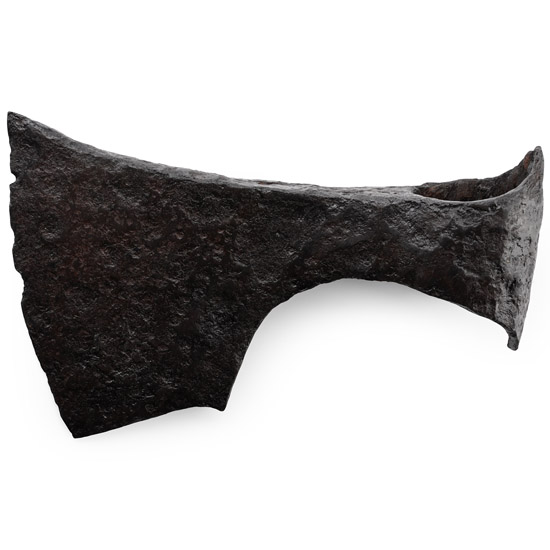
Viking Iron Bearded Axehead
9th-11th century A.D.Sold for (Inc. bp): £247
With a slender blade, chin to the lower edge with a spur to the rear, round socket with rectangular flanges; traces of the original wooden shaft inside the socket. 600 grams, 16.5 cm
From the private collection of a London gentleman, from his grandfather's collection formed before the early 1970s. -
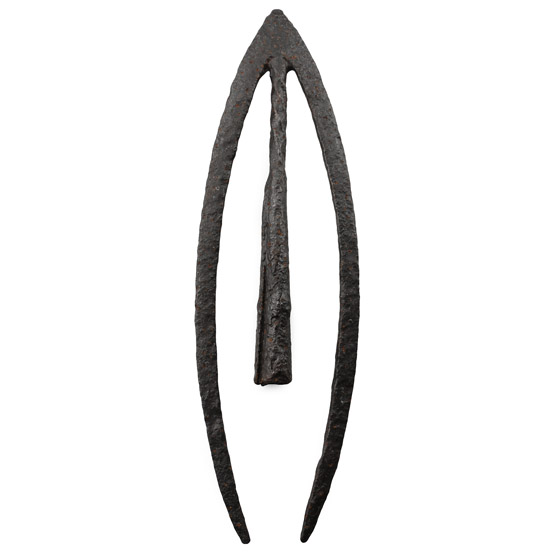
Very Large Medieval Socketted Iron Swallow-Tailed Arrowhead
Circa 13th-15th century A.D.Sold for (Inc. bp): £338
With elongated swept barbs flanking a butted socket. 29.3 grams, 14.5 cm
Acquired from a USA private collector in the 1990s. Ex Buckinghamshire, UK, collection.
