
Loading, please wait...
LOT 1802
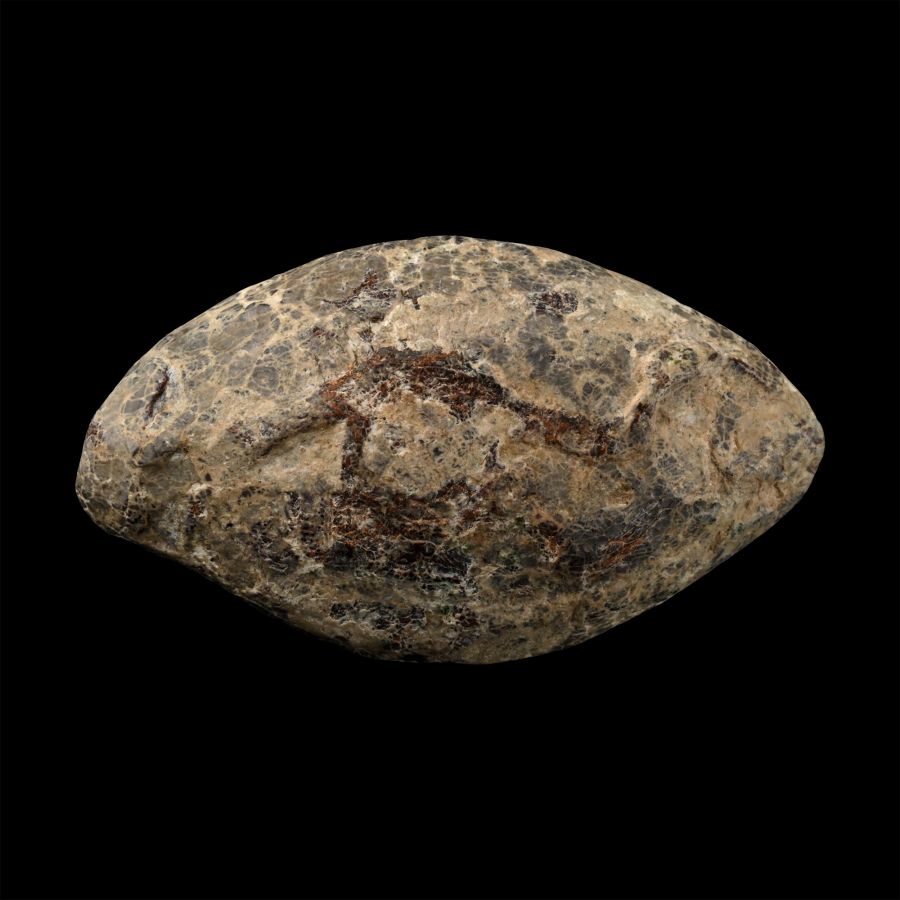
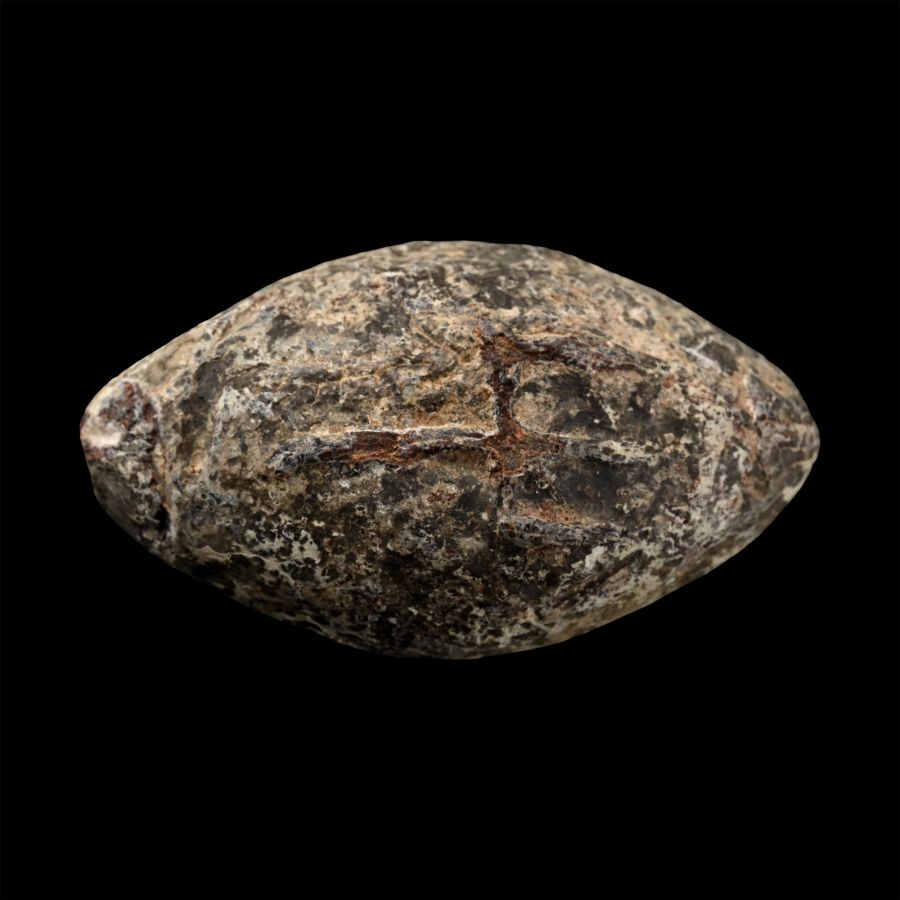
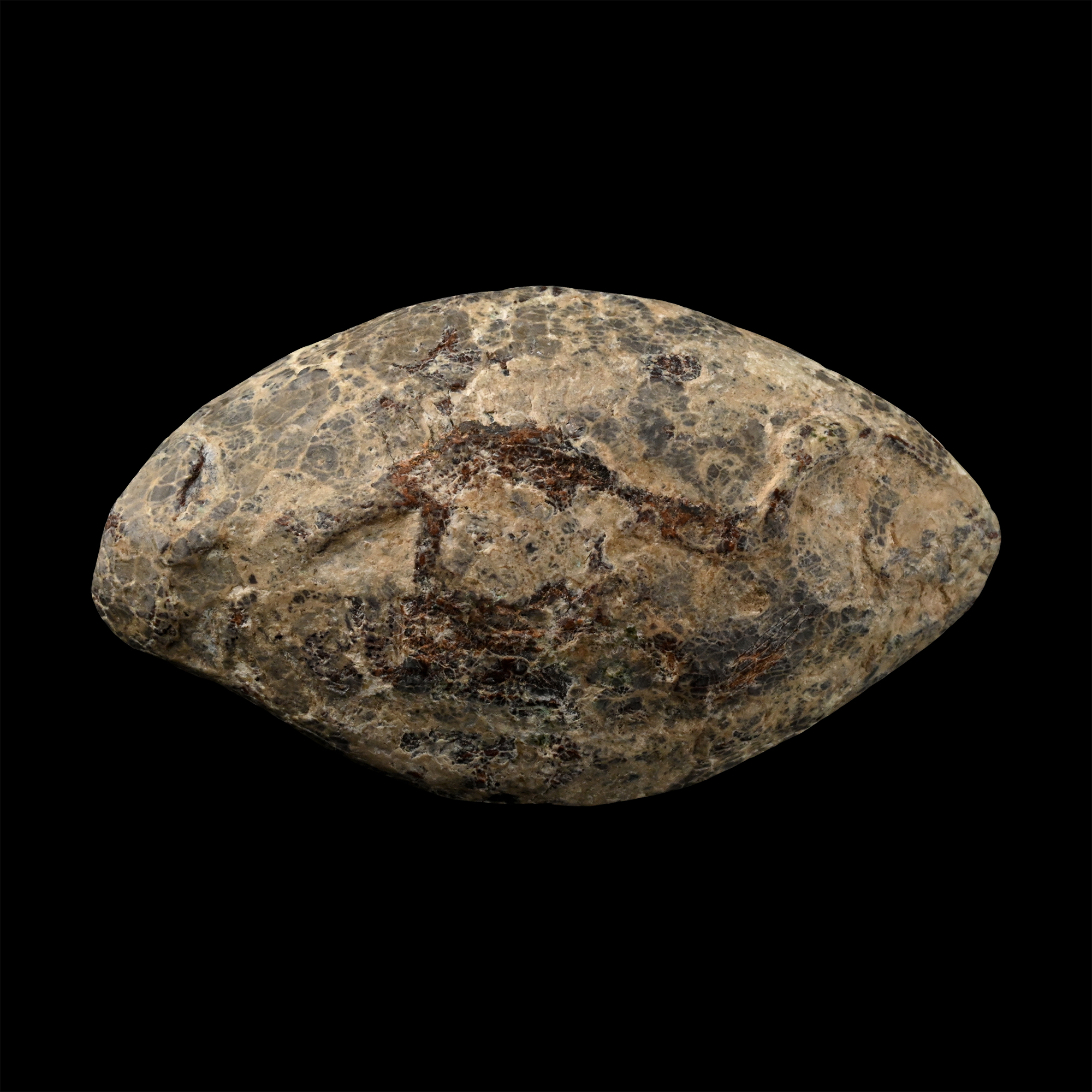
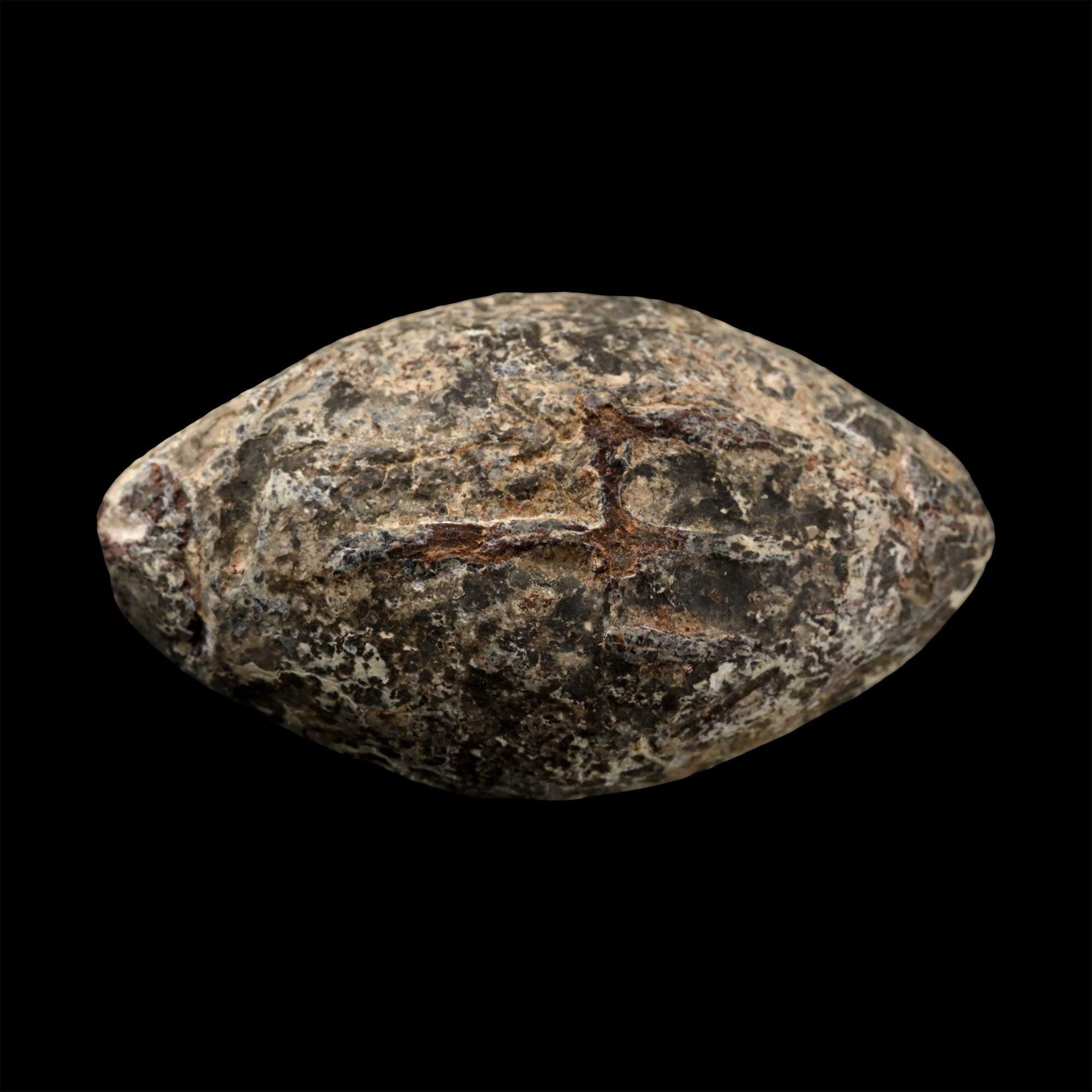
Greek Lead Slingshot with Trident of Poseidon
3RD-1ST CENTURY B.C.
1 1/4 in. (33.4 grams, 31 mm).
Biconical in profile with casting seam and low relief trident motif to one face.
ProvenanceFrom the collection of a gentleman, acquired on the London art market in the 1990s.
LiteratureCf. Schinco, G., Small, A.M., 'A previously unknown siege of Botromagno/Silvium: the evidence of slingshots from Gravina in Puglia (Provincia di Bari, Puglia)' in Papers of the British School at Rome, 2019, pp.1-52, fig.6, 37 (type Volling IIb).
CONDITIONTimeLine Auctions follows a vetting process to ensure the authenticity and legality of all items, reinforcing our commitment to integrity and responsible trading. Each antiquity, antique, and coin lot undergoes thorough examination by a vetting committee of at least ten external specialists, professional trade association members, scientists, and archaeologists: Our Vetting Process
AUCTIONS:
TimeLine is a leading auction house specialising in antiquities, ancient art, collectables, natural history, coins, medals, and books. Our auctions offer museums, collectors, historians, and enthusiasts the opportunity to acquire unique and historically significant pieces.
LOT 1802
Greek Lead Slingshot with Trident of Poseidon
Estimate £100 - 140€120 - 160 (for guidance only)$140 - 190 (for guidance only)
-
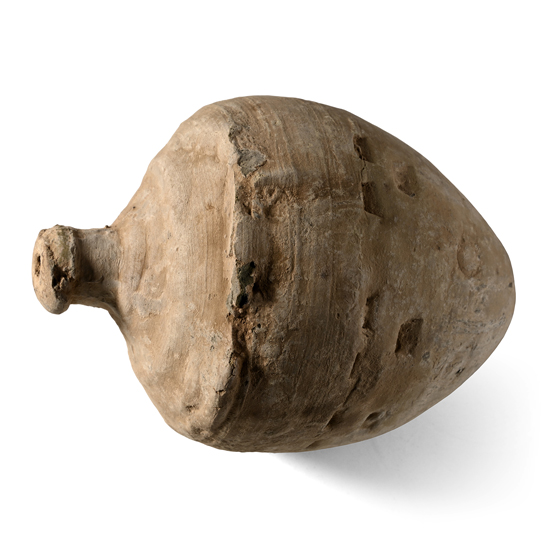
Byzantine 'Greek Fire' Ceramic Fire Bomb or Hand Grenade
9th-11th century A.D.Sold for (Inc. bp): £65
Large ovoid body with impressed decoration and raised shoulder on one side; intended to be filled with explosive liquid and a wick, and used as a hand grenade. 970 grams, 16 cm
From an important specialist collection, London, UK, 1990s. Accompanied by an academic paper by military specialist Dr Raffaele D'Amato, dated 15 July 2019 and titled 'Eastern Roman Empire - Greek Fire Bomb or Hand Grenade (μεσαίον kακάβιον) 9th-11th century AD'.
Apart from the use of siphons or manual flame-throwers called cheirosiphona, special corps of Roman soldiers employed terracotta grenades, in the form of small jars, abundantly evidenced in archaeological excavations. They were called μεσαία kακαβιά or κυτροκακάβια where the former had a bulbous shape and the latter a more cylindrical form. -
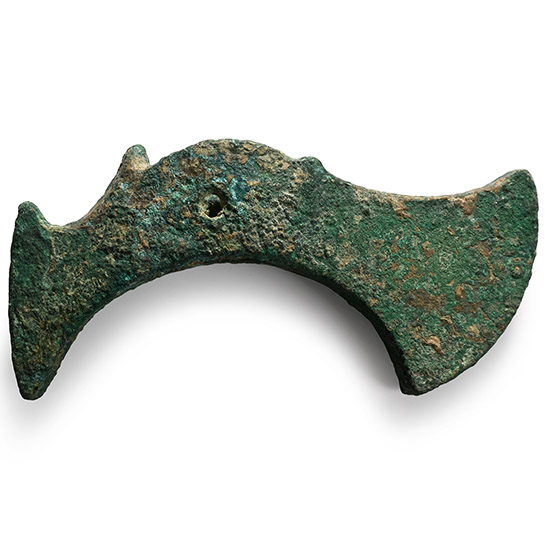
Bactrian Bronze Axehead
3rd-2nd millennium B.C.Estimate: £300 - 400 (‡+bp*)
Opening Bid: £150
With curved flaring cutting edge, characteristic curving shape and narrow socket, blade end squaring off, shaft hole pierced on both sides. 227 grams, 10.6 cm
Acquired in the mid 1980s-1990s. Private collection, Switzerland, thence by descent. Private collection, since the late 1990s.
These collared axes have the specific feature of being equipped with variously shaped rear extensions. The provenance of this typology is clearer than others: these axes came from Margiana and southern Bactria. Gonur Depe and Susa yielded a rather atypical and probably imported example. P. Amiet suggests that they were an adoption of Elamite material, from conceptual and institutional models. They would have developed from the end of the 3rd and the beginning of the 2nd millennium B.C. -
.jpg)
Urartian Bronze Helmet with Embossed Decoration
9th-7th century B.C.Sold for (Inc. bp): £6,500
A Caucasian or Urartian helmet of domed profile, hammered from a single sheet of metal; radiating rows of small repoussé bosses with interstitial rows connecting larger examples; shallow recess at the forward edge; old accession label to inner face 'AG334'; later pseudo-inscription; some restoration. 1.5 kg total, 41 cm including stand
Ex Axel Guttmann Collection of Ancient Arms and Armour, Germany [1944-2001], AG 334, 1990. with Hermann Historica, Munich, Germany, 2008. Private collection, New York, USA. Accompanied by an academic report by Dr Raffaele D’Amato. This lot has been checked against the Interpol Database of stolen works of art and is accompanied by search certificate number no.13262-254403.
The Urartian craftsmen were especially famous for their metalworking skills. However, the shape of this helmet differs considerably from the usual pointed Urartian examples, and shows a strong influence from the Scythian and Moeotic military headgear, which is not surprising if we consider that Urartu had been at war with the Scythian tribes of Caucasus since the 7th century B.C. The remainder of the helmet is its bowl, embossed and decorated, and an unusual recess on the front part. The helmet was used with a padded cap, which probably formed an integral part of the same headgear.
