
Loading, please wait...
LOT 1484
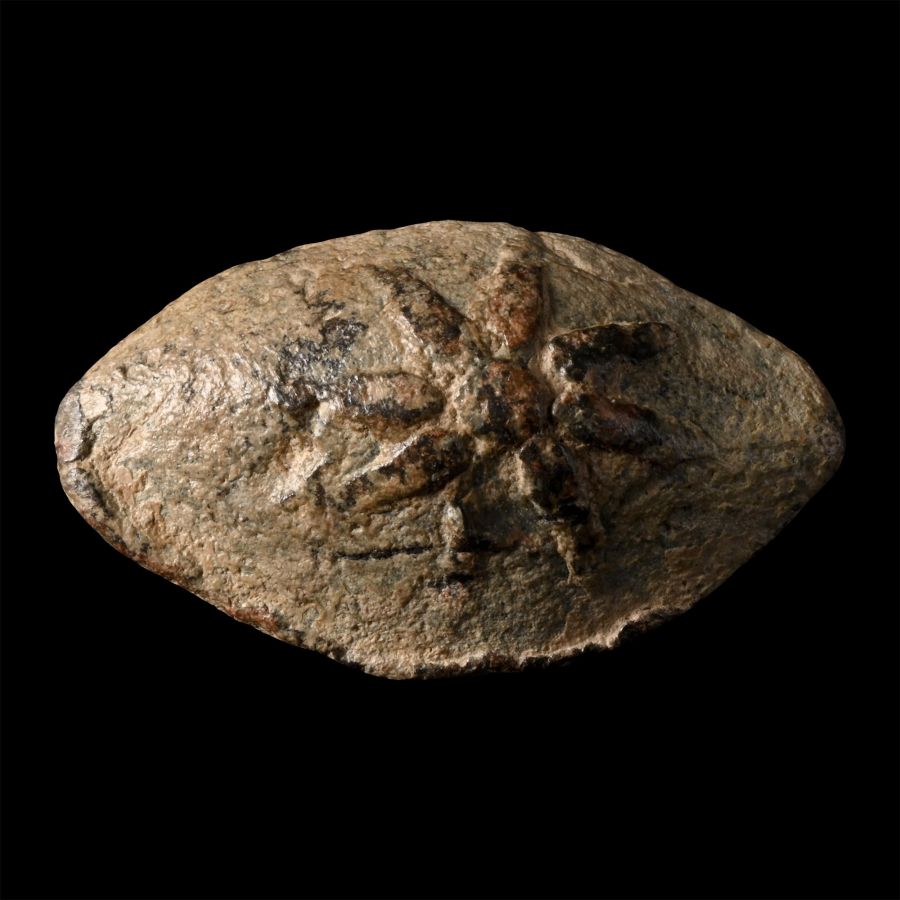
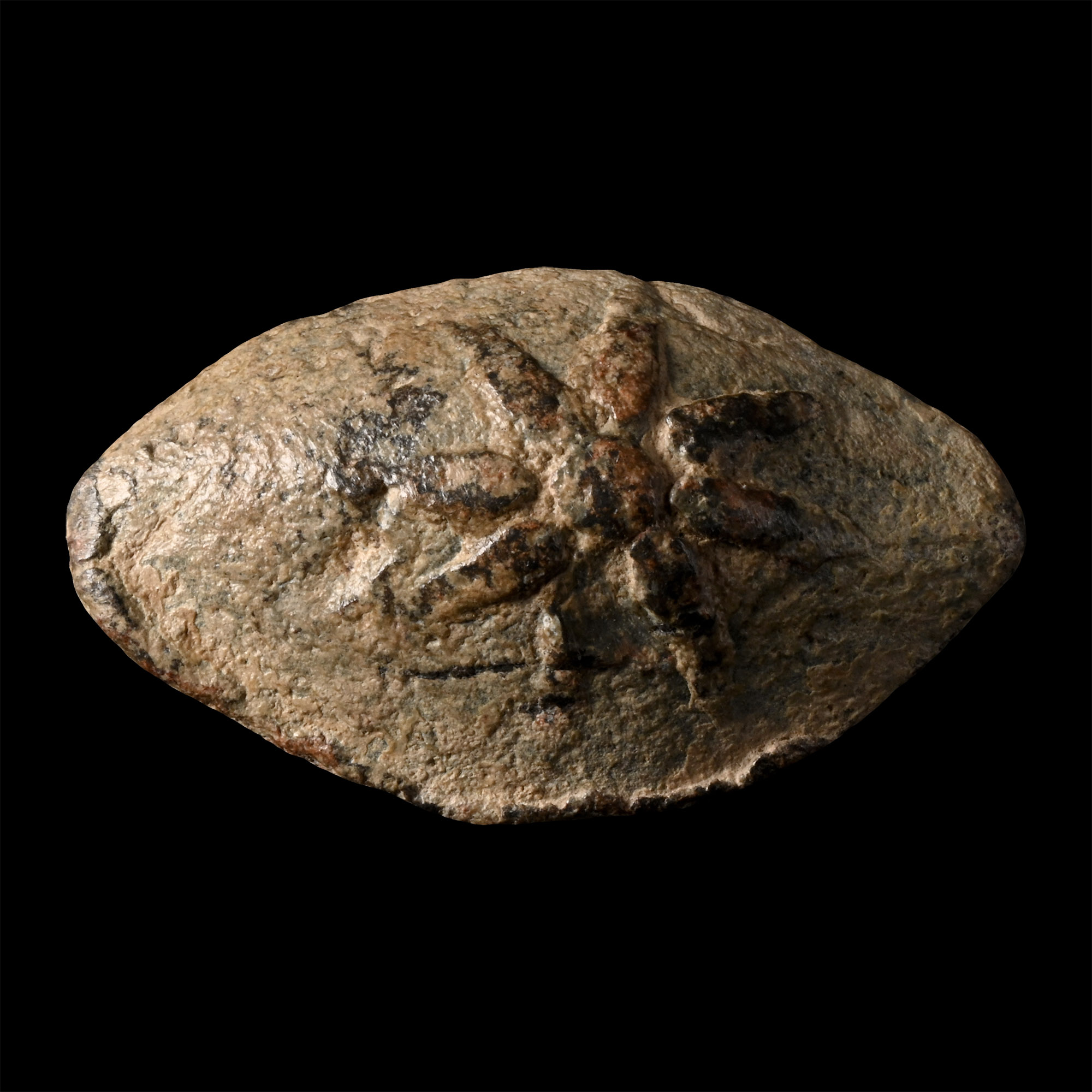
Greek Lead Slingshot with Macedonian Star
3RD-1ST CENTURY B.C.
1 1/8 in. (27.2 grams, 30 mm).
Biconical in profile with a casting seam and a rayed solar symbol, the so-called Argead Star, on one side. [No Reserve]
ProvenanceEx German art market, 2000s.
Acquired from an EU collector living in London.
From the collection of a Surrey, UK, gentleman.
Cf. Manov, M., Torbov, N. ‘Inscribed Lead Sling Bullets with the name of Alexander the Great and with other Names and Symbols found in Thrace’ in Archaeologia Bulgarica XX, 2 (2016), pp.29-43, fig.14, for a bullet with a similar symbol.
FootnotesThe rayed solar symbol (Argead Star, Vergina Star) is interpreted as the historical royal symbol of the ancient Macedonian Dynasty of the Argeads, with its most famous member being Alexander the Great.
CONDITIONTimeLine Auctions follows a vetting process to ensure the authenticity and legality of all items, reinforcing our commitment to integrity and responsible trading. Each antiquity, antique, and coin lot undergoes thorough examination by a vetting committee of at least ten external specialists, professional trade association members, scientists, and archaeologists: Our Vetting Process
AUCTIONS:
TimeLine is a leading auction house specialising in antiquities, ancient art, collectables, natural history, coins, medals, and books. Our auctions offer museums, collectors, historians, and enthusiasts the opportunity to acquire unique and historically significant pieces.
-
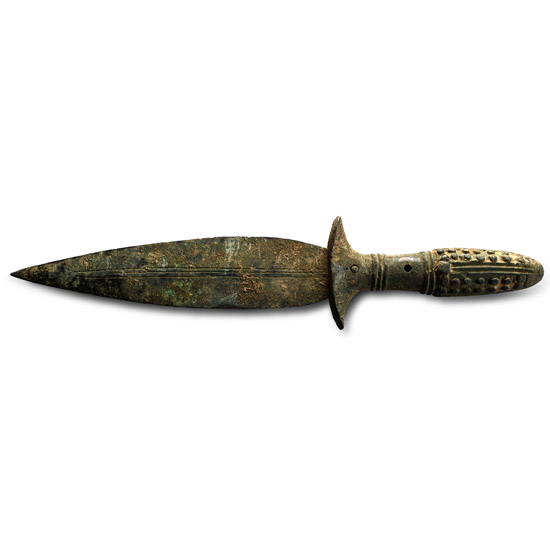
Elamite Bronze Dagger with Decorated Hilt
2nd millennium B.C.Sold for (Inc. bp): £1,950
Leaf-shaped blade with a separately cast hilt; blade tapering to a point, incised with three lines of incised linear decoration; hilt with flared guard, pierced with a pin and with a raised geometric pattern. 165 grams, 24.5 cm
Acquired on the UK art market, 1990s. Private collection, New York, USA. -
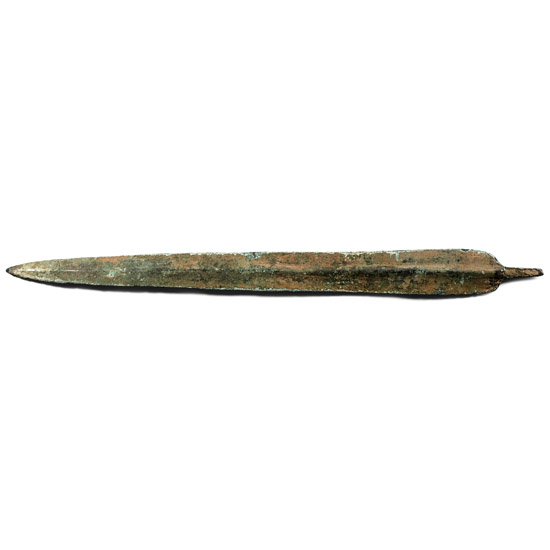
Western Asiatic Bronze Sword Blade
1st millennium B.C.Sold for (Inc. bp): £156
Slender double-edged blade with raised midrib and short tang. 224 grams, 42.2 cm
From a UK collection formed in the 1980s. Property of an Essex, UK, gentleman. -
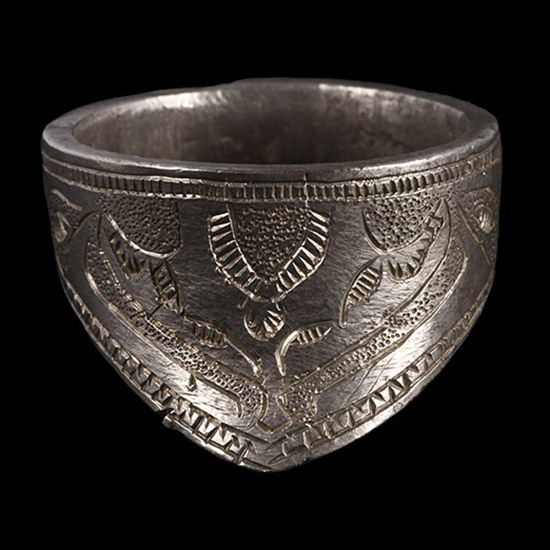
Large Byzantine Silver Archer's Ring
14th-15th century A.D.Sold for (Inc. bp): £1,430
Comprising a hoop with reserved triangular ornament on the edges and triangular plaque with foliage motifs, raised central panel with frond motif. 22.61 grams, 34.77 mm overall, 25.16 mm internal diameter
Acquired in the 1990s. Ex Cambridgeshire, UK, collection.
Archer rings in Late Byzantium and the medieval Balkans were connected with the employment of the powerful composite bow, but very often, in the 14th century they served as insignia of rank for aristocratic noblemen. Archaeological findings of archers’ rings originate mainly from fortified towns, including mining centres. Many were made in bone, simple in design and undecorated. In contrast, the ones made in bronze and silver were usually decorated in rather uniform style, consisting of floral motifs on the head, mostly tulip and foliage, and linear motifs around the edges. This decoration combined Turkish, Central European and Eastern Roman traditional patterns.
