
Loading, please wait...
LOT 1851
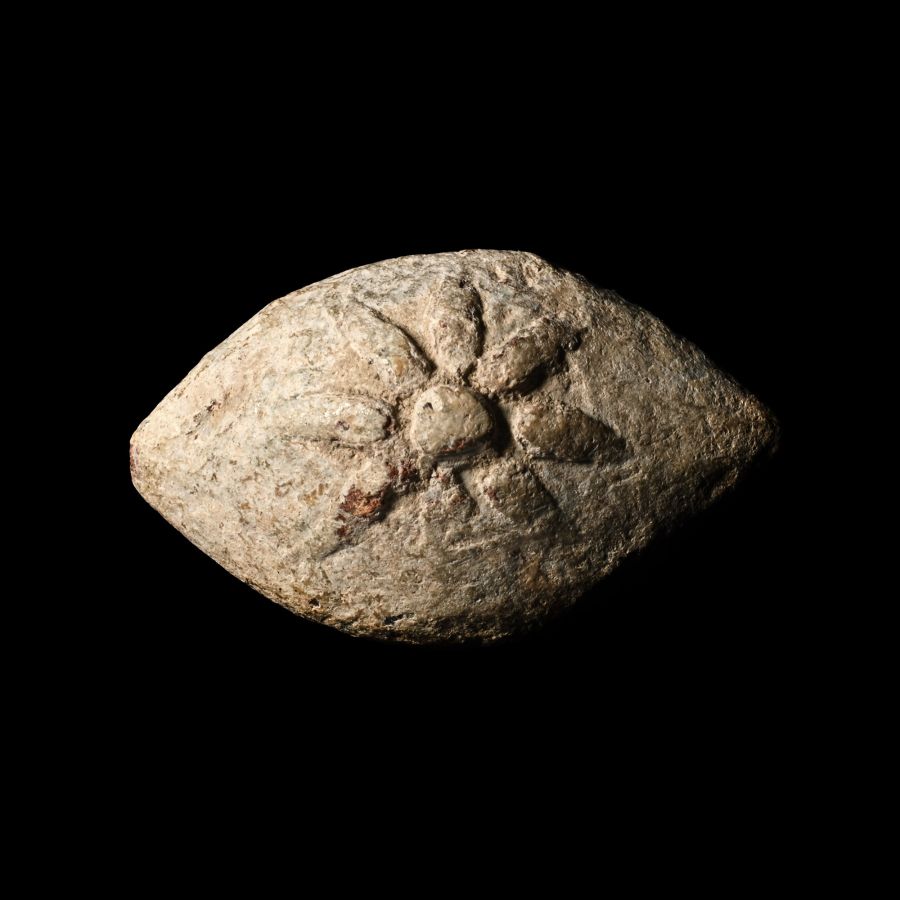
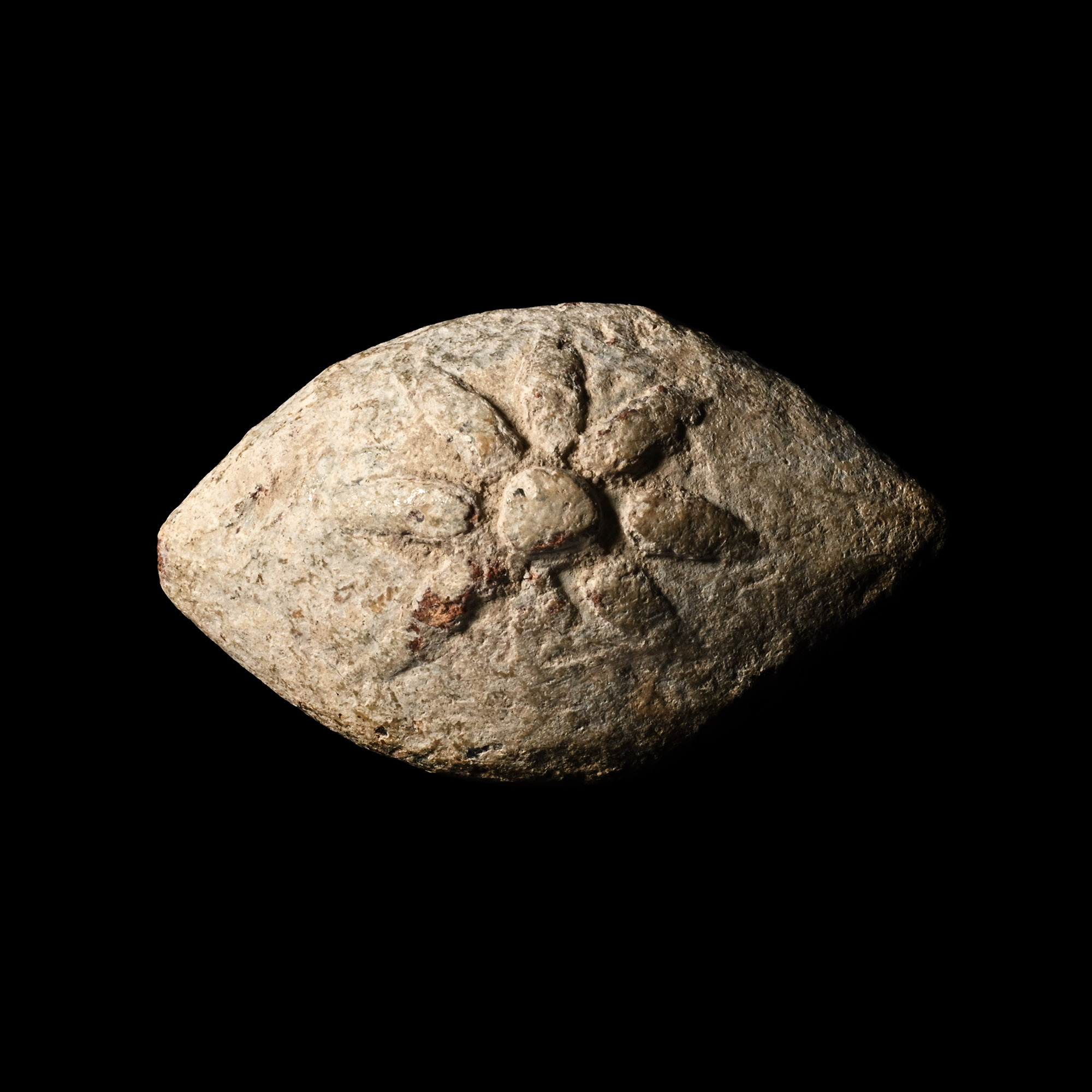
Greek Lead Slingshot with Macedonian Star
4TH-3RD CENTURY B.C.
1 1/8 in. (27.8 grams, 28 mm).
Biconical in profile with casting seam and the Macedonian Star on one side.
ProvenanceEx German art market, 2000s.
Acquired from an EU collector living in London.
From the collection of a Surrey, UK, gentleman.
Cf. Manov, M., Torbov, N. ‘Inscribed Lead Sling Bullets with the name of Alexander the Great and with other Names and Symbols found in Thrace’ in Archaeologia Bulgarica XX, 2 (2016), pp.29-43, fig.14, for a bullet with a similar symbol.
FootnotesIn Greek warfare, slingers appear as psiloi, lightly equipped troops who skirmished ahead of a phalanx or alongside peltasts. Some city-states likely trained their own slingers; others were specialists. Rhodian slingers became famous in the 4th century B.C. because the islanders had a tradition of practice. In the Peloponnese, in mainland Greece, and along the Aegean coast, slingers fought in both field operations and sieges. The practice survived into the Roman period, during which specialist mercenaries, like the Rhodians or the Balearic slingers, were still in use.
CONDITIONTimeLine Auctions follows a vetting process to ensure the authenticity and legality of all items, reinforcing our commitment to integrity and responsible trading. Each antiquity, antique, and coin lot undergoes thorough examination by a vetting committee of at least ten external specialists, professional trade association members, scientists, and archaeologists: Our Vetting Process
AUCTIONS:
TimeLine is a leading auction house specialising in antiquities, ancient art, collectables, natural history, coins, medals, and books. Our auctions offer museums, collectors, historians, and enthusiasts the opportunity to acquire unique and historically significant pieces.
-
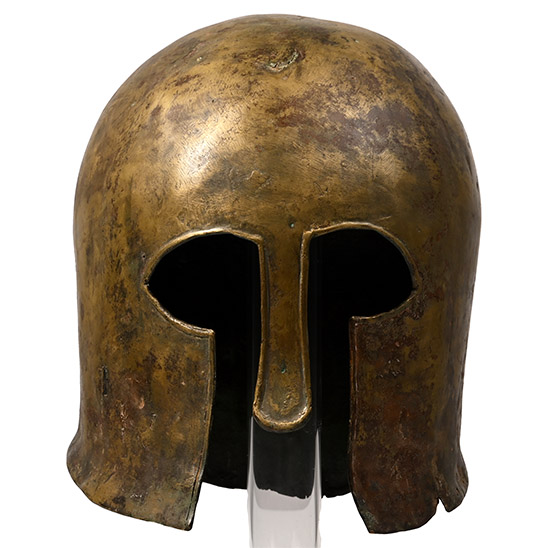
Greek Corinthian Style Helmet in Perspex Display Case
20th century A.D.Sold for (Inc. bp): £442
A bronze reproduction of a Corinthian helmet with a deep nasal and cheek guards; supplied with a custom-made perspex display case. 10.05 kg total, 40.5 cm high including stand (helmet: 26.5 cm high)
Private collection, UK. -
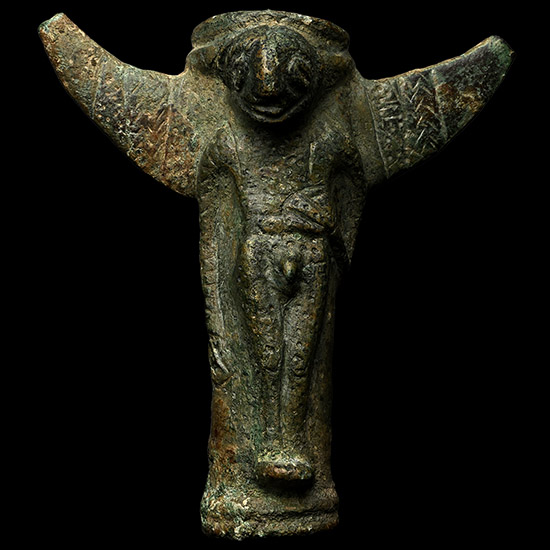
Elamite Bronze Macehead with Winged Human and Animal Figure
2nd millennium B.C.Estimate: £1,500 - 2,000 (+bp*)
Opening Bid: £750
Of cylindrical form with a raised collar at each end, one side depicting a nude male with a projecting grotesque head, the other side with a projecting ram's head with a long, curving serpent below, two crescentic wings projecting from the upper part of the socket. 285 grams, 98 mm
Acquired before 1983. Ex London gallery, 1990s. Private collection, London, UK. This lot has been checked against the Interpol Database of stolen works of art and is accompanied by search certificate number no.13258-253387.
Maces in the Middle East had always had a double function since the early periods: a) as a weapon and b) as a status symbol or symbol of rank and office. The bull-headed mace, called gorz-e gavsar in Persian, was already in use in the ancient Elam and Luristan, and was also common in religious ceremonies. -
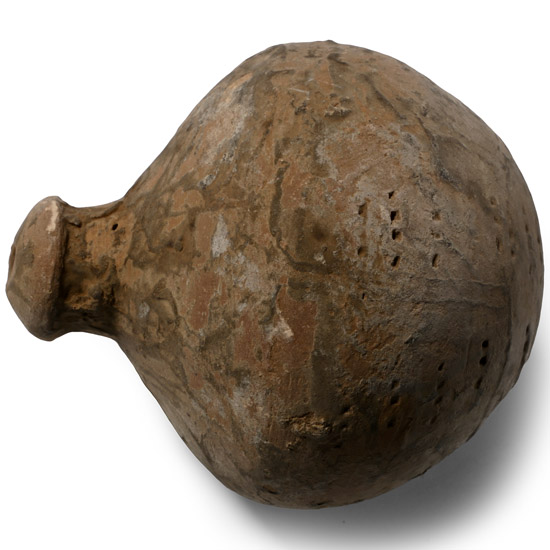
Byzantine 'Greek Fire' Ceramic Fire Bomb or Hand Grenade
9th-11th century A.D.Sold for (Inc. bp): £85
Ovoid in profile with domed filler hole; intended to be filled with explosive liquid and a wick, and used as a hand grenade. 370 grams, 10.4 cm
From an important specialist collection, London, UK, 1990s onwards. Accompanied by an academic paper by military specialist Dr Raffaele D'Amato, dated 15 July 2019 and titled 'Eastern Roman Empire - Greek Fire Bomb or Hand Grenade (μεσαίον kακάβιον) 9th-11th century AD'.
Apart from the use of siphons or manual flame-throwers called cheirosiphona, special corps of Roman soldiers employed terracotta grenades, in the form of small jars, abundantly evidenced in archaeological excavations. They were called μεσαία kακαβιά or κυτροκακάβια where the former had a bulbous shape and the latter a more cylindrical form.
