
Loading, please wait...
LOT 1786
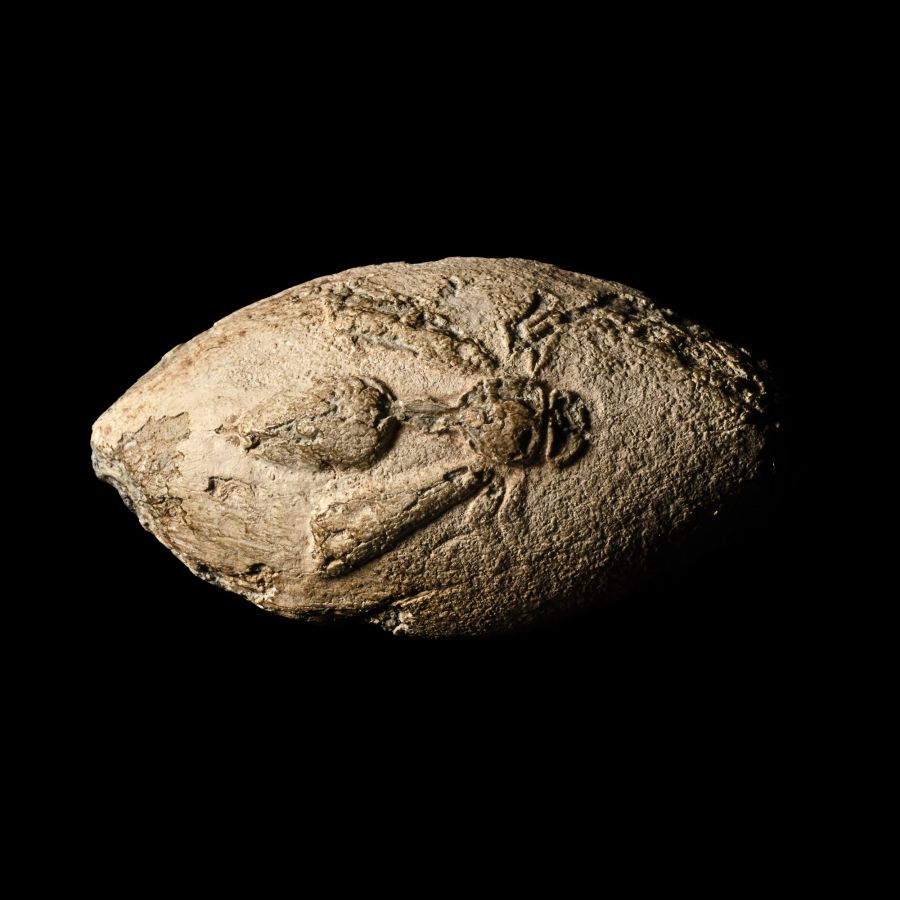
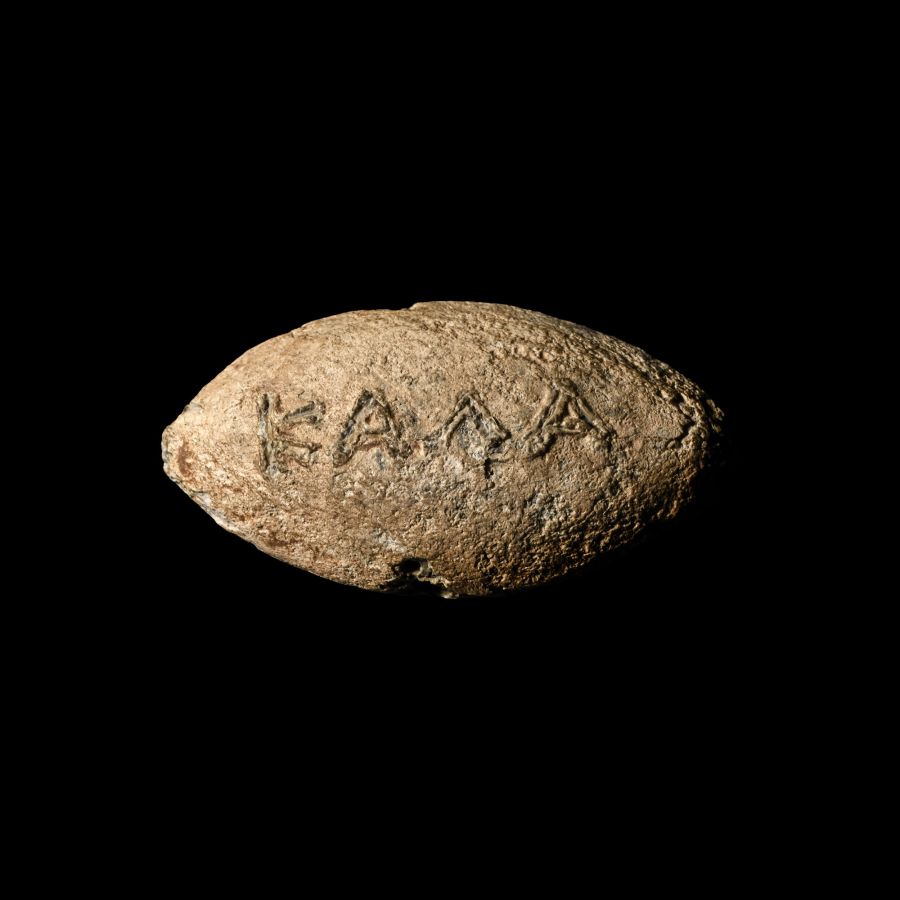
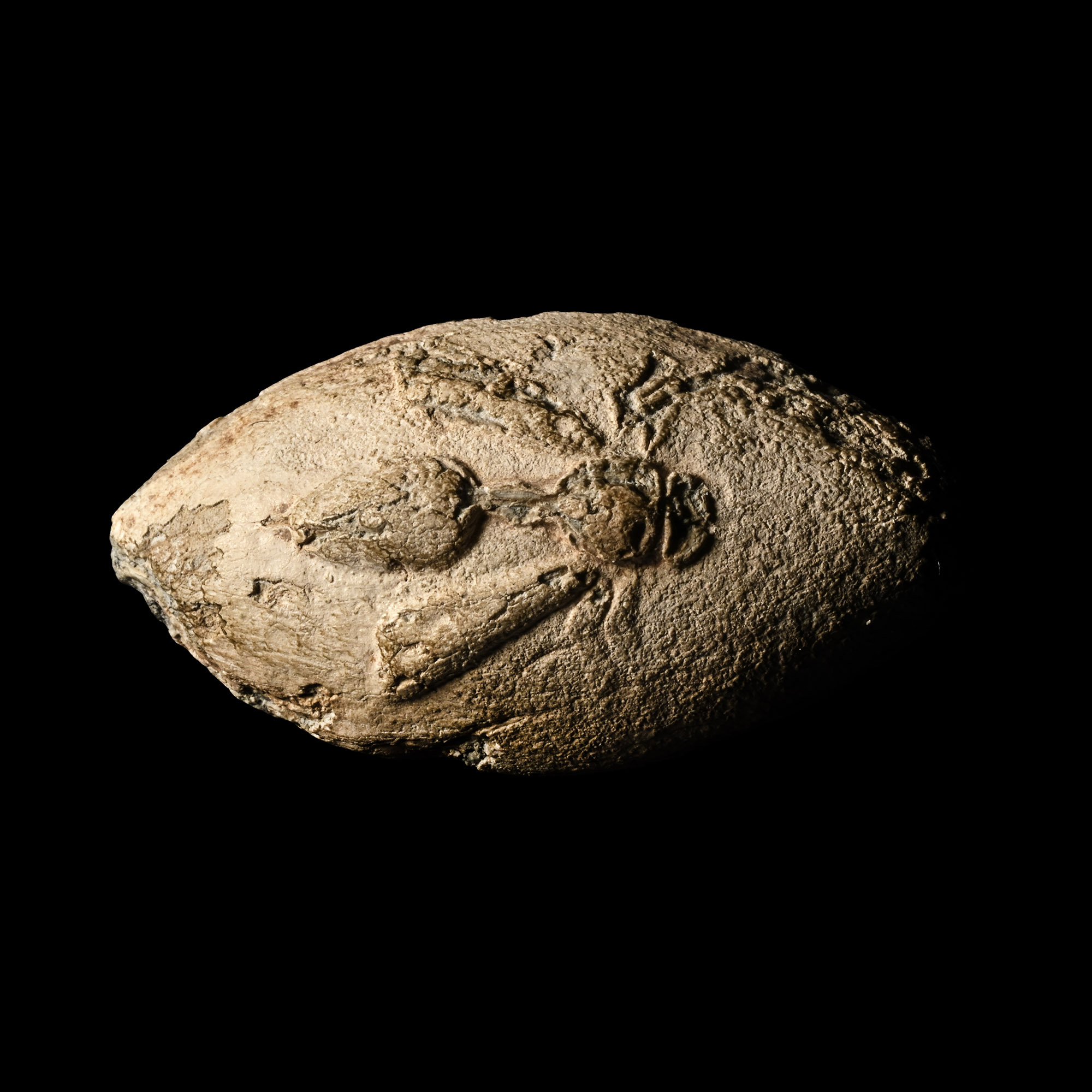
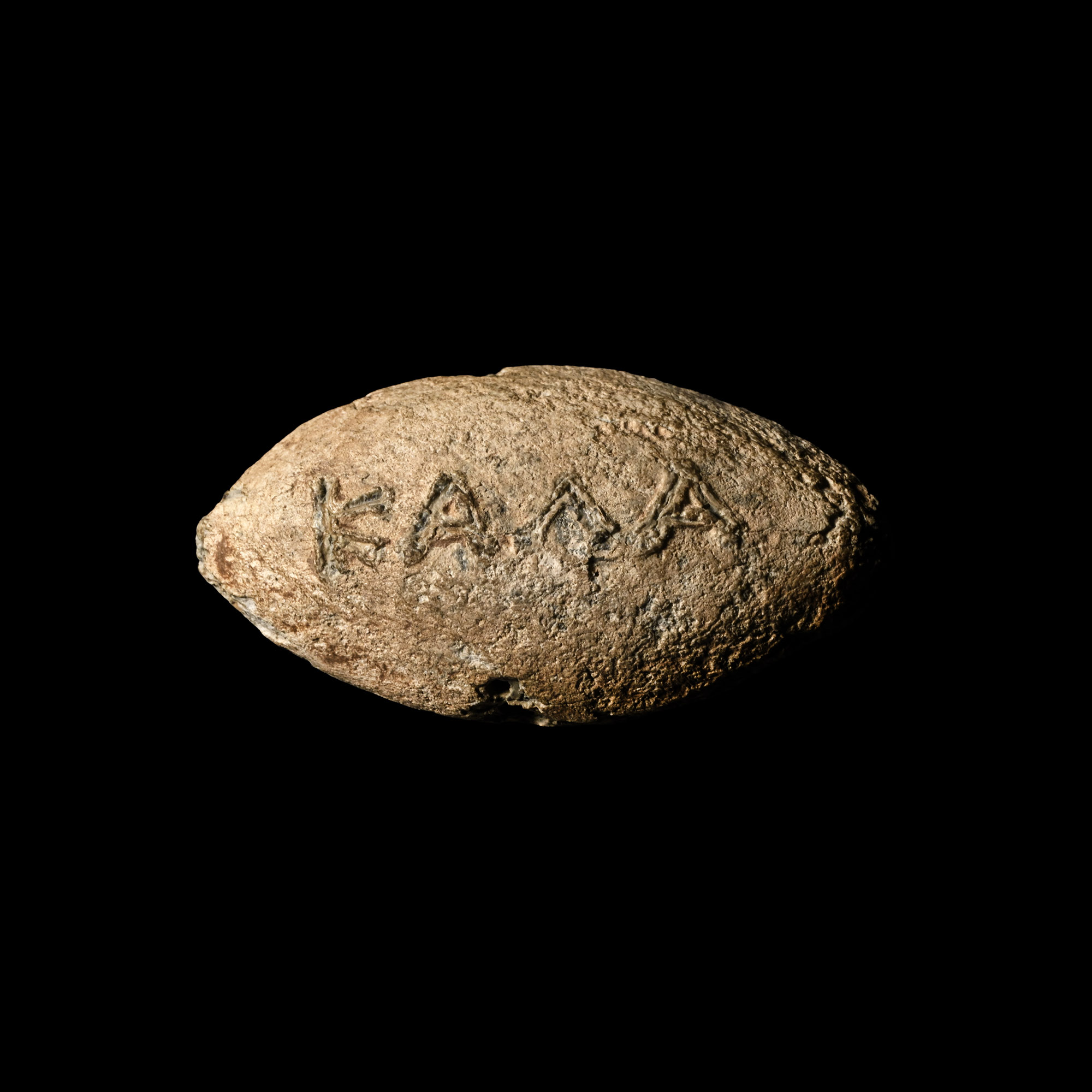
Greek Lead Slingshot with Inscription and Bee
3RD CENTURY B.C.
1 1/4 in. (30.4 grams, 31 mm).
Lentoid-section and depicting a bee to one side and the inscription 'ΚΑΛΑ' on the other.
ProvenanceEx German art market, 2000s.
Acquired from an EU collector living in London.
From the collection of a Surrey, UK, gentleman.
Cf. Manov, M., Torbov.N., 'Inscribed Lead Sling Bullets with the name of Alexander the Great and with other names and symbols found in Thrace' in Archaeologia Bulgarica, XX, 2, pp.29-43, fig.23, for identical; Schinco, G., Small, A.M., 'A previously unknown siege of Botromagno/Silvium: the evidence of slingshots from Gravina in Puglia (Provincia di Bari, Puglia)' in Papers of the British School at Rome, 2019, pp.1-52, fig.38.
FootnotesThe slingshots with an inscription ΚΑΛΑ are believed to originate from the island of Rhodes. On these sling bullets, ΚΑΛΑ should be translated as “nice things.” Together with the Balearic slingers, Rhodian slingers were considered to be the best of the Hellenistic world, and they were also used in the Roman army.
CONDITIONTimeLine Auctions follows a vetting process to ensure the authenticity and legality of all items, reinforcing our commitment to integrity and responsible trading. Each antiquity, antique, and coin lot undergoes thorough examination by a vetting committee of at least ten external specialists, professional trade association members, scientists, and archaeologists: Our Vetting Process
AUCTIONS:
TimeLine is a leading auction house specialising in antiquities, ancient art, collectables, natural history, coins, medals, and books. Our auctions offer museums, collectors, historians, and enthusiasts the opportunity to acquire unique and historically significant pieces.
-
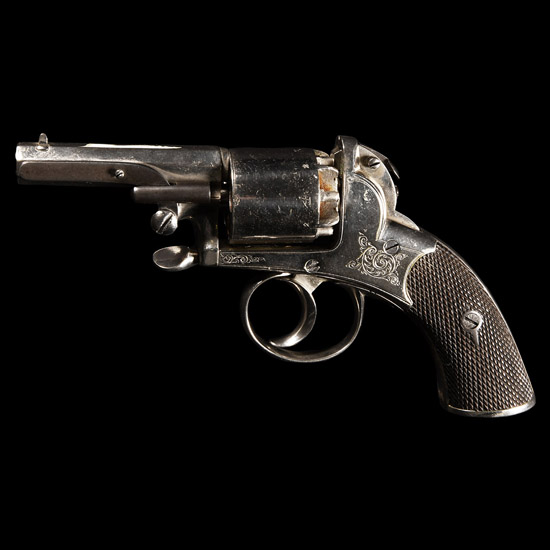
London Proofed Percussion Revolver
19th century A.D.Sold for (Inc. bp): £338
A double-action nickel-plated 5-shot percussion revolver with numbered chambers; the chambers and barrel bearing London proofmarks and the barrel numbered '2'; the frame with foliate engraving and fitted with chequered wood grip scales with hinged steel loading lever; action in working order. 480 grams, 18 cm
Acquired Peter Wilson Auction, 2020, lot 10. Ex property of a Kent collector. Accompanied by lot ticket. This lot is for UK buyers only.
Sold as an exempt item under Section 58 (2) of the Firearms Act, 1968, to be held as a curiosity or ornament. No license required but buyer must be over 18 years of age. -
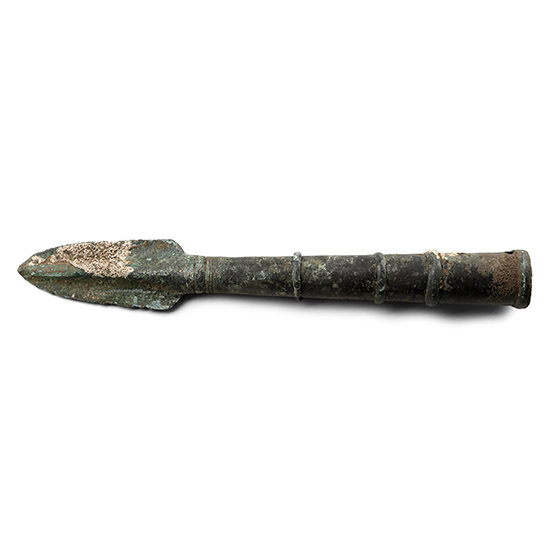
Luristan Bronze Socketted Spearhead
9th-7th century B.C.Sold for (Inc. bp): £117
Comprising a tapering tubular socket with raised ribs, a triangular blade with a raised midrib; ferrel collars to the shaft. 80 grams, 18.6 cm
Ex Abelita family collection, 1980s-2000s.
These kinds of spearheads were realised by casting in a mould. They were of different lengths and used by Luristan, Hamadan, early Median and Achaemenid warriors. The bronze rings were destined to reinforce the structure of the bronze shaft, because the blow, with this spear, was usually delivered by grasping the spear with two hands. -
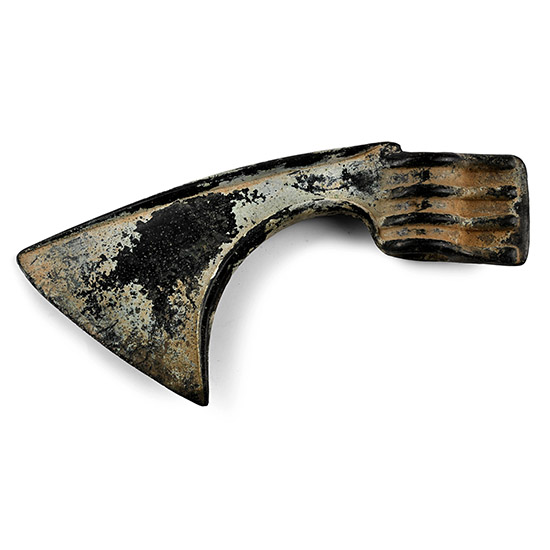
Luristan Bronze Axehead
12th-11th century B.C.Estimate: £250 - 350 (+bp*)
Opening Bid: £133
A spike-butted axehead with a short cylindrical socket with four furrowed ribs leading to four short spikes, blade with curved upper and lower edges and a convex cutting edge. 390 grams, 22 cm
Ex Abelita family collection, 1980s-2000s.
It is difficult to know whether this type of axe, given its high decoration in some specimens, was used as a weapon or was a symbol of rank and prestige, employed for ceremonial or cult purposes. However, considering that the concept of parade weapons did not exist in the surrounding areas in Antiquity, these axes were most probably used for both military and ceremonial purposes.
