
Loading, please wait...
LOT 0493
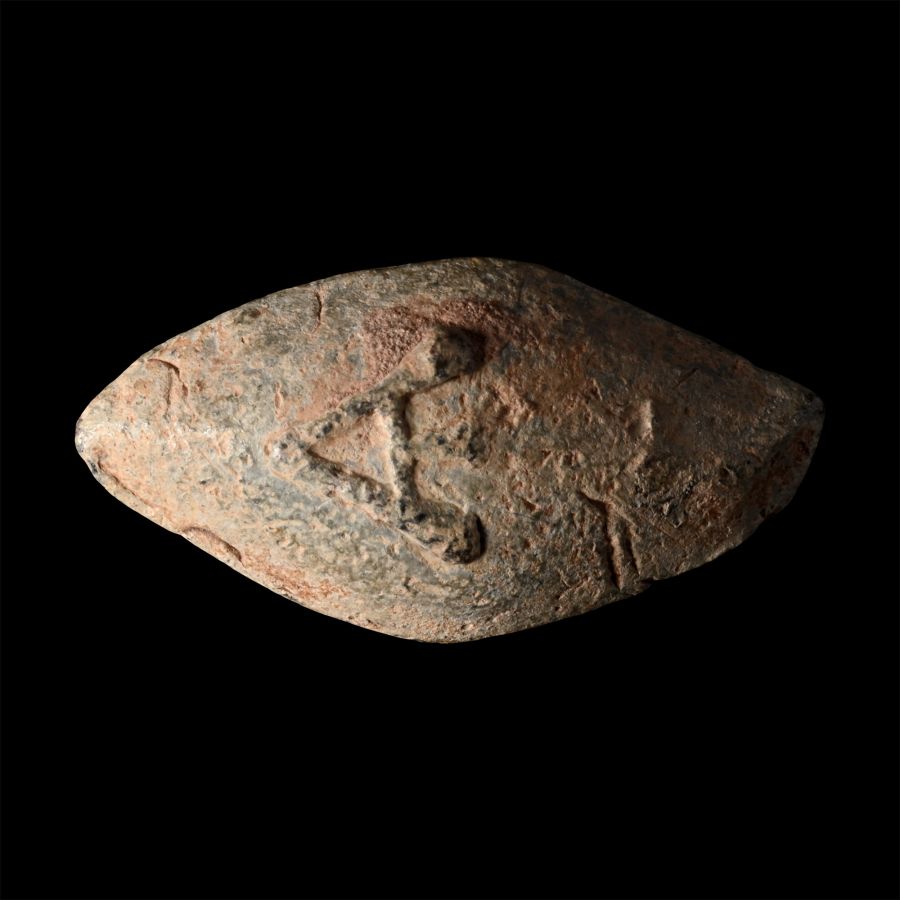
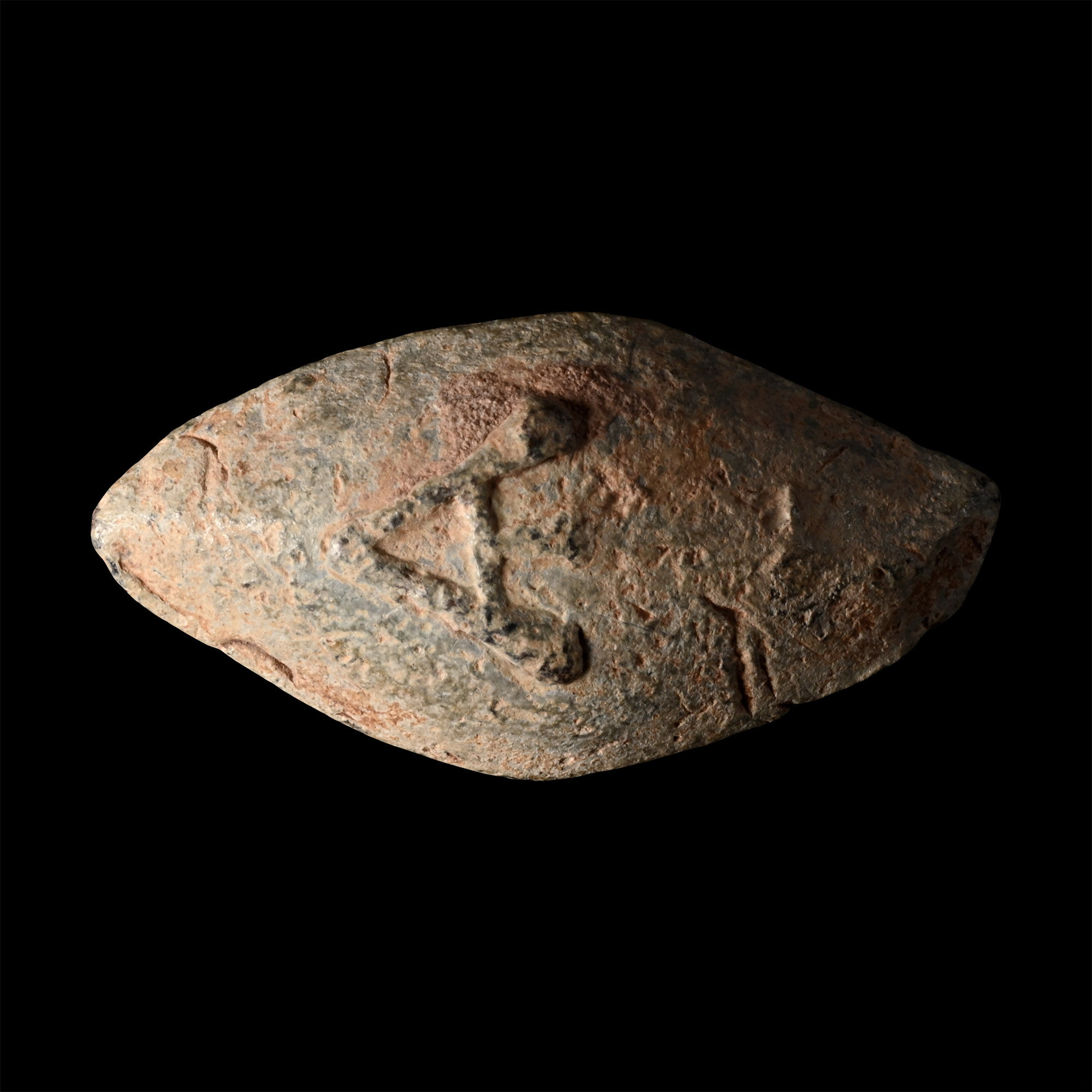
Greek Lead Slingshot with Alpha
1ST CENTURY B.C.
1 1/4 in. (26.2 grams, 32 mm).
Lenticular type with casting seam to the rim, raised iconic Greek letter A (alpha) on one side and the other side with a thunderbolt(?).
ProvenanceEx German art market, 2000s.
Acquired from an EU collector living in London.
From the collection of a Surrey, UK, gentleman.
Cf. Schinco, G., Small, A.M., 'A previously unknown siege of Botromagno/Silvium: the evidence of slingshots from Gravina in Puglia (Provincia di Bari, Puglia)' in Papers of the British School at Rome, 2019, pp.1-52, fig.31,22 (type Volling IIb); for Hellenistic sling bullets with thunderbolt see Yuzefovsky, B., 'Lead Sling Bullets' in Re'em, A. (ed.), The Qishleh Excavation in the Old City of Jerusalem, Jerusalem, 2018, p.199-200, fig.2.
CONDITIONTimeLine Auctions follows a vetting process to ensure the authenticity and legality of all items, reinforcing our commitment to integrity and responsible trading. Each antiquity, antique, and coin lot undergoes thorough examination by a vetting committee of at least ten external specialists, professional trade association members, scientists, and archaeologists: Our Vetting Process
AUCTIONS:
TimeLine is a leading auction house specialising in antiquities, ancient art, collectables, natural history, coins, medals, and books. Our auctions offer museums, collectors, historians, and enthusiasts the opportunity to acquire unique and historically significant pieces.
-
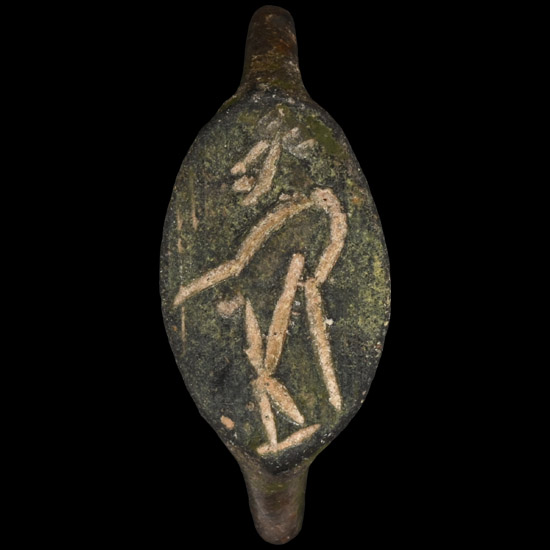
Greek Bronze Ring with Standing Figure
Circa 3rd-2nd century B.C.Sold for (Inc. bp): £39
Featuring a round-section hoop and a lentoid bezel with a stylised standing figure facing left, leaning on a short staff. 2.52 grams, 24.36 mm overall, 19.83 x 18.11 mm internal diameter (approximate size British S, USA 9, Europe 20, Japan 19)
From the private collection of a European gentleman (1942-2024), formed since the 1970s. -
.jpg)
Large Greek Black-Glazed Trefoil-Lipped Oinochoe
Apulia, 5th century B.C.Sold for (Inc. bp): £5,980
With a trefoil mouth, an applied D-section handle and a tiered foot. 405 grams, 22.1 cm
Property from a private collection. with Sotheby's, New York, 9 December 2003, no.9. Accompanied by copies of the relevant Sotheby's catalogue pages. -
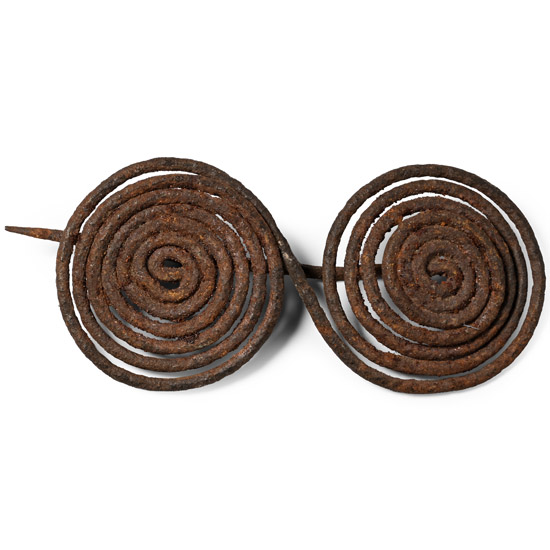
Greek Iron Spectacle Brooch with Pin
Iron Age, circa 4th century B.C.Sold for (Inc. bp): £130
Formed as a single rod in two large tightly-wound coils with integral pin and catch to reverse. 48.3 grams, 10.8 cm
From a UK collection formed in the 1980s. Property of an Essex, UK, gentleman.
