
Loading, please wait...

LOT 1865
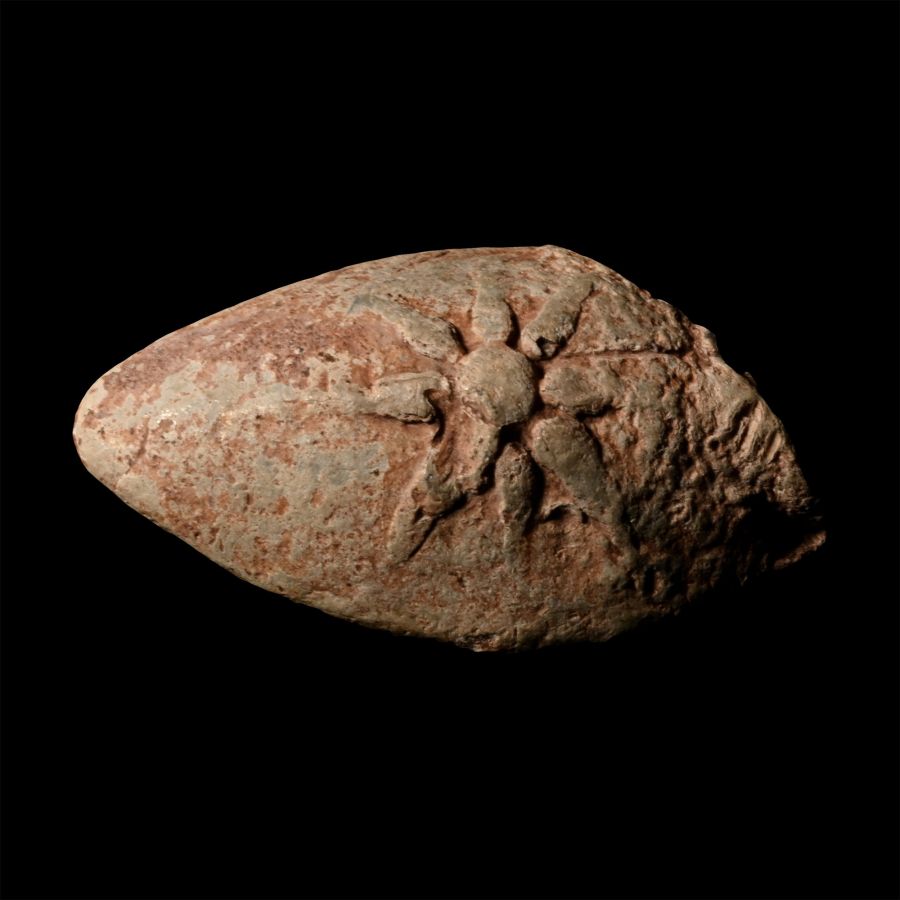
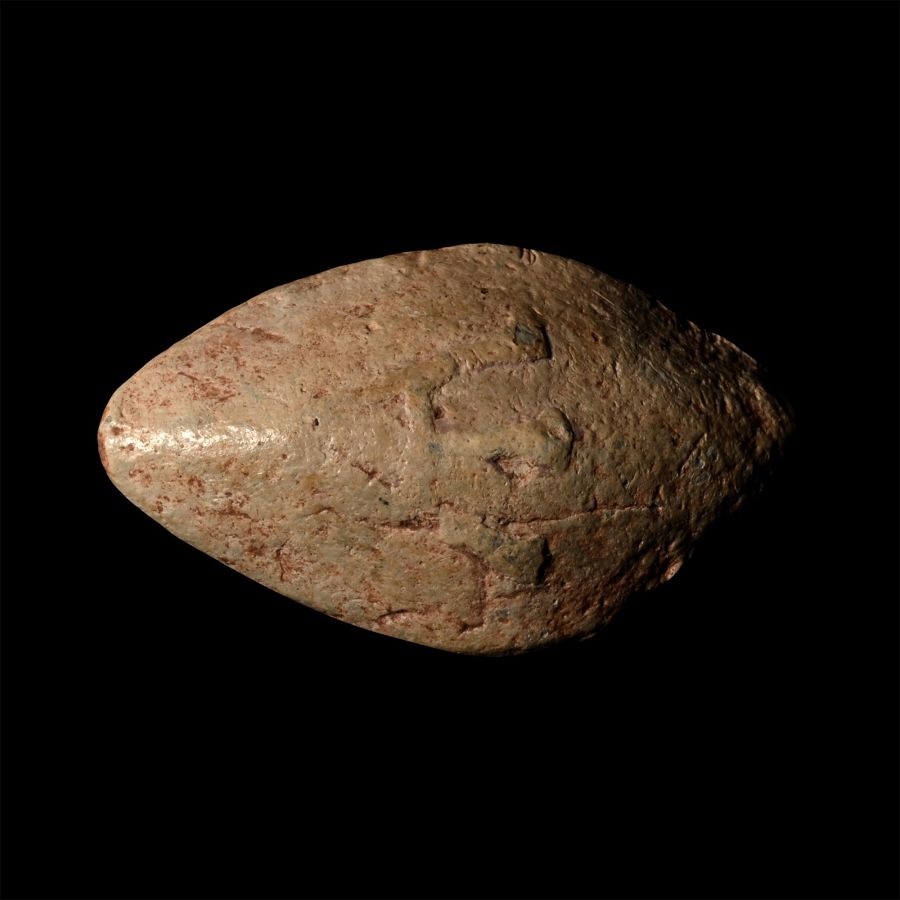
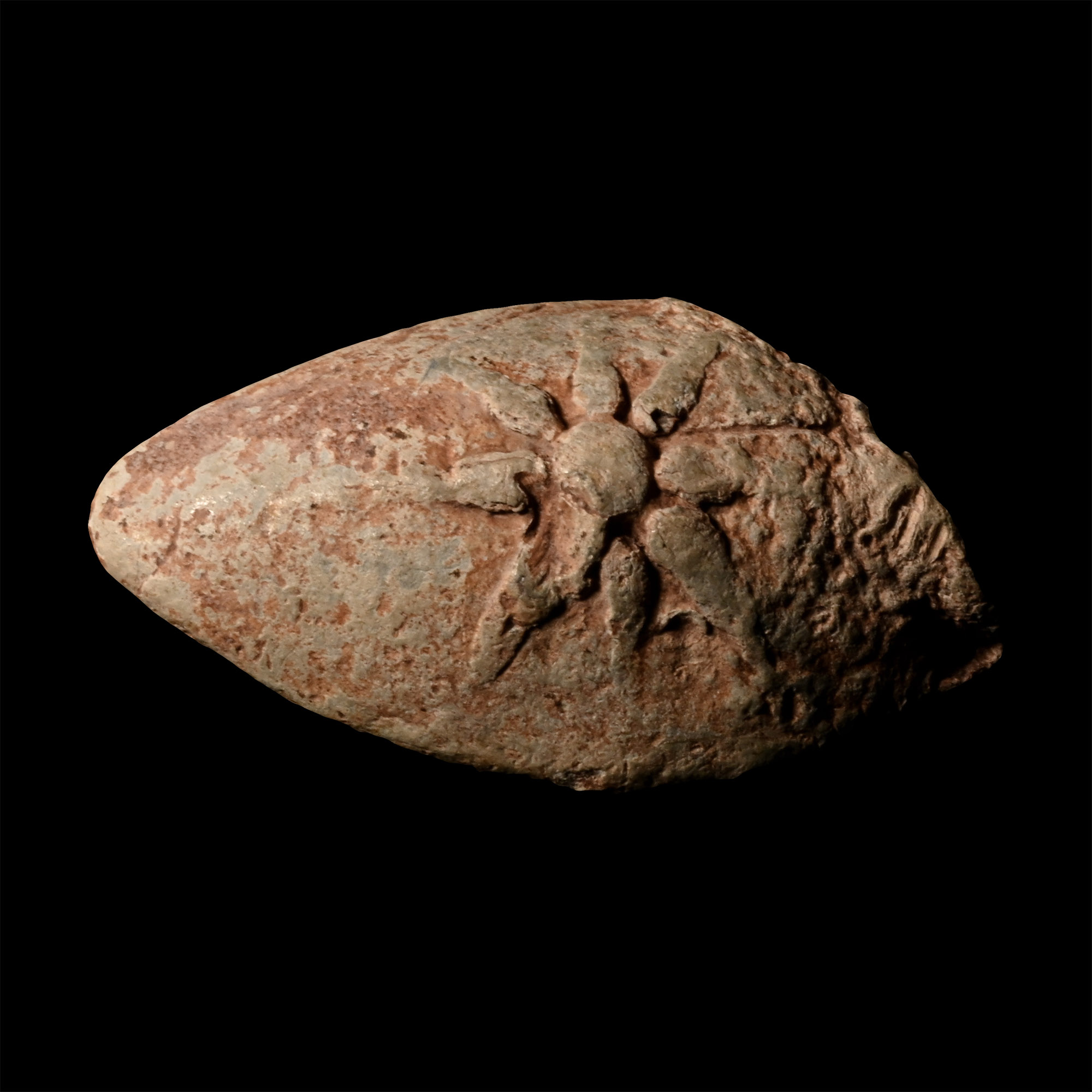
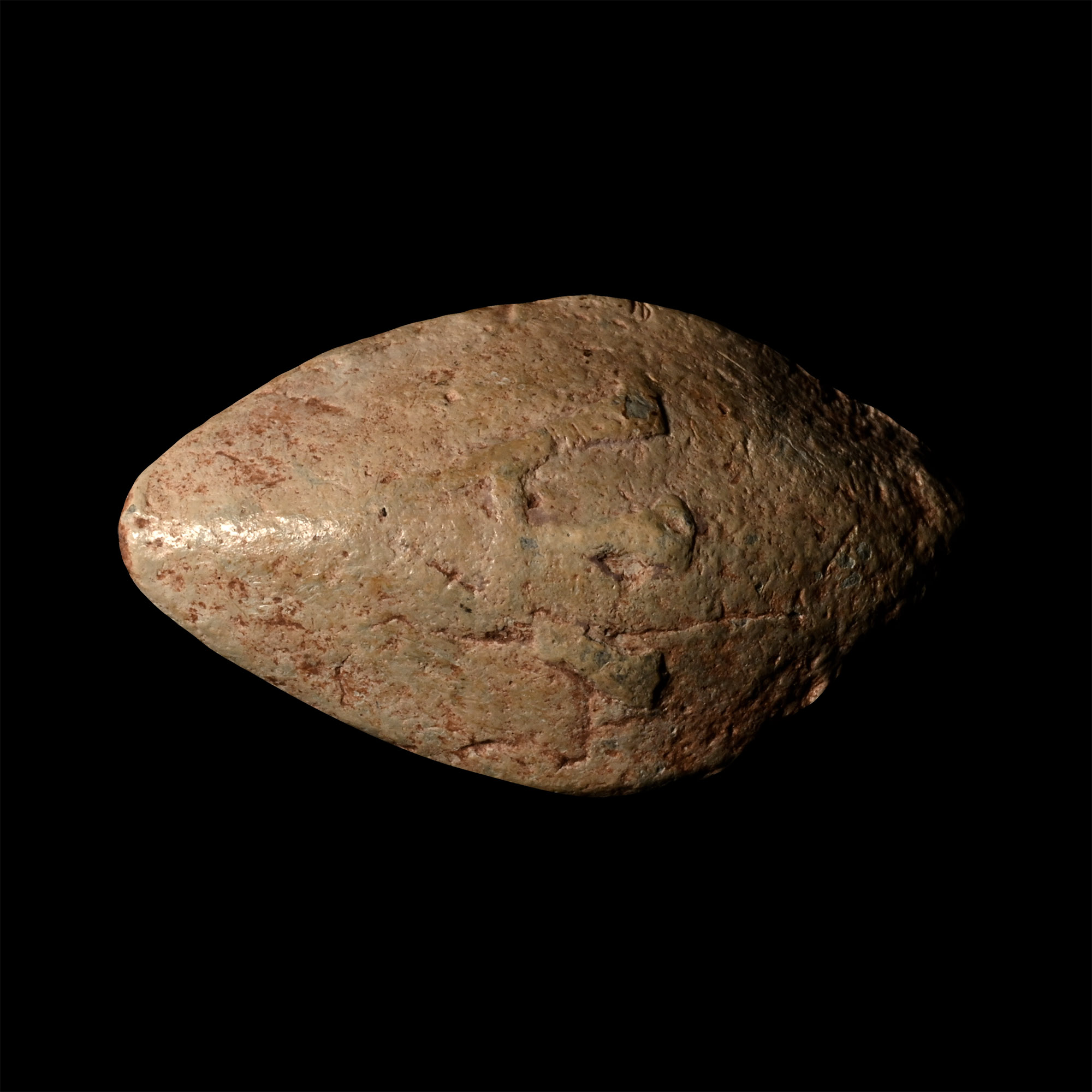
Greek Lead Slingshot of Alexander the Great
336-323 B.C.
1 1/8 in. (28.6 grams, 30 mm).
Biconical in profile with casting seam and reserved monogram 'AB = ΑΛΕΞΑΝΔΡΟΥΒΑΣΙΛΕΩΣ' (Αlexandrou basileos), a rayed solar symbol, the so-called Argead Star, on the other side; extremely rare, first known specimen of this type. [No Reserve]
ProvenanceFrom a German private collection, formed since the 1980s.
LiteratureSee Nankov, E., Markers of Military Mobility: Toward an Archaeology of the Sling in Ancient Thrace (5th c. BC – 4th c. AD), with a corpus of the inscribed lead sling projectiles from Bulgaria. Glandes Plumbeae Inscriptae in Bulgaria Repertae, Sofia, 2023, p. 75 and pl. XXV LI14; F. Şahin, Patara, vol. V.2: Patarametal buluntulari, Istanbul, 2018, pp. 57–58, D11, fig. 13.
FootnotesThe Argeads were an important Greek dynasty ruling over ancient Macedonia, with Alexander as the most prominent member of the royal house of the Argeads. The rayed solar symbol (Argead Star, Vergina Star) is interpreted as the historical royal symbol of the ancient Macedonian Dynasty of the Argeads, with its most famous member, Alexander the Great. Cf. a similar slingshot in the Musée du Louvre (INV 1497), acquired by the museum in 1825.
CONDITIONTimeLine Auctions follows a vetting process to ensure the authenticity and legality of all items, reinforcing our commitment to integrity and responsible trading. Each antiquity, antique, and coin lot undergoes thorough examination by a vetting committee of at least ten external specialists, professional trade association members, scientists, and archaeologists: Our Vetting Process
AUCTIONS:
TimeLine is a leading auction house specialising in antiquities, ancient art, collectables, natural history, coins, medals, and books. Our auctions offer museums, collectors, historians, and enthusiasts the opportunity to acquire unique and historically significant pieces.
-
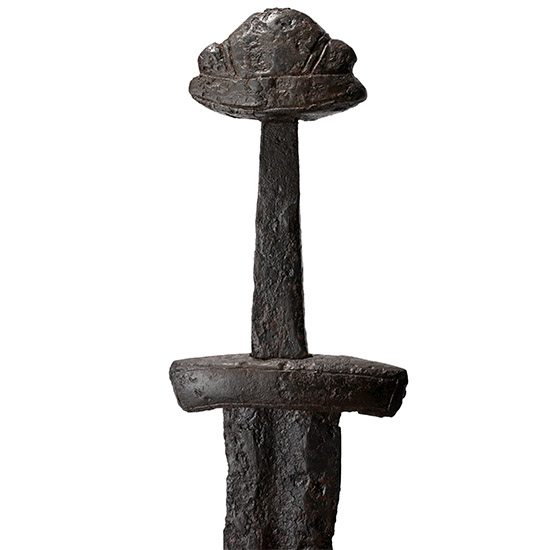
Viking Iron Sword of Petersen Type L
10th century A.D.Sold for (Inc. bp): £3,900
Double-edged cutting sword with tapering blade showing battle nicks along the length, tapering fullers showing shallow traces of pattern-welding, long tang, a boat-shaped lower guard and a three-lobed pommel. 775 grams, 86.5 cm
From the private collection of a London gentleman, from his grandfather's collection formed before the early 1970s. Accompanied by an academic report by Dr Raffaele D'Amato. This lot has been checked against the Interpol Database of stolen works of art and is accompanied by search certificate number no.13261-254356.
This type, considered as Anglo-Saxon in origin, is usually dated to 850-975 A.D., and is considered to form a distinctive group of Viking Age swords. Although used by the Vikings, it is probable that these swords were of English manufacture or inspiration. Swords of Type L are remarkable for their crosspieces and pommel bases curved away from the grip and lobed pommels. -
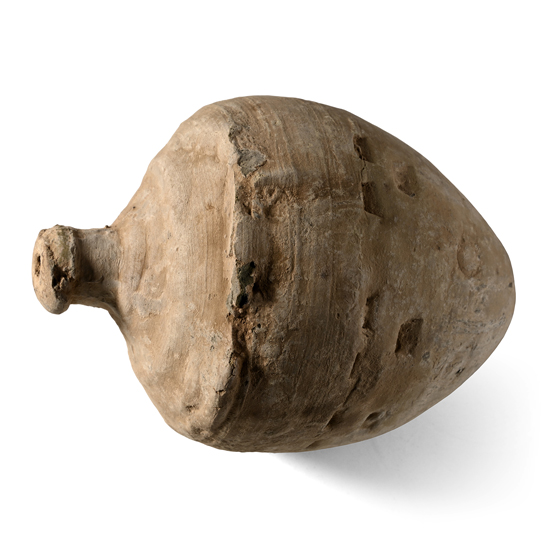
Byzantine 'Greek Fire' Ceramic Fire Bomb or Hand Grenade
9th-11th century A.D.Sold for (Inc. bp): £65
Large ovoid body with impressed decoration and raised shoulder on one side; intended to be filled with explosive liquid and a wick, and used as a hand grenade. 970 grams, 16 cm
From an important specialist collection, London, UK, 1990s. Accompanied by an academic paper by military specialist Dr Raffaele D'Amato, dated 15 July 2019 and titled 'Eastern Roman Empire - Greek Fire Bomb or Hand Grenade (μεσαίον kακάβιον) 9th-11th century AD'.
Apart from the use of siphons or manual flame-throwers called cheirosiphona, special corps of Roman soldiers employed terracotta grenades, in the form of small jars, abundantly evidenced in archaeological excavations. They were called μεσαία kακαβιά or κυτροκακάβια where the former had a bulbous shape and the latter a more cylindrical form. -
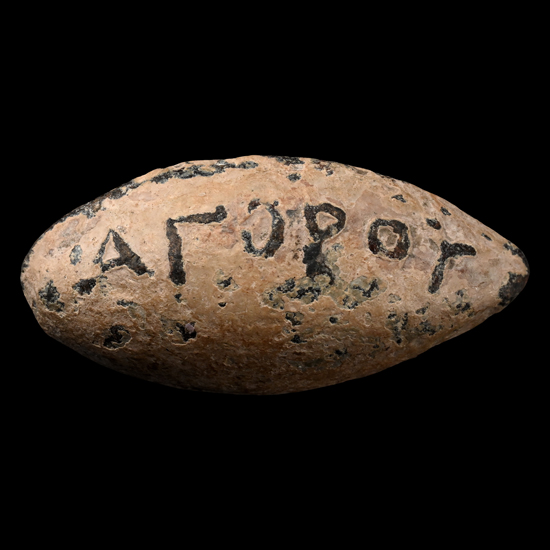
Greek Lead Slingshot with Inscription
4th-3rd century B.C.Sold for (Inc. bp): £130
Lenticular type with casting seam to the rim, raised 'AΓΟΡΟΥ' legend (genitive for Agouros = immature, unripe). 32.7 grams, 31 mm
Ex German art market, 2000s. Acquired from an EU collector living in London. From the collection of a Surrey, UK, gentleman.
Sometimes the bullet carries a joke for the enemy. Here, the bullet bears the inscription ‘immature’, signifying that the enemy will receive not a nice fruit to eat, but an unripe fruit, a fruit he never wants to get.
