
Loading, please wait...
LOT 0830
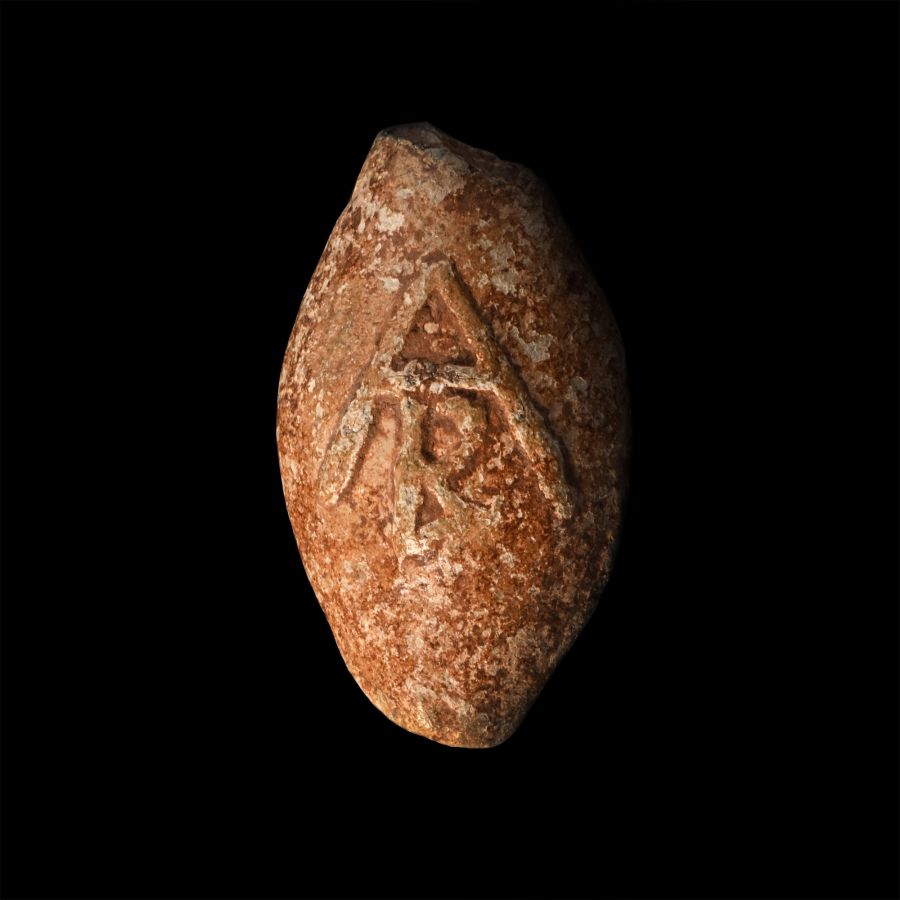
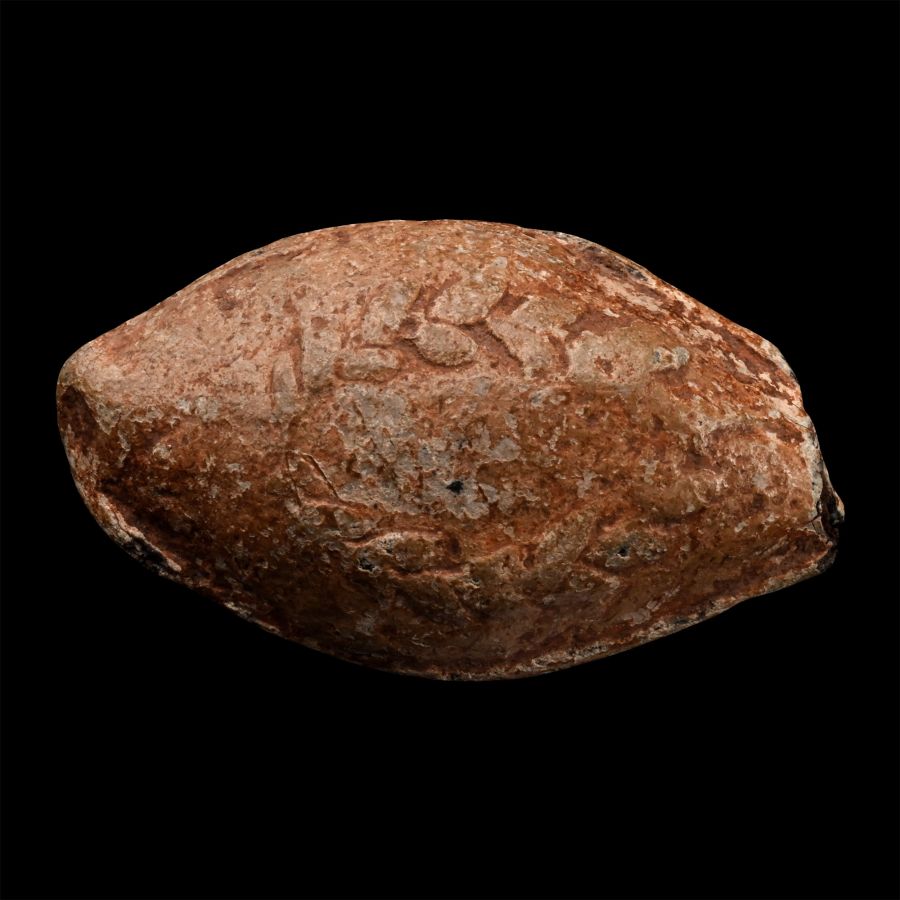
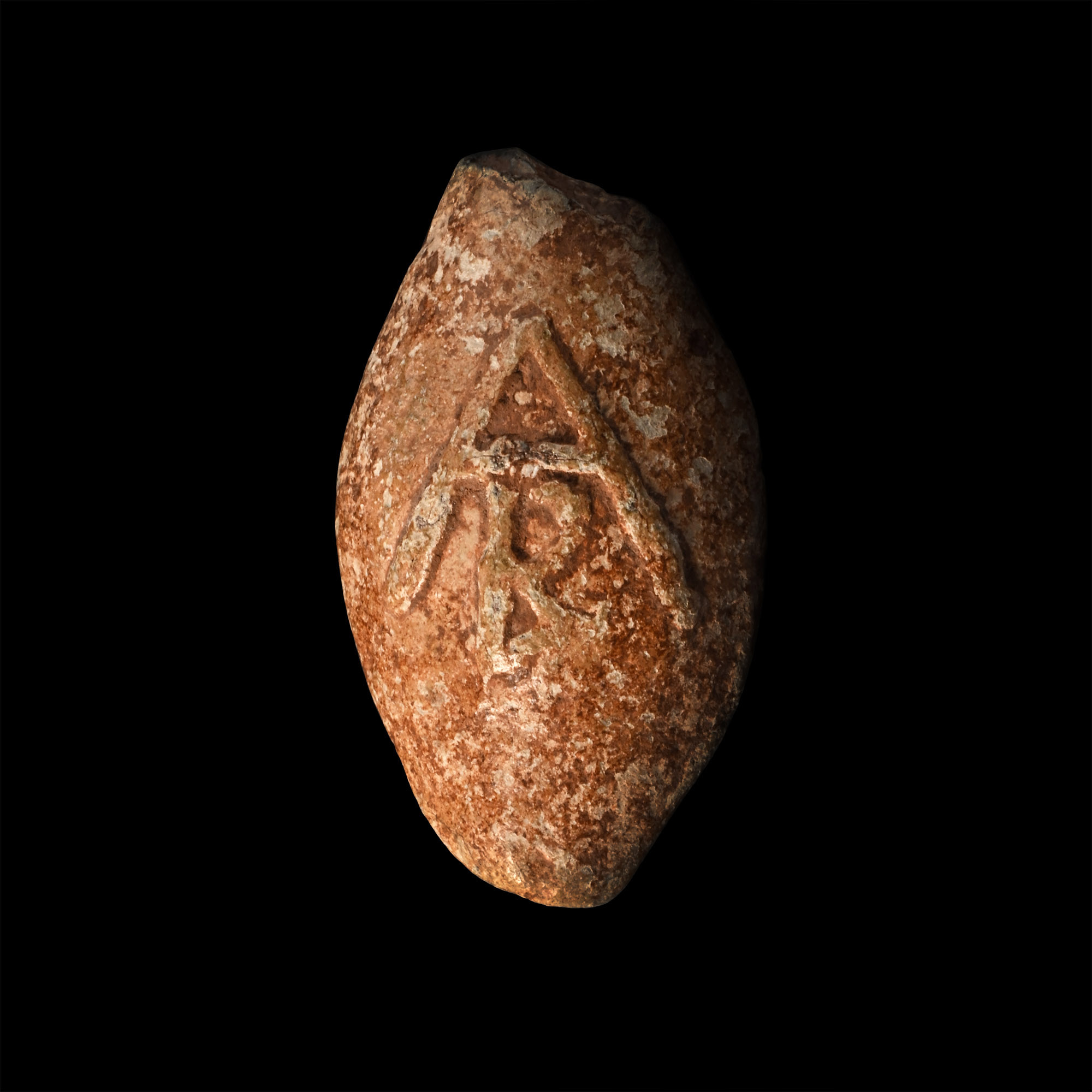
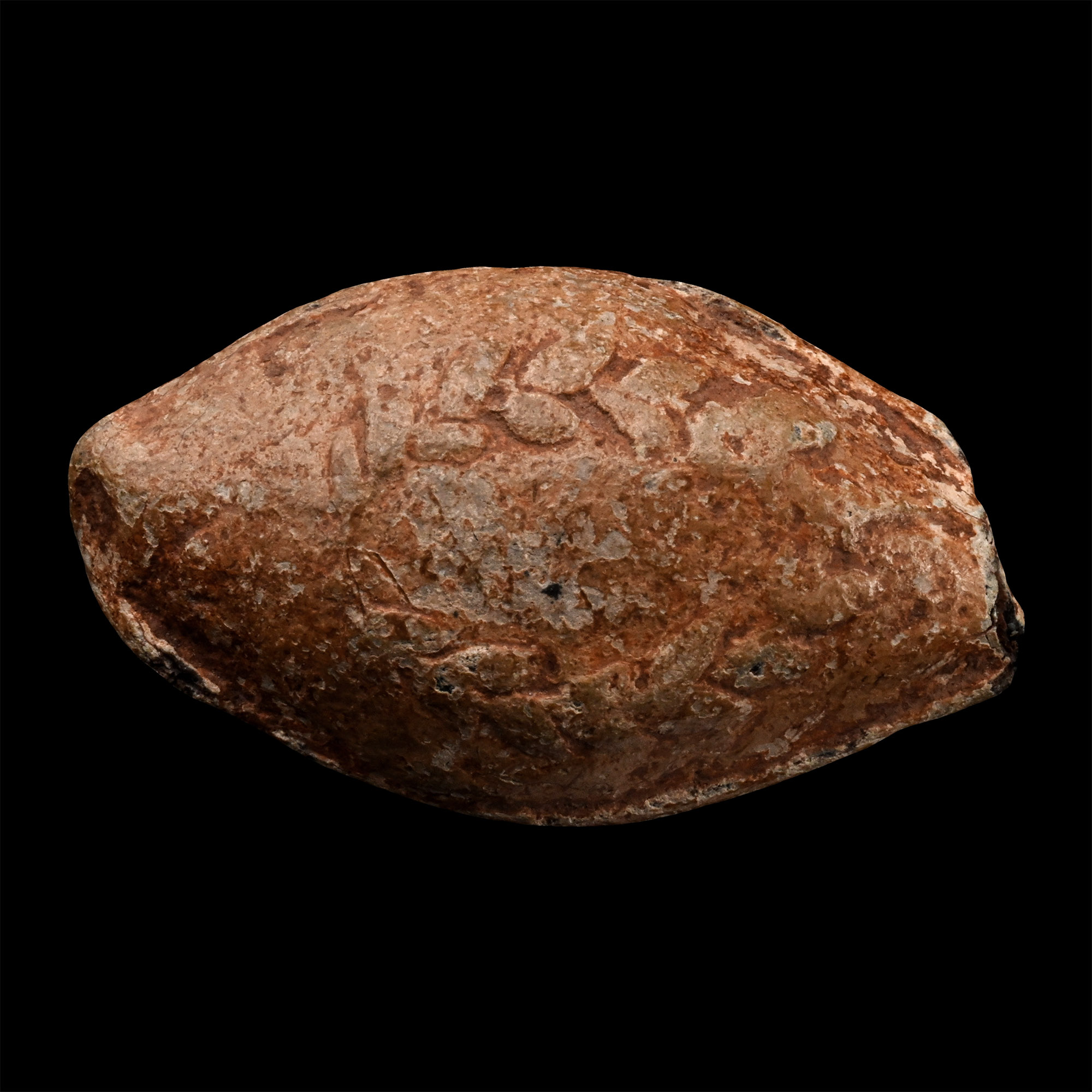
Greek Lead Slingshot of Alexander the Great, The Invincible
336-323 B.C.
1 1/8 in. (26.4 grams, 29 mm).
Biconical in profile with reserved monogram 'AB' for ΑΛΕΞΑΝΔΡΟΥ ΒΑΣΙΛΕΩΣ' (Αlexandrou Basileos) to the obverse and a laurel wreath to the reverse.
ProvenancePreviously property of an Austrian collector, Vienna, Austria.
From a German private collection, formed since the 1980s.
Ye, D. and P. Rothenhöfer, Notes on Greek Inscribed Sling Bullets, Journal of Ancient Civilizations (forthcoming).
LiteratureFor similar, see Nankov, E., Markers of Military Mobility: Toward an Archaeology of the Sling in Ancient Thrace (5th c. BC – 4th c. AD), with a corpus of the inscribed lead sling projectiles from Bulgaria. Glandes Plumbeae Inscriptae in Bulgaria Repertae, Sofia, 2023, p. 75 and pl. XXV LI14; Şahin, F., Patara, vol. V.2: Patarametal buluntulari, Istanbul, 2018, pp. 57–58, D11, fig. 13.
FootnotesIn the case of Alexander III, who never lost a battle, the laurel wreath began to be an important attribute already during his lifetime. This is best illustrated on coins, cf. a gold stater struck c. 330/325-320 (NAC auction 169, lot 74): Nike stands in the centre on the reverse holding a laurel wreath, with the name of Alexander behind the goddess on the right.
CONDITIONTimeLine Auctions follows a vetting process to ensure the authenticity and legality of all items, reinforcing our commitment to integrity and responsible trading. Each antiquity, antique, and coin lot undergoes thorough examination by a vetting committee of at least ten external specialists, professional trade association members, scientists, and archaeologists: Our Vetting Process
AUCTIONS:
TimeLine is a leading auction house specialising in antiquities, ancient art, collectables, natural history, coins, medals, and books. Our auctions offer museums, collectors, historians, and enthusiasts the opportunity to acquire unique and historically significant pieces.
LOT 0830
Greek Lead Slingshot of Alexander the Great, The Invincible
Estimate £200 - 300€230 - 350 (for guidance only)$270 - 410 (for guidance only)
-
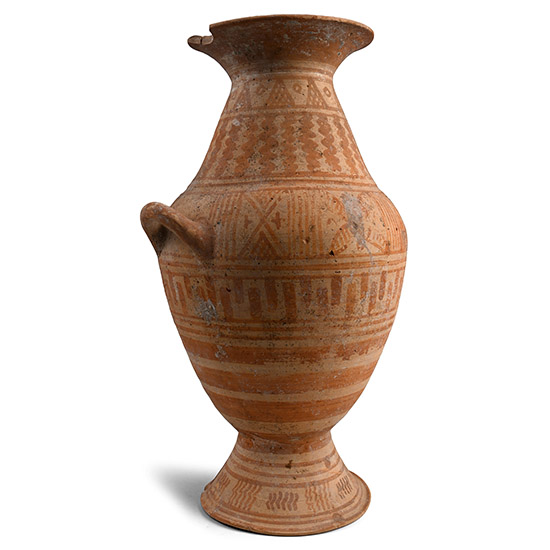
Very Large Italo-Geometric Amphora with Two Handles
7th century B.C.Estimate: £2,500 - 3,500 (‡+bp*)
Opening Bid: £1,275
With ovoid body on a tall conical foot, ovoid body sloping steeply towards the neck with wide everted rim; applied geometric decoration in clusters of lines, broad stripes, dentil patterns, vertical zig-zags and hatched lozenges; at the shoulder, alternating metopes of saltires, quatrefoils and swastikas; one handle largely absent. 2.58 kg, 43.5 cm
Ex Prof. Kurt Alder, Riehen, acquired in October 1978; thence by descent. This lot has been checked against the Interpol Database of stolen works of art and is accompanied by search certificate no.13512-263122.
By the last quarter of the 8th century B.C., the Oinotrian-Euboean production was diffused in the Greek Italic Colonies, characterised by larger vessels with elaborate figurative decoration similar to decoration known from Eretria. A detailed stylistic correspondence can be observed between the Cesnola-inspired fragments from the area north of the Daphnéphoros sanctuary of Apollo in Eretria and a decorated stand from the Timpone della Motta. With this elaborate series, the Oinotrian-Euboean production is consistent with the high craft specialisation observed in the local Euboeanizing production on Ischia. -
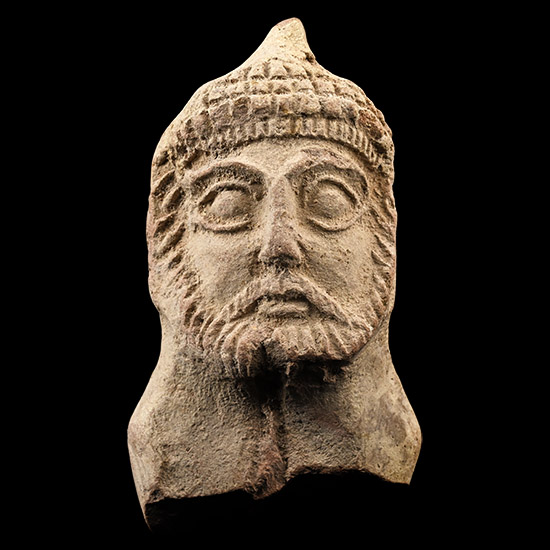
Parthian Terracotta Bust of a Warrior
2nd century B.C.-2nd century A.D.Estimate: £50 - 70 (+bp*)
Bids: 1 | Current Bid: £5
Moulded in high-relief with crested headgear, trimmed beard, large almond-shaped eyes and hatched fringe. 23 grams, 53 mm
From the private collection of a European gentleman (1942-2024), formed since the 1970s. -
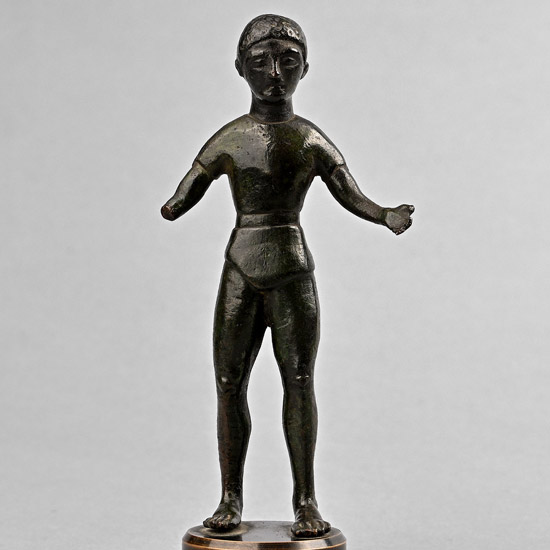
Iberian Bronze Statuette of Youth
6th-4th century B.C.Estimate: £3,000 - 4,000 (‡+bp*)
Opening Bid: £1,500
Youthful male standing, wearing a belted tunic with apron, arms spread wide, barefoot, bare-headed with short textured hair; mounted on a custom-made base. 215 grams total, 11.8 cm high including stand
Private collection, Paris, France, assembled in the 1950s-1960s. with Tessier-Sarrou & Associés, Paris, 2015. European private collection. Accompanied by a copy of an Art Loss Register certificate, no.S00107108. Accompanied by a copy of French cultural export passport no.167803. This lot has been checked against the Interpol Database of stolen works of art and is accompanied by a search certificate no.12650-264612.
This type of statuette demonstrates Phoenician influence on the Iberian Peninsula and relates to the 'warrior deity' type of Levantine origin, while also incorporating purely Iberian stylistic traits. Such works form part of the broader context of Near Eastern craftsmanship introduced to the Iberian Peninsula by the Phoenicians.
