
Loading, please wait...
LOT 1467
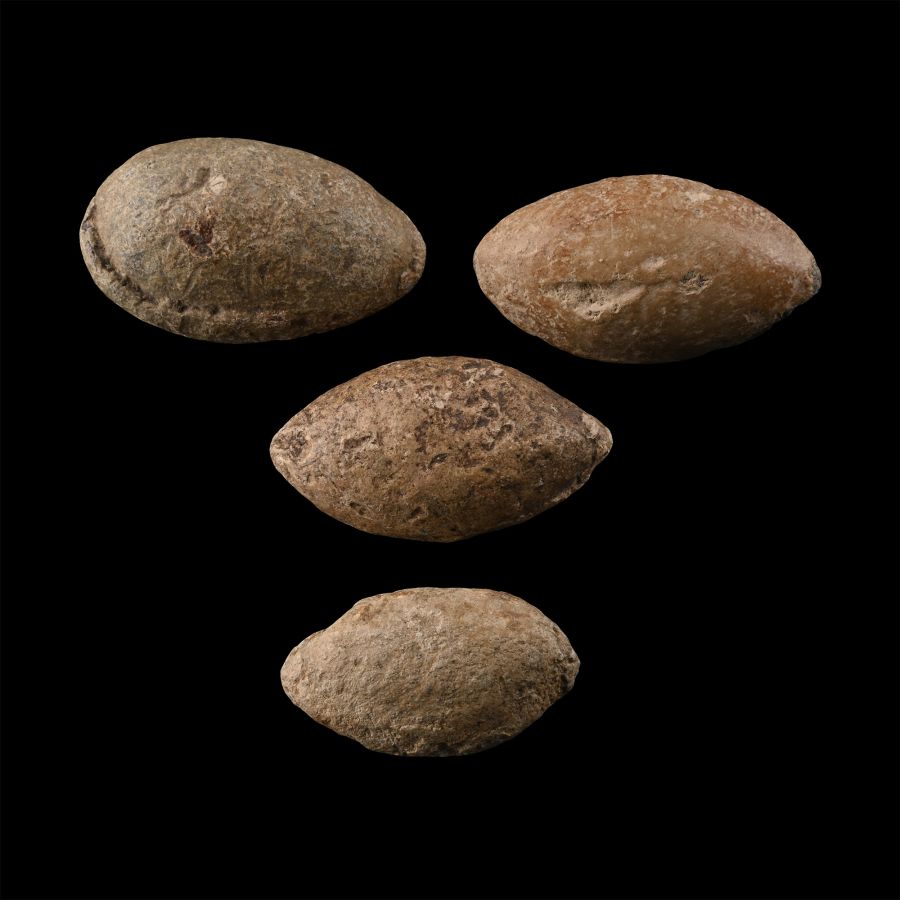
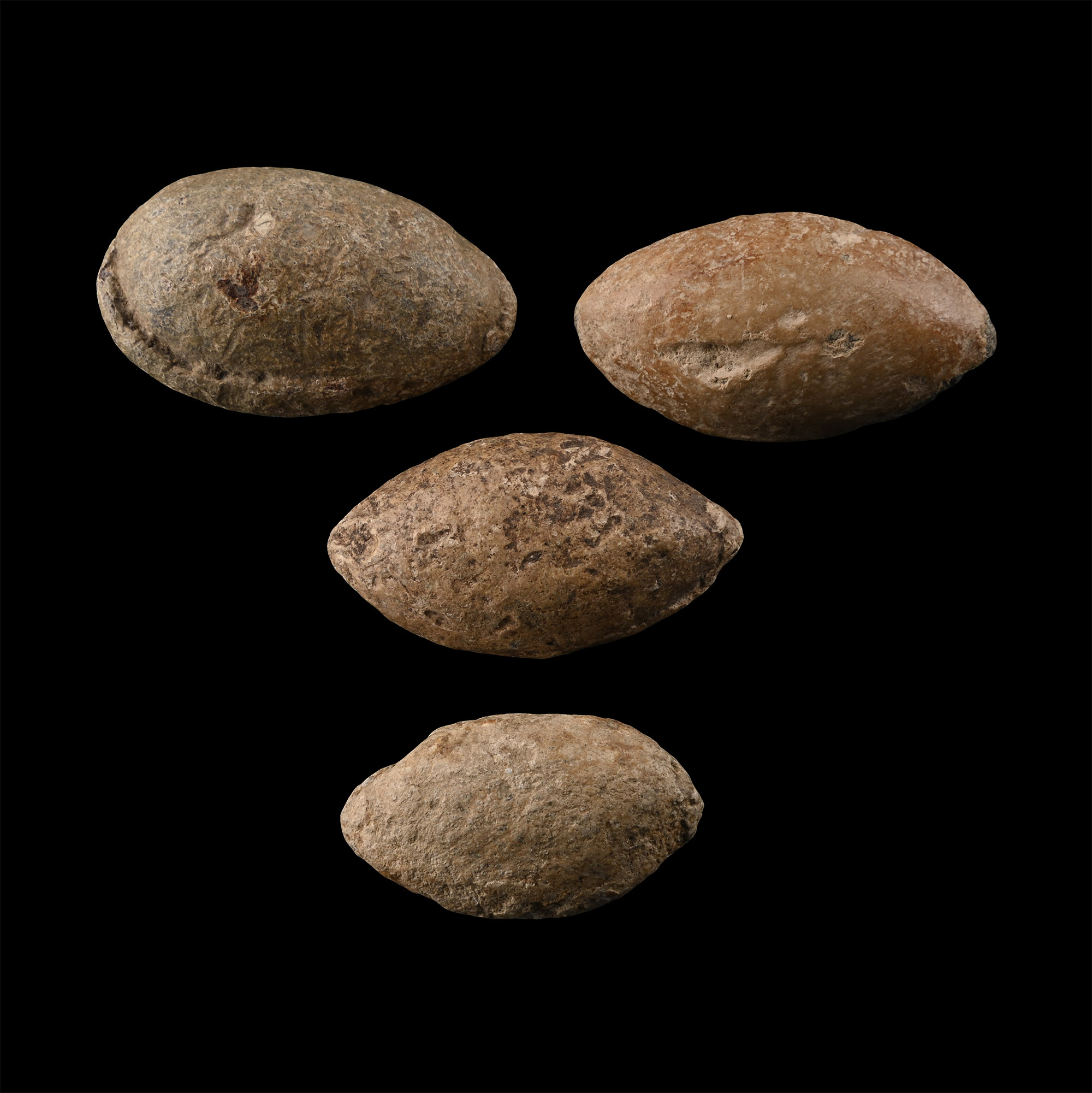
Greek Lead Slingshot Group
4TH-3RD CENTURY B.C.
1 - 1 1/4 in. (131 grams total, 26-31 mm).
Each lentoid with thick casting seam to the rim. [4, No Reserve]
ProvenanceEx German art market, 2000s.
Acquired from an EU collector living in London.
From the collection of a Surrey, UK, gentleman.
TimeLine Auctions follows a vetting process to ensure the authenticity and legality of all items, reinforcing our commitment to integrity and responsible trading. Each antiquity, antique, and coin lot undergoes thorough examination by a vetting committee of at least ten external specialists, professional trade association members, scientists, and archaeologists: Our Vetting Process
AUCTIONS:
TimeLine is a leading auction house specialising in antiquities, ancient art, collectables, natural history, coins, medals, and books. Our auctions offer museums, collectors, historians, and enthusiasts the opportunity to acquire unique and historically significant pieces.
-
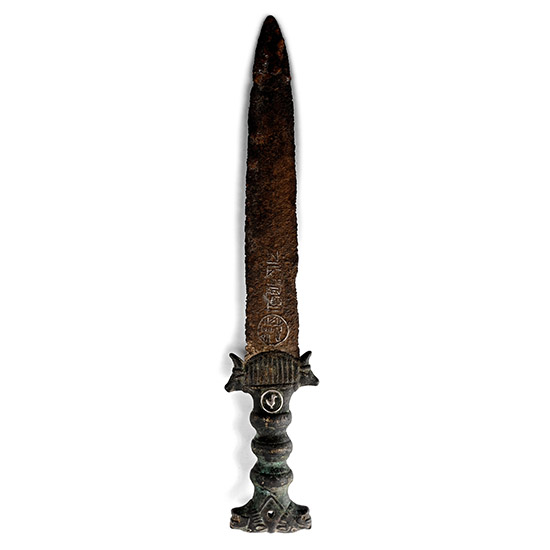
Western Asiatic Iron Dagger with Bronze Hilt
20th century A.D.Sold for (Inc. bp): £416
Comprising a broad iron two-edged blade wth inlaid white metal inscription to each face, T-shaped pommel, ribbed grip and narrow lower guard with inlaid bird motif in a circle. 477 grams, 38 cm
Private collection, UK. -
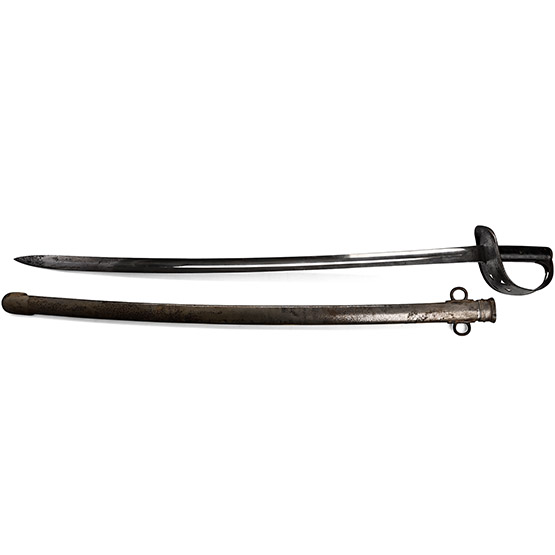
British Cavalry Trooper's Sword
1885 A.D. PatternSold for (Inc. bp): £416
A British trooper's backsword comprising a slightly curved single-edged blade with a deep fuller to each face, iron hilt with D-shaped pierced guard, leather-covered grip and bulb pommel; stamped on one face of the blade at the ricasso with 'WD' and broad arrow, crown over 'S12', crown over 'E12 YC' and to the other face '/86' over 'Baum & Co. [Sol]ingen'; scabbard with cast frog with securing srewws and stamped '/88 WD' and arrow; integral reinforced chape. 1.76 kg, 103.5 cm
From a Cambridgeshire, UK, collection. -
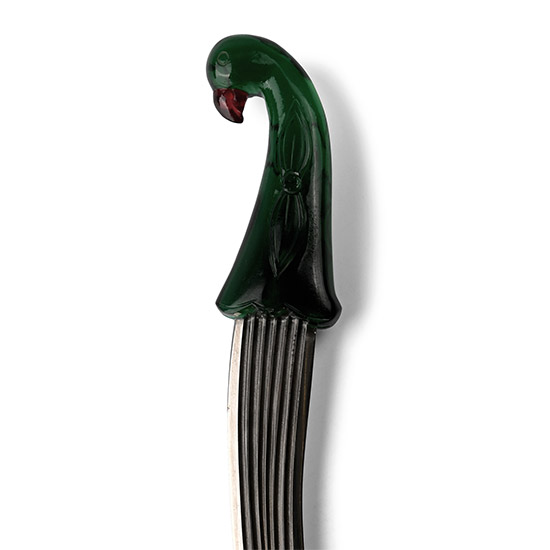
Indian Iron Dagger with Green Glass Hilt
20th century A.D.Sold for (Inc. bp): £156
Comprising a swept two-edged blade with ribbed central panel, bird-head pommel to the grip with incised rosette. 480 grams, 42 cm
Private collection, UK.
