
Loading, please wait...
LOT 0133
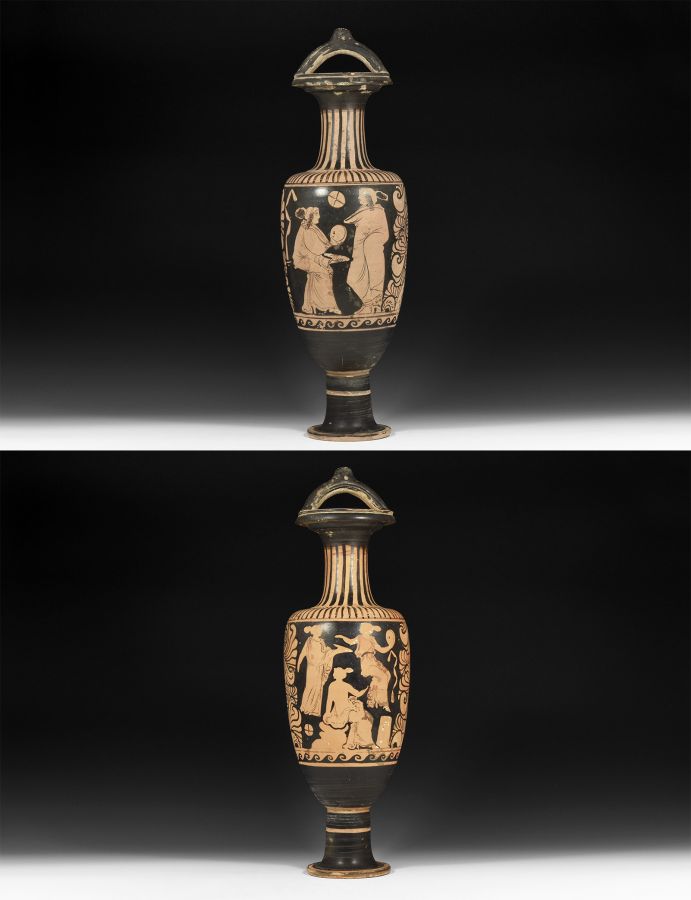
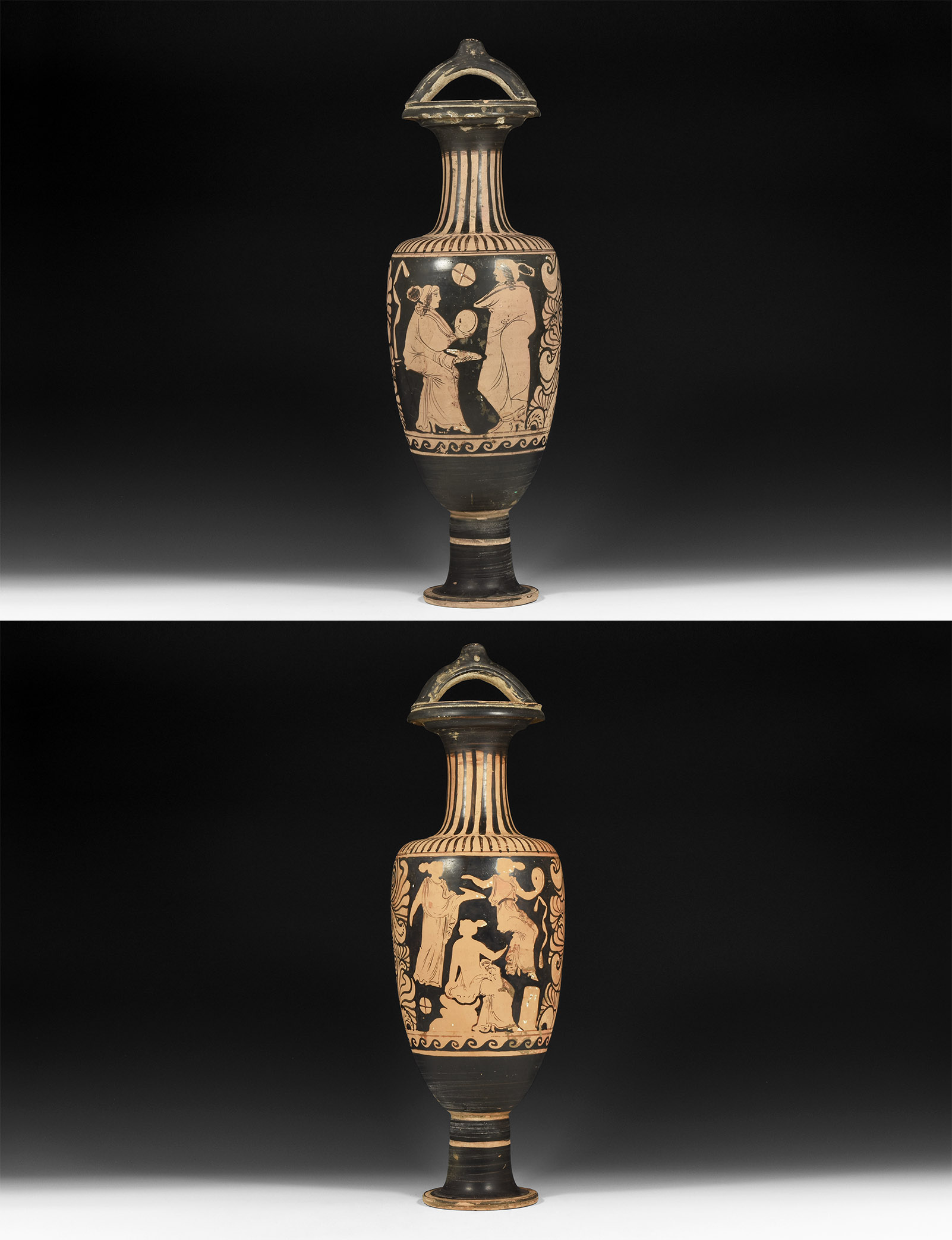
Greek Large Painted Bail-Amphora Vessel
CAMPANIA, SOUTH ITALY, 330-310 BC
24" (2.86 kg, 60cm).
A large ceramic black glazed bail-amphora with a pierced and ridged stirrup-shaped handle to the top, rolled and angled rim with long tapering neck and rounded shoulder, both painted with series of vertical lines in black; the body decorated to one side with a seated female in a robe, hair tied in a headscarf and holding a pair of dishes towards a second, standing female, also in long robes and hair tied in a headscarf, to the centre a disc with X-pattern, behind the seated female a crooked staff; to the other side a group of three female figures, two seated and one standing, all in loose robes and hair arranged in a bun, the standing figure holding forward a dish to the seated figure holding a tympanum (?), small altar to the feet of the lower seated figure; below and encircling the vase is a black wave pattern on a reserved band; tapering pedestal foot with band of black paint.
ProvenanceFrom an old British private collection; formed between 1975 and 1985.
LiteratureCf. Mayo, M. The Art of South Italy: Vases from Magna Graecia, Virginia, 1982, p. 207; for a similar example see The Cleveland Museum of Art, accession number 1967.245.
FootnotesThe bail-amphora was one of the innovative new forms of pottery that was developed by Greek settlers in South Italy and Sicily. The form bears some similarities to the loutrophoros and probably had a similar function for holding water used in ritual bathing. The scenes on such pieces indicate the nature of these rituals which would appear to be associated with marriage and religious customs reserved for women.
The institution of marriage in ancient Greece encouraged responsibility in personal relationships. Marriages were usually arranged by the parents; professional matchmakers were reluctantly used. Each city was politically independent, with its own laws affecting marriage. For the marriage to be legal, the woman's father or guardian gave permission to a suitable male who could afford to marry. Wintertime marriages were popular, and a common month in which Greeks married was Gamelion or January, which was sacred to the goddess Hera; note the two females on this vase wrapped in heavy robes against the cold. The couple participated in a ceremony which included rituals such as veil removal but the couple living together made the marriage legal.
TimeLine Auctions follows a vetting process to ensure the authenticity and legality of all items, reinforcing our commitment to integrity and responsible trading. Each antiquity, antique, and coin lot undergoes thorough examination by a vetting committee of at least ten external specialists, professional trade association members, scientists, and archaeologists: Our Vetting Process
AUCTIONS:
TimeLine is a leading auction house specialising in antiquities, ancient art, collectables, natural history, coins, medals, and books. Our auctions offer museums, collectors, historians, and enthusiasts the opportunity to acquire unique and historically significant pieces.
4th-3rd century BC
Lot No. 0101 Opening bid: £799
5th-3rd century BC
Lot No. 1444 Opening bid: £120

4th century AD
Lot No. 0095 Opening bid: £2,250
