
Loading, please wait...
LOT 0574
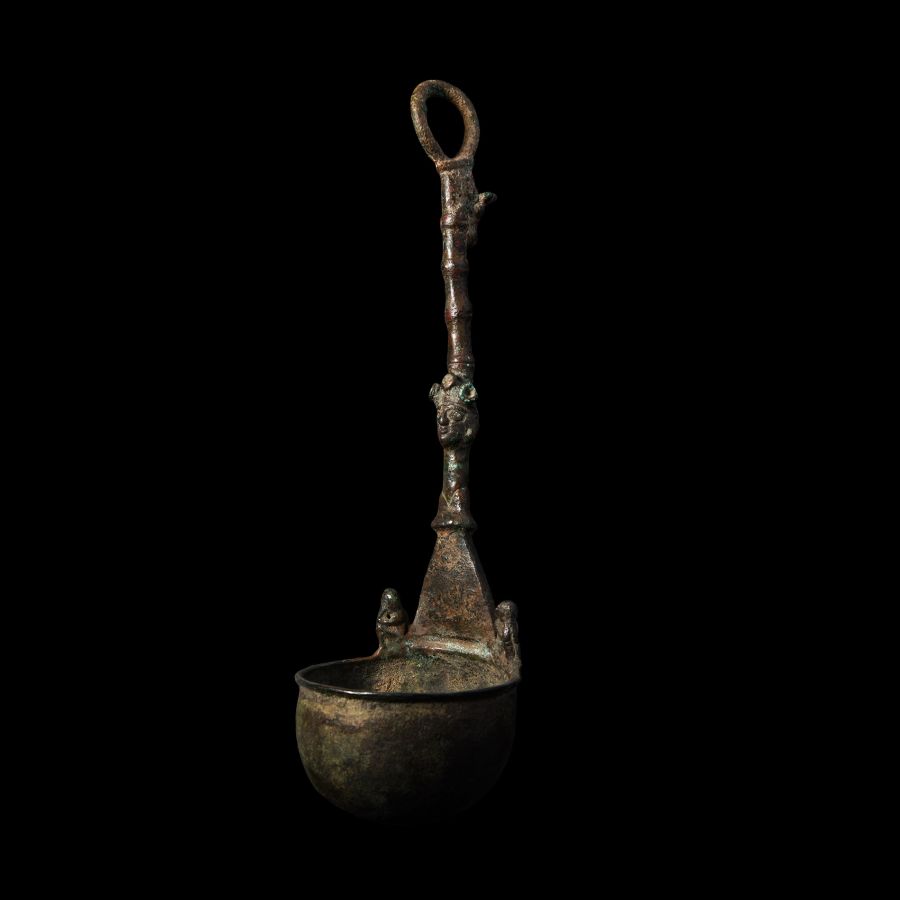
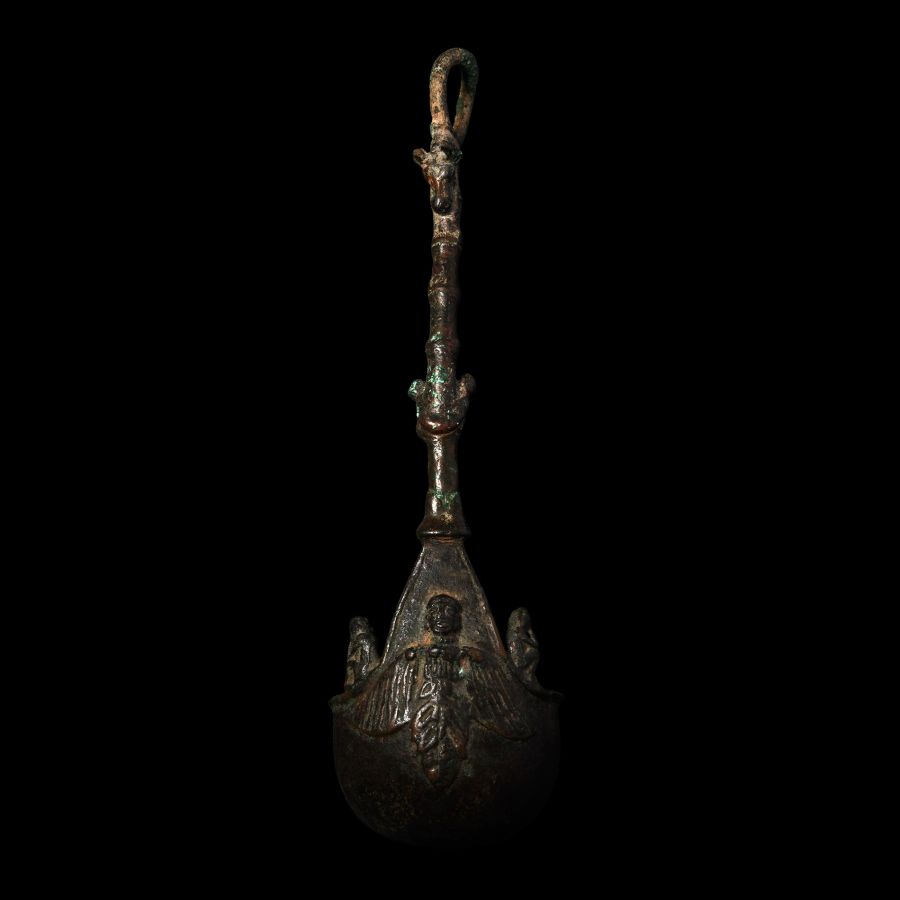
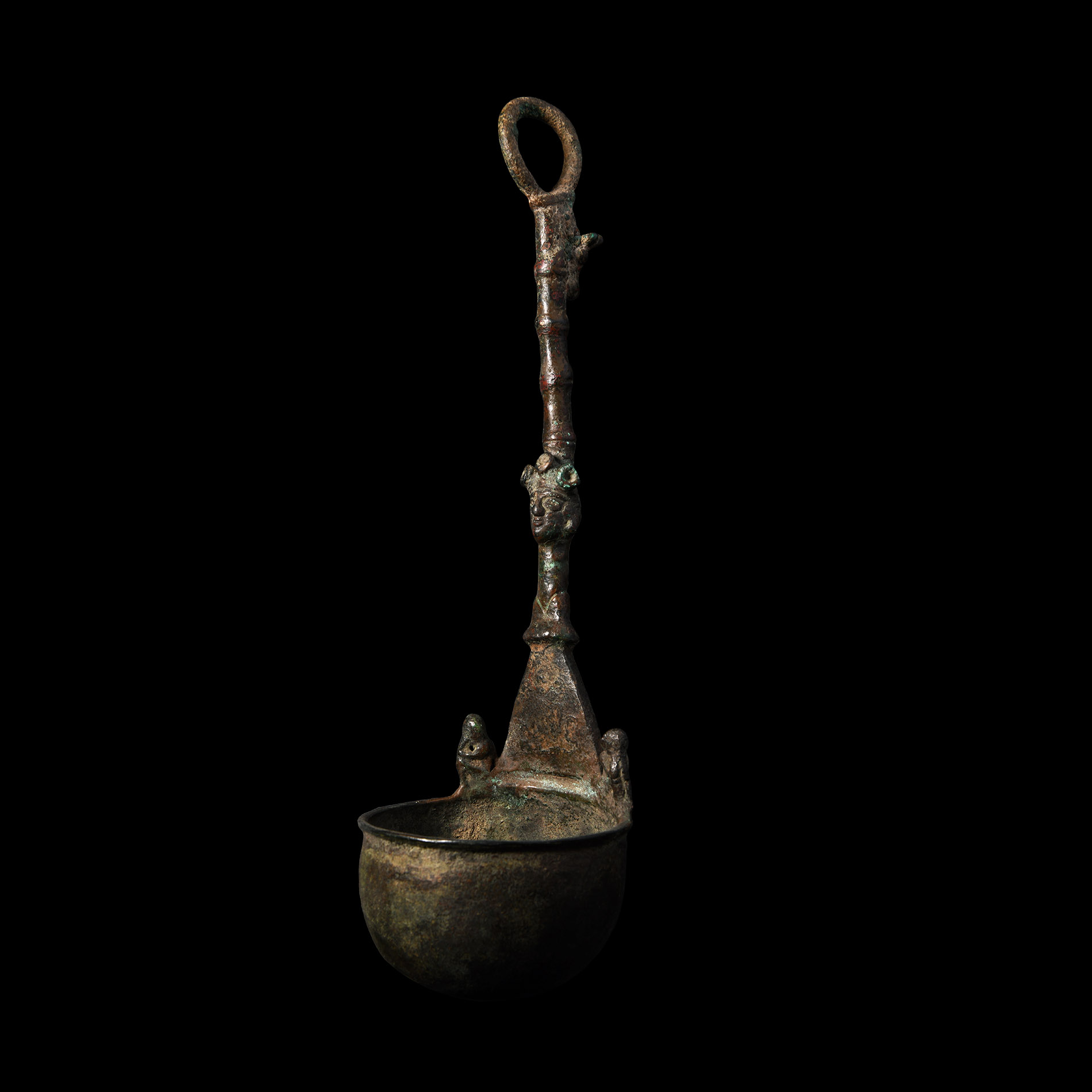
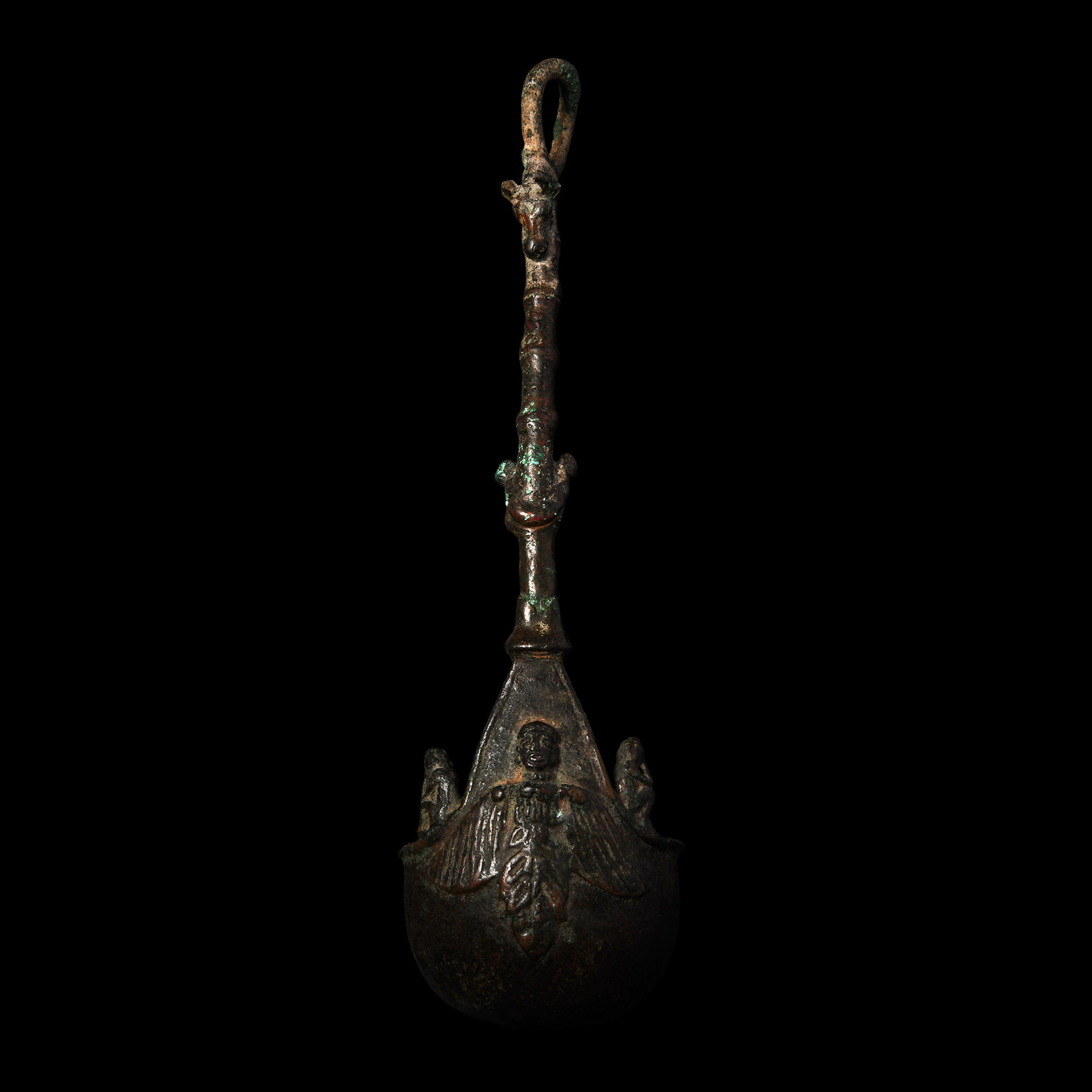
Greek Ladle with Bull’s Head and Sphinx
6TH-4TH CENTURY B.C.
8 5/8 in. (195 grams, 22 cm).
A bronze ladle with a deep hemispherical bowl and everted rim, long balustered handle with loop finial and bull’s head to the reverse of terminal, crowned female bust, crouching philosophers to the rim and winged sphinx between.
ProvenanceEx central London gallery.
London collection, 2000s.
TimeLine Auctions follows a vetting process to ensure the authenticity and legality of all items, reinforcing our commitment to integrity and responsible trading. Each antiquity, antique, and coin lot undergoes thorough examination by a vetting committee of at least ten external specialists, professional trade association members, scientists, and archaeologists: Our Vetting Process
AUCTIONS:
TimeLine is a leading auction house specialising in antiquities, ancient art, collectables, natural history, coins, medals, and books. Our auctions offer museums, collectors, historians, and enthusiasts the opportunity to acquire unique and historically significant pieces.
-
Scythian Decorated Gold Bell
1st millennium B.C.Estimate: £1,000 - 1,400 (‡+bp*)
Opening Bid: £500
A sheet-gold bell, domed with a rolled rim and vent at the apex; decorative band above the rim with reserved lozenges on a pounced field each with an impressed dimple to the centre; crack to one side. 19.47 grams, 48 mm
Cracked
Acquired early 1990s. Ex private American collection; thence by descent. Private Swiss collection since 1998. -
Greek Campanian Black Terracotta Bowl
4th century B.C.Sold for (Inc. bp): £468
A terracotta bowl or dish with broad inverted rim, squat convex body and carinated foot, covered in a black glaze and displaying a stylised radiating palmette leaf design to the interior base. 223 grams, 14.2 cm
Acquired early 1990s. Ex private American collection; thence by descent. Private Swiss collection since 1998. -
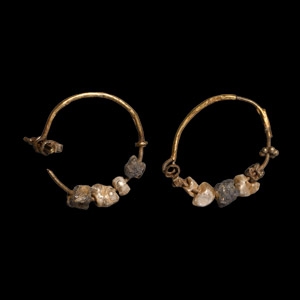
Greek Gold Hoop Earrings with Pearls
5th-3rd century B.C.Sold for (Inc. bp): £305
A matched pair of gold earrings, each composed of a round-section hoop, onto which are threaded pearl and filigree beads; one end detached. 1.4 grams total, 18-20 mm
Fine condition.
Acquired 1970-2010. Collection of a late Japanese gentleman.
