
Loading, please wait...
LOT 0318
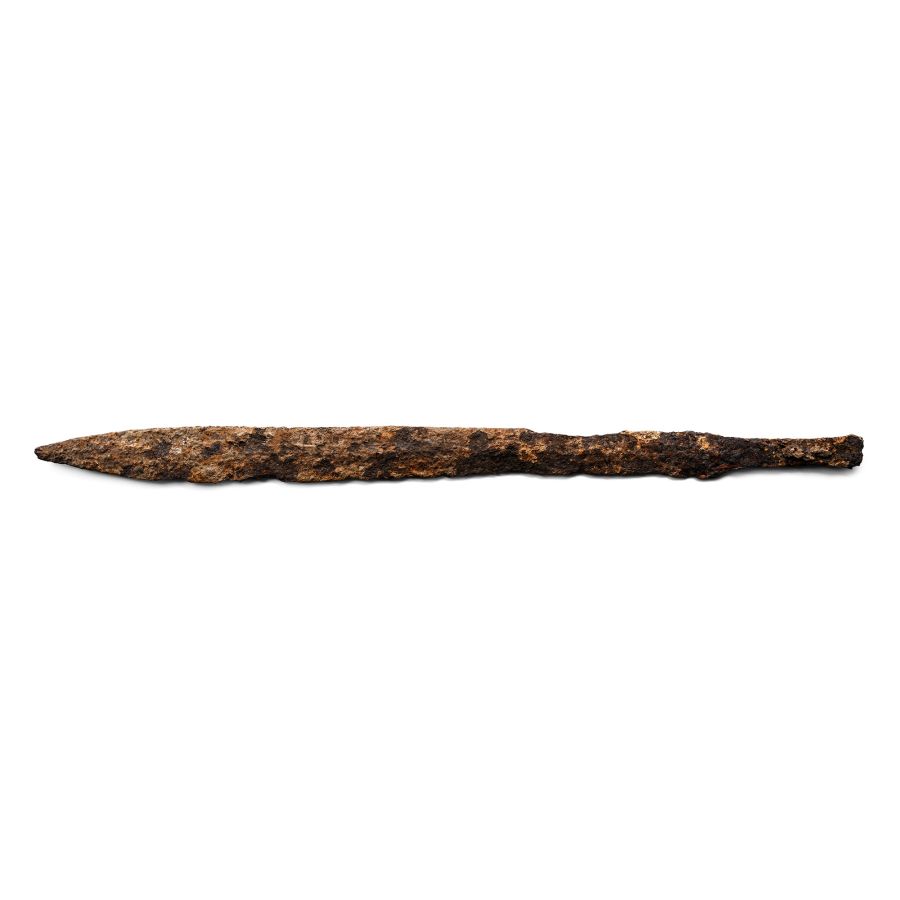
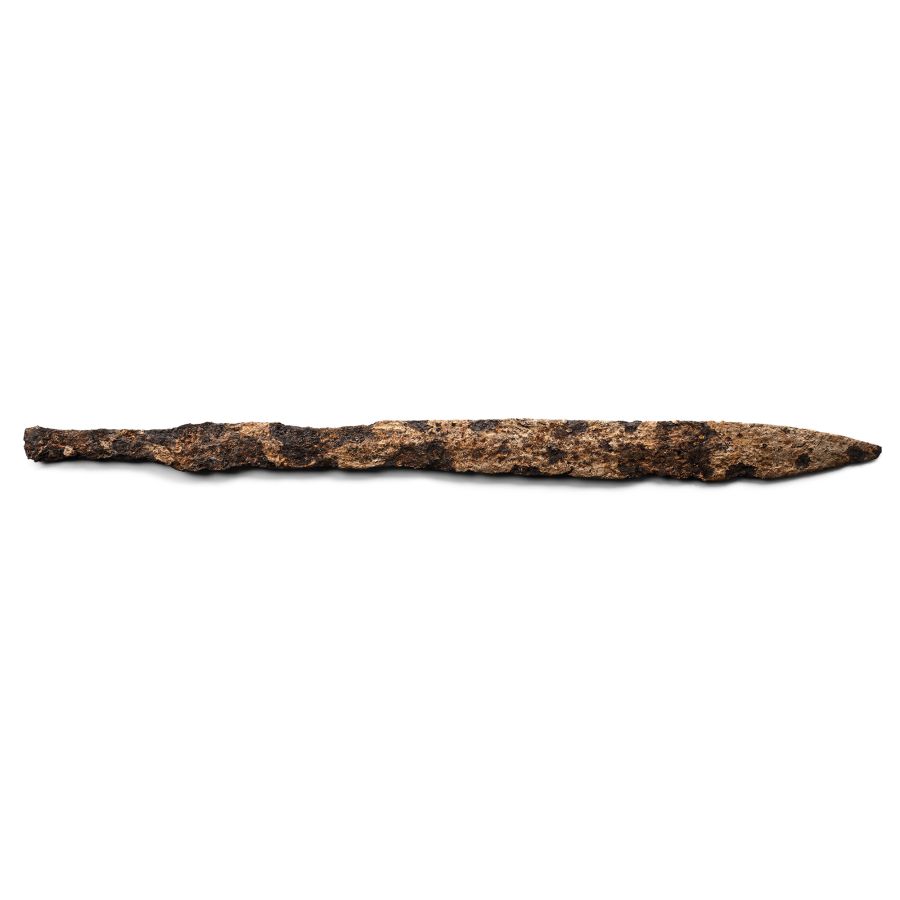
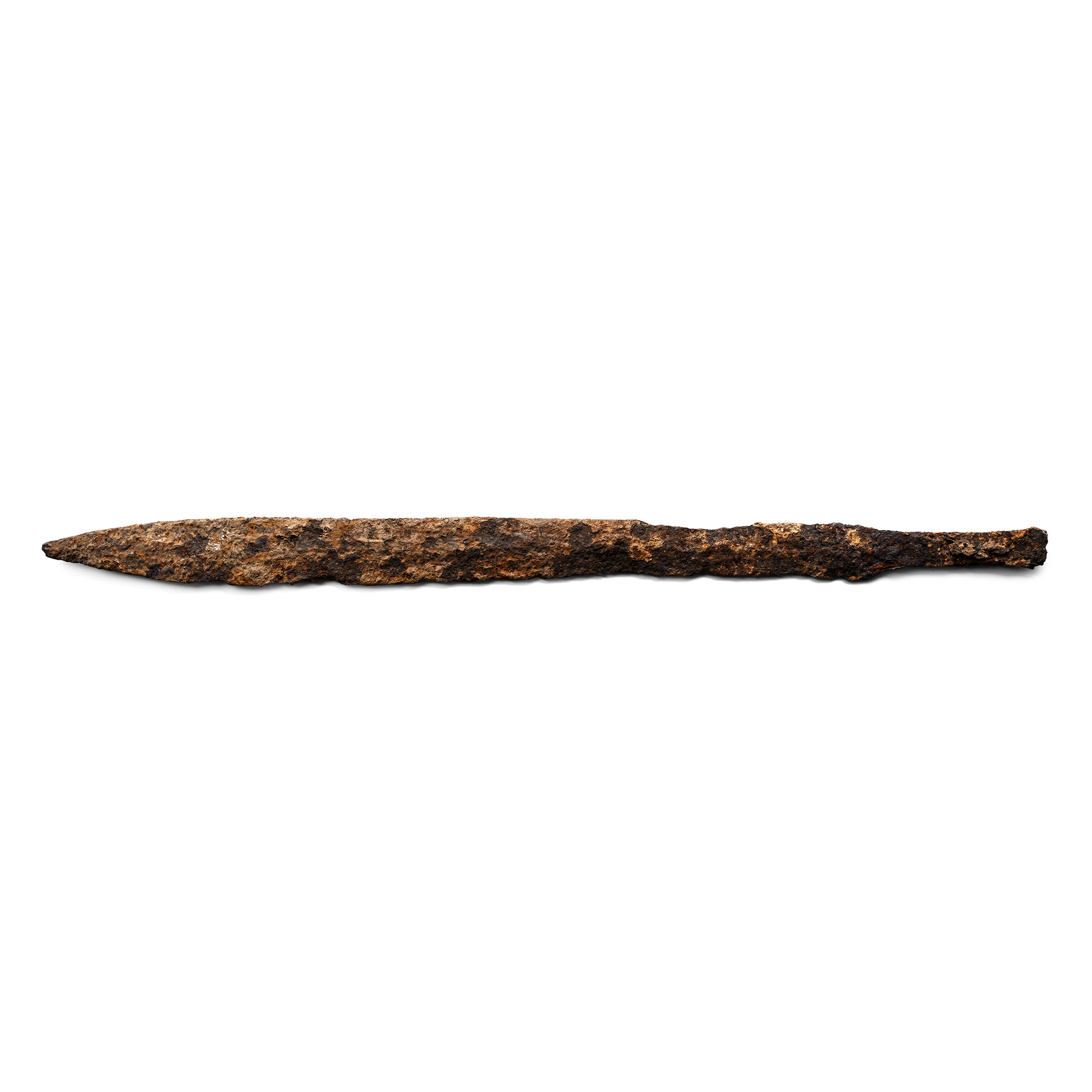
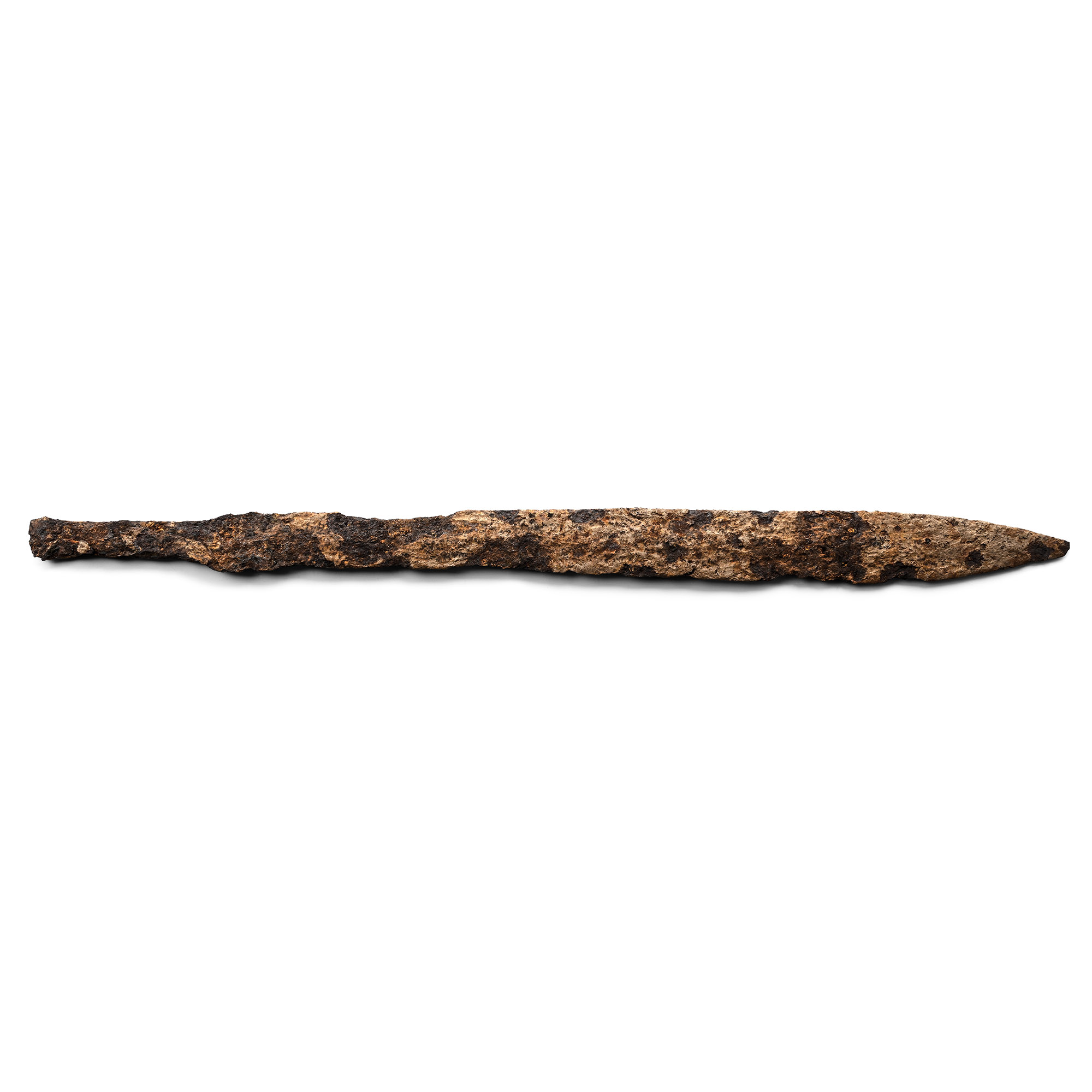
Greek Iron Short Sword
HELLENISTIC, 2ND-1ST CENTURY B.C.
22 in. (400 grams, 56 cm).
Lentoid in section with two cutting edges and narrow point; slight flare towards the tip; small shoulder and rectangular-section tang.
ProvenanceEx German art market, 2000s.
Acquired from an EU collector living in London.
From the collection of a Surrey, UK, gentleman.
See Esposito, G. Armies of the Hellenistic States 323 BC to AD 30. Stroud, 2019 for discussion; Cf. British Museum accession no. 1868,1025.98 for similar (with hilt intact).
FootnotesThis style of straight, parallel-sided weapon is referred to in Greek sources of the time as a xiphe. It was a secondary battlefield armament after the spear and javelin. It is associated with the revolutionary developments in armour, weaponry and tactics between the Classical and Iron Age periods.
CONDITIONTimeLine Auctions follows a vetting process to ensure the authenticity and legality of all items, reinforcing our commitment to integrity and responsible trading. Each antiquity, antique, and coin lot undergoes thorough examination by a vetting committee of at least ten external specialists, professional trade association members, scientists, and archaeologists: Our Vetting Process
AUCTIONS:
TimeLine is a leading auction house specialising in antiquities, ancient art, collectables, natural history, coins, medals, and books. Our auctions offer museums, collectors, historians, and enthusiasts the opportunity to acquire unique and historically significant pieces.
-
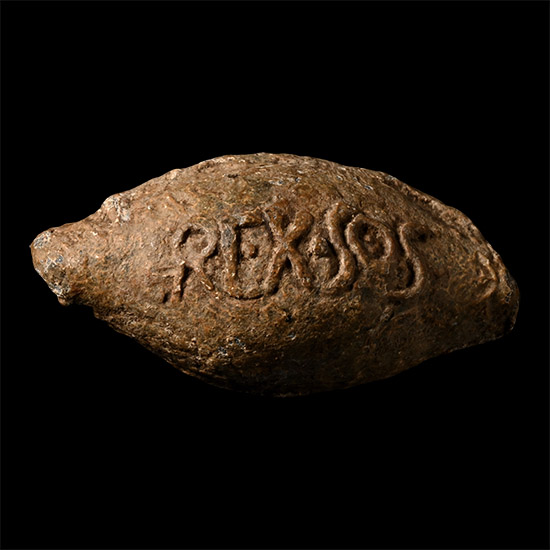
Greek Mauritanian Kingdom Lead Slingshot of King Mastanesosus
Circa 80-49 B.C.Sold for (Inc. bp): £780
Lentoid in form with raised legend to obverse 'REX·SOS'; Neo-Punic monogram to reverse. 72.8 grams, 40 mm
Acquired on the UK art market, early 2000s. Property of a London, UK, antiquarian.
This remarkable slingshot offers a rare insight into a little-known period in the history of the Kingdom of Mauretania in the first century BC. The piece can be linked to King Mastanesosus, who is known to have shortened his name to “Sos.” He was the son of Bocchus I (c. 110–80s BC), the ruler who famously betrayed King Jugurtha of Numidia to Sulla and the Roman Republic. The Latin inscription reflects Rome's growing influence at the time. It may even suggest that Roman slingers were part of Sosus’s army. During this period, Mauretania was already coming under Roman control and influence. Later, Bocchus II, the grandson of Sosus, supported the winning side in Rome’s civil war, and Mauretania became a client kingdom. This eventually led to its full absorption into the Roman Empire after the murder of King Ptolemy, son of Juba, by the emperor Caligula. The reverse of the slingshot shows a monogram in neo-Punic, similar to those found on coins from the same period. This is almost certainly a personal symbol or mark of Sosus himself. The use of both Latin and Neo-Punic makes the piece bilingual, which is particularly interesting. -
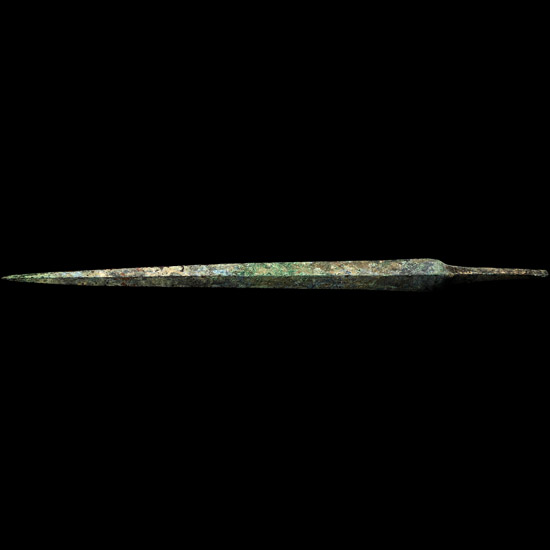
Luristan Bronze Tanged Lancehead
800-600 B.C.Sold for (Inc. bp): £124
With a tapering rectangular-section blade and a short tang. 239 grams, 31 cm
Ex Abelita family collection, 1980s-2000s.
These shoulderless spearheads are introducing the Luristan and Hamadan in the Median and Achaemenid Periods. The bronze type was cast in a mould, and the length suggests it was a throwing weapon or used in conjunction with a chariot. -
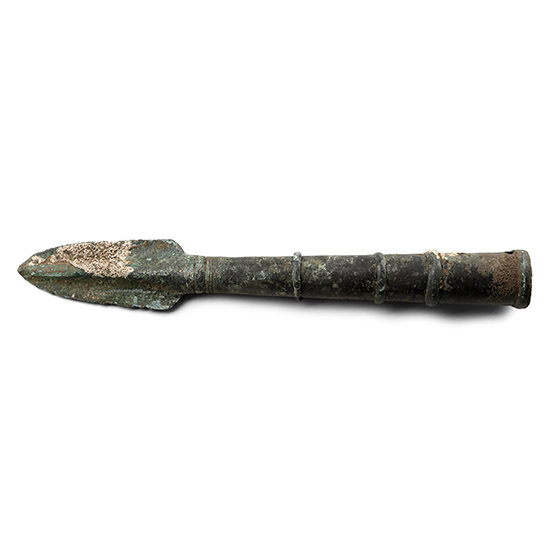
Luristan Bronze Socketted Spearhead
9th-7th century B.C.Sold for (Inc. bp): £117
Comprising a tapering tubular socket with raised ribs, a triangular blade with a raised midrib; ferrel collars to the shaft. 80 grams, 18.6 cm
Ex Abelita family collection, 1980s-2000s.
These kinds of spearheads were realised by casting in a mould. They were of different lengths and used by Luristan, Hamadan, early Median and Achaemenid warriors. The bronze rings were destined to reinforce the structure of the bronze shaft, because the blow, with this spear, was usually delivered by grasping the spear with two hands.
