
Loading, please wait...
LOT 0544
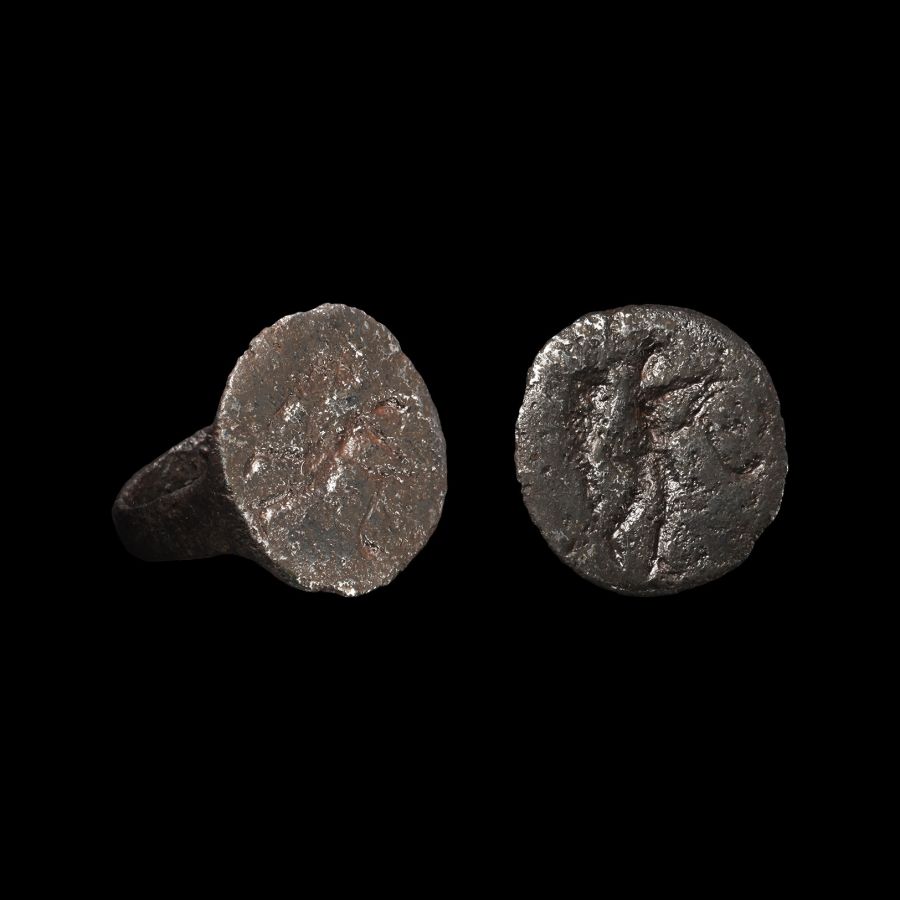
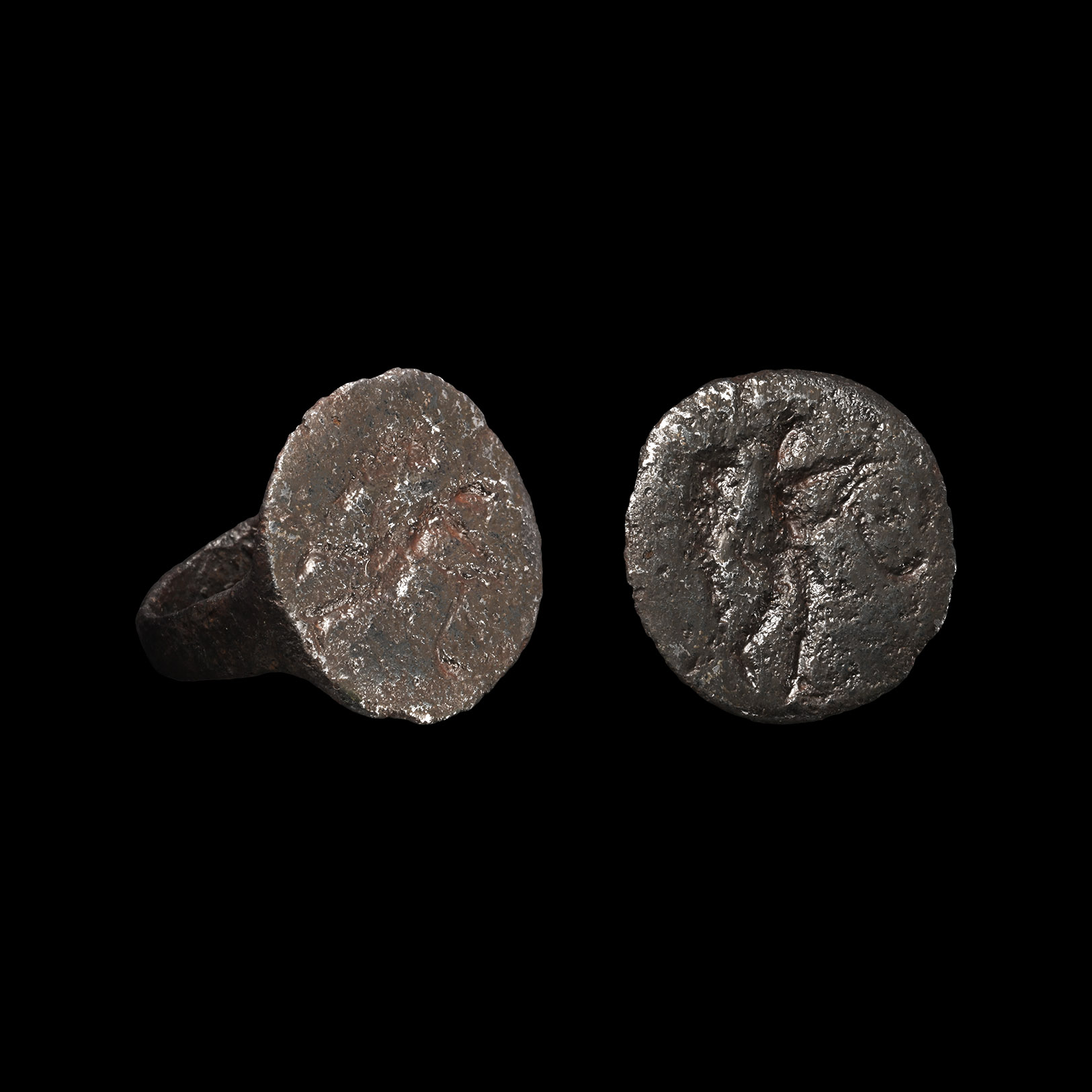
Greek Iron Ring with Figure
3RD-2ND CENTURY B.C.
7/8 in. (7.81 grams, 23.00 mm overall, 17.00 mm internal diameter (approximate size British N 1/2, USA 6 3/4, Europe 14.35, Japan 13)).
Composed of a D-section hoop with slightly splayed arms and a large sub-oval bezel, engraved with a figure advancing right. [No Reserve]
ProvenanceEx old English collection.
London art market, 1980s.
TimeLine Auctions follows a vetting process to ensure the authenticity and legality of all items, reinforcing our commitment to integrity and responsible trading. Each antiquity, antique, and coin lot undergoes thorough examination by a vetting committee of at least ten external specialists, professional trade association members, scientists, and archaeologists: Our Vetting Process
AUCTIONS:
TimeLine is a leading auction house specialising in antiquities, ancient art, collectables, natural history, coins, medals, and books. Our auctions offer museums, collectors, historians, and enthusiasts the opportunity to acquire unique and historically significant pieces.
-
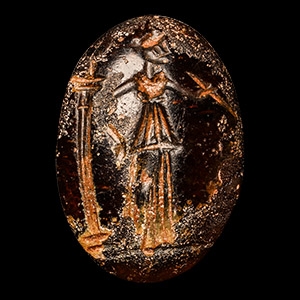
Hellenistic Glass Gem with Goddess
3rd-2nd century B.C.Estimate: £600 - 800 (+bp*)
Opening Bid: £333
Engraved with a goddess (Aphrodite?), facing right, peplos around her hips, her left elbow resting on a column and her left hand behind her body; the right hand outstretched and holding a sceptre; a snake(?) before. 2.52 grams, 22 mm
Acquired in the late 1980s-early 1990s. Important North West London collection.
In the famous Greek myth of the Gorgon, Aphrodite, jealous of their beauty, placed a curse on Medusa and her sisters, transforming their hair into snakes and making their gaze turn anyone into stone. -
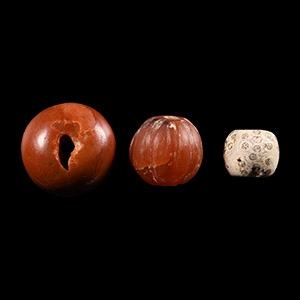
Eastern Mediterranean Stone and Glass Bead Collection
1st millennium B.C.Sold for (Inc. bp): £39
Comprising: one red jasper sphere; one glass sphere with worn eye motifs; one carnelian melon bead. 35.5 grams total, 15 - 26 mm
Acquired 1970s-1996. Property of a North American collector. London collection, 2016. -
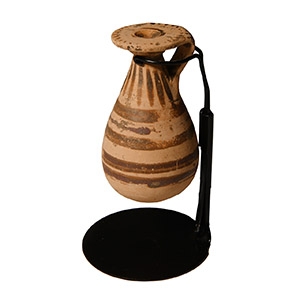
Greek Corinthian Ceramic Alabastron with Geometric Design
Circa 6th century B.C.Sold for (Inc. bp): £221
The piriform bottle with broad everted rim and strap handle, polychrome painted dashes and concentric bands to the upper body and rim; accompanied by a custom-made display stand. 36 grams total, 77 mm high including stand
Acquired 1980s-1990s. From the H.N. collection, Milton Keynes, Bedfordshire, UK.
The alabastron takes its name from the material (alabaster) from which it was originally produced by the people who inhabited Mediterranean Africa from where it spread in the classical world. From an archaeological point of view, our specimen belongs to the first type of alabastrons, a conventional form of Corinthian origin, widespread throughout Greece from the second half of the 7th century BC. to the mid-6th century B.C., characterised by an elongated body with a maximum diameter towards the base, and continuous profile. It seems to be an Etrusco-Corinthian variant.
