
Loading, please wait...
LOT 0521
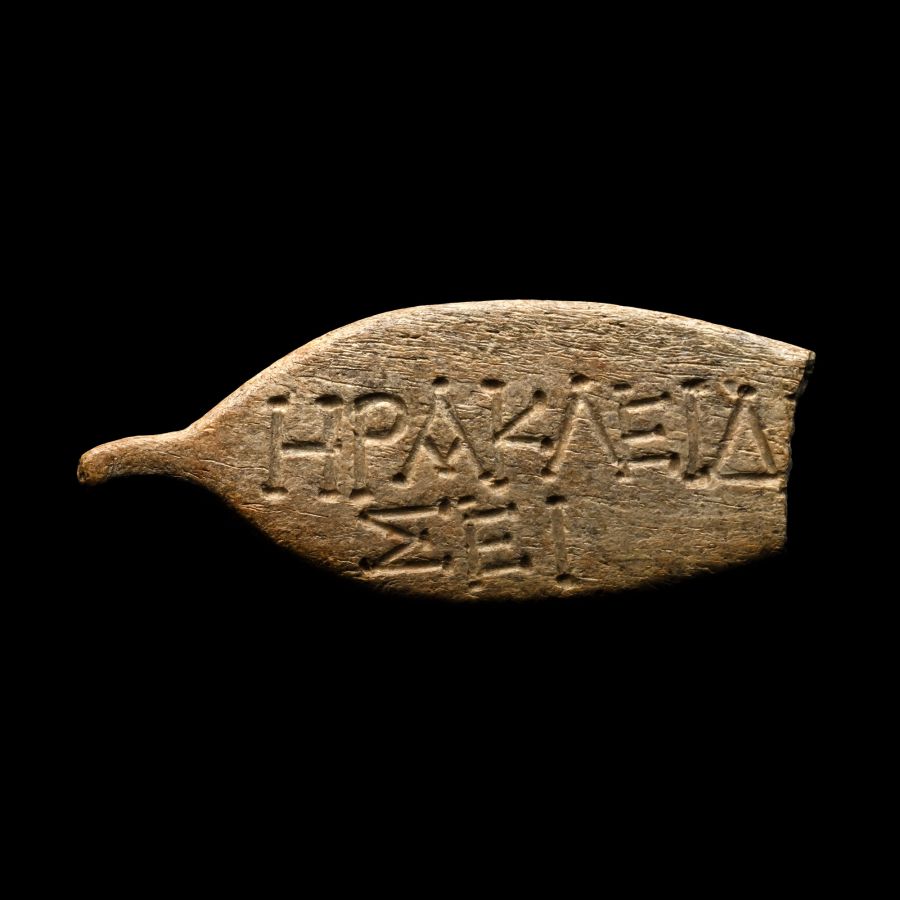
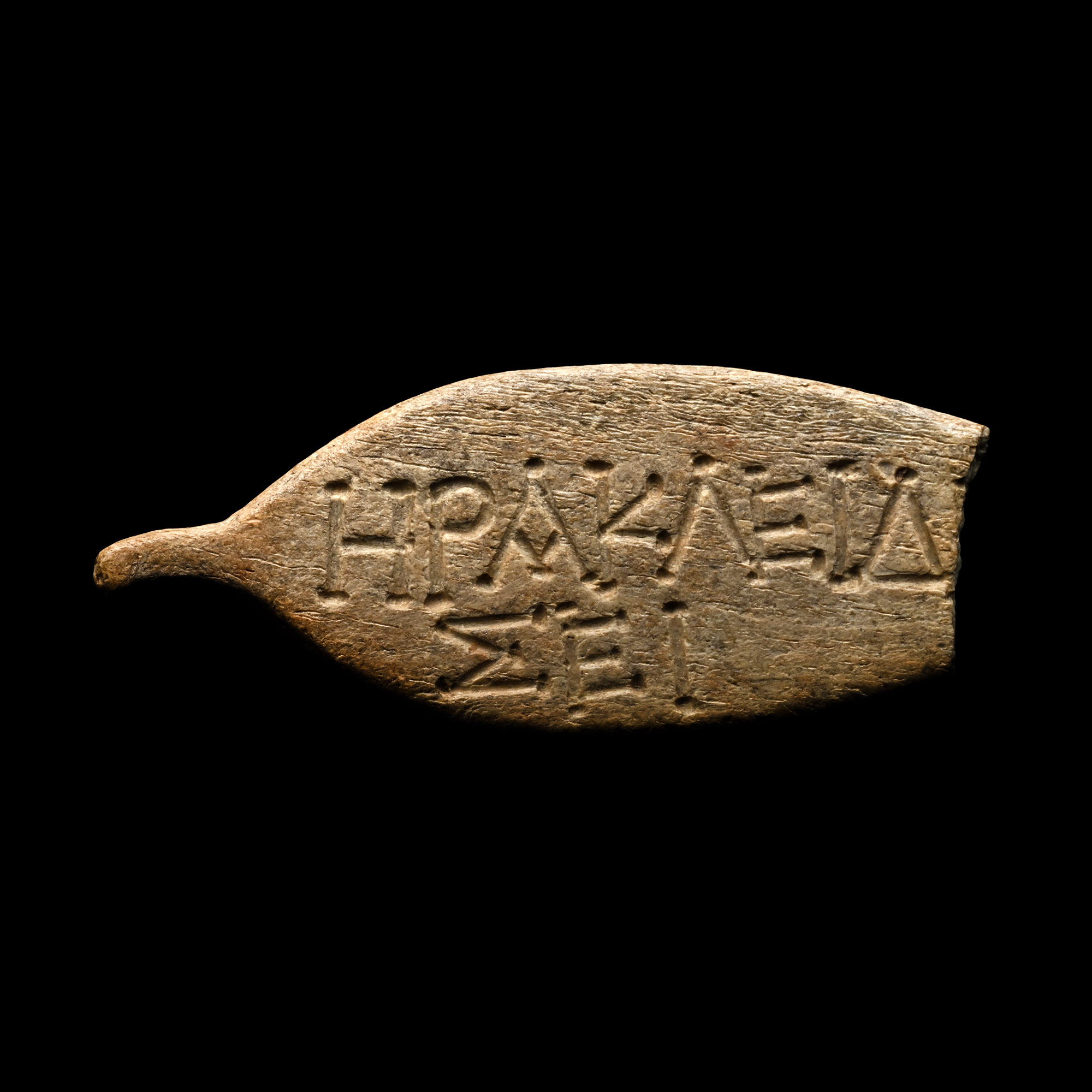
Greek Inscribed Bone Plaque
LATE 1ST MILLENNIUM B.C.
1 7/8 in. (3.24 grams, 48 mm).
A leaf-shaped plaque with a Greek inscription 'HPAKΛEIΔ [E] Σ EI' [possibly = of Heracleides]. [No Reserve]
ProvenanceFrom the collection of a gentleman, acquired on the London art market in the 1990s.
CONDITIONTimeLine Auctions follows a vetting process to ensure the authenticity and legality of all items, reinforcing our commitment to integrity and responsible trading. Each antiquity, antique, and coin lot undergoes thorough examination by a vetting committee of at least ten external specialists, professional trade association members, scientists, and archaeologists: Our Vetting Process
AUCTIONS:
TimeLine is a leading auction house specialising in antiquities, ancient art, collectables, natural history, coins, medals, and books. Our auctions offer museums, collectors, historians, and enthusiasts the opportunity to acquire unique and historically significant pieces.
-
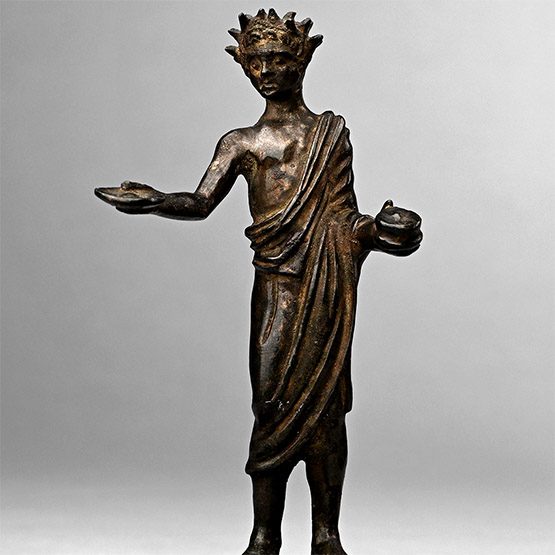
Etruscan Bronze Votive Figure of Genius Sacrificulus
6th-5th century B.C.Sold for (Inc. bp): £1,560
Depicting a ‘genius’ making a sacrifice, his head surrounded by a radiate crown or a wreath of laurel leaves arranged in rays; bare-chested with a cloak (tebenna) falling over his left shoulder, covering his back and resting on his left arm, enveloping his legs to below the knee; holding a patera in his right hand and an acerra in his left; accompanied by a display stand. 189 grams, 12.1 cm (367 grams total, 13.4 cm high including)
Anne Betgoner, Paris, by descent. French private collection, acquired in the early 20th century. Acquired from the above by the present owner. Private collection, UK. This lot has been checked against the Interpol Database of stolen works of art and is accompanied by a search certificate number no.13235-251199.
The figure represents a genius dressed as a priest according to the Etruscan tradition. He is celebrating a sacrifice by offering to the gods with a patera of precious liquids and perfumes, kept in the acerra or pyxis. Acerra was the name given to the casket in which the incense intended for sacrifices was placed (arcula turalis). A servant carried it to the altar, and the granules from the casket were scattered on the flames (acerra libare). -
.jpg)
Eastern Greek Parcel-Gilt Bowl with Inscription
Hellenistic, late 2nd-early 1st century B.C.Estimate: £6,000 - 8,000 (‡+bp*)
Opening Bid: £3,000
Broad and shallow with thick rolled rim; parcel-gilt band to the inner face below the rim of running scrolls on a pounced field; to the centre, a hexafoil reserved on a pounced field with border of running scrolls; pointillé cursive Aramaic inscription to the outer face. 413 grams, 20.6 cm wide
Private collection, London, 1990s or earlier. with Gorny & Mosch, 22 June 2007, no.37. with Christie's, New York, 5 December 2012, no.52. Accompanied by copies of the relevant Gorny & Mosch and Christie's catalogue pages. Accompanied by an academic report by Dr Raffaele D'Amato. This lot has been checked against the Interpol Database of stolen works of art and is accompanied by search certificate number no.13217-250131.
The bowl is related to a large group of Hellenistic silver vessels of similar shape, some with Aramaic inscriptions on the exterior beneath the rim, all thought to be of eastern origin, produced within the Seleucid Empire. Here, the Aramaic inscription, now mostly unreadable, reports the name of the maker and the weight of the bowl as 118 zuzim. -
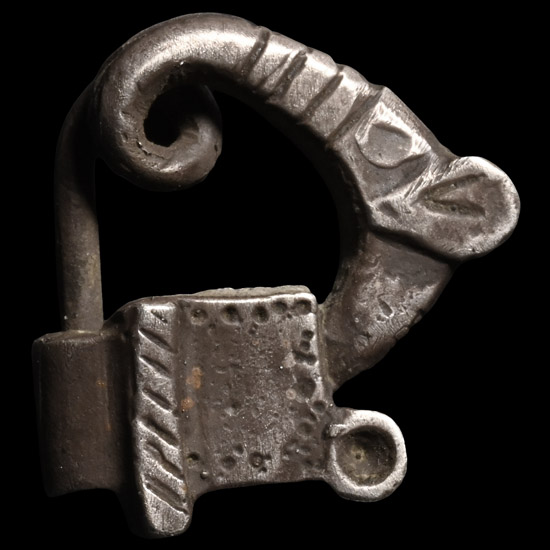
Phrygian Silver Bow Brooch
Iron Age, circa 8th-7th century B.C.Sold for (Inc. bp): £65
The bow formed as a stylised animal with teardrop-shaped ears and a long, curving trunk extending as the pin, square footplate with a small loop. 2.93 grams, 16.12 mm
From the private collection of a European gentleman (1942-2024), formed since the 1970s.
