
Loading, please wait...



LOT 0596
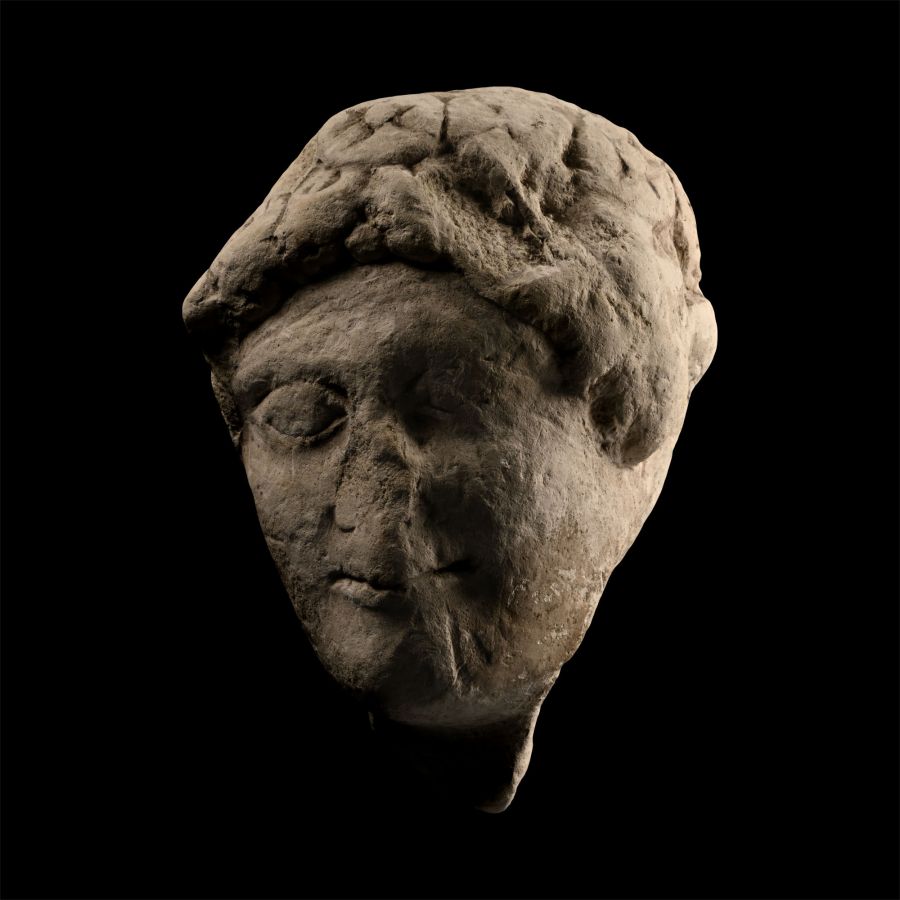
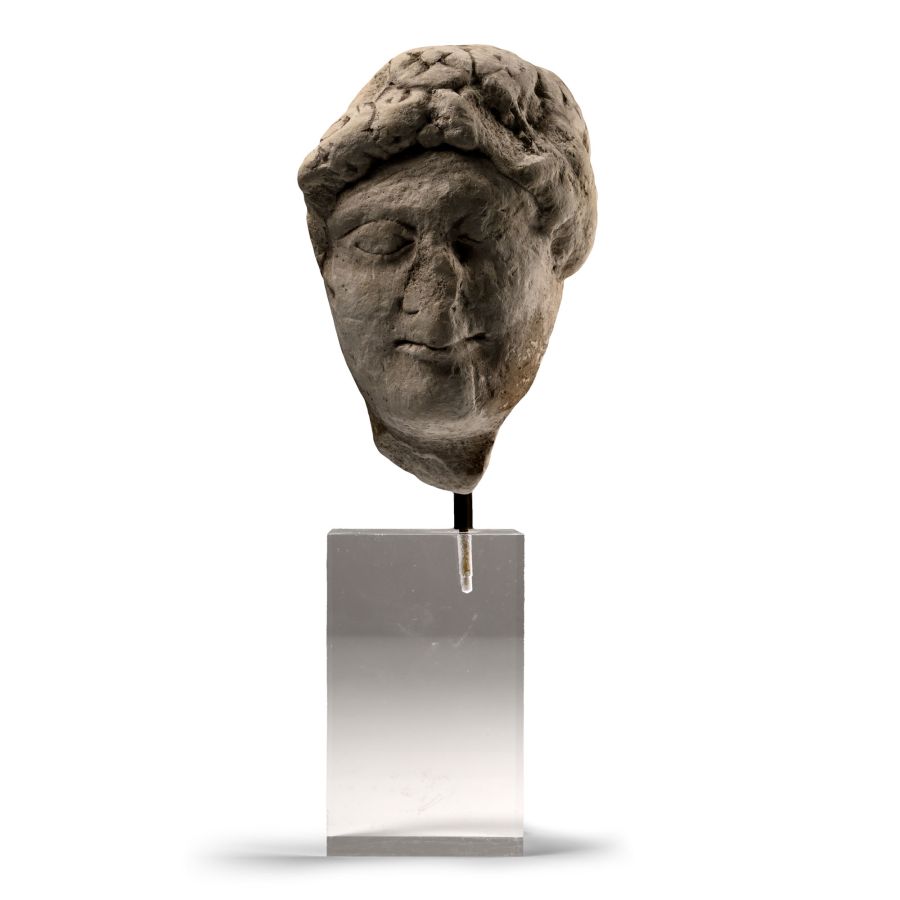
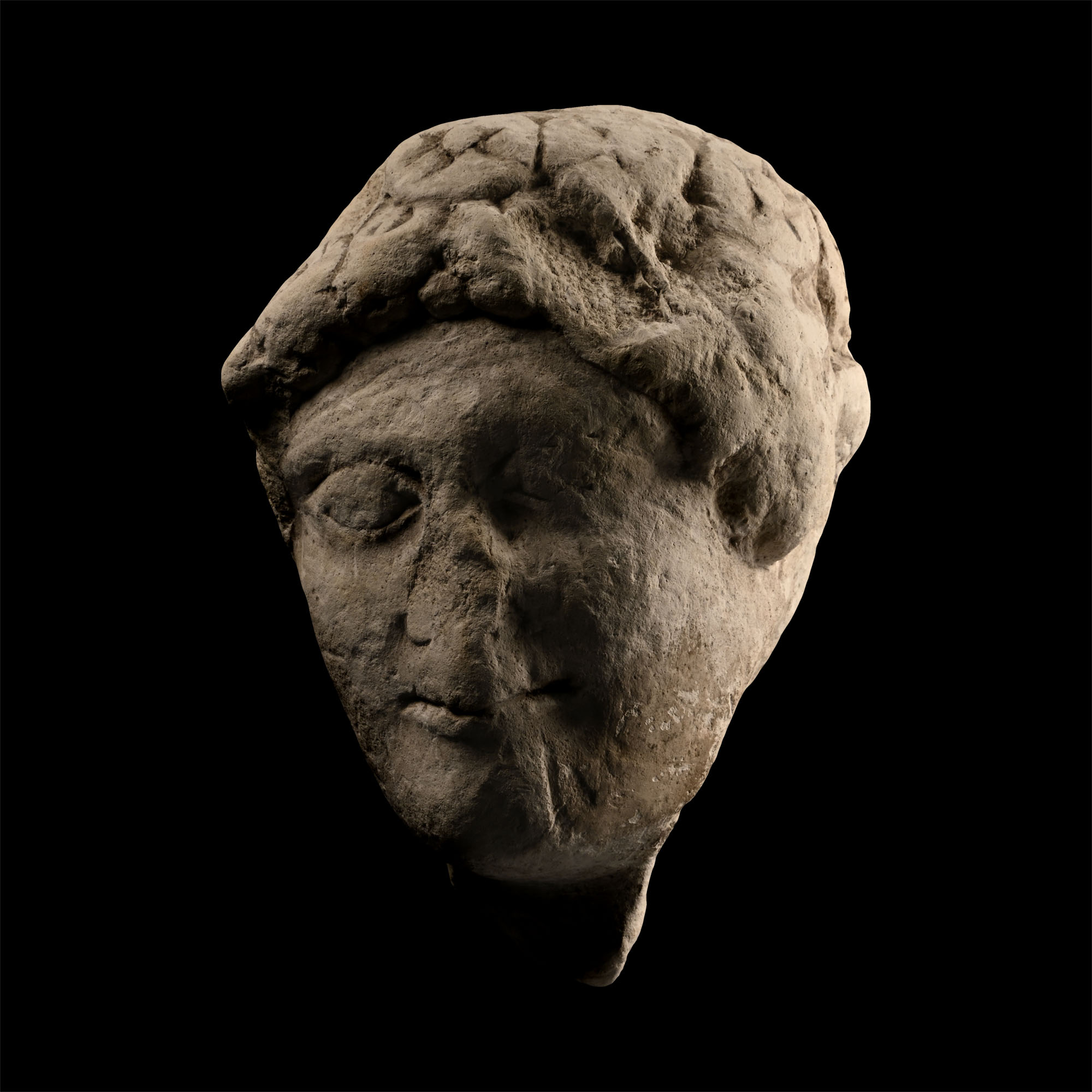
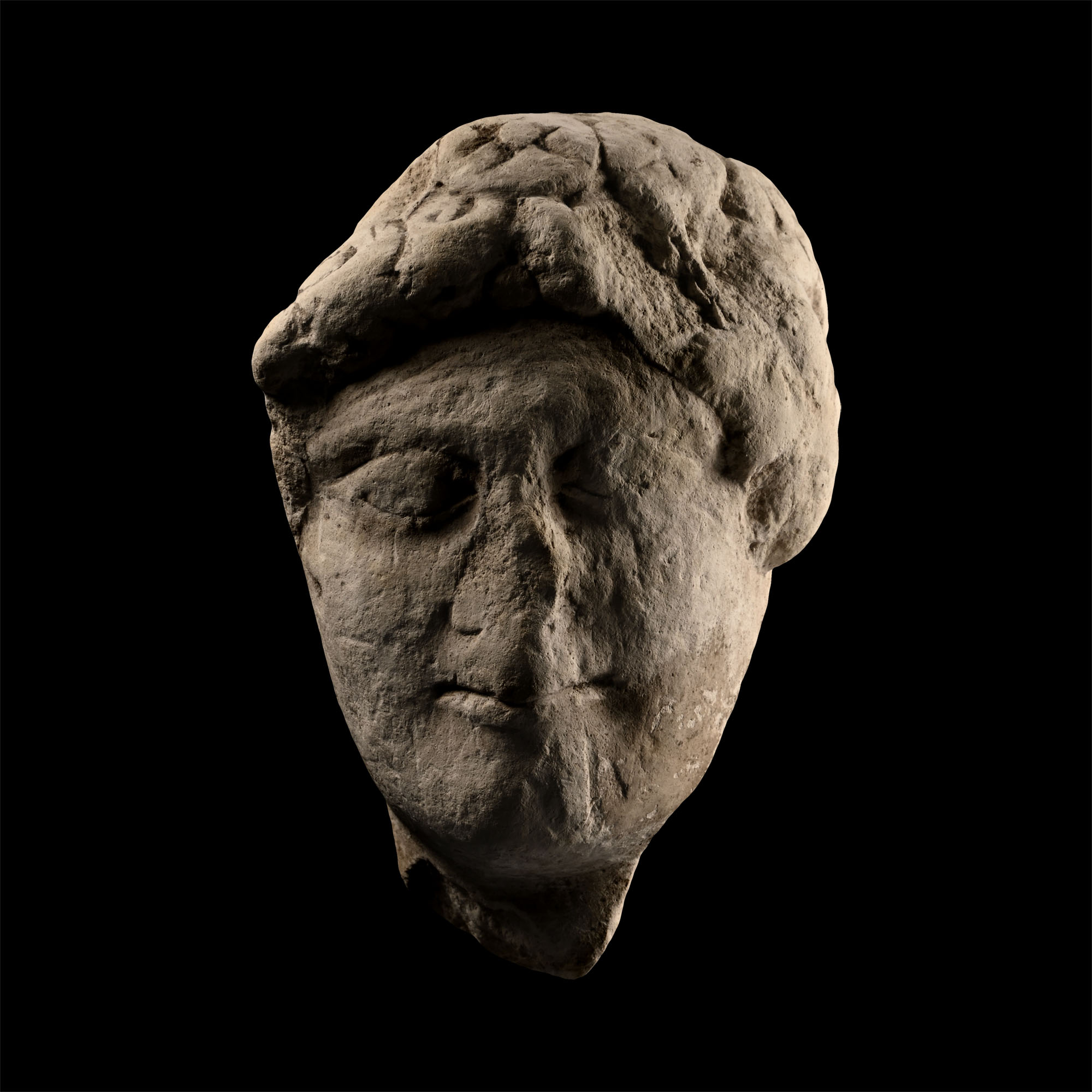
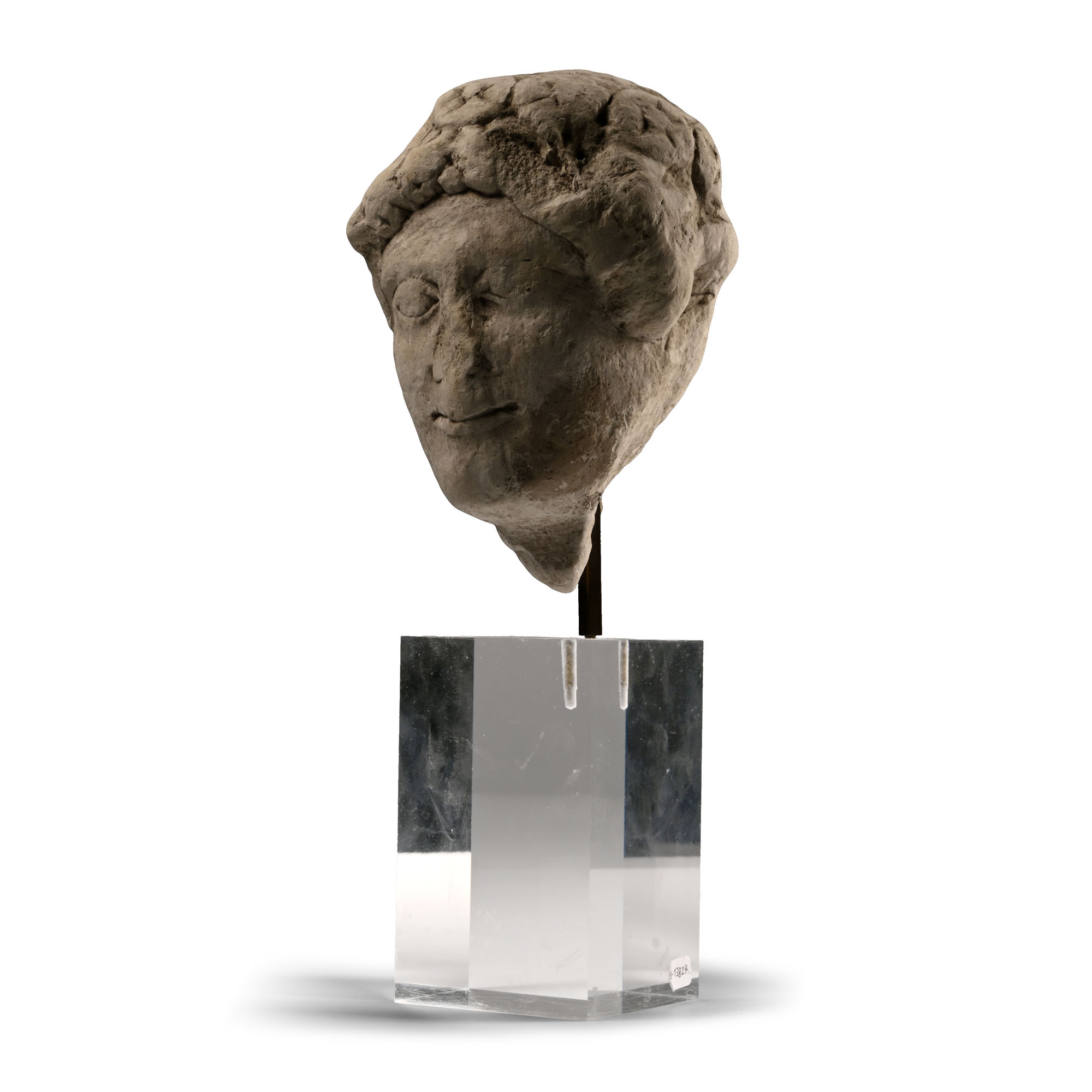
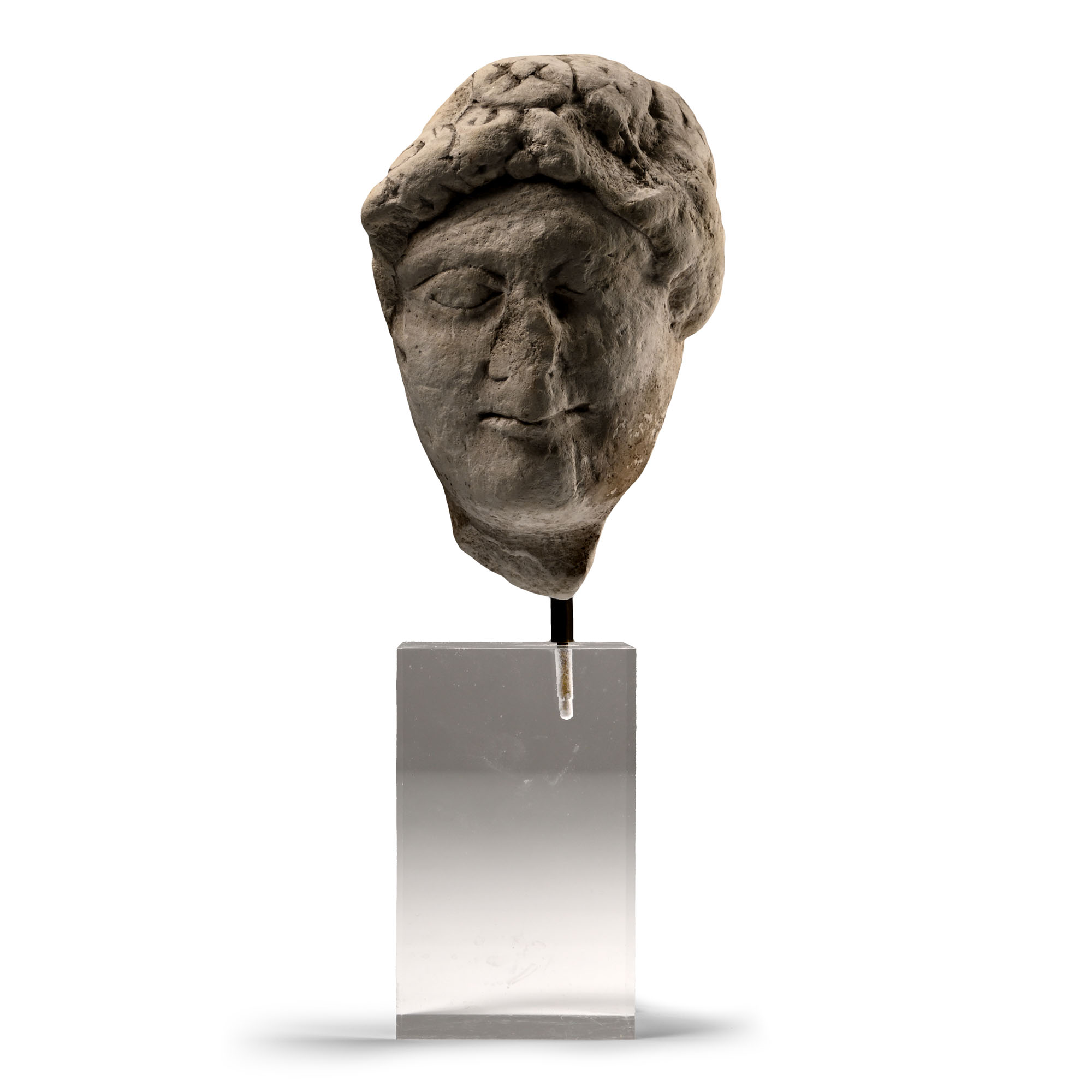
Greek Head of a Youth with a Floral Crown
LATE ARCHAIC, LATE 6TH-EARLY 5TH CENTURY B.C.
9 5/8 in. (958 grams total, 24.6 cm including stand).
Modelled in three-quarter view, limestone face of a youth with almond-shaped eyes with broad upper lids under a flat brow; eyeballs contoured by a fine outer groove and lips with the 'archaic' smile; rosette wreath over spiral-shaped, voluminous curls framing the forehead; the surface abraded and some curls lost; reverse trimmed and smoothed at an angle; mounted on a custom-made display stand.
ProvenanceJean-Louis Debauve (1926-2016).
with Jean Renaud Geoffroy & Yves Becquet Auction, Paris, 16 November 2018, no.225.
This lot is accompanied by an illustrated lot declaration signed by the Head of the Antiquities Department, Dr Raffaele D’Amato.
This lot is accompanied by an illustrated lot declaration signed by the Head of the Antiquities Department, Dr Raffaele D'Amato.
The head probably originally belonged to one of the votive statuettes, mostly hewn from limestone, which are frequently documented for the Cypriot region at this period.
CONDITIONTimeLine Auctions follows a vetting process to ensure the authenticity and legality of all items, reinforcing our commitment to integrity and responsible trading. Each antiquity, antique, and coin lot undergoes thorough examination by a vetting committee of at least ten external specialists, professional trade association members, scientists, and archaeologists: Our Vetting Process
AUCTIONS:
TimeLine is a leading auction house specialising in antiquities, ancient art, collectables, natural history, coins, medals, and books. Our auctions offer museums, collectors, historians, and enthusiasts the opportunity to acquire unique and historically significant pieces.
-
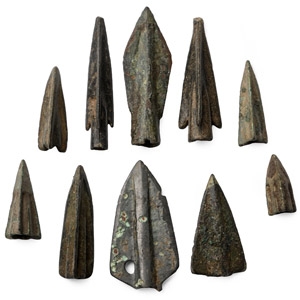
Greek Period High Quality Bronze Arrowhead Collection
5th-3rd century B.C.Sold for (Inc. bp): £143
Mainly triangular-section socketted and deltoid types. 28 grams total, 16-35 mm
From an English collection formed before 2000. This lot is accompanied by an illustrated lot declaration signed by the Head of the Antiquities Department, Dr Raffaele D'Amato. -
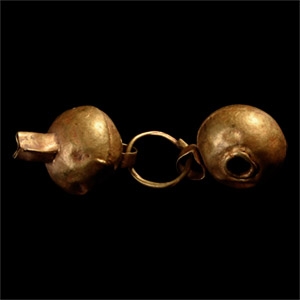
Greek Gold Pomegranate-Shaped Pendant
Circa 5th-3rd century B.C.Sold for (Inc. bp): £234
Comprising a hollow-form body with detailed calyx below, the suspension formed as a hollow collared bead with a thin connecting loop. 0.29 grams, 18 mm
From the collection of a late Japanese collector, 1970s. This lot is accompanied by an illustrated lot declaration signed by the Head of the Antiquities Department, Dr Raffaele D'Amato.
Fruit were generally considered to be a symbol of sensuality, temptation and fertility; the giving and accepting of fruit may be regarded as a symbolic sexual act, or at least a prelude to marriage. It follows naturally that the pomegranate, with its innumerable fleshy seeds symbolising life and fecundity, was an attribute of Aphrodite. -
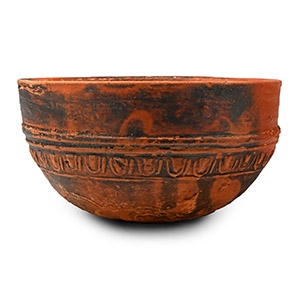
Greek Megarian Terracotta Bowl
2nd century B.C.Estimate: £350 - 450 (+bp*)
Opening Bid: £175
Hemispherical in profile with slightly everted rim and a matt glaze, raised architectural motifs to the shoulder, dense stylised vines below; shallow rosette foot. 208 grams, 13.5 cm
From the collection of a gentleman, acquired on the London art market in the 1990s. This lot is accompanied by an illustrated lot declaration signed by the Head of the Antiquities Department, Dr Raffaele D'Amato.
