
Loading, please wait...
LOT 0594
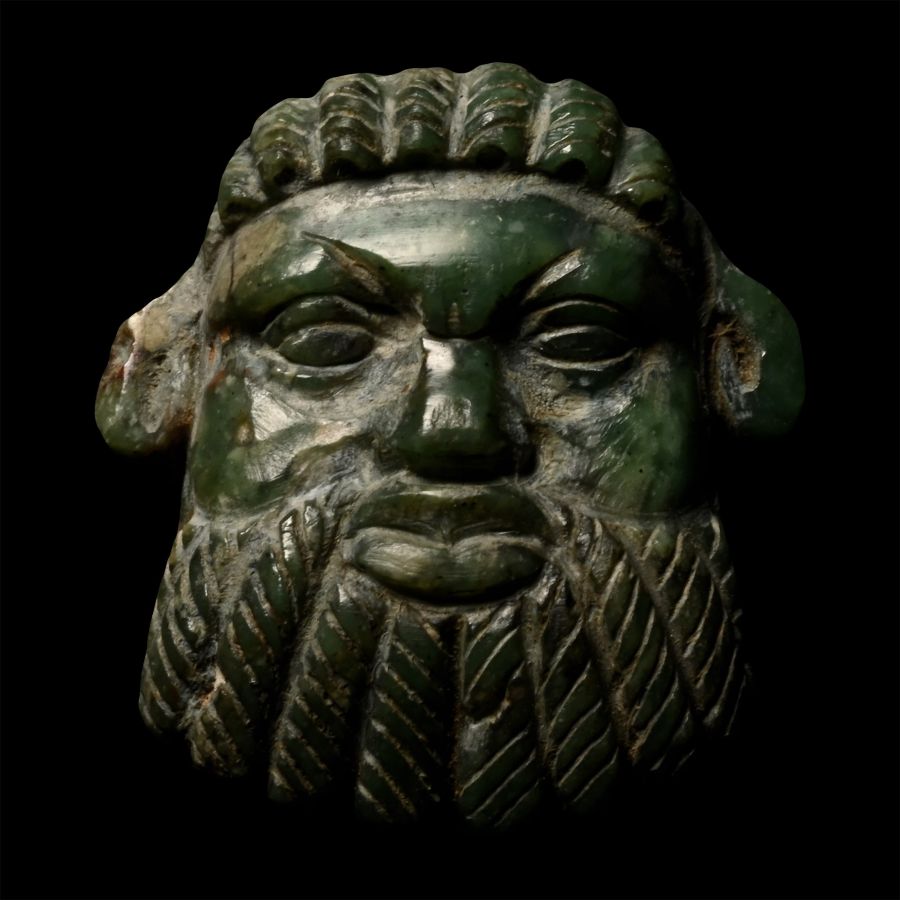
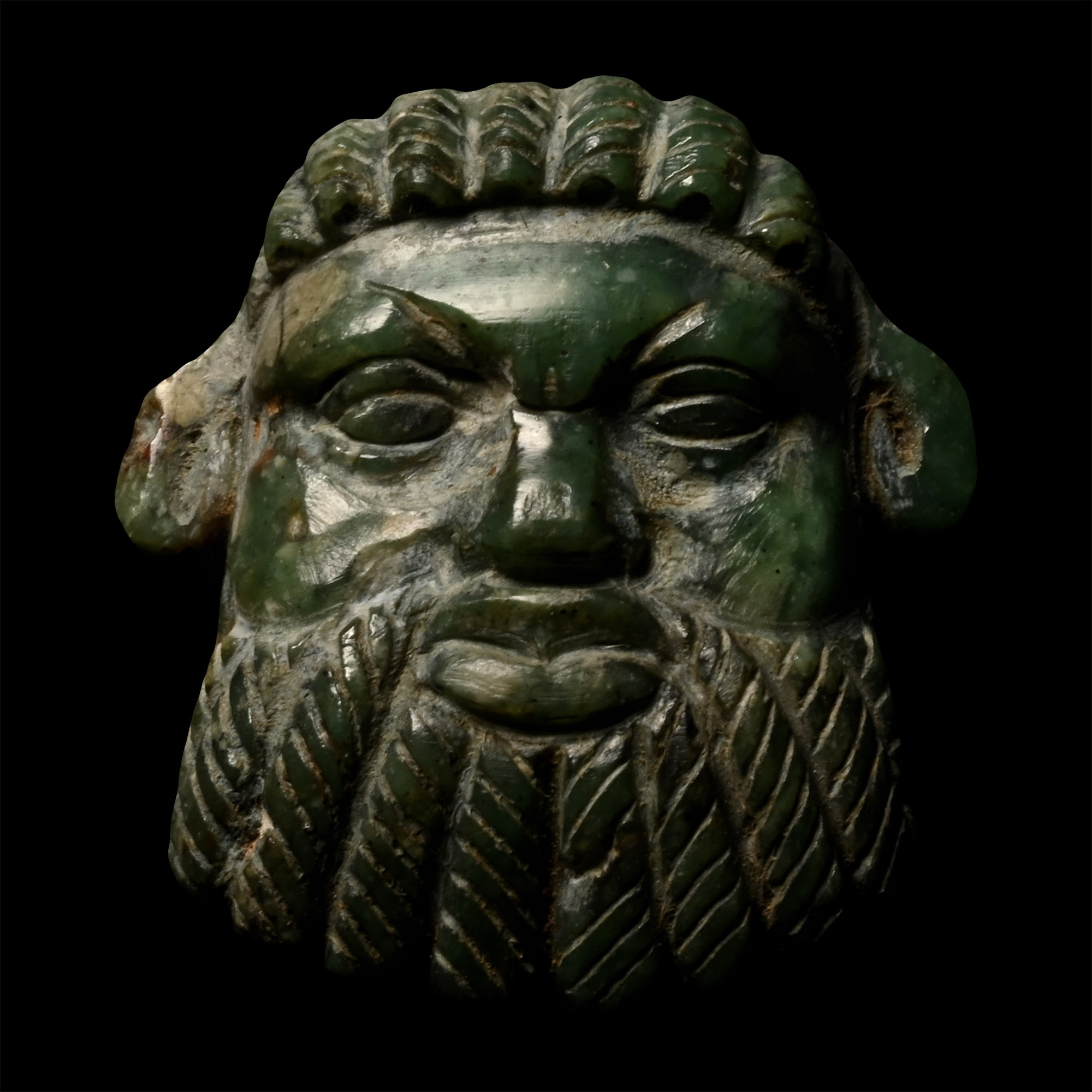
Greek Green Stone Bearded Face Amulet
400-300 B.C.
3/4 in. (4.16 grams, 20 mm).
Finely carved head, featuring narrow eyes, a snub nose, full lips, a broad, stranded beard, and tightly curled hair rows; with a suspension loop behind the head.
ProvenancePrivate collection, England.
FootnotesThe facial features closely resemble those of Bes; the absence of Bes's characteristic plumed headdress is also evident in other amulets (Cf. Reisner, G.A., Catalogue général des antiquités égyptiennes du Musée du Caire, Nos.12528-13595, Vol. II, Amulets, Cairo, 1958, p. 16 (CG12649), pl. IV).
CONDITIONTimeLine Auctions follows a vetting process to ensure the authenticity and legality of all items, reinforcing our commitment to integrity and responsible trading. Each antiquity, antique, and coin lot undergoes thorough examination by a vetting committee of at least ten external specialists, professional trade association members, scientists, and archaeologists: Our Vetting Process
AUCTIONS:
TimeLine is a leading auction house specialising in antiquities, ancient art, collectables, natural history, coins, medals, and books. Our auctions offer museums, collectors, historians, and enthusiasts the opportunity to acquire unique and historically significant pieces.
-
.jpg)
Greek Bronze Ring with Goddess Nike
4th-2nd century B.C.Sold for (Inc. bp): £364
With discoid bezel, showing the Greek goddess of victory, Nike, holding a victory wreath in one hand, and the long ribbons of the latter in the other, the ring itself probably was part of a victory price for the winner of a contest (agon). 8.87 grams, 25.51 mm overall, 22.53 x 21.73 mm internal diameter (approximate size British Y, USA 12, Europe 27.51, Japan 26)
Acquired on the European art market in the 2000s. Private collection, England. -
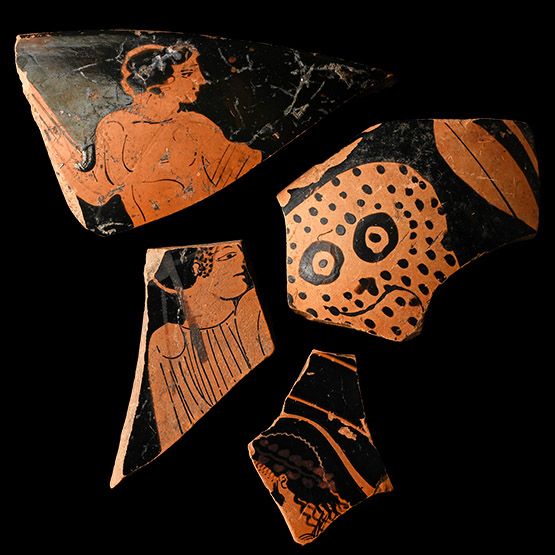
Greek Attic Red-Figure Fragment Collection
Early 5th century B.C.Sold for (Inc. bp): £975
Comprising four irregular fragments depicting an owl with a dotted body and large circular eyes, a youthful nude wearing a laurel wreath, a draped young female, male head with long hair wearing a wreath of vine leaves. 26 grams total, 36-70 mm
From the stock of a former UK antiquarian, acquired at trade fairs and from private collection formed in the 1980s-1990s. Private collection, Europe. -
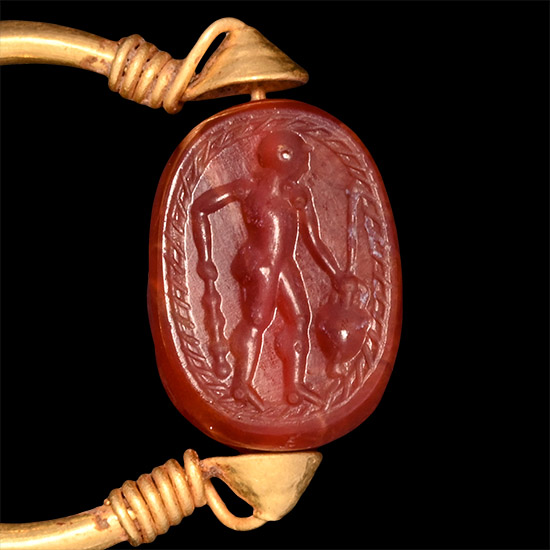
Etruscan Carnelian Scarab with Hercules at a Fountain in Gold Ring
3rd century B.C.Estimate: £1,500 - 2,000 (+bp*)
Opening Bid: £750
Hoop made from D-section wire with coils to the shoulders, scarab bezel with carapace detailing and intaglio of a standing nude figure of Hercules holding a club and amphora at a stream, enclosed by a roped border. 5.73 grams, 22.52 mm overall, 18.68 x 16.58 mm internal diameter (approximate size British P, USA 7 1/2, Europe 16.23, Japan 15)
Acquired on the UK art market. Private collection, England.
