
Loading, please wait...
LOT 0500
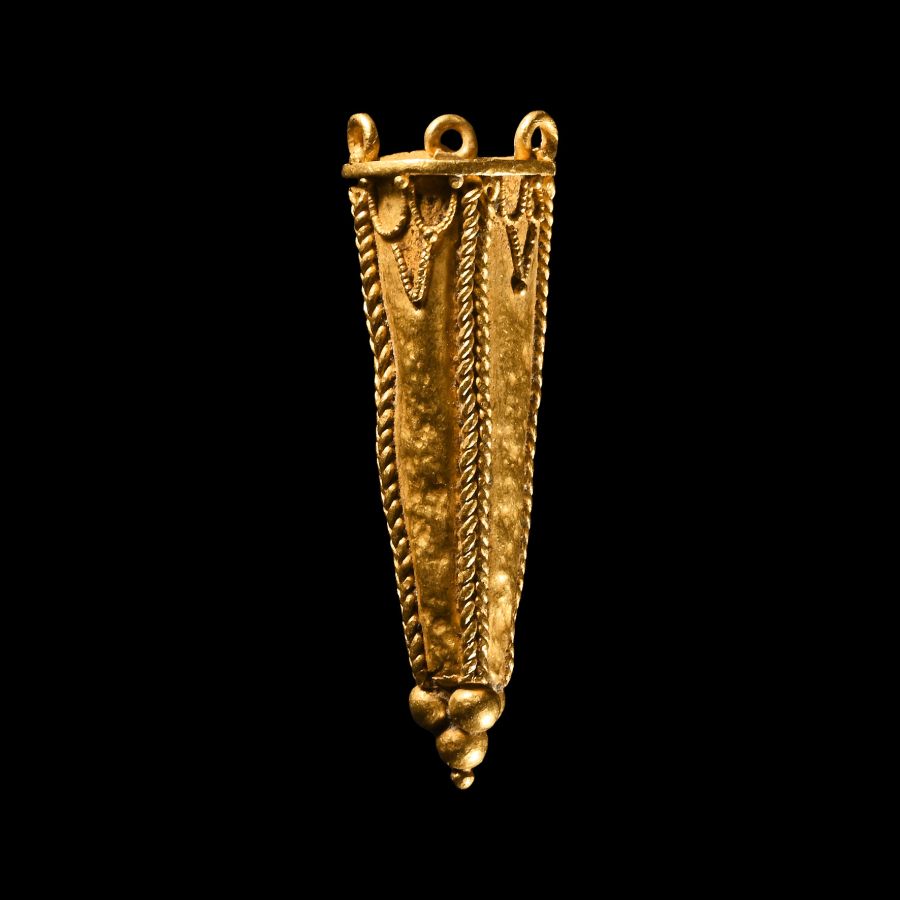
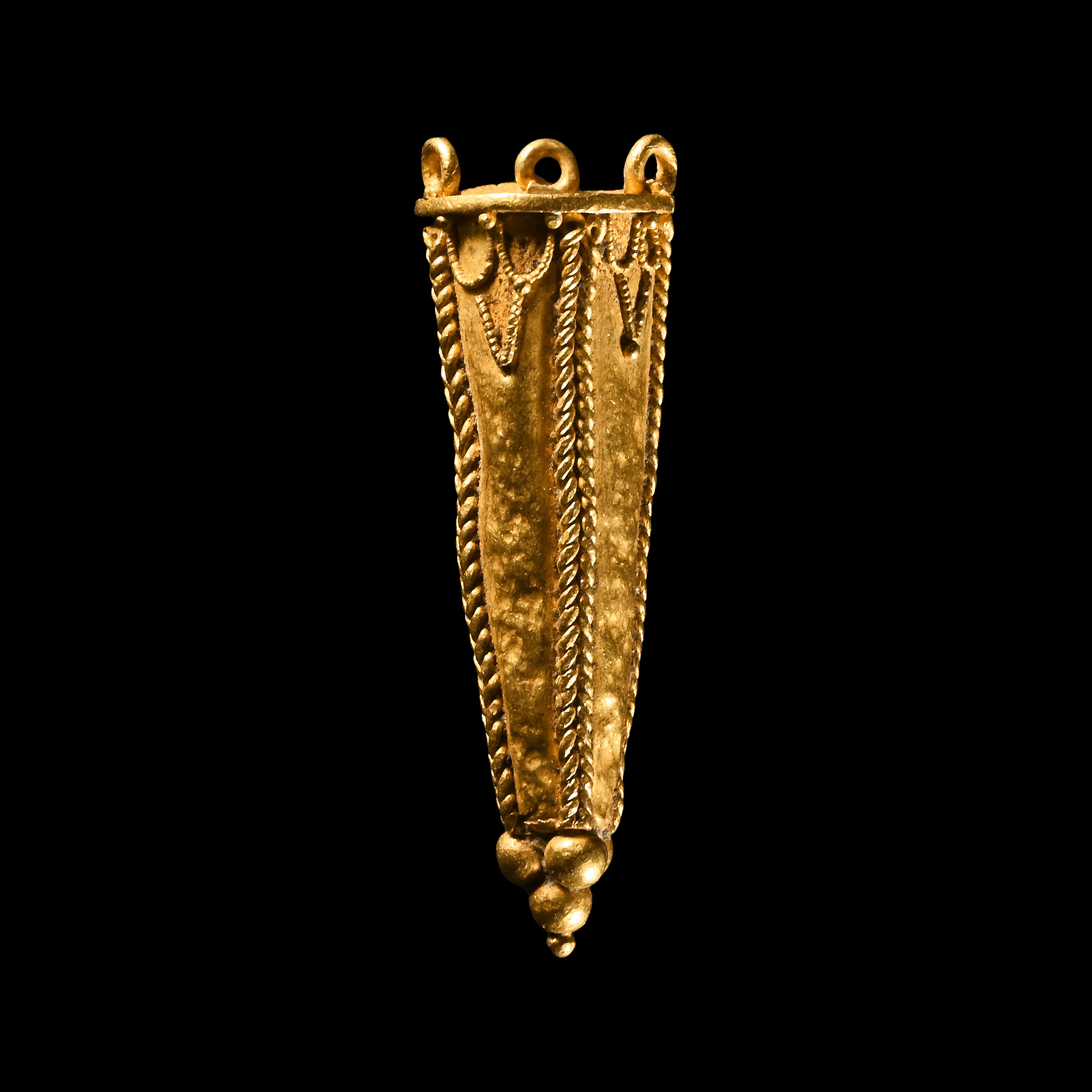
Greek Gold Vessel-Shaped Pendant
CIRCA 4TH-3RD CENTURY B.C.
1 in. (2.25 grams, 26 mm).
Conical sheet-gold dangle with applied rim and three suspension loops, filigree detailing beneath the rim, four vertical braided filigree bands to the sidewall, granule cluster finial.
ProvenanceUK private collection formed before 2000.
Ex North London, UK, gallery.
TimeLine Auctions follows a vetting process to ensure the authenticity and legality of all items, reinforcing our commitment to integrity and responsible trading. Each antiquity, antique, and coin lot undergoes thorough examination by a vetting committee of at least ten external specialists, professional trade association members, scientists, and archaeologists: Our Vetting Process
AUCTIONS:
TimeLine is a leading auction house specialising in antiquities, ancient art, collectables, natural history, coins, medals, and books. Our auctions offer museums, collectors, historians, and enthusiasts the opportunity to acquire unique and historically significant pieces.
-
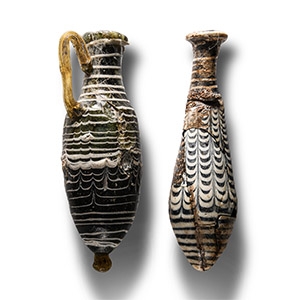
Greek Festooned Glass Vessel Group
2nd-1st century B.C. and laterEstimate: £300 - 400 (‡+bp*)
Opening Bid: £150
The pair comprising: an opaque blue alabastron with white spiralling trails to base and neck, marvering between; a green-amber coloured amphoriskos decorated with white trails, knop foot and remains of one applied handle; both fragmentary. 213 grams total, 13.6-14 cm high
Acquired early 1990s. Ex private American collection; thence by descent. Private collection since 1998. -
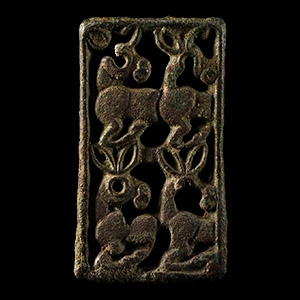
Scythian Fretwork Bronze Mount
Late 1st millennium B.C.Sold for (Inc. bp): £234
Rectangular frame with openwork design of two tiered horses with legs folded beneath the body and head turned to the rear; pierced eyes and ears for attachment. 16.8 grams, 51 mm
Ex S. collection, London UK, 1970-1990s. Examined by Professor Wilfrid George Lambert FBA (1926-2011), historian, archaeologist, and specialist in Assyriology and Near Eastern archaeology, in the 1990s with collection reference no.V 447. -
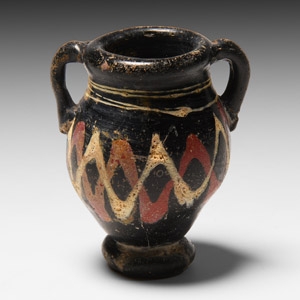
Greek Core-Formed Glass Amphora
Circa 3rd century B.C.Estimate: £500 - 700 (+bp*)
Opening Bid: £250
Miniature with piriform body, carinated rim, applied handles and discoid foot, with polychrome geometric motif to the equator. 45.2 grams, 47 mm high
Fine condition.
Paris collection, 1990s. From an important Paris gallery, France. Ex private Parisian collection.
