
Loading, please wait...
LOT 0540
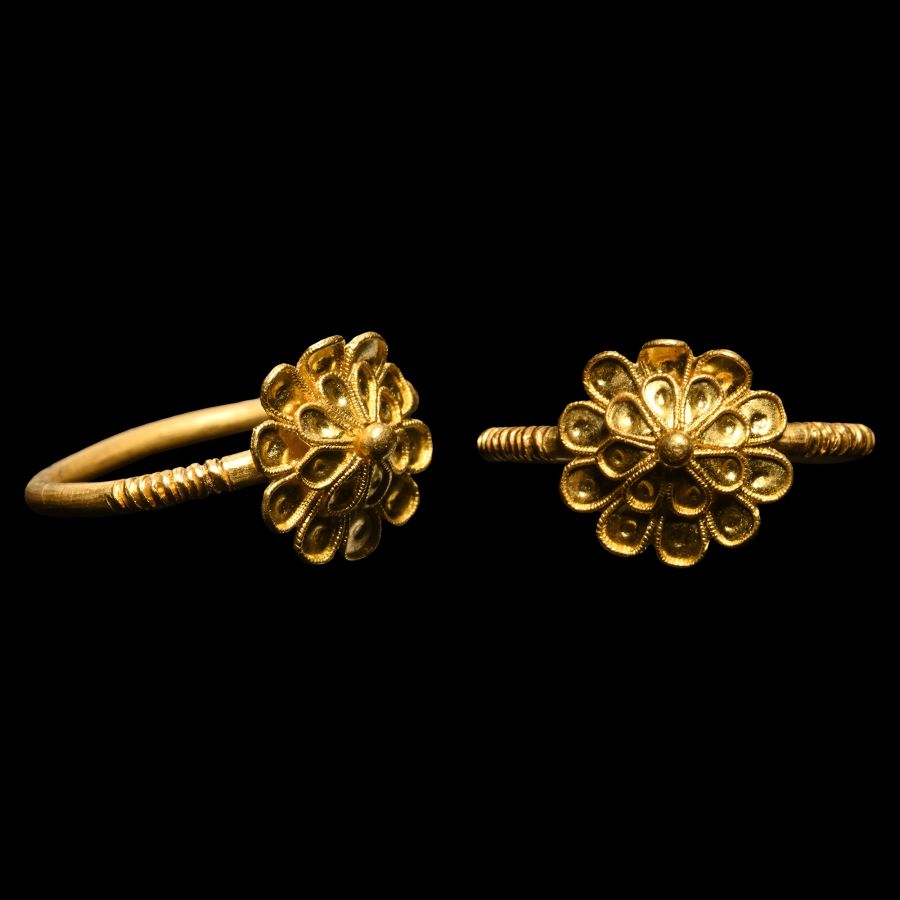
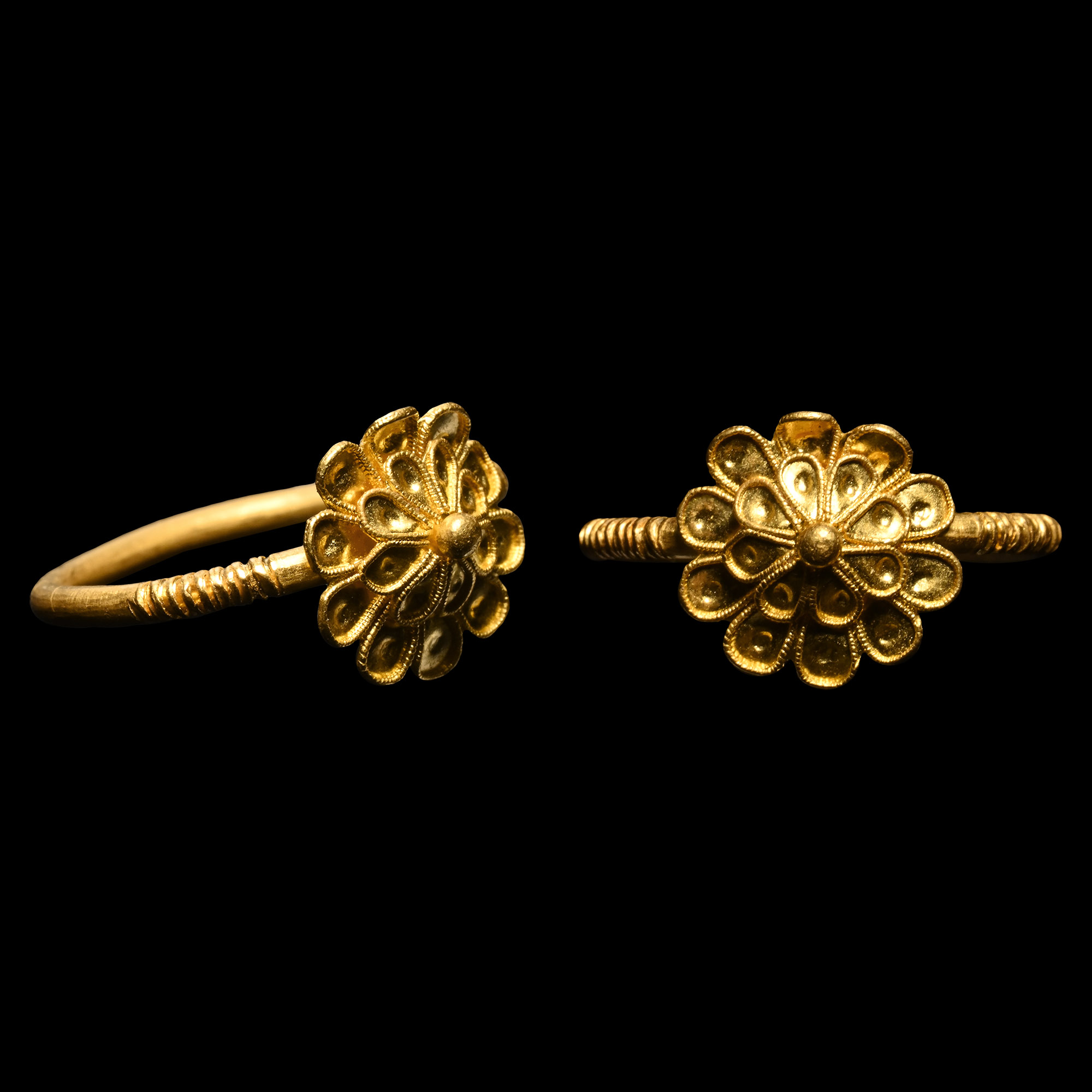
Greek Gold Ring with Flower
4TH-3RD CENTURY B.C. AND LATER
3/4 in. (1.77 grams, 17.72 mm overall, 14.15 mm internal diameter (approximate size British E, USA 2 1/4, Europe 2.41, Japan 2)).
With ribbing to the shoulders, applied rosette with granule finial, with later hoop.
ProvenanceEx German art market, 2000s.
Acquired from an EU collector living in London.
From the collection of Surrey, UK, gentleman.
This lot is accompanied by an illustrated lot declaration signed by the Head of the Antiquities Department, Dr Raffaele D’Amato.
TimeLine Auctions follows a vetting process to ensure the authenticity and legality of all items, reinforcing our commitment to integrity and responsible trading. Each antiquity, antique, and coin lot undergoes thorough examination by a vetting committee of at least ten external specialists, professional trade association members, scientists, and archaeologists: Our Vetting Process
AUCTIONS:
TimeLine is a leading auction house specialising in antiquities, ancient art, collectables, natural history, coins, medals, and books. Our auctions offer museums, collectors, historians, and enthusiasts the opportunity to acquire unique and historically significant pieces.
-
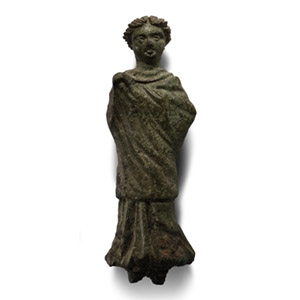
Etruscan Bronze Ceres Statuette
3rd-2nd century B.C.Estimate: £800 - 1,000 (‡+bp*)
Opening Bid: £400
Female with hair drawn up in a chignon, palla wrapped tightly around the upper body hiding the right arm bent with the hand at the shoulder, lower hem of robe flared; fixing lug to underside. 86 grams, 71 mm
Acquired in the mid 1980s-1990s. Private collection, Switzerland, thence by descent. Private collection, since the late 1990s. This lot is accompanied by an illustrated lot declaration signed by the Head of the Antiquities Department, Dr Raffaele D’Amato.
This is a figurine of a deity of difficult interpretation representing an ex-voto. This typology is widespread in the votive offerings of Etrusco-Roman sanctuaries, and by analogy with various statuettes could represent Ceres. -
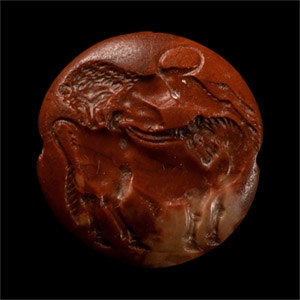
Minoan Red Jasper Seal Depicting a Lion Attacking a Bull
Late Helladic, circa 1400-1300 B.C. or laterSold for (Inc. bp): £5,720
Of lentoid form with domed reverse, showing a lion attacking a bull from above with its jaws and claws sunken into the bull's hindquarters, the bull shown standing with its head turned towards the lion in the act of trying to pry it off with its long horns; pierced horizontally. 7.45 grams, 26 mm
With Münzen und Medaillen A.G., Basel, prior 1980. Accompanied by an academic report by Dr Raffaele D’Amato. This lot has been checked against the Interpol Database of stolen works of art and is accompanied by search certificate number no.12465-228767. This lot has been cleared against the Art Loss Register database, and is accompanied by an illustrated lot declaration signed by the Head of the Antiquities Department, Dr Raffaele D’Amato. -
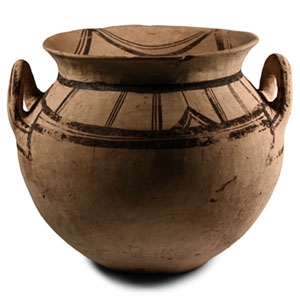
Daunian Terracotta Olla
Subgeometric, 6th-5th century B.C.Estimate: £600 - 800 (‡+bp*)
Opening Bid: £270
With a deep body on round base, flaring mouth, short loop handles to the shoulders; pendant circle segments on interior of mouth; Metope-like frieze on shoulder with triglyphs and suspended triangles, U-shaped motif at the root of the handle, horizontal bands; monochrome ware. 2.33 kg, 25.5 cm wide
The estate of Hans-Ulrich Rutschmann, Switzerland, circa 1950s-1970s. Accompanied by a copy of an Art Loss Register certificate no.S00097644. This lot is accompanied by an illustrated lot declaration signed by the Head of the Antiquities Department, Dr Raffaele D’Amato.
