
Loading, please wait...
LOT 0594
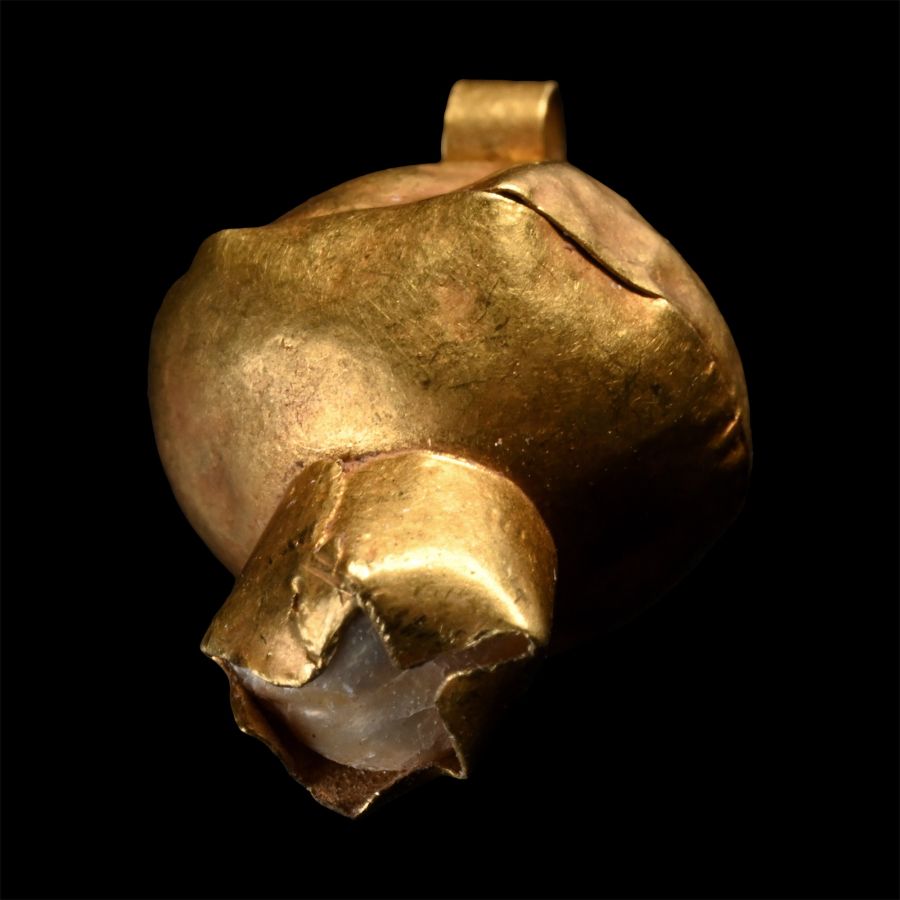
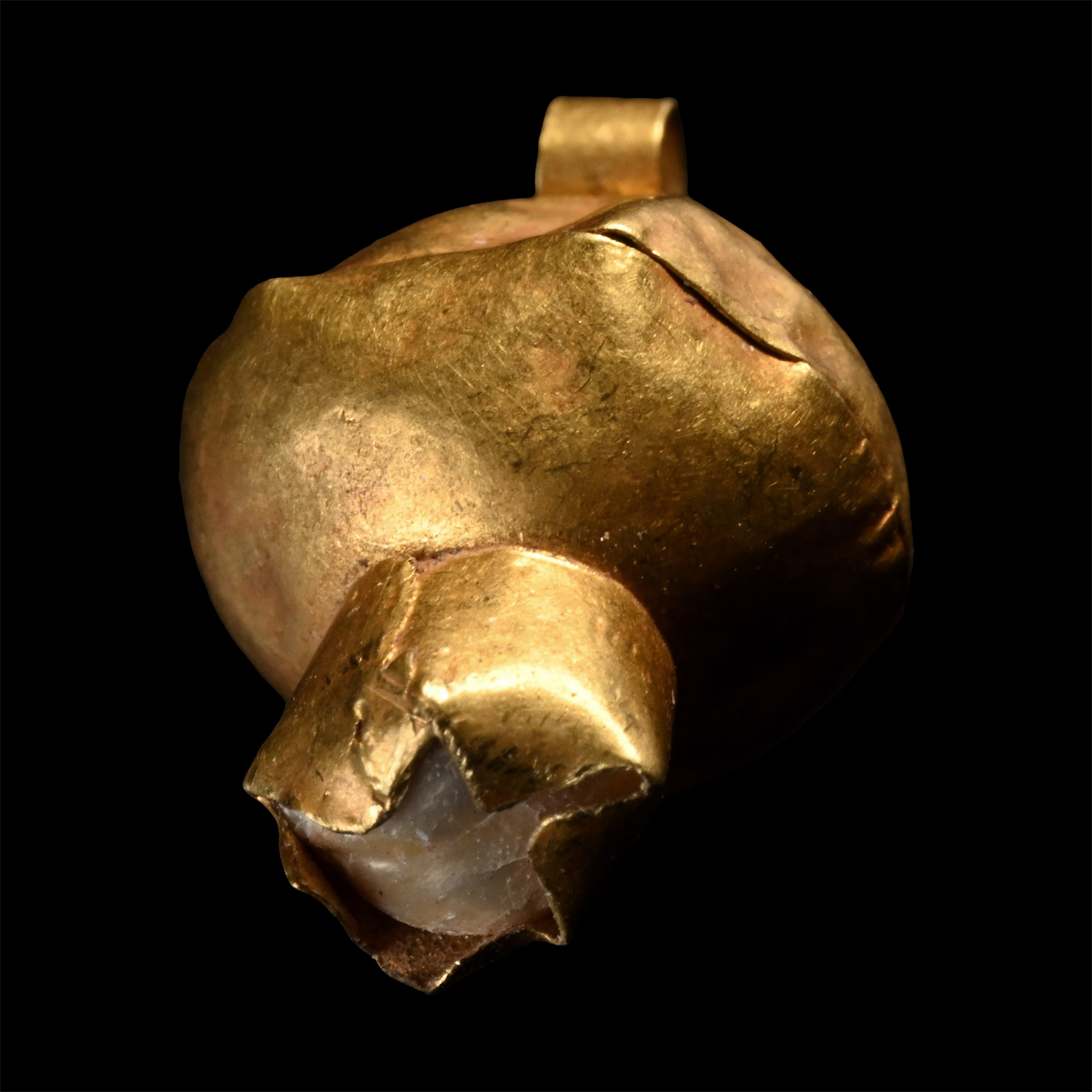
Greek Gold Pomegranate-Shaped Pendant
CIRCA 5TH-3RD CENTURY B.C.
5/8 in. (0.97 grams, 16 mm).
Formed of sheet-gold with applied loop, a small pearl enclosed within the calyx.
ProvenanceFrom the collection of a late Japanese collector, 1970s.
This lot is accompanied by an illustrated lot declaration signed by the Head of the Antiquities Department, Dr Raffaele D'Amato.
Cf. for similar gold beads in Marshall, F.H. Catalogue of the jewellery, Greek, Etruscan, and Roman, in the department of antiquities, British Museum London, 1911, pl.XXIII, nos.1450,1458.
FootnotesFruit were generally considered to be a symbol of sensuality, temptation and fertility; the giving and accepting of fruit may be regarded as a symbolic sexual act, or at least a prelude to marriage. It follows naturally that the pomegranate, with its innumerable fleshy seeds symbolising life and fecundity, was an attribute of Aphrodite.
CONDITIONTimeLine Auctions follows a vetting process to ensure the authenticity and legality of all items, reinforcing our commitment to integrity and responsible trading. Each antiquity, antique, and coin lot undergoes thorough examination by a vetting committee of at least ten external specialists, professional trade association members, scientists, and archaeologists: Our Vetting Process
AUCTIONS:
TimeLine is a leading auction house specialising in antiquities, ancient art, collectables, natural history, coins, medals, and books. Our auctions offer museums, collectors, historians, and enthusiasts the opportunity to acquire unique and historically significant pieces.
-
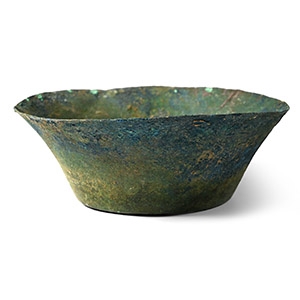
Archaic Cypriot Bronze Dish
7th century B.C.Sold for (Inc. bp): £260
Hemispherical with low profile and gently flaring walls, flat base. 52 grams, 10.7 cm
Ex London, UK, collections, 1990s-2000s. This lot is accompanied by an illustrated lot declaration signed by the Head of the Antiquities Department, Dr Raffaele D'Amato.
The Greek name for a shallow, round bowl, generally with a round boss in the centre, appears to have been phiale, which is described as resembling a shield (Aristotle, Rhetoric, III, 4, 1 1; Poetics, 21, 12), and as without handles. -
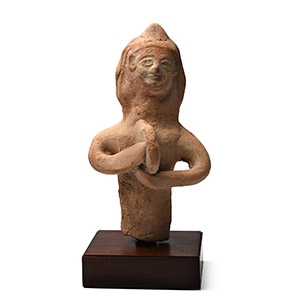
Greek Terracotta Musician Figure
Cyprus, 7th century B.C.Sold for (Inc. bp): £390
A musician wearing a broad leaf-shaped headdress, arms bent clasping a D-shaped rhoptron tambourine; red pigment to the headdress, carefully modelled ears, eyes and other facial features; mounted on a custom-made stand. 283 grams total, 16 cm including stand
Fine condition.
Formerly in an old Tokyo collection. Property of a Japanese gentleman, acquired early 1990s. with Timeline Auctions, London, 4 September 2019, no.904. Private collection of John Meredith, thence by descent. This lot is accompanied by an illustrated lot declaration signed by the Head of the Antiquities Department, Dr Raffaele D'Amato. -
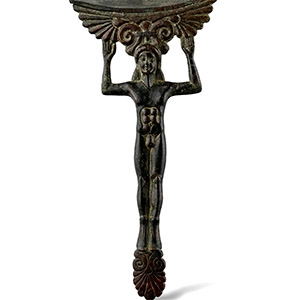
Archaic Greek Bronze Kouros Handle
Western Greek, circa 480 B.C.Estimate: £8,000 - 10,000 (‡+bp*)
Opening Bid: £3,500
The handle formed as a nude youth supporting a panel of double volutes and half-palmettes, long braided hair falling at the back of the neck and on his forehead; the legs joined and ankles extended, the feet enclosed in pointed shoes, palmette below; accompanied by the basin with inverted rim, a pair of parallel lines to the outer rim; the handle and part of the rim detached and mounted separately on the custom-made display stand. 1.35 kg total, 45.5 cm high including stand
with Herbert A. Cahn, Basel, 1990s. Accompanied by a copy of an Art Loss Register certificate no.S00075168. Accompanied by an academic report by Dr Raffaele D’Amato. This lot has been checked against the Interpol Database of stolen works of art and is accompanied by search certificate no.12462-228709. This lot has been cleared against the Art Loss Register database, and is accompanied by an illustrated lot declaration signed by the Head of the Antiquities Department, Dr Raffaele D'Amato.
