
Loading, please wait...
LOT 0637
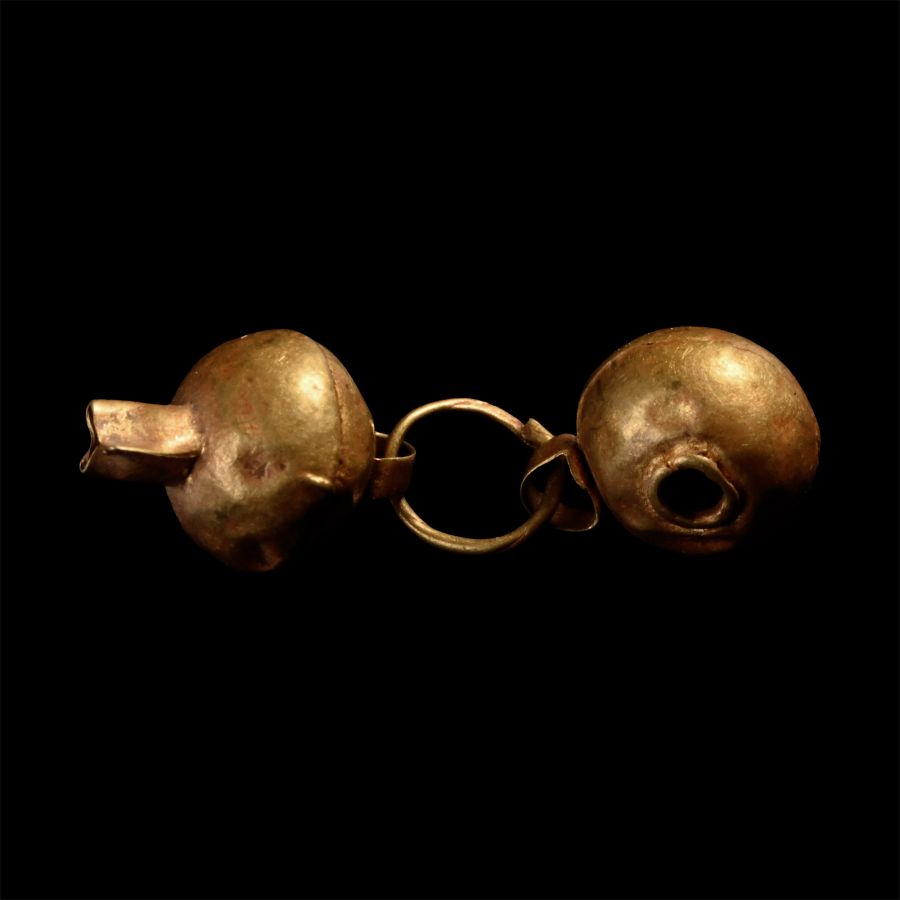
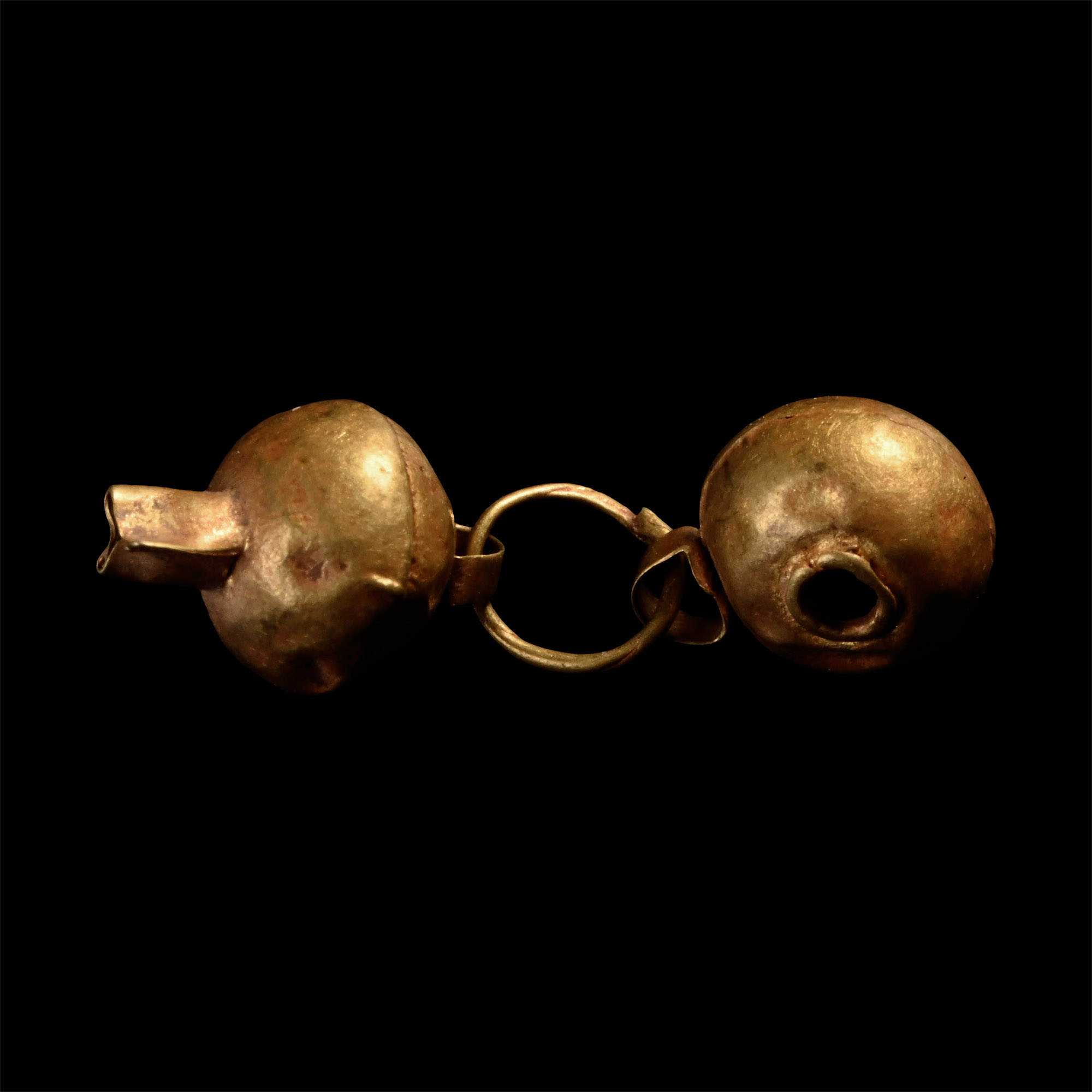
Greek Gold Pomegranate-Shaped Pendant
CIRCA 5TH-3RD CENTURY B.C.
3/4 in. (0.29 grams, 18 mm).
Comprising a hollow-form body with detailed calyx below, the suspension formed as a hollow collared bead with a thin connecting loop.
ProvenanceFrom the collection of a late Japanese collector, 1970s.
This lot is accompanied by an illustrated lot declaration signed by the Head of the Antiquities Department, Dr Raffaele D'Amato.
Cf. for similar gold beads in Marshall, F.H., Catalogue of the jewellery, Greek, Etruscan, and Roman, in the department of antiquities, British Museum, London, 1911, pl.XXIII, nos.1450,1458.
FootnotesFruit were generally considered to be a symbol of sensuality, temptation and fertility; the giving and accepting of fruit may be regarded as a symbolic sexual act, or at least a prelude to marriage. It follows naturally that the pomegranate, with its innumerable fleshy seeds symbolising life and fecundity, was an attribute of Aphrodite.
CONDITIONTimeLine Auctions follows a vetting process to ensure the authenticity and legality of all items, reinforcing our commitment to integrity and responsible trading. Each antiquity, antique, and coin lot undergoes thorough examination by a vetting committee of at least ten external specialists, professional trade association members, scientists, and archaeologists: Our Vetting Process
AUCTIONS:
TimeLine is a leading auction house specialising in antiquities, ancient art, collectables, natural history, coins, medals, and books. Our auctions offer museums, collectors, historians, and enthusiasts the opportunity to acquire unique and historically significant pieces.
-
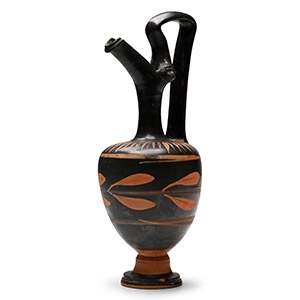
Greek Apulian Blackware Prochous with Laurel Leaves
South Italic, circa 4th century B.C.Sold for (Inc. bp): £546
With pedestal base, bulbous body, broad shoulder, tapering neck with beak-like spout and tall strap handle to the rear; the body painted with a laurel-leaf frond. 172 grams, 18 cm
From the private collection of a Canadian gentleman living in Essex, UK, formed since the 1920s-circa 1990. Property of an Essex lady until the late 1990s; thence by descent. From the private collection of an Essex gentleman since the late 1990s. This lot is accompanied by an illustrated lot declaration signed by the Head of the Antiquities Department, Dr Raffaele D'Amato. -
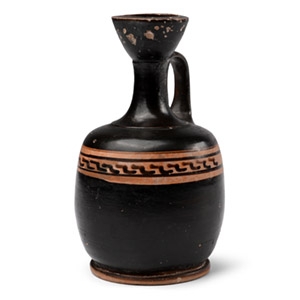
Greek Black-Glazed Lekythos
South Italic, circa 4th century B.C.Sold for (Inc. bp): £312
Ovoid in profile with trumpet-shaped spout and strap handle, reserved band below the shoulder with running guilloche motif. 89 grams, 10.5 cm
From the private collection of a Canadian gentleman living in Essex, UK, formed since the 1920s-circa 1990. Property of an Essex lady until the late 1990s; thence by descent. From the private collection of an Essex gentleman since the late 1990s. This lot is accompanied by an illustrated lot declaration signed by the Head of the Antiquities Department, Dr Raffaele D'Amato. -
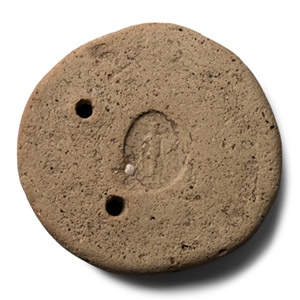
Greek Terracotta Pendant with Stamp
6th-4th century B.C.Sold for (Inc. bp): £85
Thick disc with rounded edge, two suspension holes, impressed ellipsoid panel with standing figure of Hermes. 90 grams, 76 mm
Acquired on the European art market in the early 2000s. with Galerie Rhéa, Zurich, Switzerland. This lot is accompanied by an illustrated lot declaration signed by the Head of the Antiquities Department, Dr Raffaele D'Amato.
