
Loading, please wait...
LOT 0533
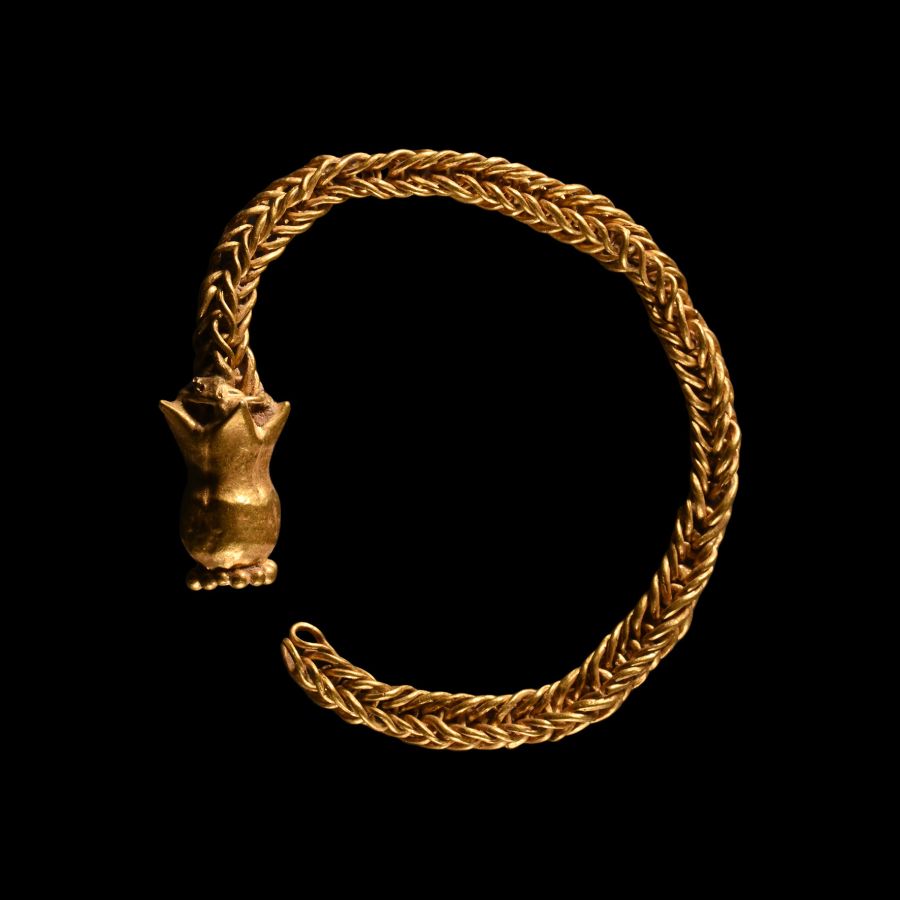
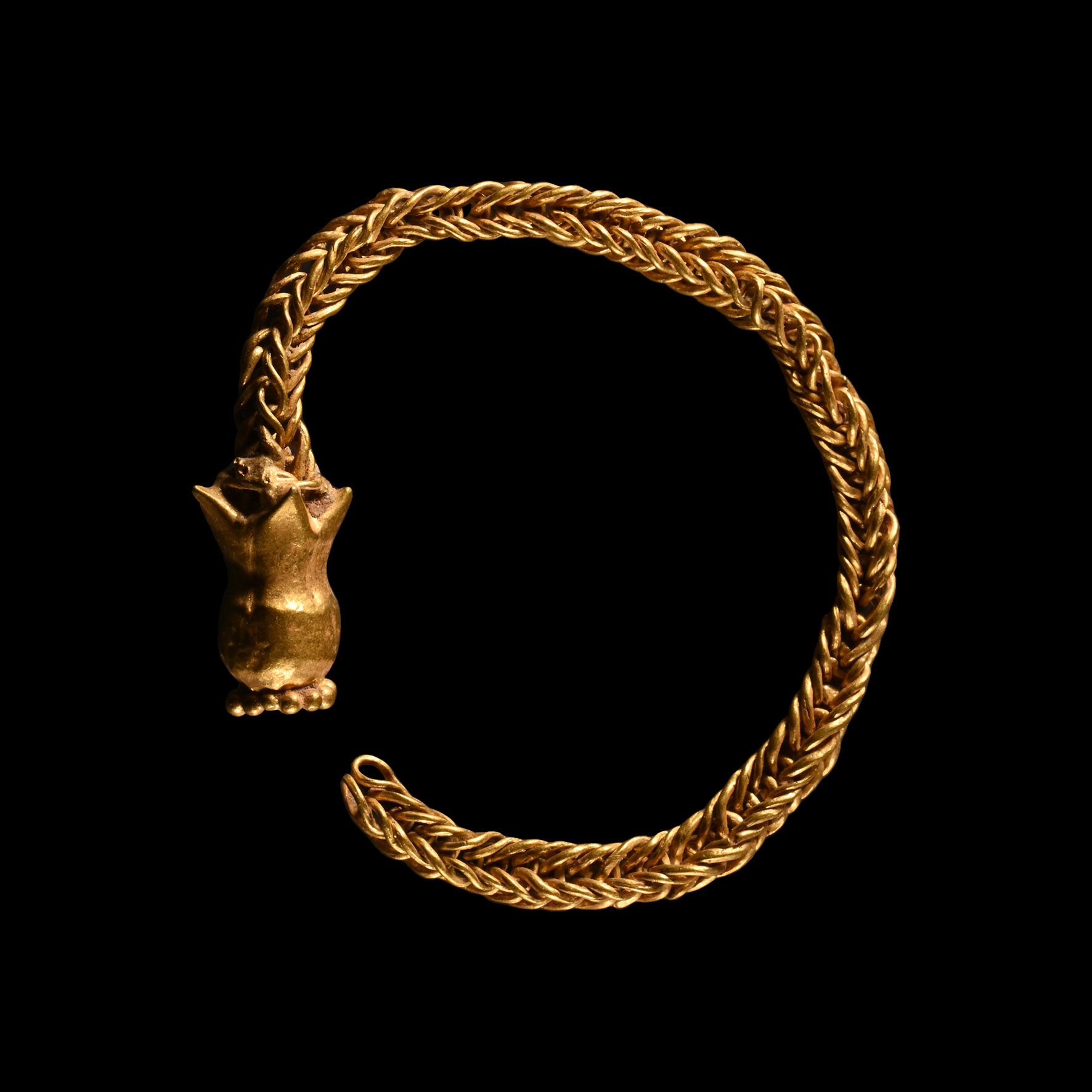
Greek Gold Pomegranate on Gold Chain
CIRCA 4TH-3RD CENTURY B.C.
3 1/2 in. (3.58 grams, 90 mm).
The fruit with granulated base and length of trichinopoly chain.
ProvenanceFrom a late Japanese specialist collector, 1970-2000s.
CONDITIONTimeLine Auctions follows a vetting process to ensure the authenticity and legality of all items, reinforcing our commitment to integrity and responsible trading. Each antiquity, antique, and coin lot undergoes thorough examination by a vetting committee of at least ten external specialists, professional trade association members, scientists, and archaeologists: Our Vetting Process
AUCTIONS:
TimeLine is a leading auction house specialising in antiquities, ancient art, collectables, natural history, coins, medals, and books. Our auctions offer museums, collectors, historians, and enthusiasts the opportunity to acquire unique and historically significant pieces.
LOT 0533
Greek Gold Pomegranate on Gold Chain
Estimate £350 - 450€410 - 520 (for guidance only)$470 - 610 (for guidance only)
-
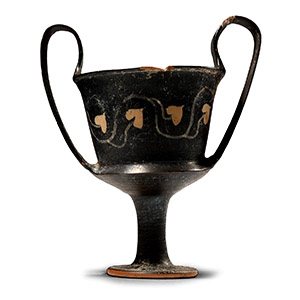
South Italian Blackware Kantharos with Ivy Branch
5th-4th century B.C.Estimate: £1,500 - 2,000 (‡+bp*)
Opening Bid: £750
The high-handled drinking cup with carinated lower body, discoid feet and vines painted to the equator. 472 grams, 23.3 cm high
Acquired in Europe before 1994. -
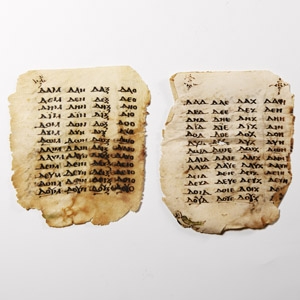
Vellum Manuscript Page Group
Coptic, circa 6th-9th century A.D.Sold for (Inc. bp): £2,860
Two pages from a codex each with four columns of Greek script text, possibly part of an alphabetical listing. 22 grams, 11 x 9 cm each
Acquired 1970s-1996. Property of a North American collector. London collection, 2016. -
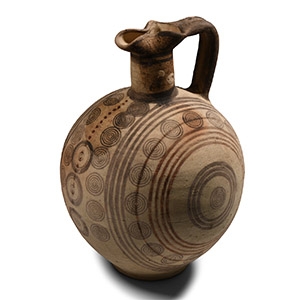
Cypriot Trefoil Jug with Concentric Decorations
700-600 B.C.Sold for (Inc. bp): £3,640
With low basal ring, globular body, cylindrical neck with a pinched trefoil spout and thick ribbed strap-handle from shoulder to rim; decorated on each broad face with concentric rings in black and red paint with vertical bands of smaller concentric rings to the shoulder. 1.7 kg, 32.5 cm high
From the collection of Herbert Henry Marks (1896-1972), acquired 1930s-1940s. Subsequently by descent to his son, Stephen Powys Marks (1932-2020), Bath. This lot has been checked against the Interpol Database of stolen works of art and is accompanied by search certificate number no.11848-207711.
