
Loading, please wait...


LOT 0072
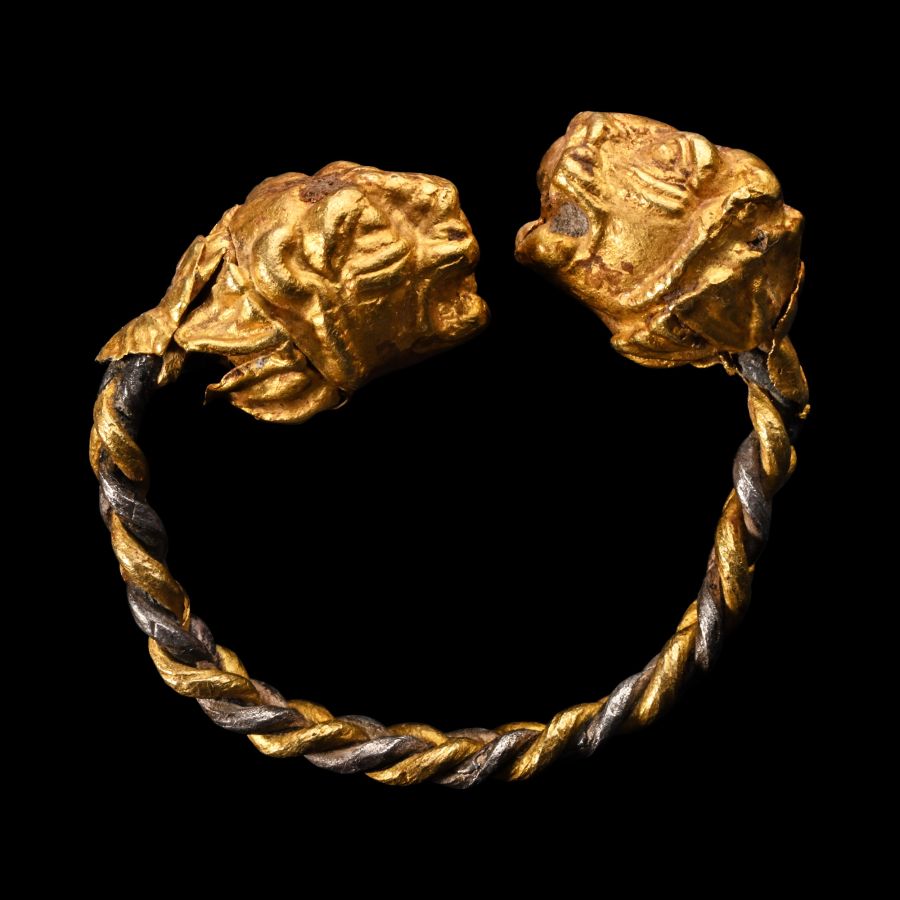
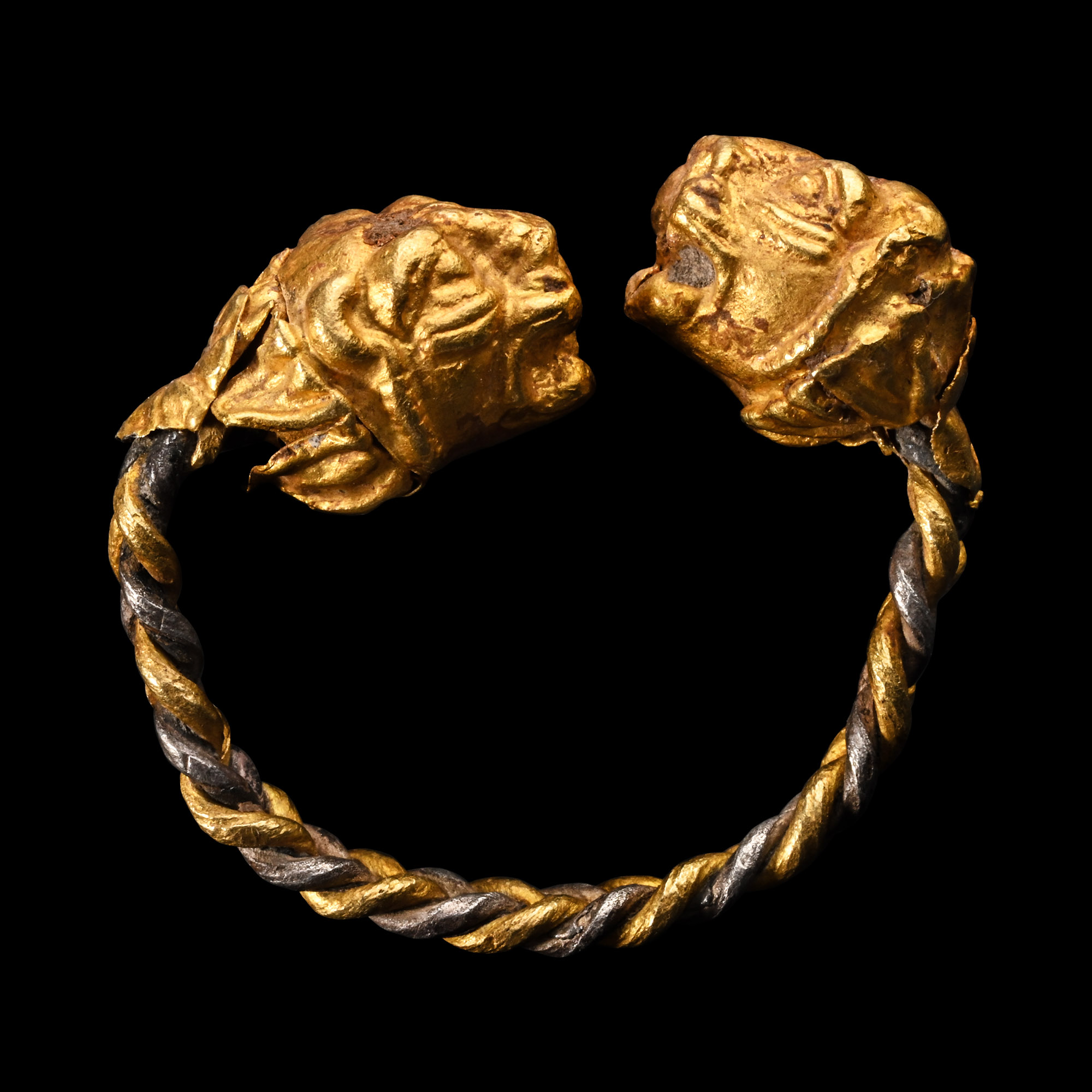
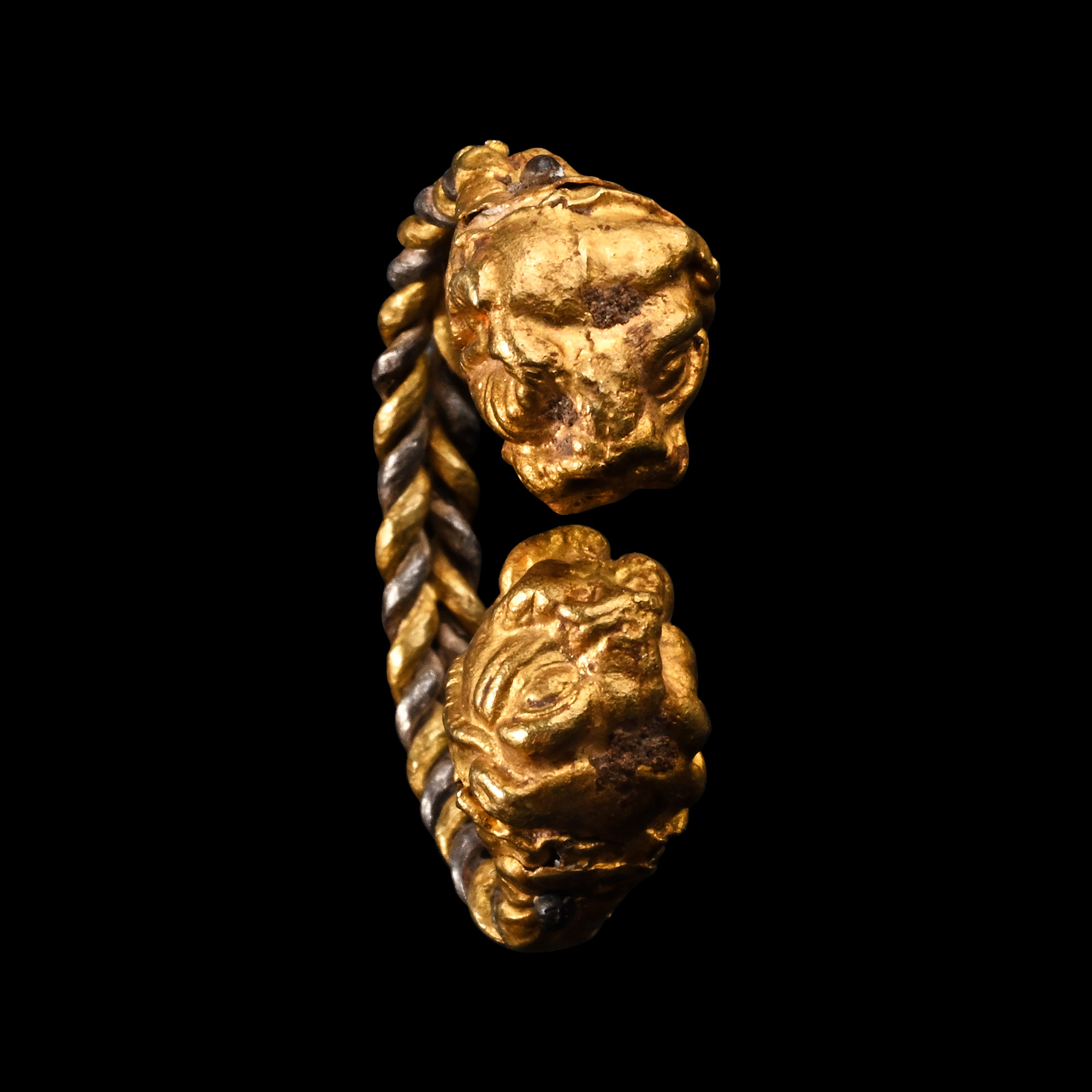
Greek Gold Lion Head Ring with Plaited Band
3RD CENTURY B.C. AND LATER
1 1/4 in. (8.43 grams, 32 mm).
Formed as a plaited band of gold and silver rods, the finials formed as large lion heads with gaping jaws, a rosette with a rivet behind the neck; possibly a marriage.
ProvenanceAcquired in London, 1979.
CONDITIONTimeLine Auctions follows a vetting process to ensure the authenticity and legality of all items, reinforcing our commitment to integrity and responsible trading. Each antiquity, antique, and coin lot undergoes thorough examination by a vetting committee of at least ten external specialists, professional trade association members, scientists, and archaeologists: Our Vetting Process
AUCTIONS:
TimeLine is a leading auction house specialising in antiquities, ancient art, collectables, natural history, coins, medals, and books. Our auctions offer museums, collectors, historians, and enthusiasts the opportunity to acquire unique and historically significant pieces.
-
.jpg)
Etruscan Carnelian Scarab with Deer
5th century B.C.Sold for (Inc. bp): £468
With carved anatomical detailing, the underside featuring a running stag with a long spear about to pierce its neck from behind. 1.1 grams, 11 mm
Acquired on the European art market. -
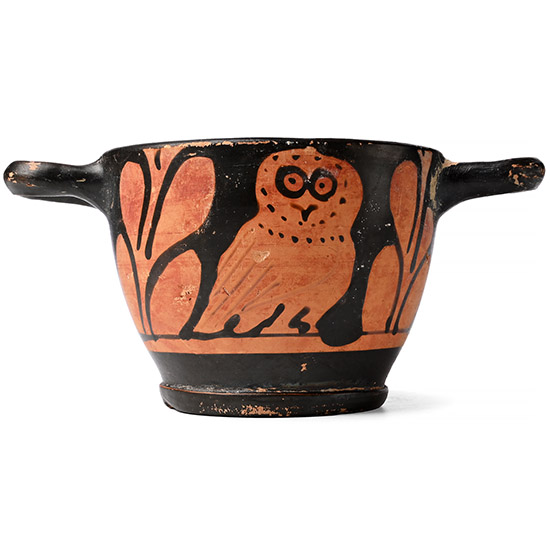
Greek Red-Figure Skyphos with Owl
Attic, 5th-4th century B.C.Sold for (Inc. bp): £1,560
Mammiform body with flared pedestal base and two loop handles to the rim; each side with a facing image of an owl between laurel fronds; concentric circles to the base, Attic workmanship. 115 grams, 14.1 cm wide
Bonhams, Knightsbridge, London, 20 1994, no.39. Private collection, Suffolk. -
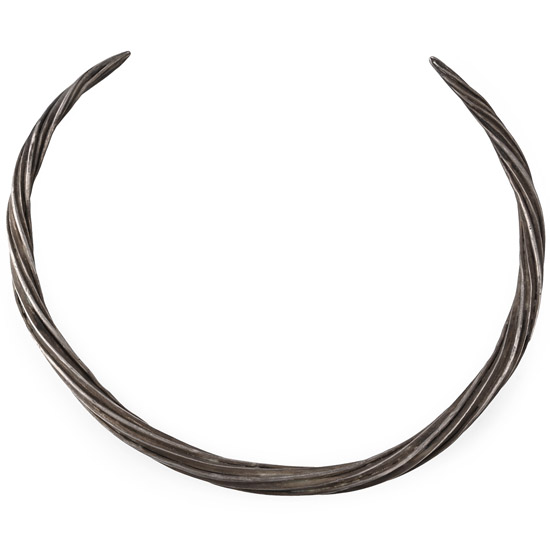
Thracian Silver Twisted Torc
5th century B.C.Sold for (Inc. bp): £702
Penannular torc twisted around its axis with tapering finials. 221 grams, 19.7 cm
Acquired in the early 1970s. Private collection, Suffolk.
