
Loading, please wait...
LOT 0529
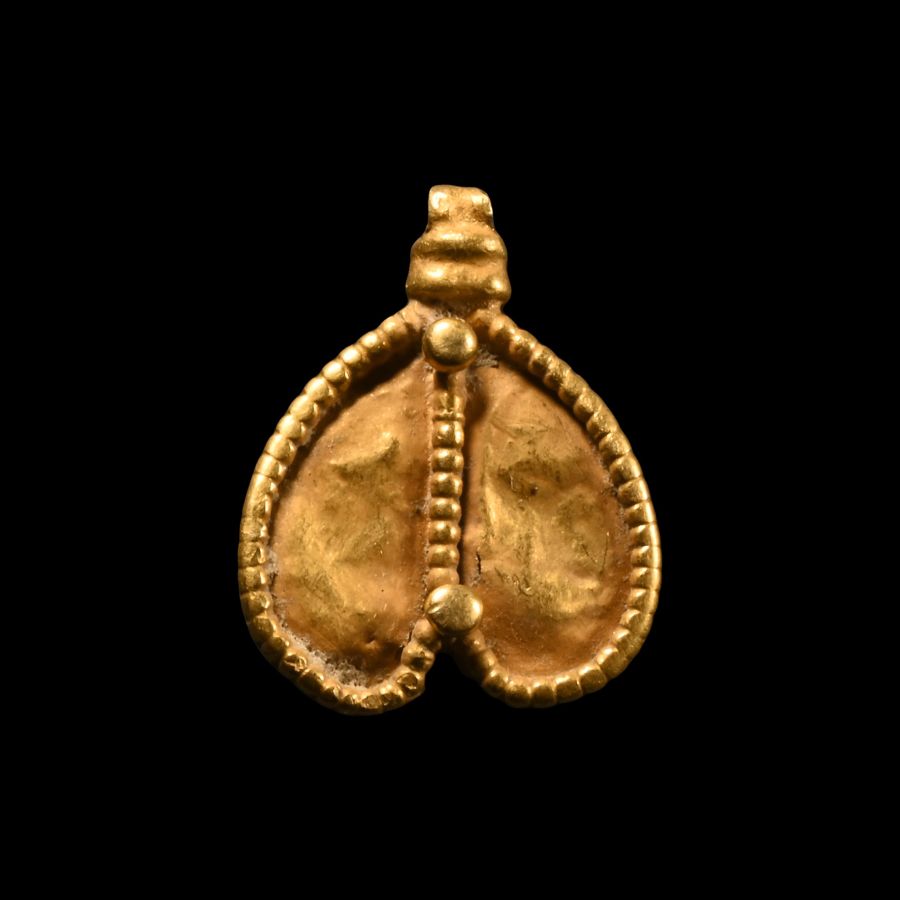
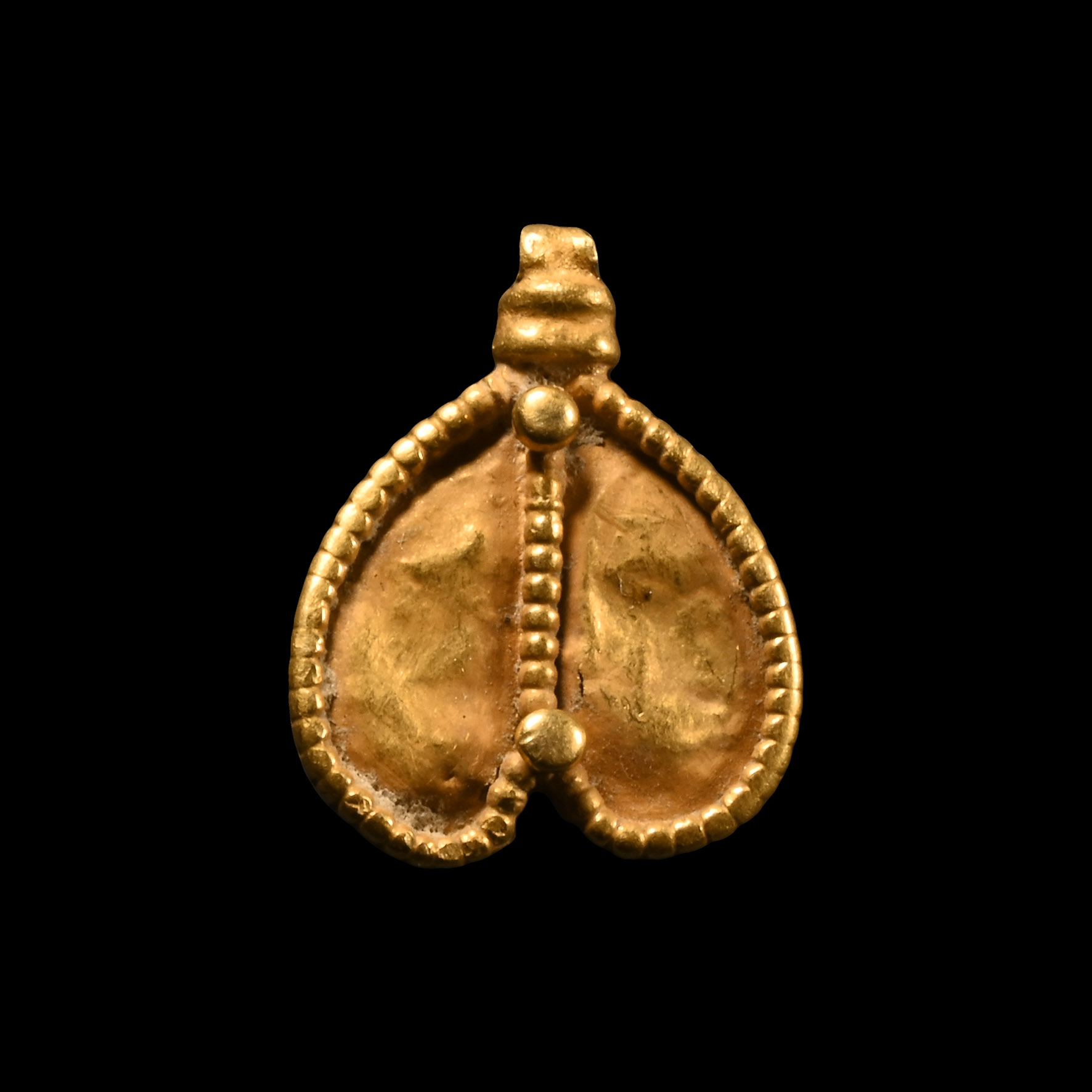
Greek Gold Insect-Shaped Pendant
CIRCA 4TH-3RD CENTURY B.C.
1/2 in. (0.55 grams, 13 mm).
Possibly in the form of a fly; composed of a heart-shaped body with filigree and granules defining the body and two wings, a collared suspension loop representing the head and eyes.
ProvenanceCollected from 1970-1999.
From the collection of the late Mr S.M., London, UK.
TimeLine Auctions follows a vetting process to ensure the authenticity and legality of all items, reinforcing our commitment to integrity and responsible trading. Each antiquity, antique, and coin lot undergoes thorough examination by a vetting committee of at least ten external specialists, professional trade association members, scientists, and archaeologists: Our Vetting Process
AUCTIONS:
TimeLine is a leading auction house specialising in antiquities, ancient art, collectables, natural history, coins, medals, and books. Our auctions offer museums, collectors, historians, and enthusiasts the opportunity to acquire unique and historically significant pieces.
LOT 0529
Greek Gold Insect-Shaped Pendant
Estimate £150 - 200€170 - 230 (for guidance only)$200 - 270 (for guidance only)
-
Etruscan Bronze Pendant Group
Circa 8th century B.C.Estimate: £400 - 600 (+bp*)
Opening Bid: £200
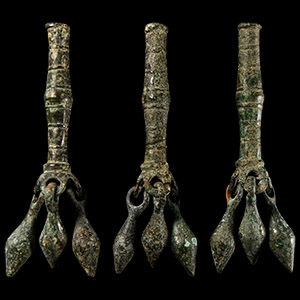
Comprising three pendant clusters, each a tube with balustered middle section and ribs, radiating loops at the lower end with suspended biconvex dangles. 90 grams total, 78 mm each
Acquired in the late 1970s. Ex Herr Bernhard Muller collection. with Galerie Ostracon, circa 2015. Accompanied by detailed collector's catalogue pages including description and photograph. -
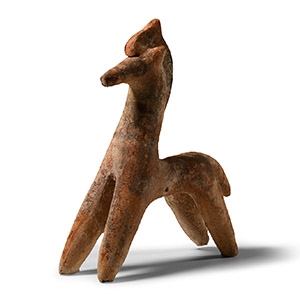
Cypriot Bichrome Ware Terracotta Horse Model
Circa 850-750 B.C.Sold for (Inc. bp): £611
Modelled in the round, detailed in black and crimson. 168 grams, 13 cm high
Lt. Col. H.A. Hill, R.A.M.C. while stationed in Cyprus as S.M.O in the 1920s, thence by descent. -
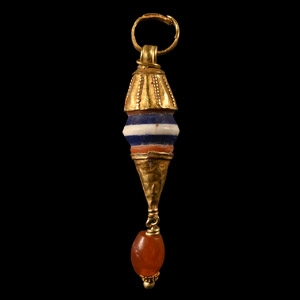
Greek Gold and Bead Pendant
Circa 4th-3rd century B.C.Estimate: £500 - 700 (+bp*)
Opening Bid: £250
Composed of a blue and white glass bead between gold caps, granulation to the upper body with suspension loop and free-running ring, dangle below composed of a carnelian stone bead and granulated gold bead; some restoration. 5.29 grams, 53 mm
From a late Japanese specialist collector, 1970-2000s.
