
Loading, please wait...



LOT 0073
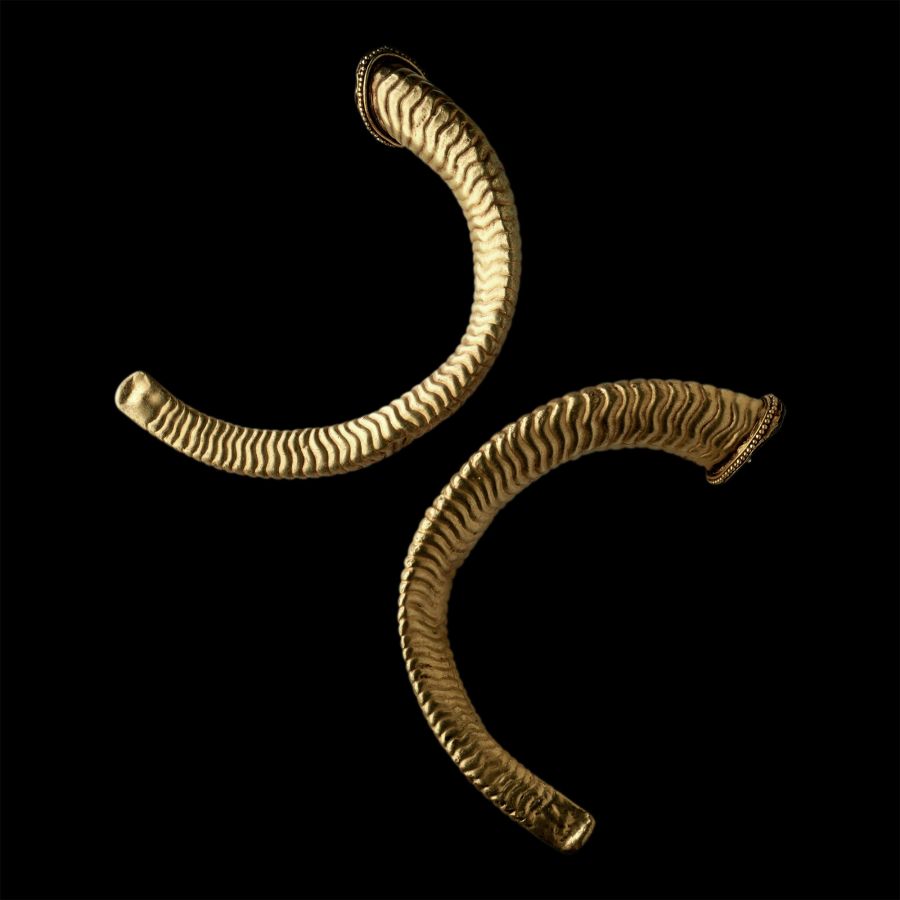
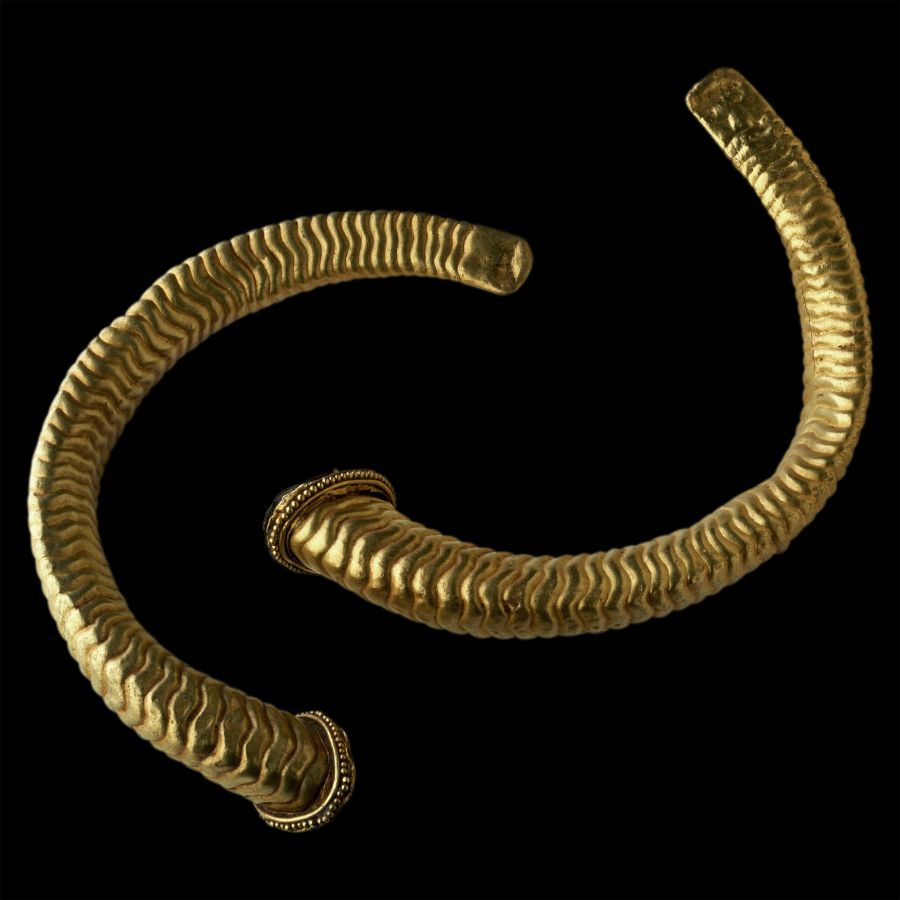
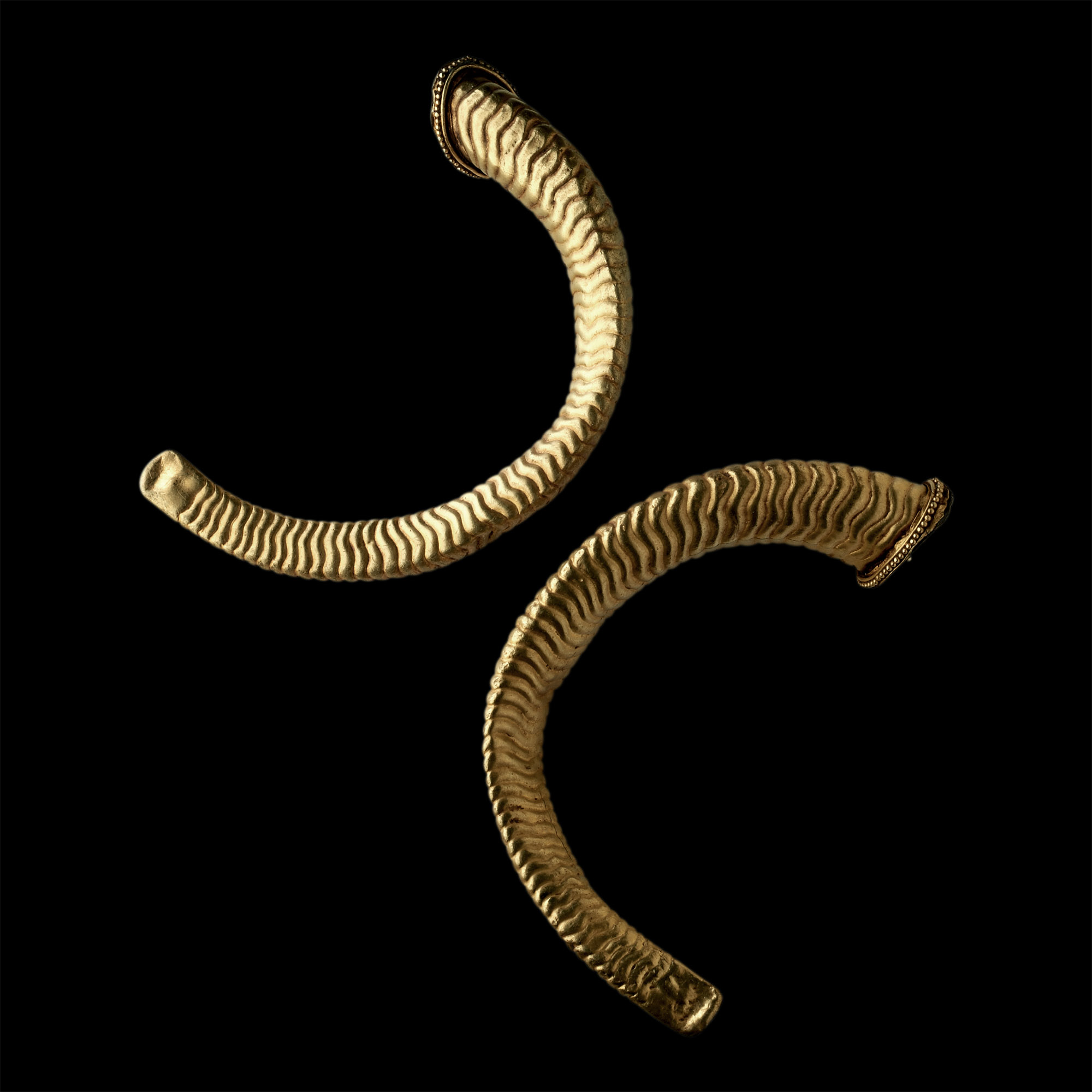
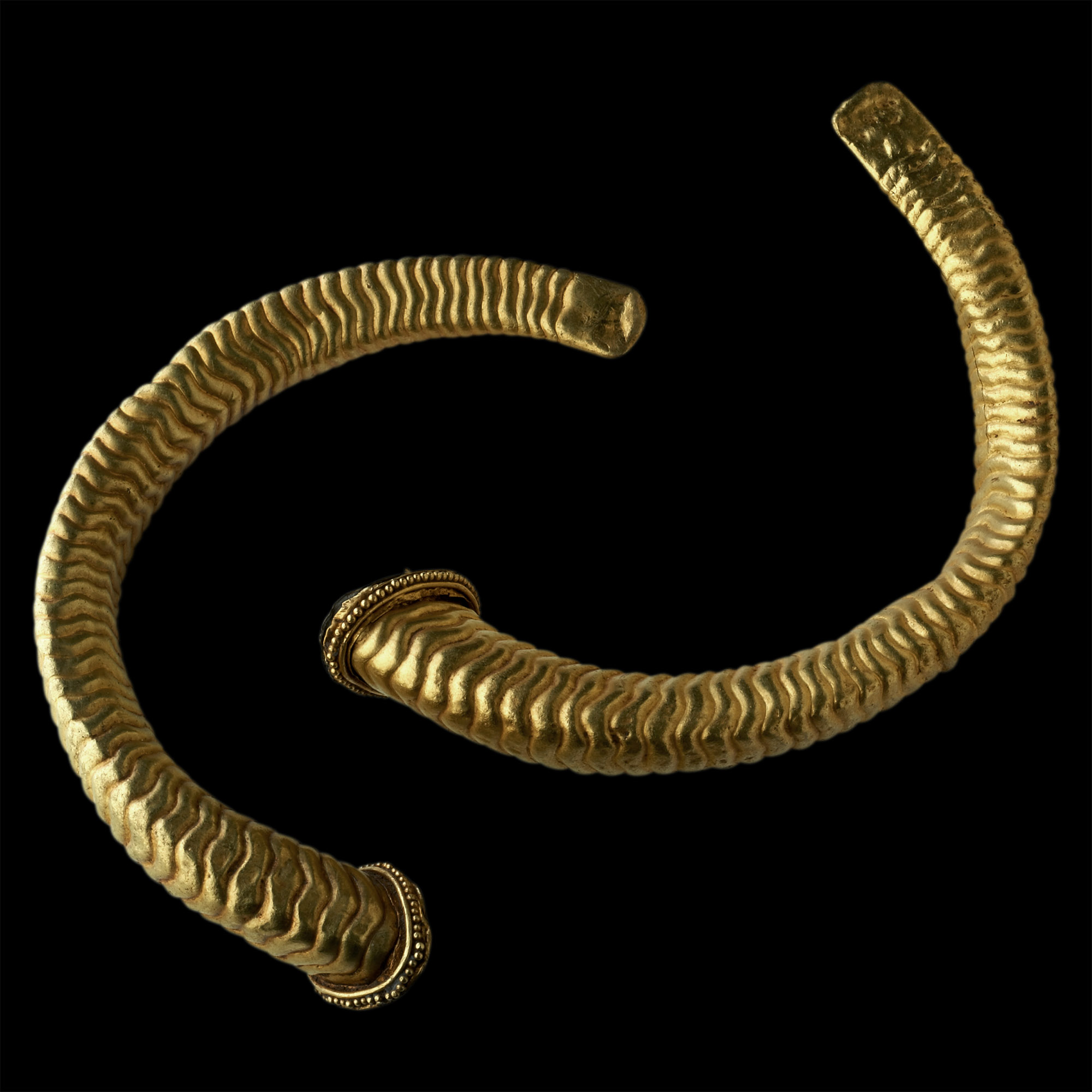
Greek Gold 'Golden Fleece' Ram-Horn Pair
5TH-3RD CENTURY B.C.
4 in. (60.61 grams total, 10.5 cm each).
A matched pair of sheet-gold model ram's horns, each curved with a narrow end flattened, ribbed body, flared rim to the mouth with applied granule detailing; probably from a representation of the χρυσόμαλλον δέρας or 'golden fleece' from the legend of Jason and his adventures with the crew of the ship Argo.
ProvenanceFrom a private collection of seals and amulets, the property of a Canadian gentleman living in London; from his father's collection formed in the late 1960s to 1980s.
This lot has been checked against the Interpol Database of stolen works of art and is accompanied by search certificate number no.13105-249639.
The legend of the Golden Fleece is referenced by several ancient writers, including Pindar, whose reformulation forms the basis of most modern retellings, but an earlier version was evidently familiar to Homer in the 8th century B.C. It appears as a pictorial theme on early Greek vases. The story refers to a celestial winged ram with golden wool, which was believed to live and be worshipped by the inhabitants of lands north of the Black Sea; this ram, in some versions of the tale, is transformed into the constellation Aries.
CONDITIONTimeLine Auctions follows a vetting process to ensure the authenticity and legality of all items, reinforcing our commitment to integrity and responsible trading. Each antiquity, antique, and coin lot undergoes thorough examination by a vetting committee of at least ten external specialists, professional trade association members, scientists, and archaeologists: Our Vetting Process
AUCTIONS:
TimeLine is a leading auction house specialising in antiquities, ancient art, collectables, natural history, coins, medals, and books. Our auctions offer museums, collectors, historians, and enthusiasts the opportunity to acquire unique and historically significant pieces.
-
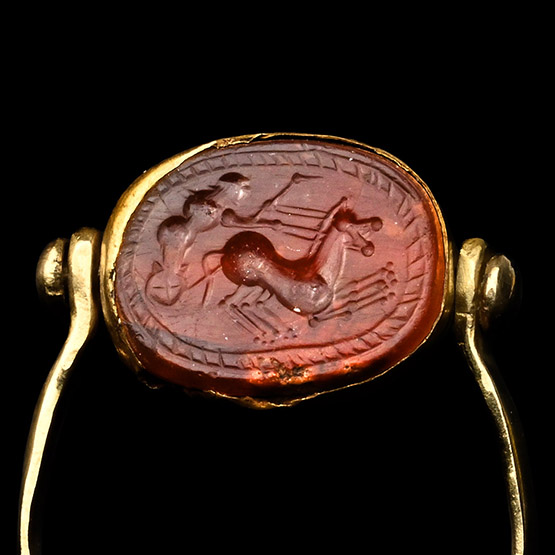
Etruscan Carnelian Scarab of a Charioteer in Gold Ring
3rd century B.C. and laterEstimate: £3,000 - 4,000 (+bp*)
Opening Bid: £1,500
Opaque scaraboid engraved with a dynamic scene of a charioteer driving a biga with his whip raised; set in a sheet-gold mount and a later swivel ring; supplied with a museum-quality impression. 4.26 grams, 25.07 mm overall, 17.77 x 16.22 mm internal diameter (approximate size British O, USA 7, Europe 14.98, Japan 14)
Private English collection, formed between the late 1970s and early 1990s. Private collection, UK. This lot has been checked against the Interpol Database of stolen works of art and is accompanied by search certificate number no.12948-245985. -
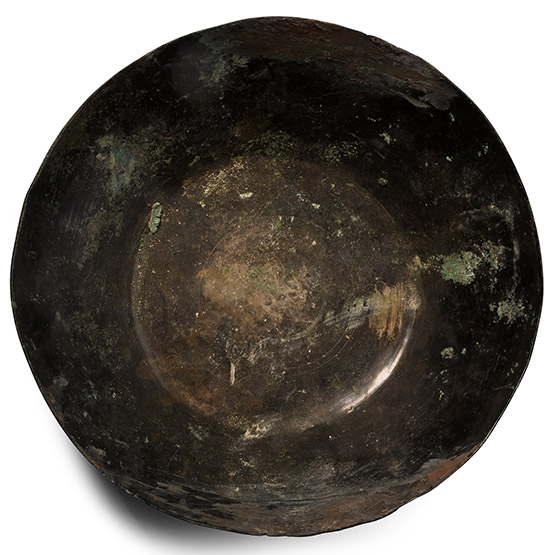
Parthian Bronze Bowl
2nd century B.C.-1st century A.D.Sold for (Inc. bp): £78
Broad and squat with flared sidewall. 153 grams, 17.5 cm
Ex 1990s collection and with a central London gallery. -
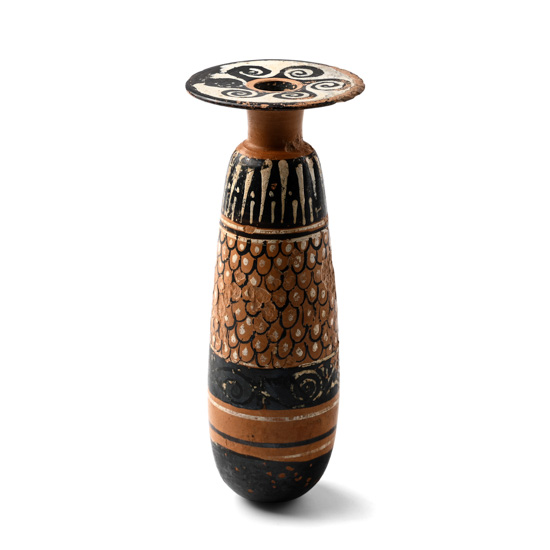
Greek Black-Figure Alabastron with Fish Scale Pattern, Possibly Attributed to the Bulas Group
Attic, early 4th century B.C.Sold for (Inc. bp): £2,340
Ovoid shape with short neck and expanded flat rim; painted with horizontal bands with vertical strokes on the shoulder, fish-scale pattern below and running scrolled tendrils; horizontal stripes below. 87 grams, 13 cm
partially repainted
Collection of M. Bouvier, Switzerland (1901-1980), Switzerland. Bouvier was a law professor in Alexandria prior to 1930. with Christie's, London, 7 October 2010, no.117. Private collection, 2010. Accompanied by an original thermoluminescence analysis report no.N125q42 by Oxford Authentication. Accompanied by copies of the Christie's catalogue pages. Accompanied by an academic report by Dr Raffaele D’Amato. This lot has been checked against the Interpol Database of stolen works of art and is accompanied by a search certificate number no.13008-246447.
The alabastra of the Bulas Group display scale-like patterns. They were painted with slip, a liquid clay which vitrifies when fired. This group is usually dated to the late 5th – early 4th century B.C. It was named after Kazimierz Bulas, who was the first to study them in depth in the 1930s. He characterised various shapes according to their decorative techniques (nets and floral patterns) and their functions.
