
Loading, please wait...
LOT 0536
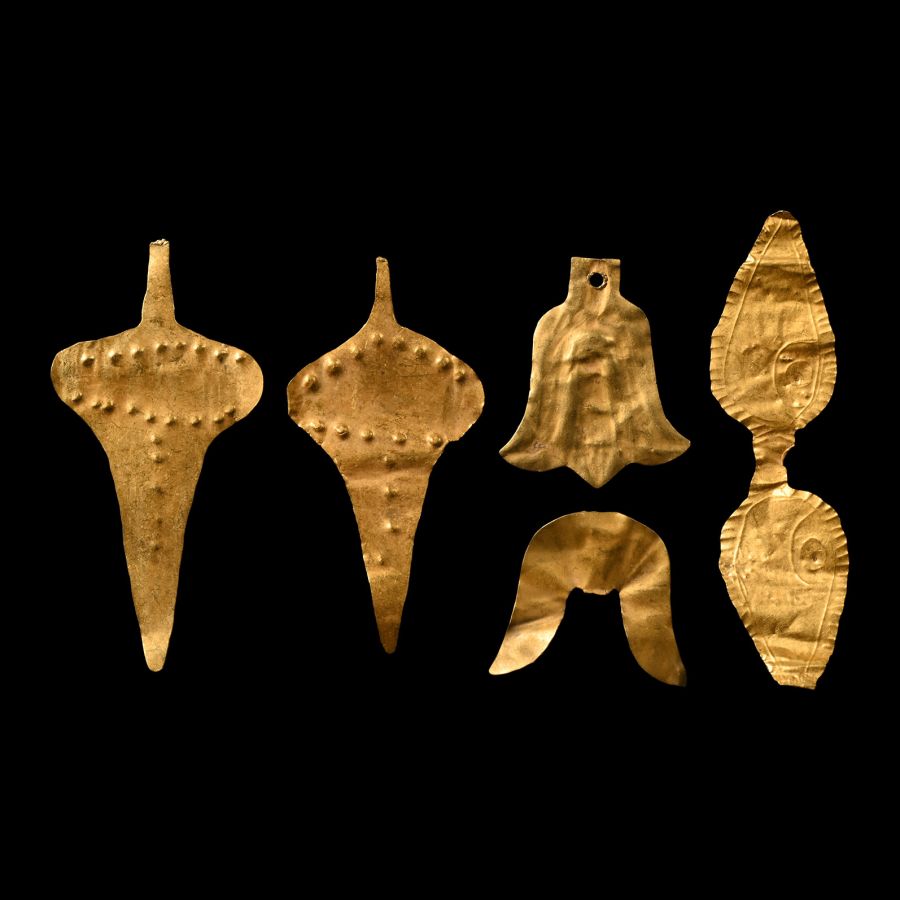
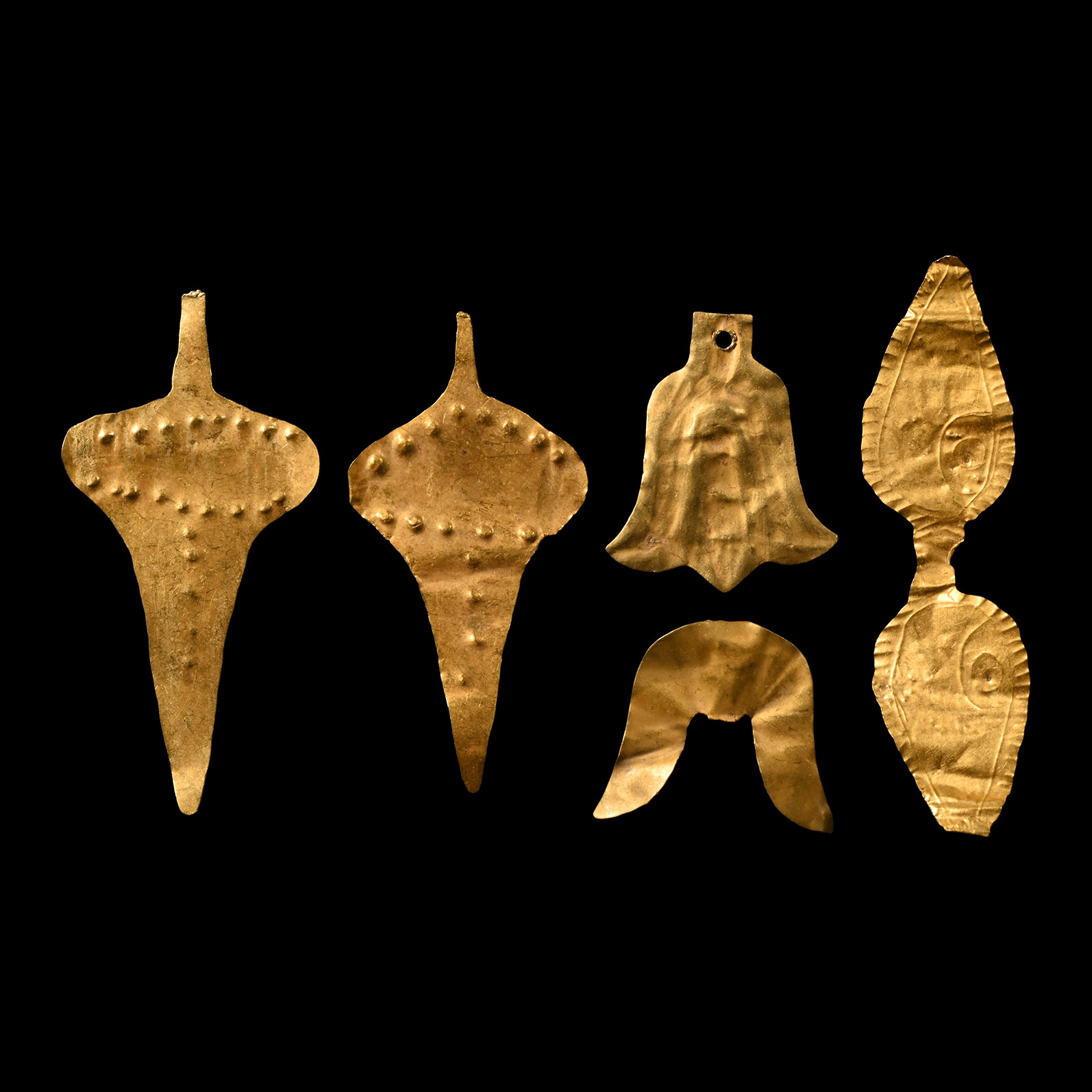
Greek Gold Funerary Decoration Group
6TH-4TH CENTURY B.C.
5/8 - 1 3/4 in. (2.31 grams total, 17-43 mm).
A mixed group of sheet-gold funerary appliqués comprising: two swords with repoussé pellets; a lily flower; a bull-horns' motif; a pair of leaves with notched edges. [5]
ProvenanceAcquired 1970-2010.
Collection of a late Japanese gentleman.
TimeLine Auctions follows a vetting process to ensure the authenticity and legality of all items, reinforcing our commitment to integrity and responsible trading. Each antiquity, antique, and coin lot undergoes thorough examination by a vetting committee of at least ten external specialists, professional trade association members, scientists, and archaeologists: Our Vetting Process
AUCTIONS:
TimeLine is a leading auction house specialising in antiquities, ancient art, collectables, natural history, coins, medals, and books. Our auctions offer museums, collectors, historians, and enthusiasts the opportunity to acquire unique and historically significant pieces.
-
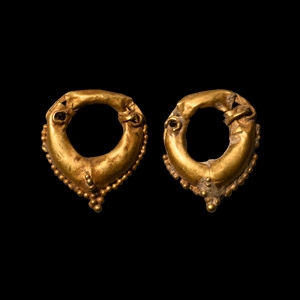
Parthian Gold Earrings
2nd-3rd century A.D.Sold for (Inc. bp): £305
A matching pair of hinged gold earrings, each composed of a hollow-formed crescentic hoop adorned with a row of granulation and pyramid granules; hinged closure above. 3.95 grams total, 18 mm each
Fine condition.
Acquired 1970-2010. Collection of a late Japanese gentleman. -
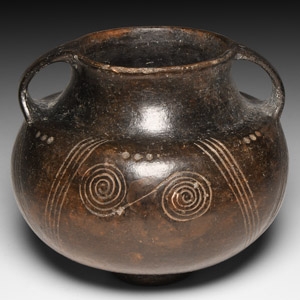
Villanovan Two-Handled Jar
7th century B.C.Sold for (Inc. bp): £1,820
A terracotta amphora composed of a squat bulbous body and rounded shoulder, waisted neck, integral loop handles and integral foot, decorated with scrolling S-motifs, clusters of dots and combed chevrons. 145 grams, 10.5 cm wide
Ex collection of P. Linders, Herrliberg, Zurich, Switzerland. with Galleria Serodine SA, Ascona, Switzerland, 12 November 2008. -
.jpg)
Greek Marble Head of a Female
4th-1st century B.C.Sold for (Inc. bp): £715
A head of a female carved in white marble, modelled in the round with semi-naturalistic facial features and hair tied back into a chignon at the nape of the neck. 163 grams, 59 mm high
Acquired early 1990s. Ex private American collection; thence by descent. Private collection since 1998.
