
Loading, please wait...
LOT 0508
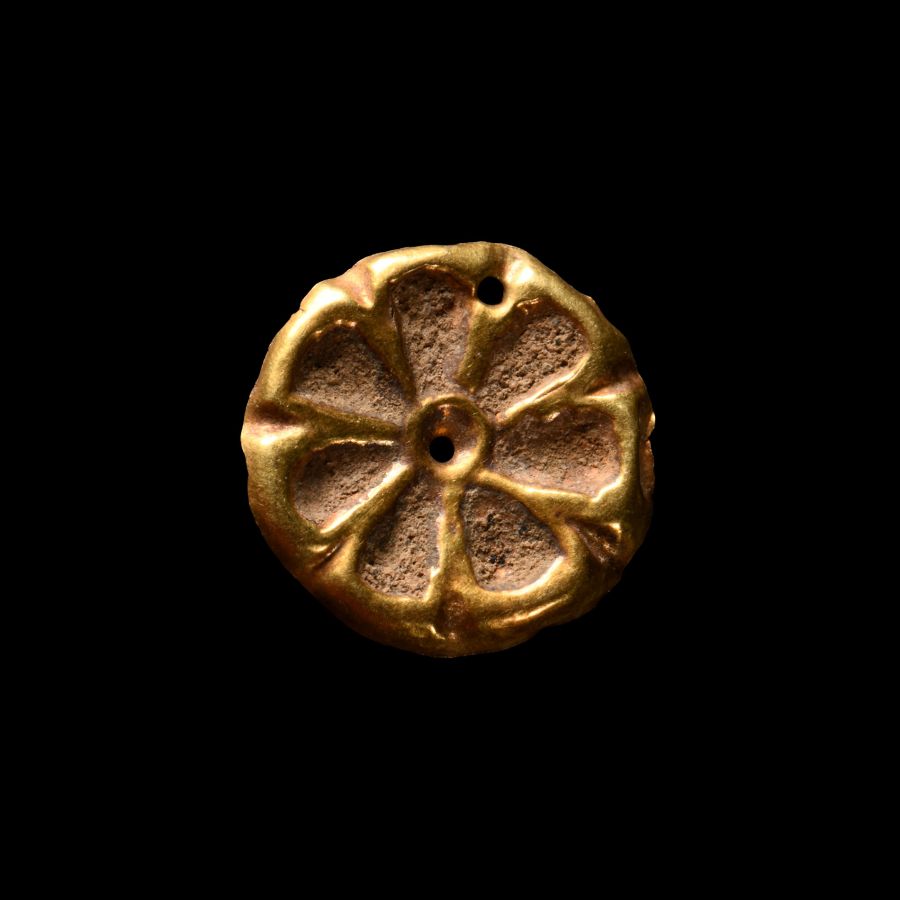
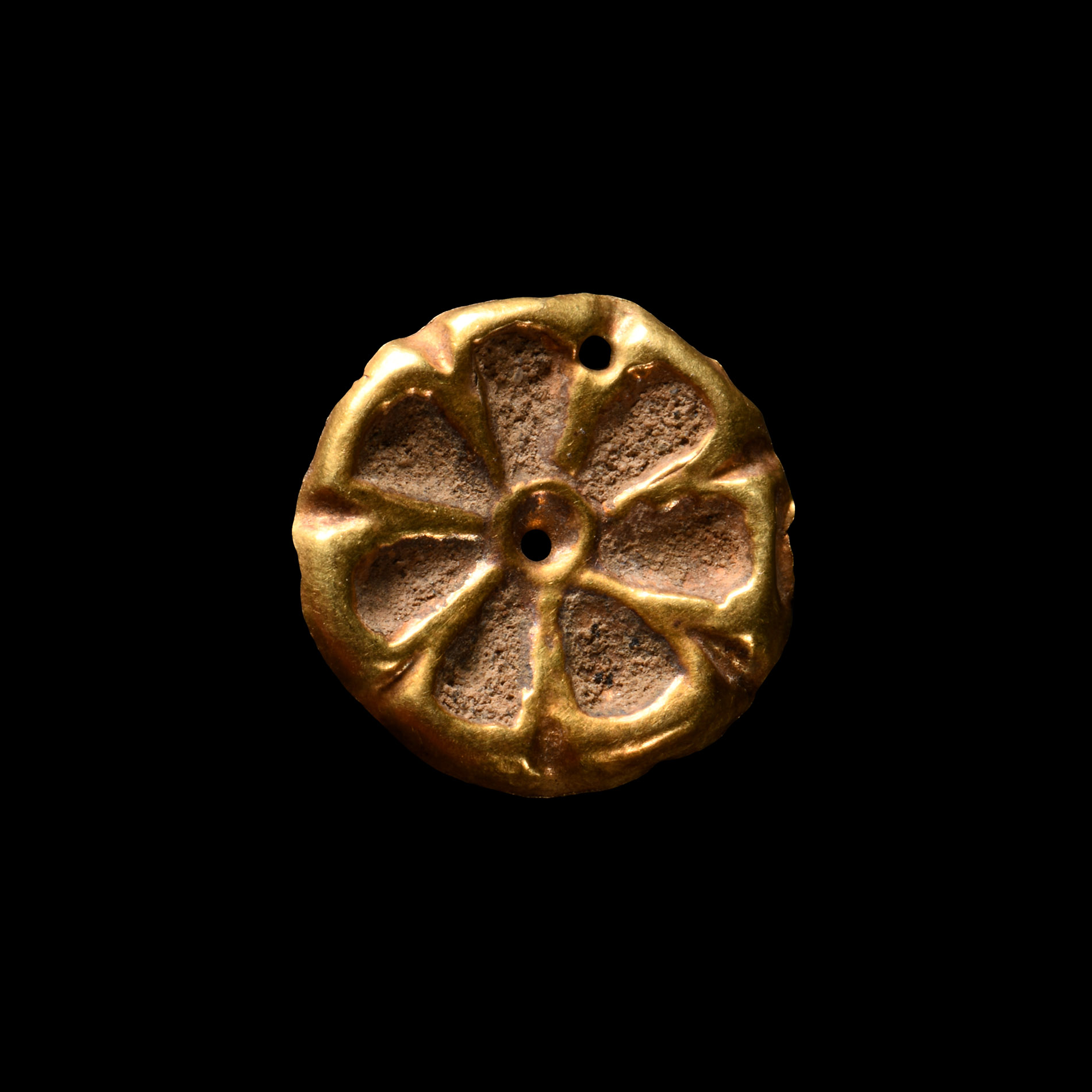
Greek Gold Floral Mount
CIRCA 4TH-2ND CENTURY B.C.
1/2 in. (0.36 grams, 14 mm wide).
The repoussé flower with seven petals and pierced through the pistil and once between the petals. [No Reserve]
ProvenanceProperty of a UK gentleman, acquired 20 November 1981.
Property of an East Sussex, UK, gentleman.
TimeLine Auctions follows a vetting process to ensure the authenticity and legality of all items, reinforcing our commitment to integrity and responsible trading. Each antiquity, antique, and coin lot undergoes thorough examination by a vetting committee of at least ten external specialists, professional trade association members, scientists, and archaeologists: Our Vetting Process
AUCTIONS:
TimeLine is a leading auction house specialising in antiquities, ancient art, collectables, natural history, coins, medals, and books. Our auctions offer museums, collectors, historians, and enthusiasts the opportunity to acquire unique and historically significant pieces.
-
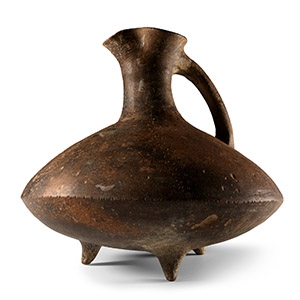
Eastern Mediterranean Tripod Footed Jug with Strainer
1st millennium B.C. or laterSold for (Inc. bp): £910
With a carinated body with conical feet to the base, a slender neck with trefoil mouth and pierced strainer panel to the spout, integral handle to the rear; displaying vertical notching to the equator and columns composed of shallow dimples to the upper body; chipped. 1.64 kg, 24 cm wide
with a London, UK, gallery, 1971-early 2000s. -
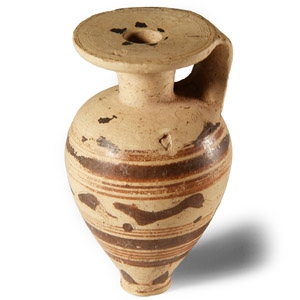
Etruscan Buffware Aryballos
8th-7th century B.C.Sold for (Inc. bp): £169
With a piriform body and narrow foot, deep shoulder and flange rim, strap handle to the rear; the rim and shoulder with radiating strokes, concentric bands to the body and foot, frieze of stylised running hounds below the shoulder. 34 grams, 63 mm high
Acquired 1980-1990s. From the private collection of H.N., Milton Keynes, Bedfordshire, UK.
Proto-Corinthian aryballoi of the same type, probably of Etruscan manufacture, in buff-ware decorated with dark metallic, purple-maroon and red-brown bands have been found in the Veii excavations. John Boardman noted that the shape in Corinth barely survives the 7th century, but these small pots are still found in Etruscan graves of the first half, or at least the first quarter, of the 6th century B.C. -
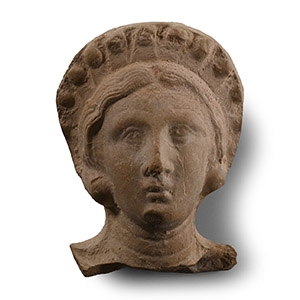
Hellenistic Terracotta Head of the Goddess Demeter
Circa 2nd-1st century B.C.Sold for (Inc. bp): £780
Hollow-formed and with rounded facial features; wavy hair with central partition, dressed with a tall diadem. 74 grams total, 78 mm high
UK private collection. Acquired Spink, York, UK, 2009. Property of a Nottinghamshire gentleman.
The head is probably from a cult statuette of Demeter. Statuettes of the goddess, seated or standing, or even busts, are well documented in the south of Italy, both among the Greek colonists and the local populations; many have been excavated from regional sanctuaries.
