
Loading, please wait...
LOT 0098
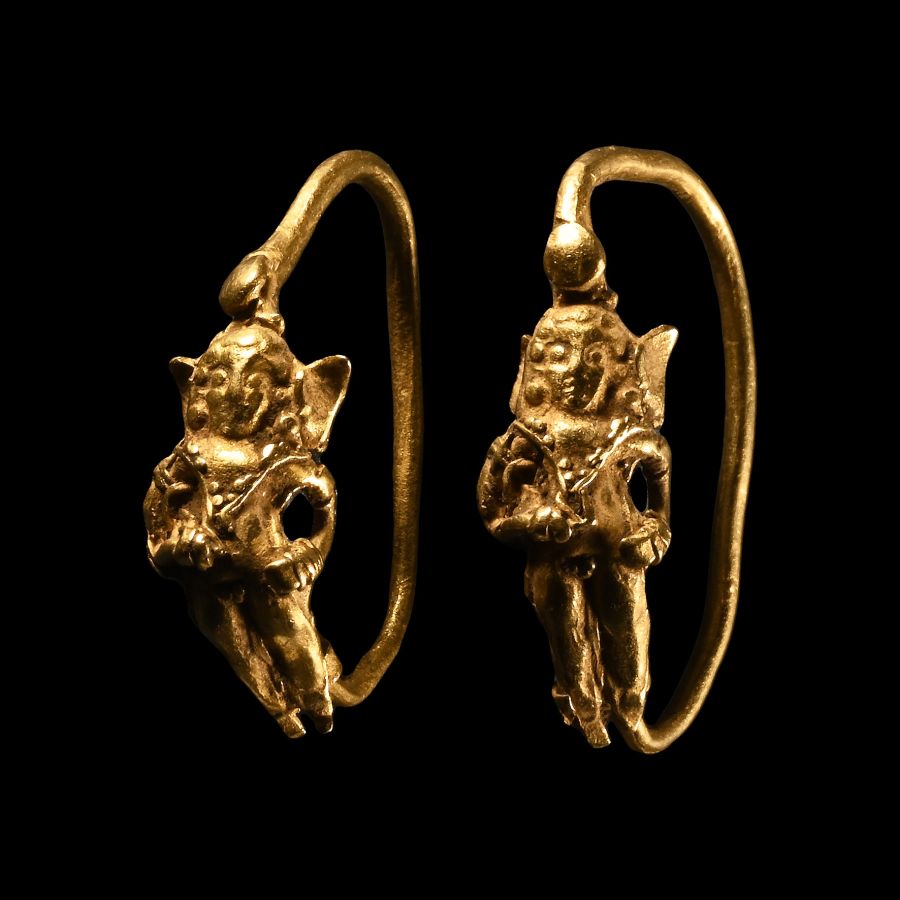
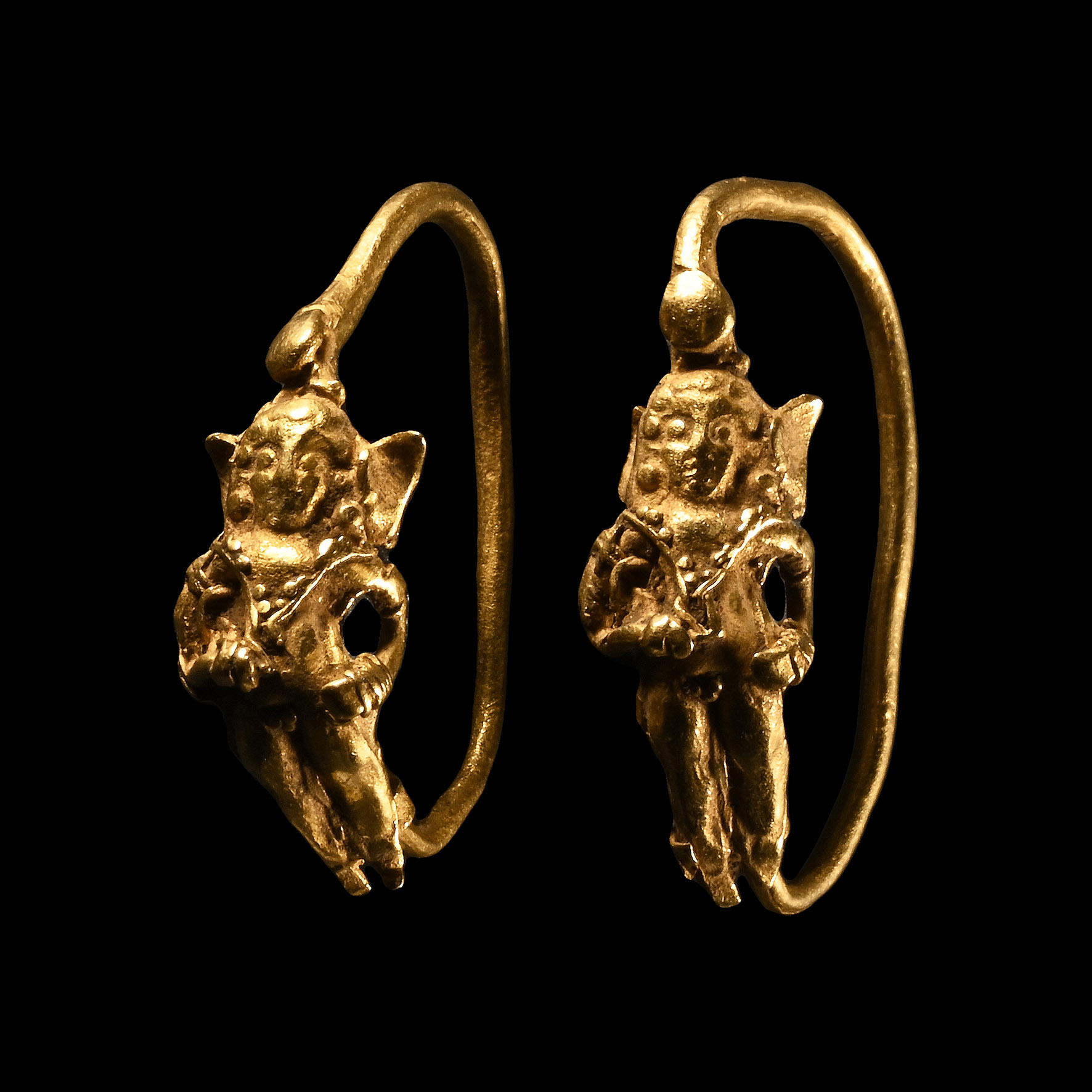
Greek Gold Eros Earrings
3RD-2ND CENTURY B.C.
3/4 in. (3.24 grams total, 21 mm each).
Each composed of a slender wire hoop and a winged Eros plaque with detailing to the body, face and hair; closure loop to reverse. [2]
ProvenanceAcquired 1980-2015.
Ex Abelita family collection.
Cf. The Metropolitan Museum, accession number 74.51.3506, for similar.
CONDITIONTimeLine Auctions follows a vetting process to ensure the authenticity and legality of all items, reinforcing our commitment to integrity and responsible trading. Each antiquity, antique, and coin lot undergoes thorough examination by a vetting committee of at least ten external specialists, professional trade association members, scientists, and archaeologists: Our Vetting Process
AUCTIONS:
TimeLine is a leading auction house specialising in antiquities, ancient art, collectables, natural history, coins, medals, and books. Our auctions offer museums, collectors, historians, and enthusiasts the opportunity to acquire unique and historically significant pieces.
-
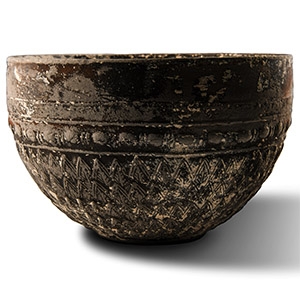
Greek Megarian Terracotta Bowl
Circa 2nd-1st century B.C.Sold for (Inc. bp): £585
Roughly hemispherical in form with in-turned rim and a matt glaze, raised architectural motifs to the shoulder, dense stylised ferns below; shallow foot. 143 grams, 11.5 cm wide
Acquired in before 1994. -
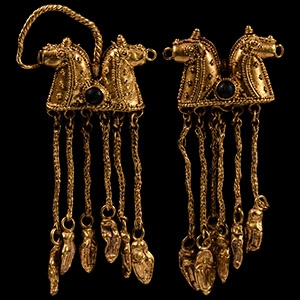
Eastern Greek Gold Horse Earrings with Pendants
Circa 4th century B.C. and laterEstimate: £1,500 - 2,000 (‡+bp*)
Opening Bid: £750
Each composed of a pair of bifacial addorsed horse-heads with filigree and granule detailing, filigree loop to each mouth, coil to each forehead, six loops to the underside each with a chain and sheet gold fruit pendant; to each face an inset glass cabochon; one with twisted wire ear hook above; both earrings with ancient chain dangles, one with a replicant horse. 18.08 grams total, 58-64 mm
Previously acquired on the UK art market between 1978-1980. Ex property of a North West London gentleman. -
.jpg)
Greek Core-Formed Glass Aryballos
Circa 5th-3rd century B.C.Estimate: £800 - 1,000 (+bp*)
Opening Bid: £400
In opaque blue glass, flask shaped with shallow vertical channelling and polychrome feathering, trails to the neck and broad everted rim; iridescent surfaces; restored. 70 grams, 78 mm
Ex Maurice Mathieu. Acquired from Asfar, Lebanon, 1960s. Art Auction, Rémy Le Fur & Associés, 10 October 2012, lot 130. Accompanied by a copy of a French cultural passport no.116789.
