
Loading, please wait...
LOT 0100
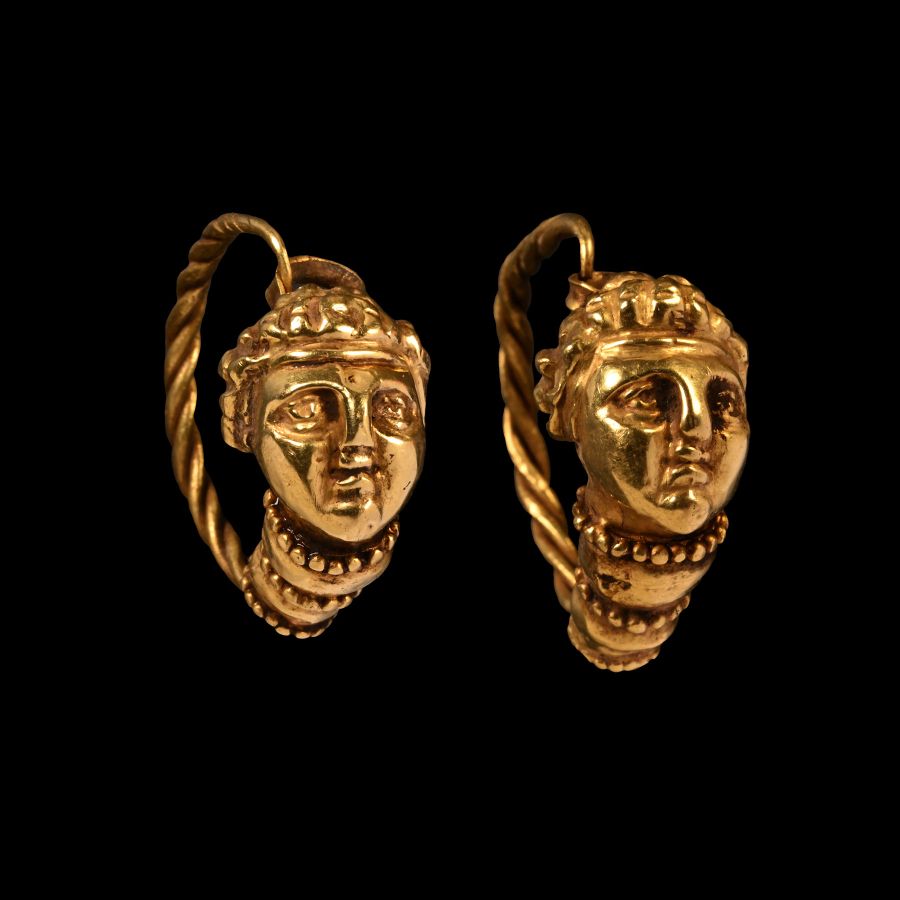
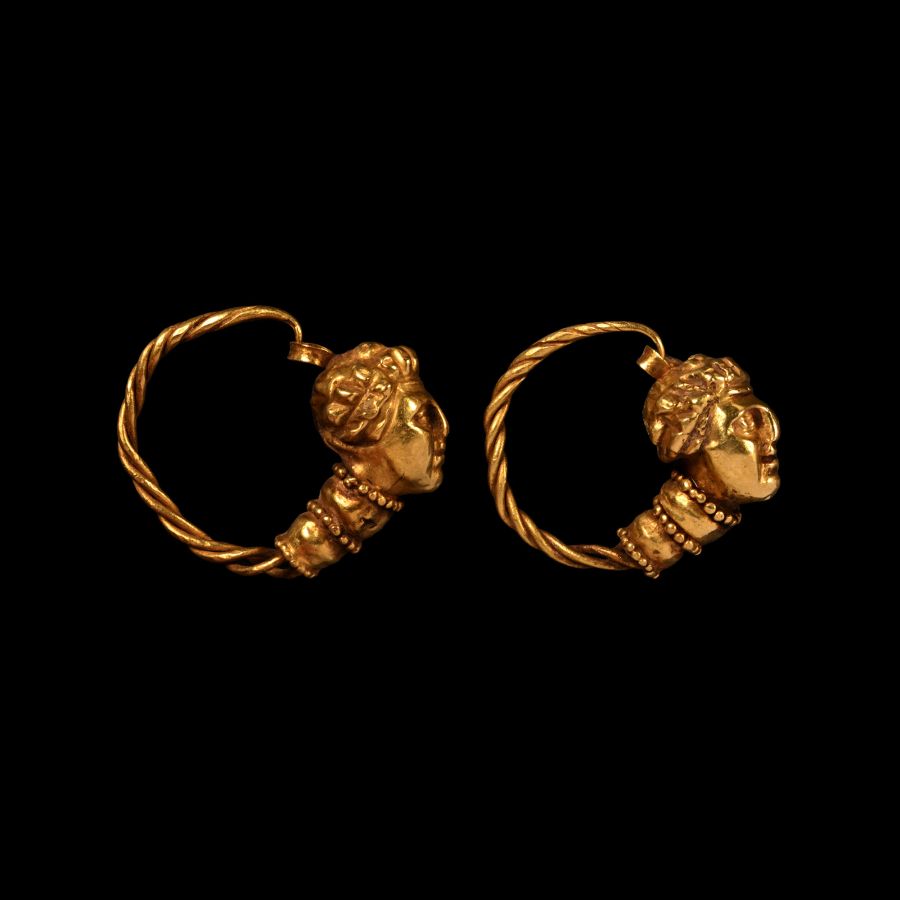
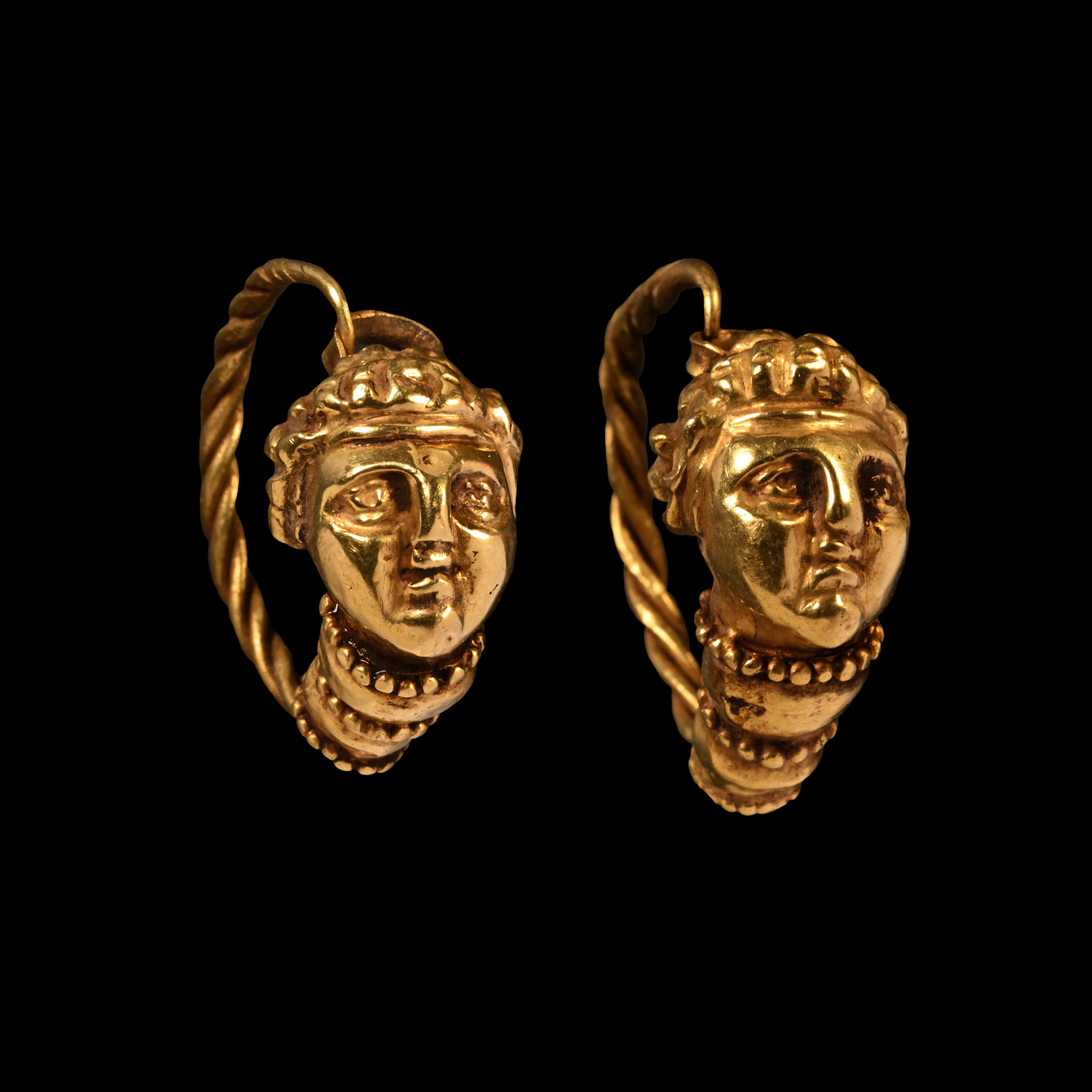
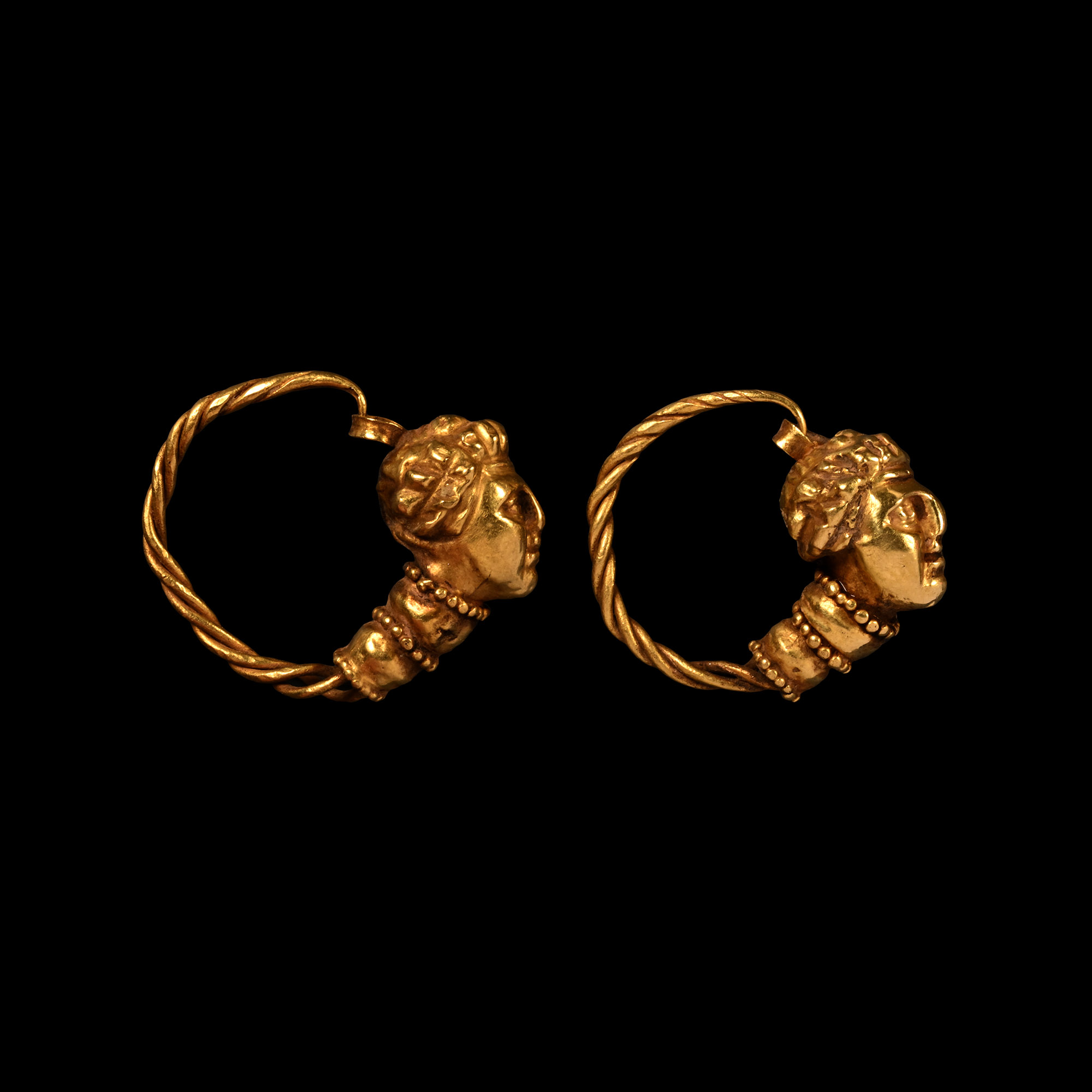
Greek Gold Earrings with Female Heads
HELLENISTIC, 2ND-1ST CENTURY B.C.
1 - 1 1/8 in. (5.93 grams total, 25-28 mm).
Each a hollow-formed female head with stephane to the brow, granulated collars flanking biconvex bulbs, tapering twisted shank curved to meet the gussetted loop above the head. [2]
ProvenanceFrom the collection of a gentleman, acquired on the London art market in the 1990s.
LiteratureCf. Marshall, F.H., Catalogue of the Jewellery, Greek, Etruscan and Roman, in the Department of Antiquities, British Museum, London, 1911, item 1706, for type.
CONDITIONTimeLine Auctions follows a vetting process to ensure the authenticity and legality of all items, reinforcing our commitment to integrity and responsible trading. Each antiquity, antique, and coin lot undergoes thorough examination by a vetting committee of at least ten external specialists, professional trade association members, scientists, and archaeologists: Our Vetting Process
AUCTIONS:
TimeLine is a leading auction house specialising in antiquities, ancient art, collectables, natural history, coins, medals, and books. Our auctions offer museums, collectors, historians, and enthusiasts the opportunity to acquire unique and historically significant pieces.
-

Large Greek Apulian Red-Figure Skyphos with Maenad
4th century B.C.Sold for (Inc. bp): £9,100
With stepped foot and two loop handles to the rim, egg-and-dart border; Side A: female in loosely draped chiton holding a dish in her raised left hand and advancing towards an altar, looking to her rear and with her right arm extended; Side B: nude male in similar pose to the female, with mantle draped over his left elbow, gripping a thyrsus, the head wrapped in a band or taenia; volute scroll beneath each handle. 1.74 kg, 34 cm wide
Acquired in the mid 1980s-1990s. Private collection, Switzerland, thence by descent. Private collection, since the late 1990s. This lot has been checked against the Interpol Database of stolen works of art and is accompanied by search certificate number no.12364-226707.
The thyrsus in the hand of the male figure implies that he is a worshipper of Dionysus, and this impression is strengthened by the casual discarding of his clothing which is draped over his arm. The female may then be interpreted as a Maenad, a member of the group of devotees who accompanied the god and led the celebrations in his worship. A combination of protracted and vigorous dancing combined with wine-drinking led to an ecstatic frenzy in which the god was honoured. -
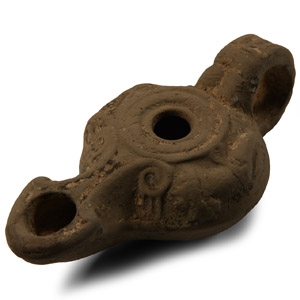
Hellenistic Terracotta Oil Lamp with Cornucopiae
2nd-1st century B.C.Estimate: £150 - 200 (+bp*)
Opening Bid: £83
With circular body and raised rim, round central filling-hole flanked by cornucopiae; long broad nozzle with rounded spout-like termination; handle with three ribs. 62 grams, 10.5 cm
Collected from 1970-1999. From the collection of the late Mr S.M., London, UK.
The principal parts of a Graeco-Roman lamp were: a) the body or reservoir which contained the oil (infundibulum); the flat circular top (discus) on which the design was placed, sometimes with an ornamental rim; the edge (margo); the nozzle (rostrum, nasus, myxus) with a hole for the insertion of the wick (ellychnium); and the handle (ansa, manubrium,). -
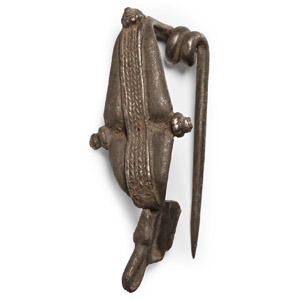
Greek Silver Fibula
5th-4th century B.C.Estimate: £200 - 300 (‡+bp*)
Opening Bid: £100
Comprising an ellipsoid bow with lateral knops (one absent) and applied collars, longitudinal band of applied filigree braid, knop finial with collar, perpendicular two-coil spring and long pin; footplate with incised saltire with reversed-loop finial, square catchplate with pointillé gammadion and frame. 6.86 grams, 42 mm
Private European collection, 1994, thence by descent.
