
Loading, please wait...
LOT 0616
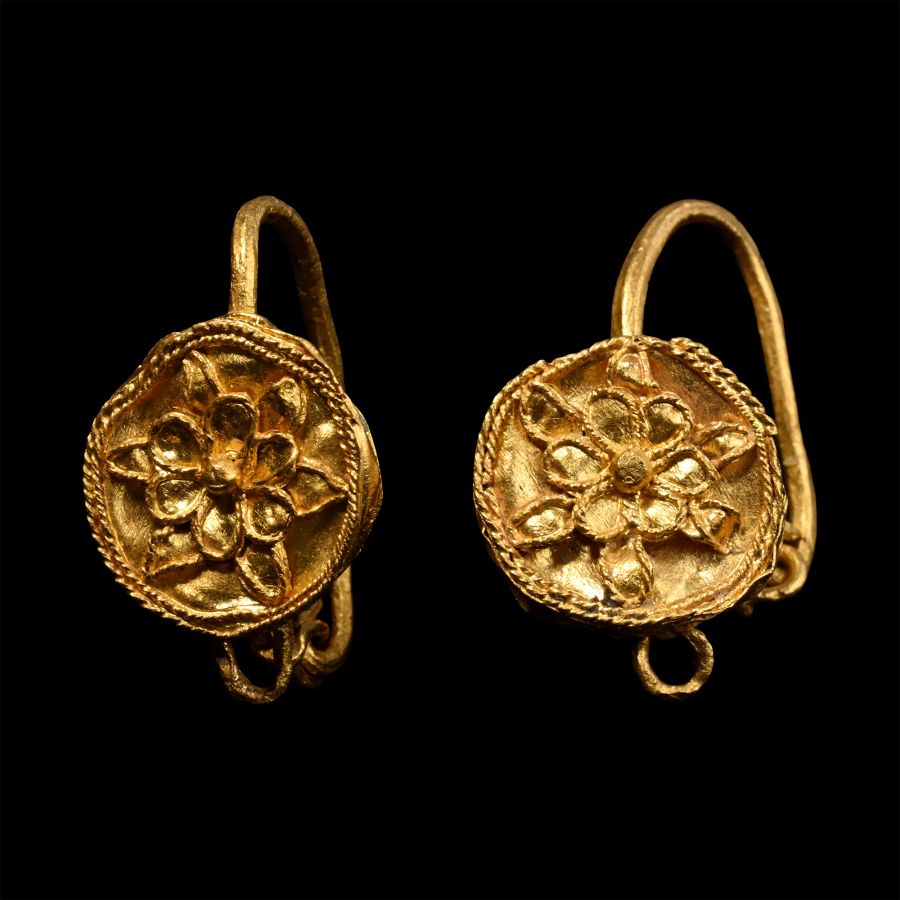
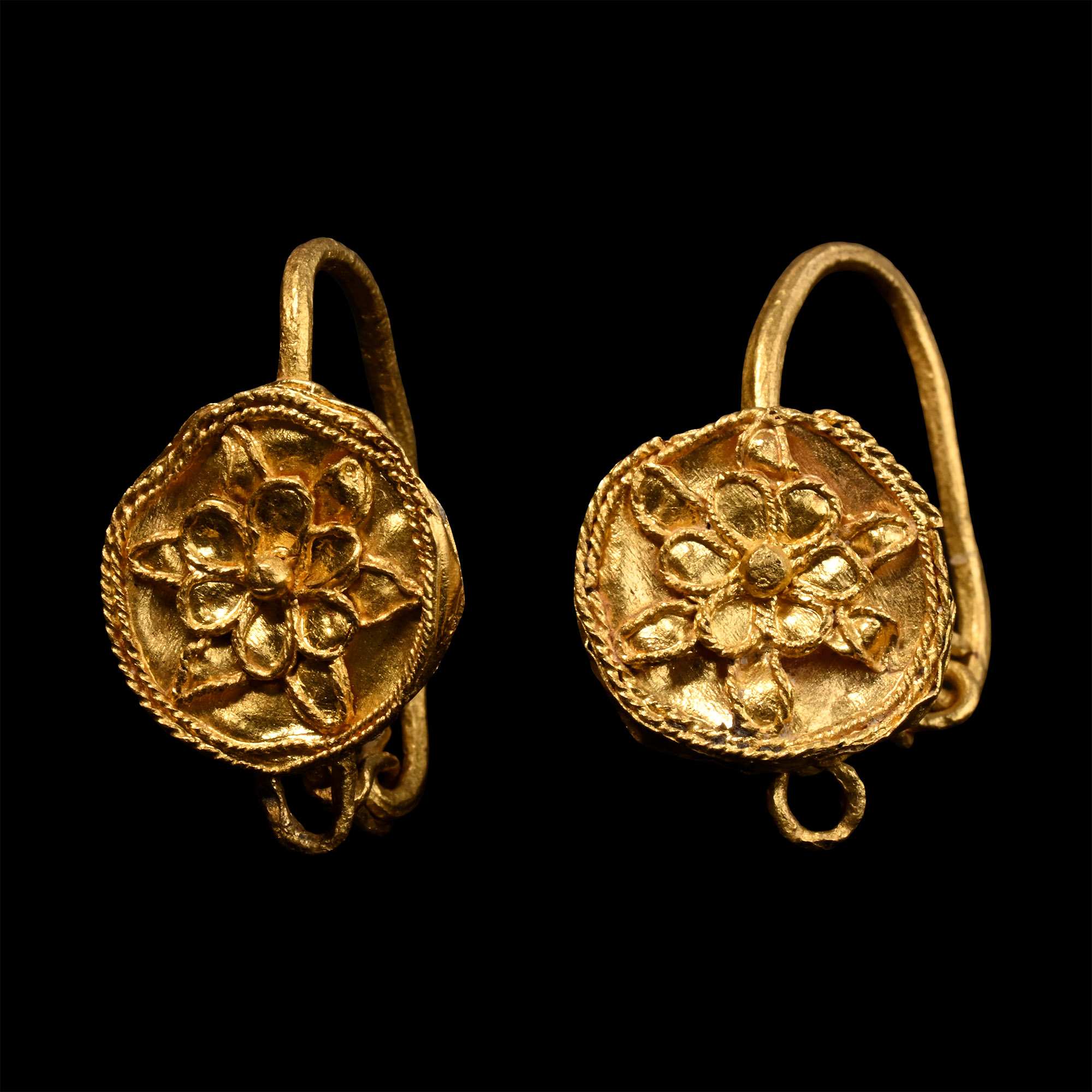
Greek Gold Earring Pair with Rosettes
5TH CENTURY B.C.
1 in. (5.64 grams total, 22.9-24.8 mm).
Each a sturdy hoop with a hook-and-eye closure, granule above; discoid plaque with applied granule border, filigree rosette. [2]
ProvenanceAcquired on the UK art market 1971-1974.
Private collection, London.
This lot has been checked against the Interpol Database of stolen works of art and is accompanied by search certificate number no.13173-248088.
TimeLine Auctions follows a vetting process to ensure the authenticity and legality of all items, reinforcing our commitment to integrity and responsible trading. Each antiquity, antique, and coin lot undergoes thorough examination by a vetting committee of at least ten external specialists, professional trade association members, scientists, and archaeologists: Our Vetting Process
AUCTIONS:
TimeLine is a leading auction house specialising in antiquities, ancient art, collectables, natural history, coins, medals, and books. Our auctions offer museums, collectors, historians, and enthusiasts the opportunity to acquire unique and historically significant pieces.
LOT 0616
Greek Gold Earring Pair with Rosettes
Estimate £1,800 - 2,400€2,090 - 2,780 (for guidance only)$2,430 - 3,240 (for guidance only)
-
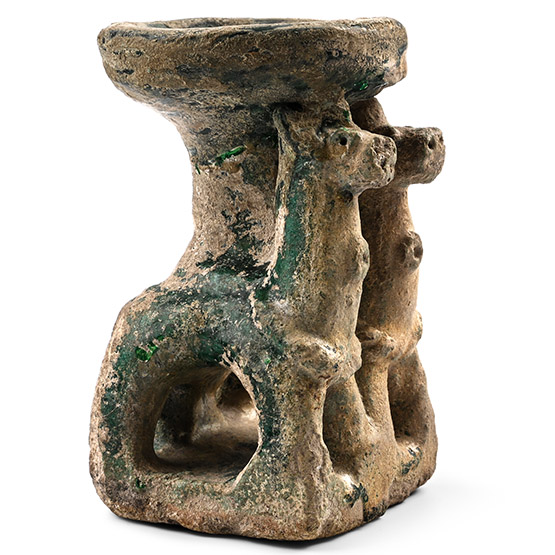
Parthian Faience Glazed Offering Chalice with Quadrupeds
Circa 3rd-1st century B.C.Sold for (Inc. bp): £546
Modelled in the round as two quadrupeds on a square base supporting a shallow bowl on a stem; the beasts with rope halter to the neck. 645 grams, 12.8 cm
Collected from 1979-1999. From the collection of the late Mr Shlomo Mousiaffee, London, UK. Acquired on the UK art market. Private collection, London, UK. -
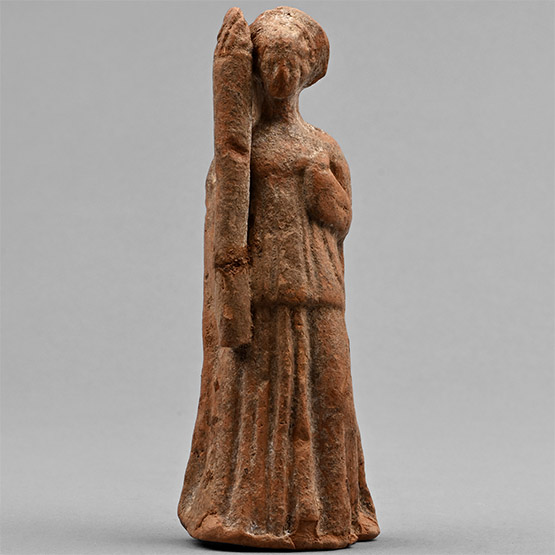
Greek Terracotta Goddess Figure
4th-3rd century B.C.Sold for (Inc. bp): £338
Tanagra type, hollow-formed with a void to the reverse, standing female in tiered robe wearing a diadem and with her hair drawn back, applied torch in her right hand. 18 grams, 12 cm
European art market. Acquired in Münich in 2012. European private collection. -
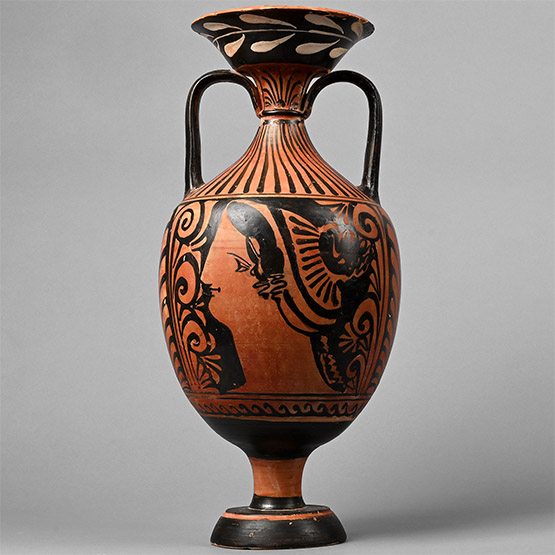
Large Greek Red-Figure Amphora with Lady of Fashion
Apulian, 3rd-2nd century B.C.Sold for (Inc. bp): £3,900
The conical mouth with laurel-leaf motif, palmettes below; lateral strap handles to the shoulder and palmette below each; Side A: profile bust of a lady of fashion with her hair in a chignon covered by a sakkos; Side B: similar design. 2.48 kg, 46.5 cm high
Acquired on the art market between the late 1990s and mid-2000s. Estate of the late Barry Paul Buxton (1944-2024), Oakham, Rutland. Acquired on the UK art market, 2025. Accompanied by a thermoluminescence analysis report no.N126a17 from Oxford Authentication. This lot has been checked against the Interpol Database of stolen works of art and is accompanied by search certificate no.13076-248950.
The pattern-work and the female head seem to connect the vase more closely with the Monopoli Group. The corkscrew curls on the hair over the ear and the sakkos with a bow at the top are, in fact, typical of the heads of this group.
