
Loading, please wait...
LOT 0570
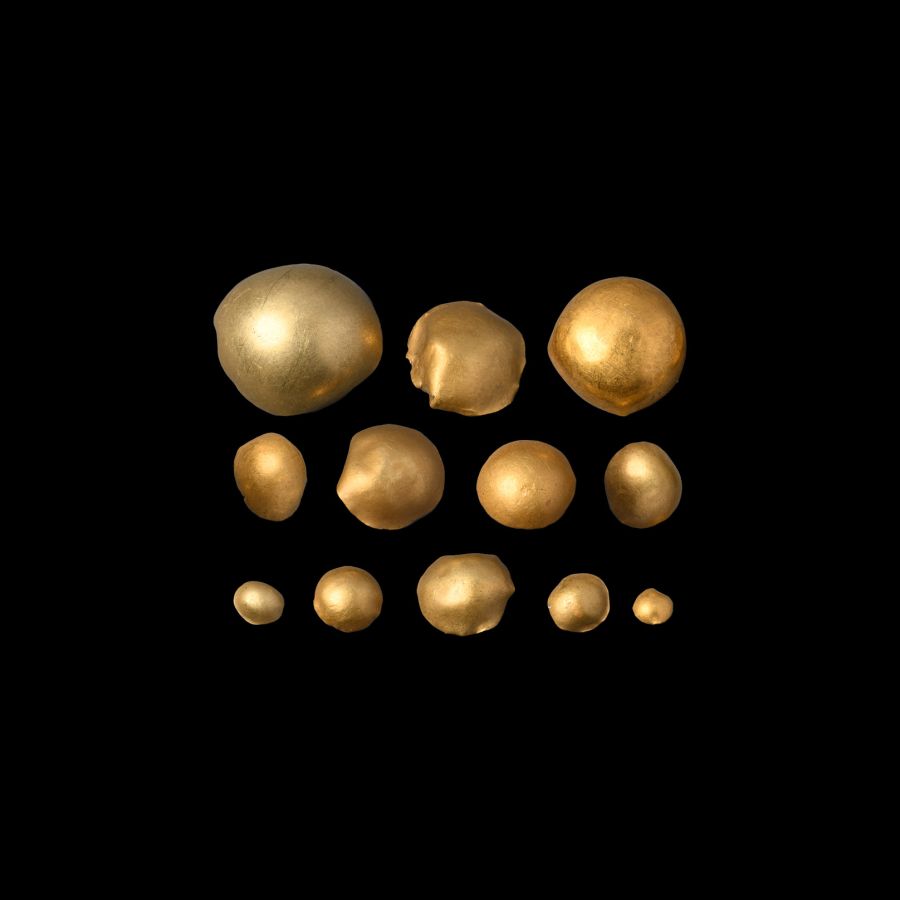
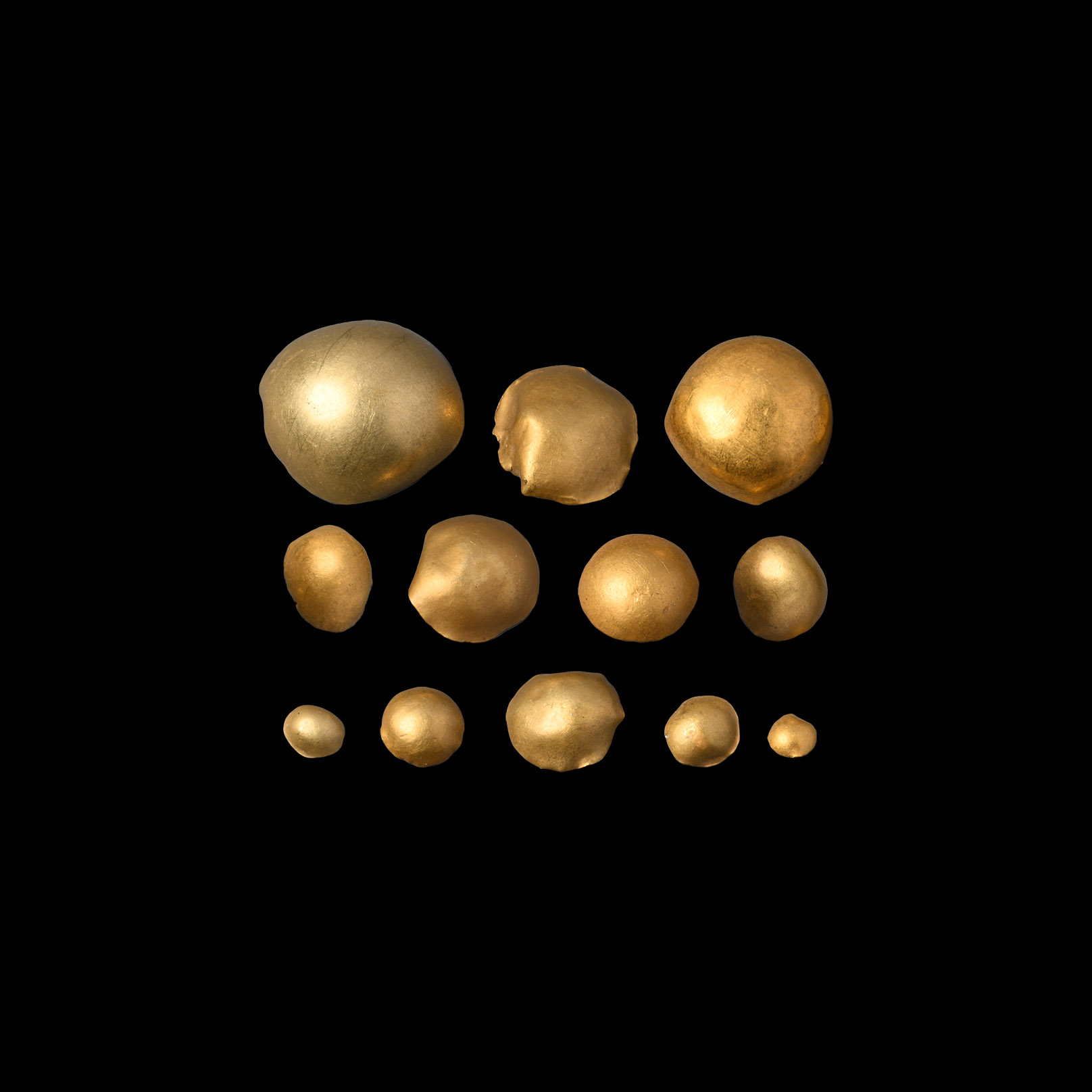
Greek Gold Domed Dress Decoration Set
CIRCA 3RD CENTURY B.C.
1/8 - 1/2 in. (5 1/8 x 5 1/4 in.) (3.01 grams total, 2-12 mm (207 grams total, 13 x 13.5 cm including case)).
A group of 12 gold garment fittings of various sizes, each discoid in form with one domed face and concave reverse; at least nine with loops for attachment; accompanied by a display frame. [12]
ProvenanceAcquired 1970-2010.
Collection of a late Japanese gentleman.
TimeLine Auctions follows a vetting process to ensure the authenticity and legality of all items, reinforcing our commitment to integrity and responsible trading. Each antiquity, antique, and coin lot undergoes thorough examination by a vetting committee of at least ten external specialists, professional trade association members, scientists, and archaeologists: Our Vetting Process
AUCTIONS:
TimeLine is a leading auction house specialising in antiquities, ancient art, collectables, natural history, coins, medals, and books. Our auctions offer museums, collectors, historians, and enthusiasts the opportunity to acquire unique and historically significant pieces.
LOT 0570
Greek Gold Domed Dress Decoration Set
Estimate £200 - 300€230 - 350 (for guidance only)$270 - 410 (for guidance only)
-
Greek Trailed Glass Vessel Group
2nd-1st century B.C.Estimate: £500 - 700 (‡+bp*)
Opening Bid: £250
A pair of glass vessels with polychrome decoration and iridescent surfaces: an alabastron with fusiform body, conical foot and ledge handles, decorated with yellow feathering and trails; a blue amphoriskos with yellow festooning and trails, knop foot and everted rim; fragmentary. 197 grams total, 11.3-15 cm high
Acquired early 1990s. Ex private American collection; thence by descent. Private collection since 1998. -
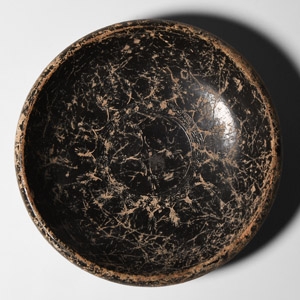
Greek Campanian Black Terracotta Bowl
4th century B.C.Sold for (Inc. bp): £468
A terracotta bowl or dish with broad inverted rim, squat convex body and carinated foot, covered in a black glaze and displaying a stylised radiating palmette leaf design to the interior base. 223 grams, 14.2 cm
Acquired early 1990s. Ex private American collection; thence by descent. Private Swiss collection since 1998. -
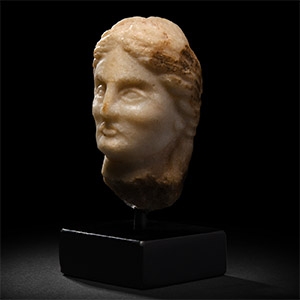
Greek Marble Head of a Woman
2nd century B.C.Estimate: £1,200 - 1,700 (+bp*)
Opening Bid: £667
A marble head of lady carved in the round with semi-naturalistic, masculine facial features, severe facial expression, hair dressed with a central parting and tied in a chignon at the nape of the neck; mounted on a custom-made display stand. 386 grams total, 11 cm high
Acquired in the 1980s. Ex private German collection.
Probably a votive statuette, of which only the head remains; it may also have been part of a high-relief made in the style of Asia Minor sculptures. The soft treatment of the hair, and the deep-set eyes in the narrow face, creating a soft effect, are among the characteristics known from the late Classical period. The arrangement of the hair in soft curls encircling the face, in a manner which provides a triangular form to the forehead, and then hanging downwards after being collected at the back of the neck, resembles the Kore types known from the early Hellenistic period.
