
Loading, please wait...
LOT 0510
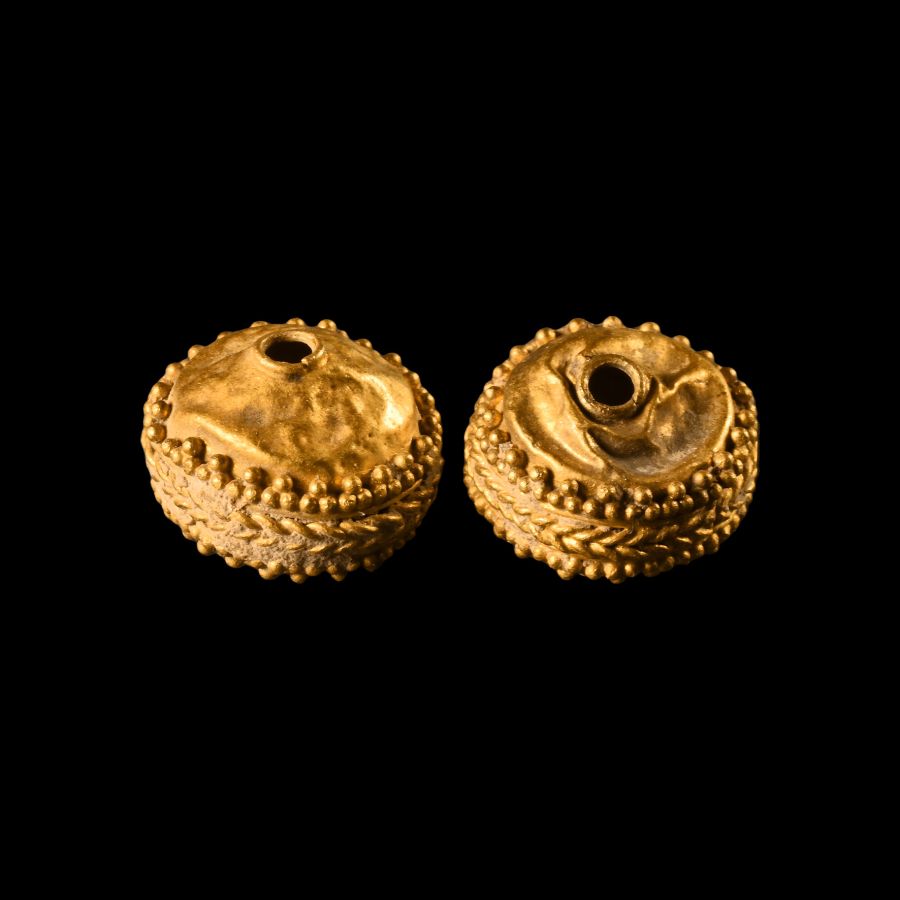
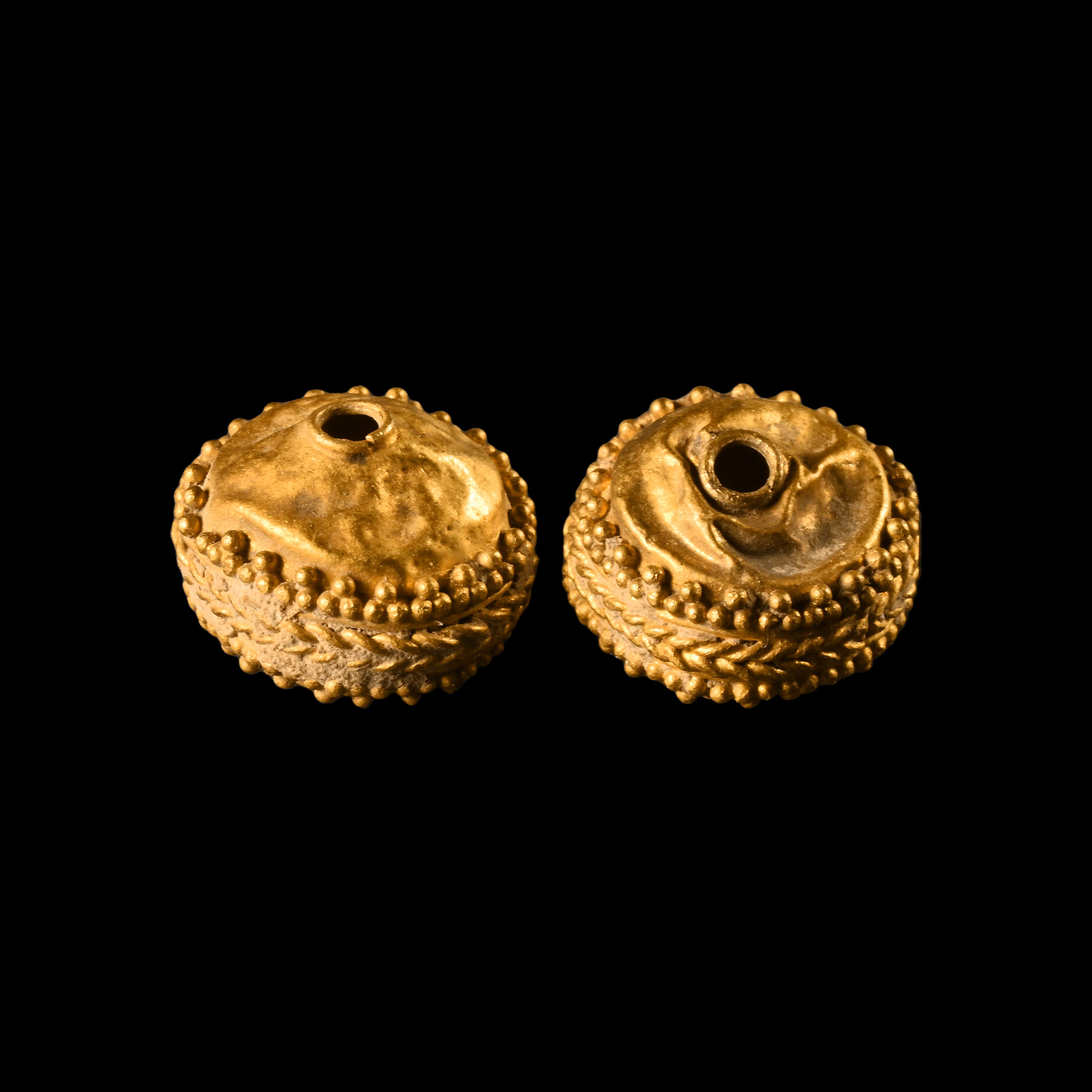
Greek Gold Bead Pair
CIRCA 4TH-3RD CENTURY B.C.
3/8 in. (1.85 grams total, 9 mm each).
Each with a squat, spherical body adorned with decoratively twisted filigree wire and granules around the equator. [2]
ProvenanceCollected from 1970-1999.
From the collection of the late Mr S.M., London, UK.
TimeLine Auctions follows a vetting process to ensure the authenticity and legality of all items, reinforcing our commitment to integrity and responsible trading. Each antiquity, antique, and coin lot undergoes thorough examination by a vetting committee of at least ten external specialists, professional trade association members, scientists, and archaeologists: Our Vetting Process
AUCTIONS:
TimeLine is a leading auction house specialising in antiquities, ancient art, collectables, natural history, coins, medals, and books. Our auctions offer museums, collectors, historians, and enthusiasts the opportunity to acquire unique and historically significant pieces.
-
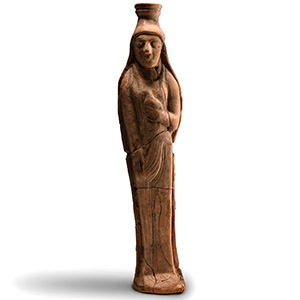
Archaic Greek Figural Alabastron
6th century B.C.Estimate: £1,000 - 1,400 (‡+bp*)
Opening Bid: £500
The free-standing perfume vase modelled as a standing and draped female figure, the neck and mouth of the vessel possibly formed as a modius worn on her head, holding what is possibly a dove to her chest; moulded and painted detailing to her face and garments; heavily repaired. 269 grams, 22 cm high
Acquired in Europe before 2001. -
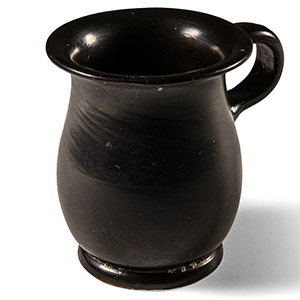
Greek High-Glazed Black Ware Mug
4th-3rd century B.C.Sold for (Inc. bp): £1,820
With flared base, bulbous body. tapering shoulder and flared mouth with everted rim, loop handle. 69 grams, 71 mm
Private collection, Sussex, UK; acquired 1975-1990. -
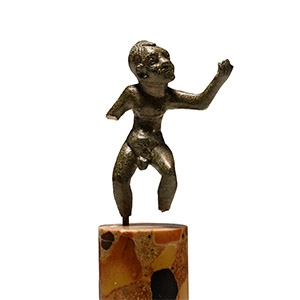
Hellenistic Bronze Statuette of an Alexandrian Dancing Dwarf
1st century B.C.-1st century A.D.Estimate: £3,000 - 4,000 (+bp*)
Opening Bid: £1,500
In an active pose with both legs bent and left arm raised dramatically, head tilted to the left; exaggerated facial features, short trimmed hair, slim body with developed pectoral muscles and pronounced kyphosis; mounted on a columnar stand. 299 grams,14.5 cm including stand
Belgian private art collection of M.A., Brussels, Belgium, 1995. with Gorny and Mosch, 14 December 2011, lot 82. This lot has been checked against the Interpol Database of stolen works of art and is accompanied by search certificate number no.11886-206399.
