
Loading, please wait...
LOT 0105
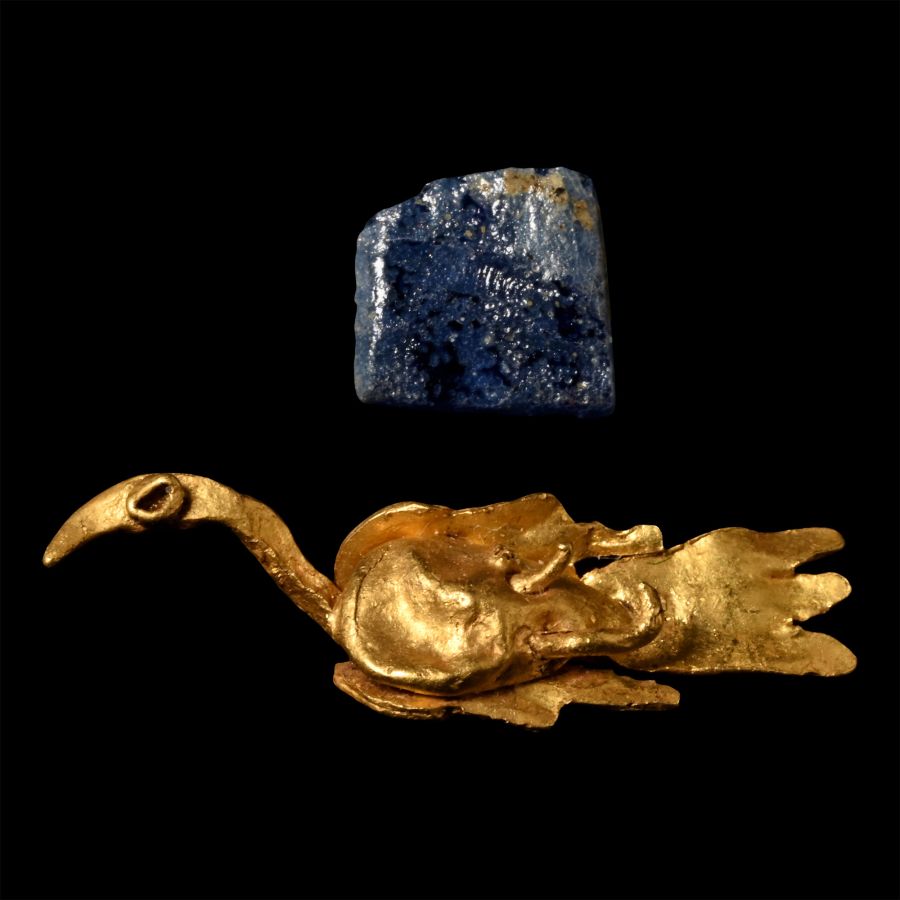
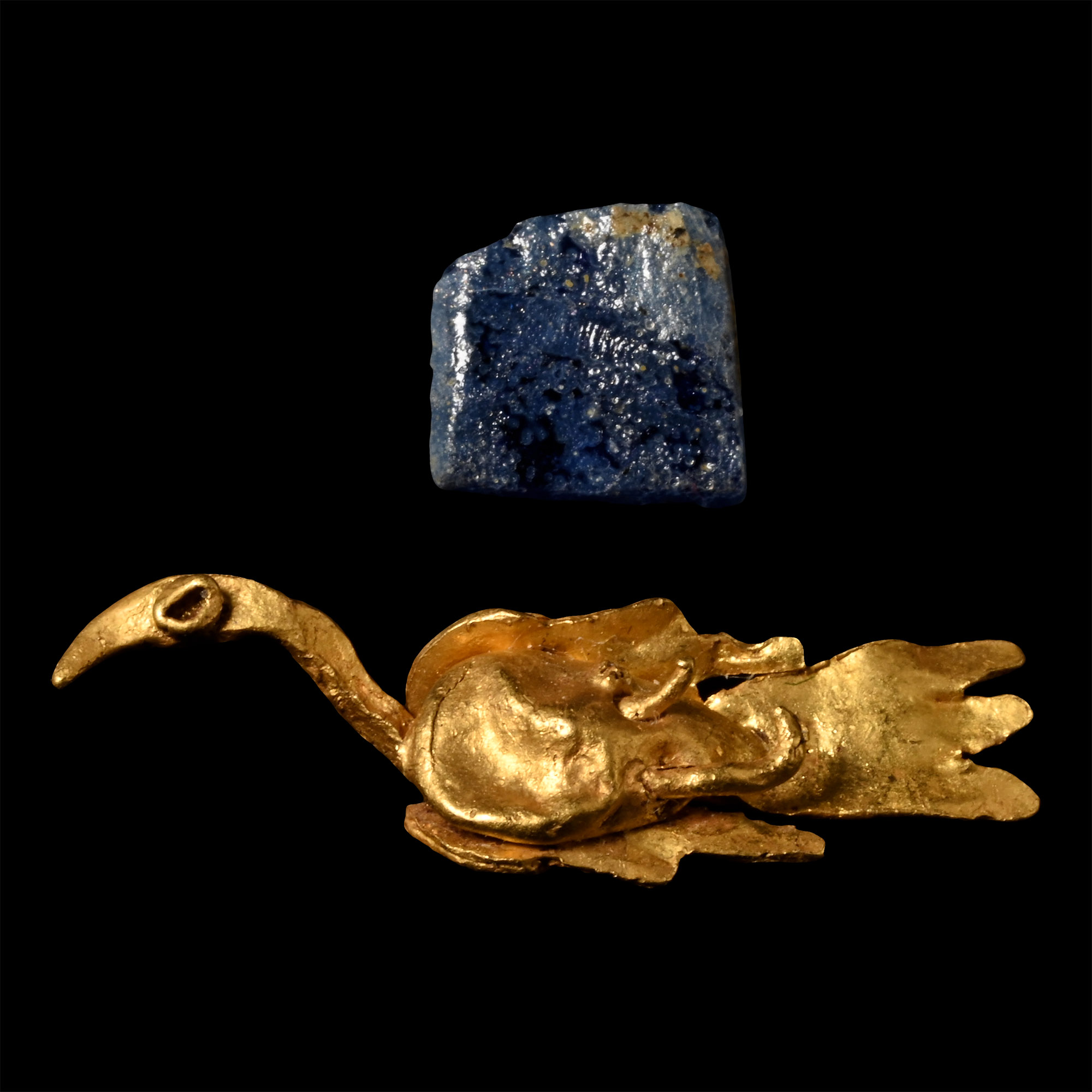
Greek Gold Amuletic Bird
5TH-1ST CENTURY B.C.
3/4 in. (0.57 grams, bird: 19 mm).
Comprising a sheet-gold hollow-formed avian figure with applied filigree detailing, and a separate beaked head; accompanied by a rectangular blue glass fragment. [3]
ProvenancePrivate collection, USA and Switzerland, acquired in the late 1980s-early 1990s; thence by descent.
CONDITIONTimeLine Auctions follows a vetting process to ensure the authenticity and legality of all items, reinforcing our commitment to integrity and responsible trading. Each antiquity, antique, and coin lot undergoes thorough examination by a vetting committee of at least ten external specialists, professional trade association members, scientists, and archaeologists: Our Vetting Process
AUCTIONS:
TimeLine is a leading auction house specialising in antiquities, ancient art, collectables, natural history, coins, medals, and books. Our auctions offer museums, collectors, historians, and enthusiasts the opportunity to acquire unique and historically significant pieces.
LOT 0105
Greek Gold Amuletic Bird
Estimate £1,500 - 2,000€1,740 - 2,320 (for guidance only)$2,030 - 2,700 (for guidance only)
-
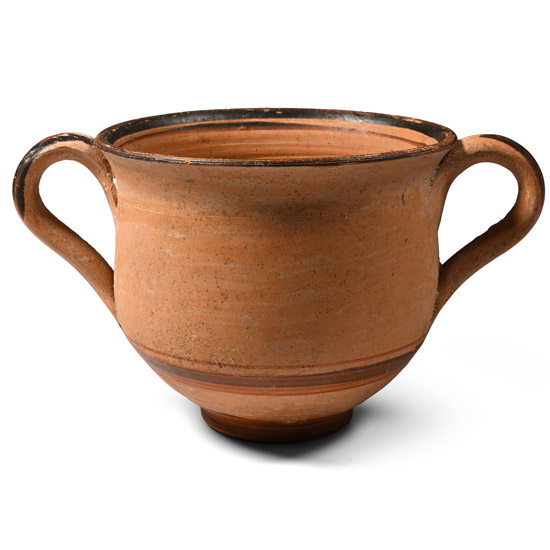
Daunian Terracotta Twin-Handled Cup
5th-4th century B.C.Sold for (Inc. bp): £312
Comprising a bell-shaped thin-walled body with two strap handles and an everted rim, dark lip with a thin circumferential band below; each handle with a lentoid motif; narrow foot with two circumferential bands above. 206 grams, 16 cm wide
From the estate of a Swiss gentleman, Ticino, before 1970. with Galerie Rhéa, Zurich, Switzerland.
Daunian pottery is characterised by unique shapes and decorative motifs, which include geometric patterns, plant and animal motifs, and human figures. The pottery is typically made from a coarse clay, and it is decorated with black or dark brown slip, a type of liquid clay that is applied to the surface of the pottery before firing. -
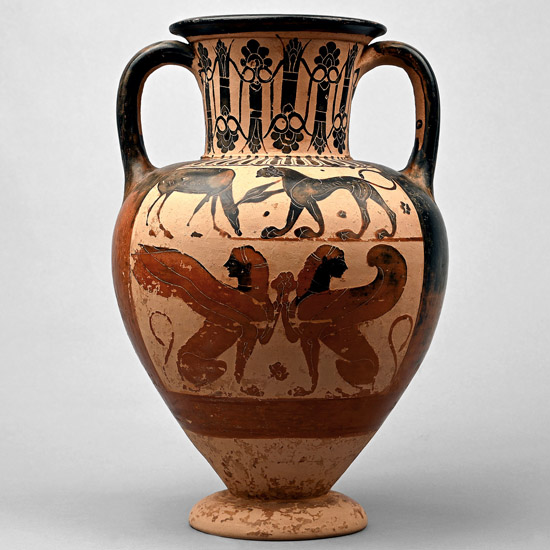
Greek Terracotta Amphora Attributed to the Phineus Painter
Chalcidian, circa 525 B.C.Estimate: £4,000 - 6,000 (‡+bp*)
Opening Bid: £2,500
Piriform body with splayed foot and narrow handles; the neck with slender lotus blossoms and palmettes, Side A) two opposing roosters with a lotus blossom in between, two standing swans flanking, below a youth on horseback holding the reins of a trotting horse, a man and a woman behind the horse; Side B) a grazing deer before an advancing panther looking back, two opposing sphinxes below with their heads turned back and front paws raised. 1.06 kg, 28 cm
Ex Münzen und Medaillen A.G., H. Cahn, Basel, 13 April 1985. Private collection, Bern, Switzerland. This lot has been checked against the Interpol Database of stolen works of art and is accompanied by a search certificate number no.12643-236366.
An important work by the leading master of the 'Chalcidian' workshop, which, despite the name, is not to be located in Chalkis itself but rather in a Chalcidian colony in Magna Graecia (possibly Rhegion). Within the oeuvre of Phineus, who is known for his neck-amphorae, examples with two image zones are very rare—see, for example, the fragmentary amphora in the Faina Collection in Orvieto, with similar sphinxes. -
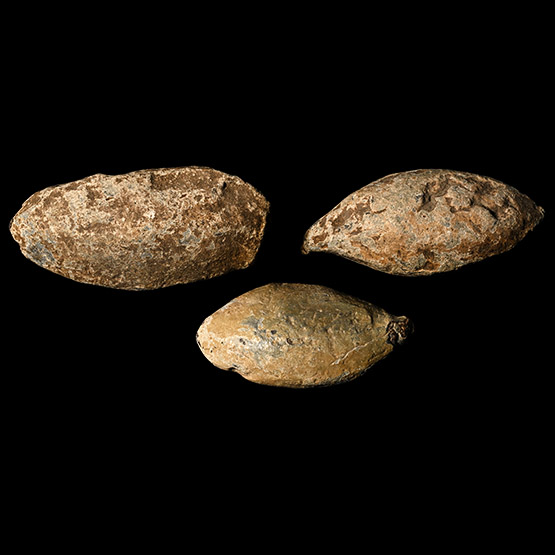
Greek Lead Slingshot Group
4th-3rd century B.C.Sold for (Inc. bp): £85
Comprising three lentoid-section bullets. 89 grams total, 30-36 mm
Ex German art market, 2000s. Acquired from an EU collector living in London. From the collection of a Surrey, UK, gentleman.
