
Loading, please wait...
LOT 0537
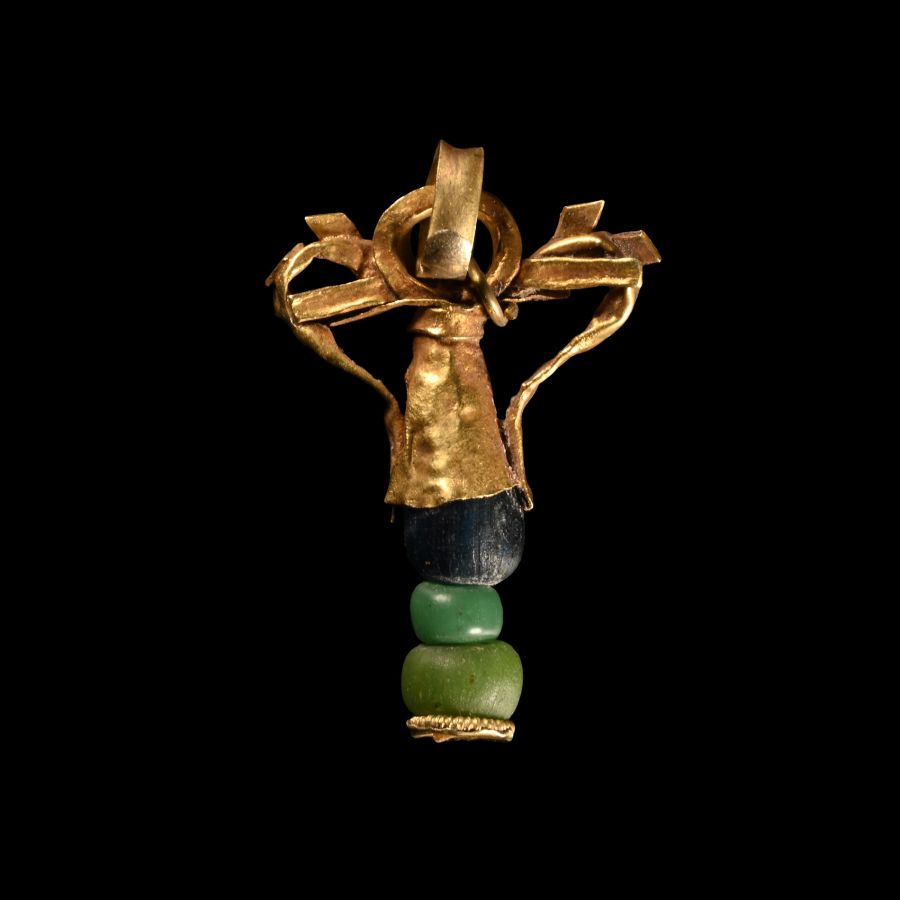
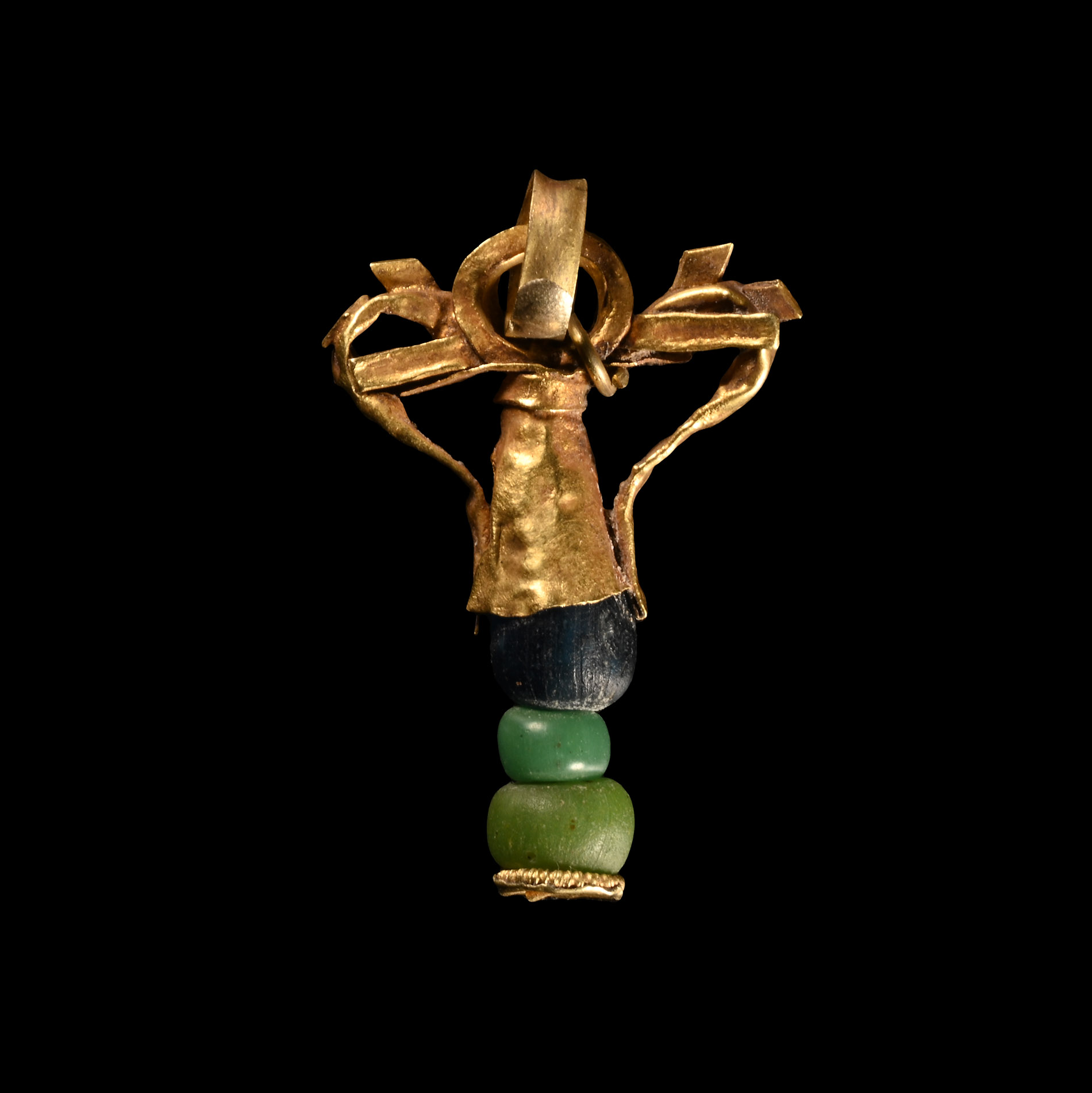
Greek Gold Amphora-Shaped Pendant
CIRCA 2ND CENTURY B.C.
1 in. (1.76 grams, 25 mm).
Composed of a conical upper body with stylised dolphin-shaped handles and central suspension loops, the lower body of the vessel formed from three later coloured glass beads.
ProvenanceAcquired 1980-2015.
Ex Abelita family collection.
TimeLine Auctions follows a vetting process to ensure the authenticity and legality of all items, reinforcing our commitment to integrity and responsible trading. Each antiquity, antique, and coin lot undergoes thorough examination by a vetting committee of at least ten external specialists, professional trade association members, scientists, and archaeologists: Our Vetting Process
AUCTIONS:
TimeLine is a leading auction house specialising in antiquities, ancient art, collectables, natural history, coins, medals, and books. Our auctions offer museums, collectors, historians, and enthusiasts the opportunity to acquire unique and historically significant pieces.
LOT 0537
Greek Gold Amphora-Shaped Pendant
Estimate £300 - 400€350 - 460 (for guidance only)$410 - 540 (for guidance only)
-
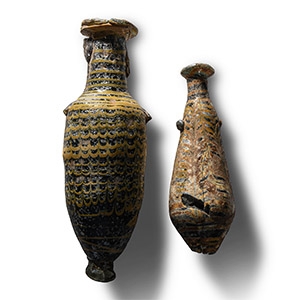
Greek Core-Formed Glass Vessel Group
2nd-1st century B.C.Estimate: £400 - 600 (‡+bp*)
Opening Bid: £200
With polychrome decoration and iridescent surfaces, comprising: an alabastron with fusiform body, conical foot and ledge handles, decorated with yellow feathering and trails; a blue amphoriskos with yellow festooning and trails, knop foot and everted rim; fragmentary. 197 grams total, 11.3-15 cm high
Acquired early 1990s. Ex private American collection; thence by descent. Private collection since 1998. -
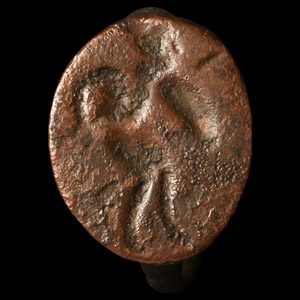
Hellenistic Bronze Ring with Hoplite
Circa 2nd-1st century B.C.Sold for (Inc. bp): £78
Ellipsoid bezel with low-relief image of a warrior with pilos helmet, shield and xiphos short-sword. 6.93 grams, 22.90 mm overall, 20.17 mm internal diameter (approximate size British Q, USA 8, Europe 17.46, Japan 16)
Ex old English collection. London art market, pre 2000. Property of a London, UK, gentleman. -
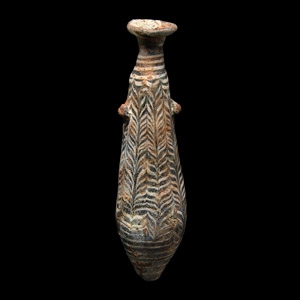
Greek Core-Formed Glass Alabastron
3rd-1st century B.C.Estimate: £1,500 - 2,000 (+bp*)
Opening Bid: £750
With fusiform body, slender neck and broad flange rim, applied ledge handles, decorated with white marvered feathering and spiralling trails. 79 grams, 15 cm high
Fine condition.
Paris collection, 1990s. From an important Paris gallery, France. Ex private Parisian collection.
A perfume bottle.
