
Loading, please wait...
LOT 0601
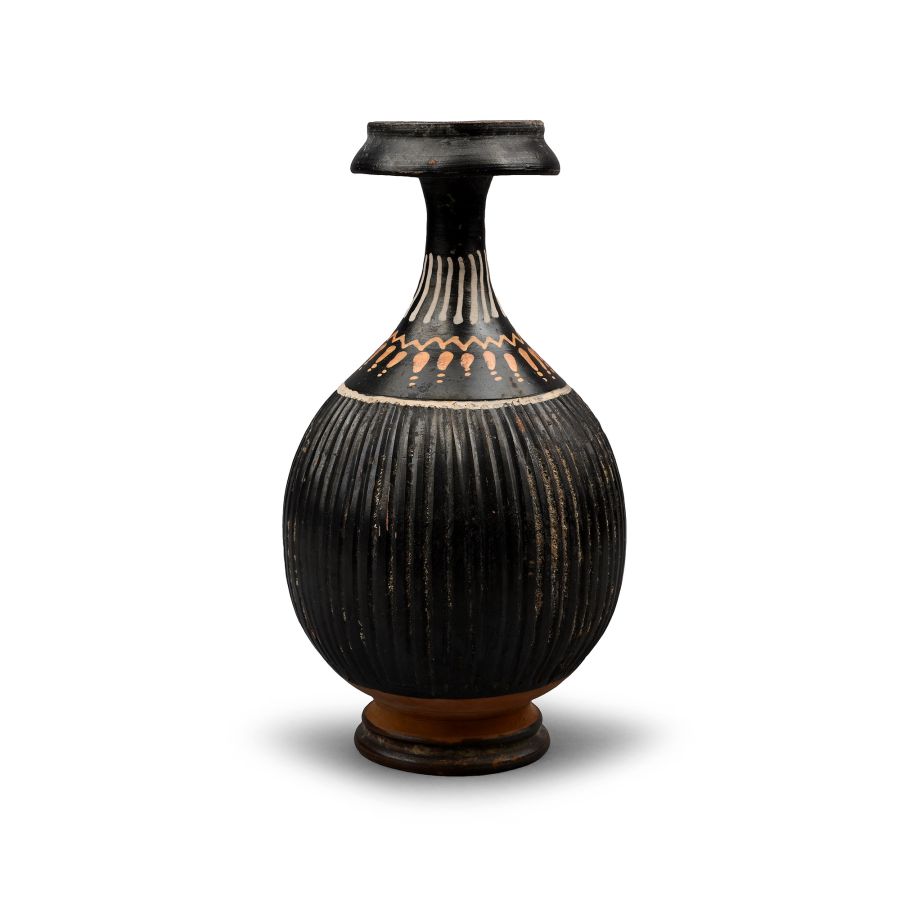
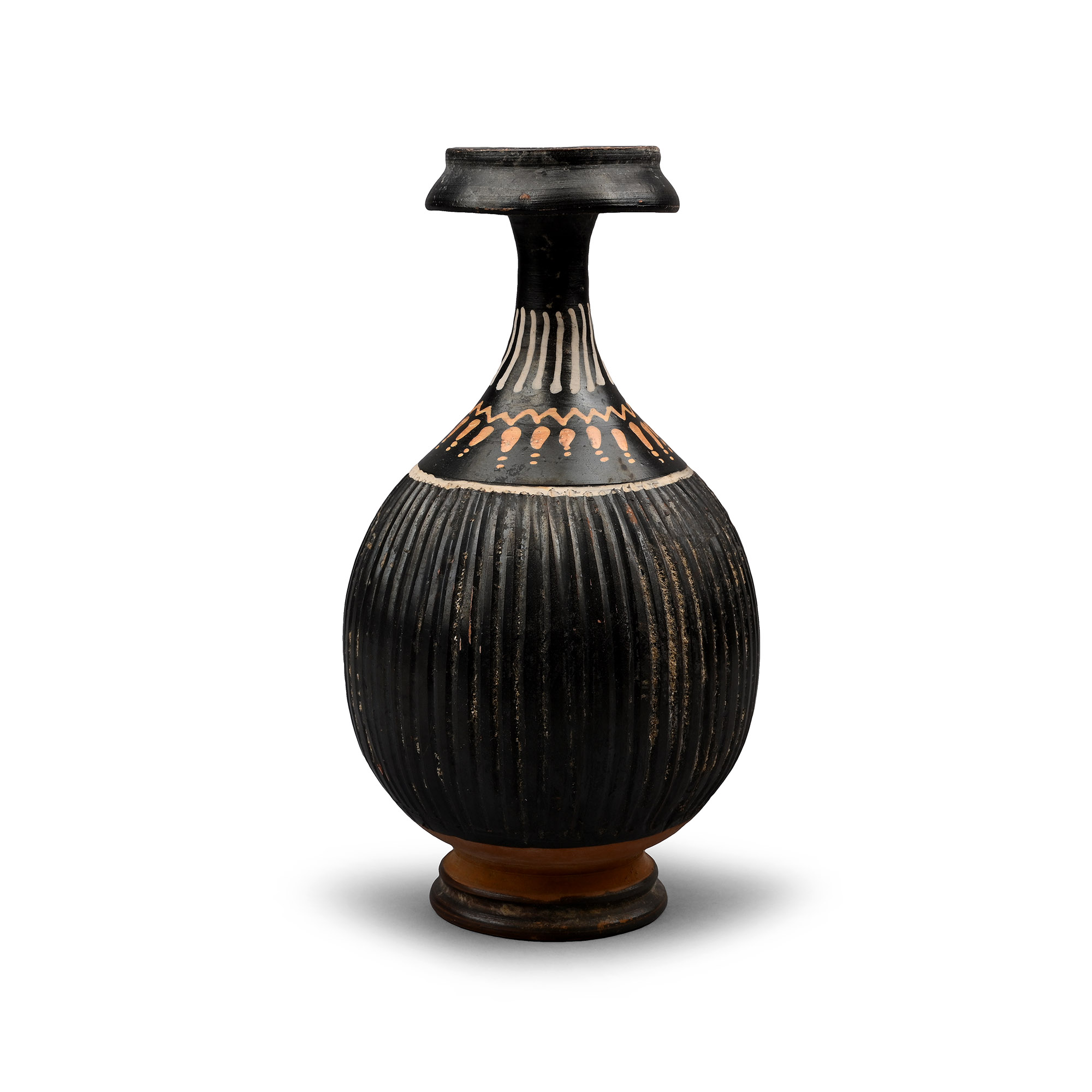
Greek Gnathian Thistle Flask
APULIAN, CIRCA 325-300 B.C.
6 3/4 in. (188 grams, 17 cm).
Piriform in profile with flange to the flared mouth, ribbed fusiform body and socle base; painted undulation and stylised grapevine motif in ochre and white.
ProvenanceAcquired on the art market between the late 1990s and mid-2000s.
Estate of the late Barry Paul Buxton (1944–2024), Oakham, Rutland.
Acquired on the UK art market, 2025.
TimeLine Auctions follows a vetting process to ensure the authenticity and legality of all items, reinforcing our commitment to integrity and responsible trading. Each antiquity, antique, and coin lot undergoes thorough examination by a vetting committee of at least ten external specialists, professional trade association members, scientists, and archaeologists: Our Vetting Process
AUCTIONS:
TimeLine is a leading auction house specialising in antiquities, ancient art, collectables, natural history, coins, medals, and books. Our auctions offer museums, collectors, historians, and enthusiasts the opportunity to acquire unique and historically significant pieces.
-
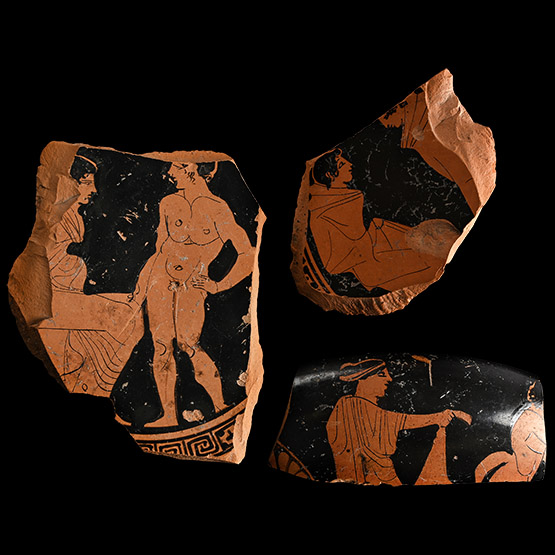
Greek Attic Red-Figure Fragment Collection
5th-4th century B.C.Sold for (Inc. bp): £1,950
Comprising irregular fragments depicting draped females, a standing nude male, a satyr body and a draped young man. 143 grams total, 87-116 mm
From the stock of a former UK antiquarian, acquired at trade fairs and from private collection formed in the 1980s-1990s. Private collection, Europe. -
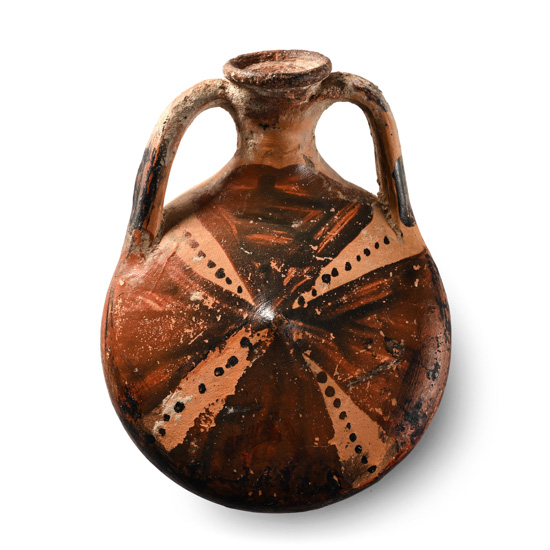
Mycenaean Painted Pottery Flask
14th-13th century B.C.Estimate: £1,500 - 2,000 (‡+bp*)
Opening Bid: £750
Comprising a circular body with a rounded base and two strap handles, a short neck with an everted rim; the body with a painted expanding cross motif with the arms separated by a band of pellets. 132 grams, 11.1 cm
Private collection, Switzerland, acquired in the 1994. Private family collection since the late 1990s. Accompanied by an academic report by Dr Raffaele D'Amato. This lot has been checked against the Interpol Database of stolen works of art and is accompanied by search certificate number no.13018-246795.
Mycenaean ceramics were influenced by Minoan shapes and decorative styles from the late Middle Helladic period. This close relationship – likely accompanied by the development of shared cultural practices and etiquette – creates the hypothesis that pilgrim flasks were introduced to Greece via Crete. Pilgrim flasks were produced in Mycenaean contexts from the Late Helladic IIA:1 period (1420-1390 B.C.). -
.jpg)
Italic Carnelian Scarab with Satyr Mounted in a Gold Swivel Ring
4th-3rd century B.C.Sold for (Inc. bp): £1,404
Carved scarab with detailed carapace, legs and mouth; underside with intaglio standing figure holding an amphora; set into a later gold swivel ring. 5.30 grams, 23.85 mm overall, 14.56 x 17.70 mm internal diameter (approximate size British J 1/2, USA 5, Europe 9.32, Japan 9)
Private collection, Europe. Acquired on the English art market.
It is clear that the sculptor devoted more care and attention to carving the scarab itself rather than its intaglio.
