
Loading, please wait...
LOT 0061
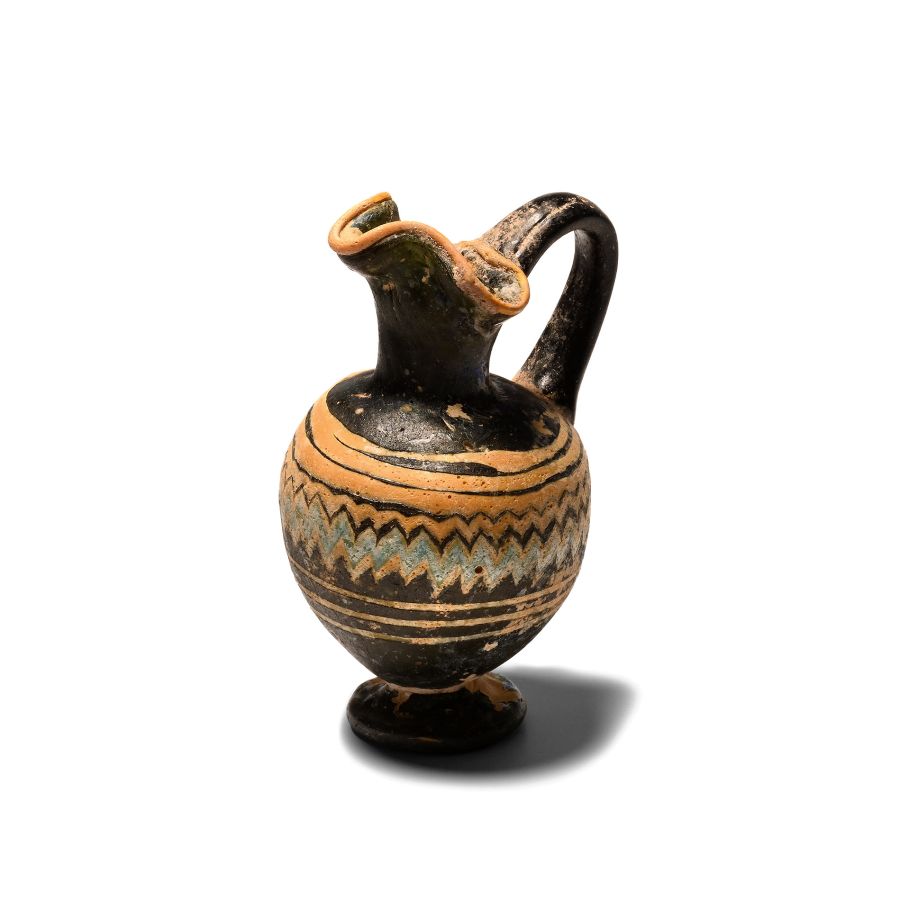
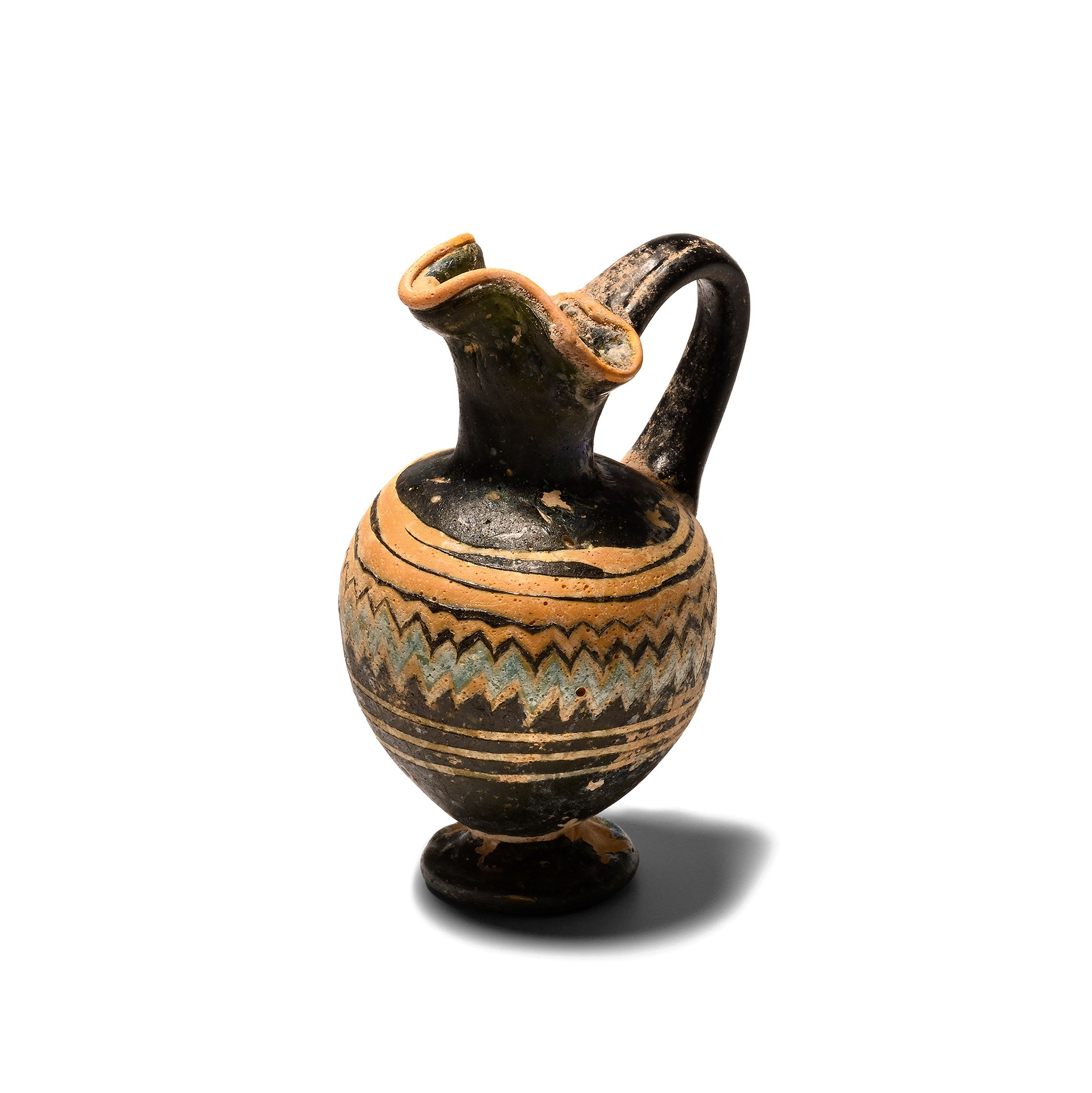
Greek Glass Trefoil Oinochoe
6TH-3RD CENTURY B.C.
3 in. (45 grams, 75 mm high).
An opaque blue glass oinochoe with trefoil mouth, handle and discoid foot, polychrome bands and chevrons around the body and plain yellow band to lip; iridescent surfaces.
ProvenanceFrench collection, 1960s-early 2000s.
From an important Paris gallery, France.
Cf. The Metropolitan Museum, New York, accession numbers 17.194.766 and 17.194.743, for similar.
CONDITIONTimeLine Auctions follows a vetting process to ensure the authenticity and legality of all items, reinforcing our commitment to integrity and responsible trading. Each antiquity, antique, and coin lot undergoes thorough examination by a vetting committee of at least ten external specialists, professional trade association members, scientists, and archaeologists: Our Vetting Process
AUCTIONS:
TimeLine is a leading auction house specialising in antiquities, ancient art, collectables, natural history, coins, medals, and books. Our auctions offer museums, collectors, historians, and enthusiasts the opportunity to acquire unique and historically significant pieces.
-
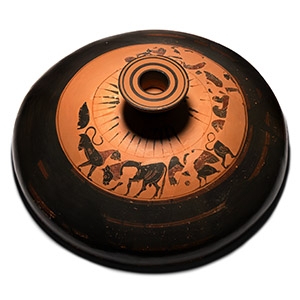
Huge Corinthian Black-Figure Lekanis Lid
6th century B.C.Estimate: £10,000 - 14,000 (‡+bp*)
Opening Bid: £5,000
An extremely large Corinthian or Attic black-figure ceramic lekanis lid with concentric bands to the rim and handle; to the tondo, a frieze of painted figures comprising a swan, a regardant lion, two opposed sphinxes, another regardant lion, another swan, a bull, a lioness and part of another bull(?); restored. 3.7 kg, 49.5 cm wide
Acquired early 1990s. Ex private American collection; thence by descent. Private Swiss collection since 1998. This lot has been checked against the Interpol Database of stolen works of art and is accompanied by search certificate no.11614-199000. -
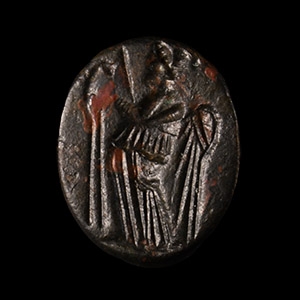
Greek Ring with Tyche
3rd-2nd century B.C.Estimate: £600 - 800 (+bp*)
Opening Bid: £300
An Eastern Greek bronze finger ring with intaglio winged Tyche in profile. 6.09 grams, 20.50 mm overall, 16.92 mm internal diameter (approximate size British K, USA 5 1/4, Europe 9.95, Japan 9)
Acquired in the late 1980s-early 1990s. Important North West London collection. -
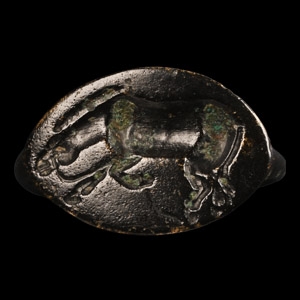
Greek Seal Ring with Antelope
Circa 5th century B.C.Estimate: £150 - 200 (+bp*)
Opening Bid: £75
A bronze ring with slender hoop and elliptical bezel engraved with an antelope. 4.02 grams, 22.50 mm overall, 18.90 mm internal diameter (approximate size British P, USA 7 1/2, Europe 16.23, Japan 15)
Acquired before 2000. From the collection of a European gentleman living in the UK.
