
Loading, please wait...


LOT 0521
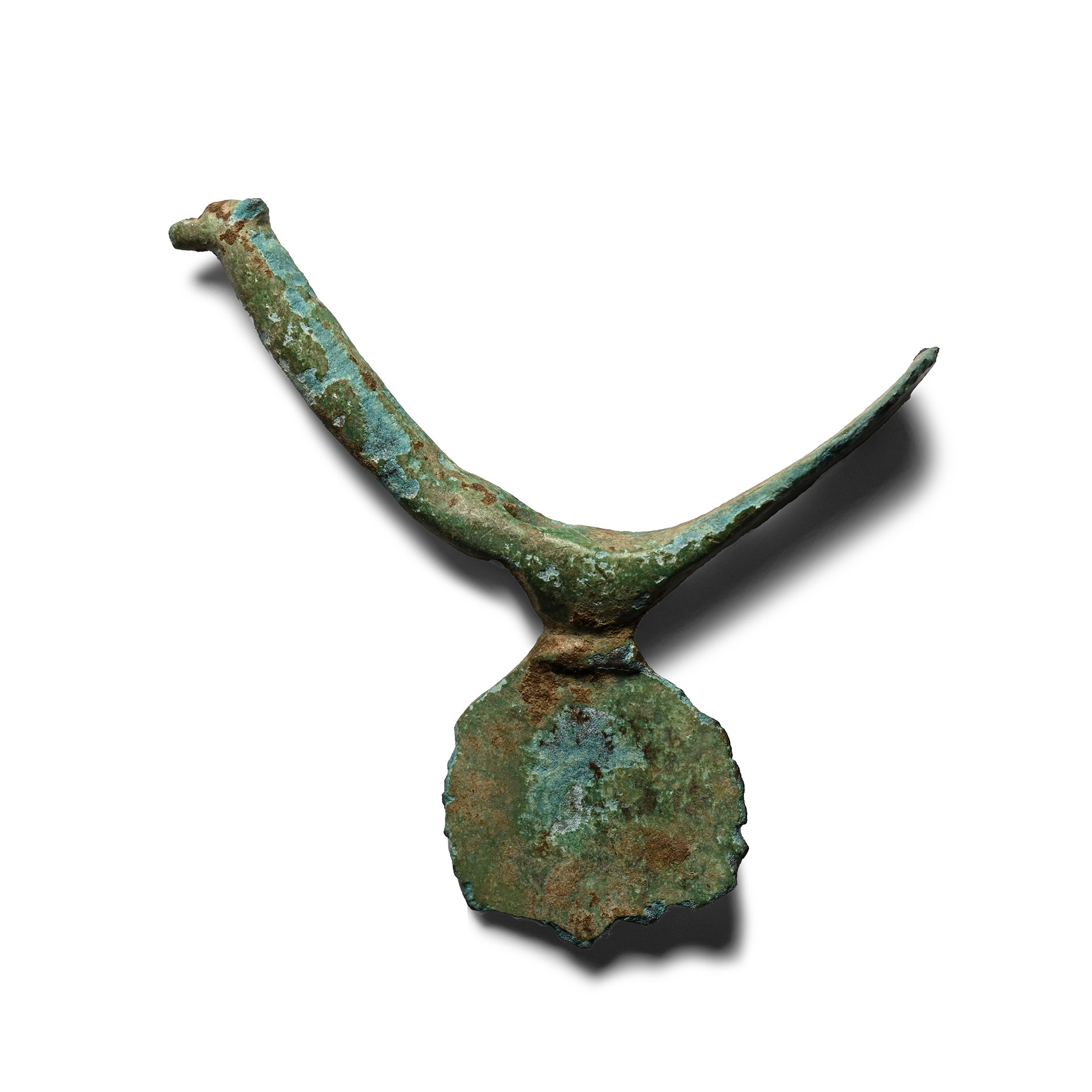
Greek Geometric Votive Gift in the Form of a Bird
8TH CENTURY B.C.
1 3/4 in. (8.47 grams, 46 mm).
Comprising a columnar neck with pinched detailing to the head and spatulate tail, discoid plate below. [No Reserve]
ProvenanceAcquired from a London auction house, circa 2001.
Property of a Swiss gentleman.
Cf. for similar fittings, Christiansen, J., Greece in the Geometric Period, Copenhagen, 1992, figs.70ff., esp.nos. 39,43,45.
CONDITIONTimeLine Auctions follows a vetting process to ensure the authenticity and legality of all items, reinforcing our commitment to integrity and responsible trading. Each antiquity, antique, and coin lot undergoes thorough examination by a vetting committee of at least ten external specialists, professional trade association members, scientists, and archaeologists: Our Vetting Process
AUCTIONS:
TimeLine is a leading auction house specialising in antiquities, ancient art, collectables, natural history, coins, medals, and books. Our auctions offer museums, collectors, historians, and enthusiasts the opportunity to acquire unique and historically significant pieces.
-
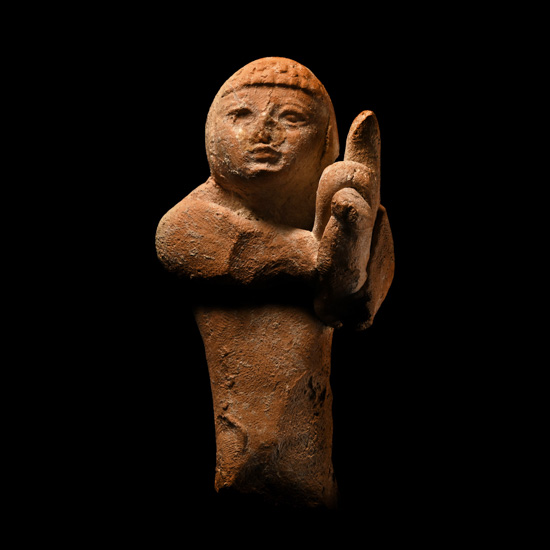
Greek Terracotta Citharode
6th-4th century B.C.Estimate: £1,200 - 1,700 (‡+bp*)
Opening Bid: £600
D-shaped in section with close-cut hairstyle, standing, holding a cithara supported on the left arm, strumming with the right hand. 62 grams, 86 mm
Ex Shlomo Moussaieff (1925-2015), Israel. European private collection. This lot has been checked against the Interpol Database of stolen works of art and is accompanied by search certificate number no.13107-246791.
The cithara was the instrument of the ‘virtuosi’, the principal concert instrument of the ancient Greeks. Its sound box was made of wood and was much bigger than that of the lyra. Strips of copper or horn were commonly incorporated into it, which resonated in sympathy with the strings, giving a great breath of sound. -
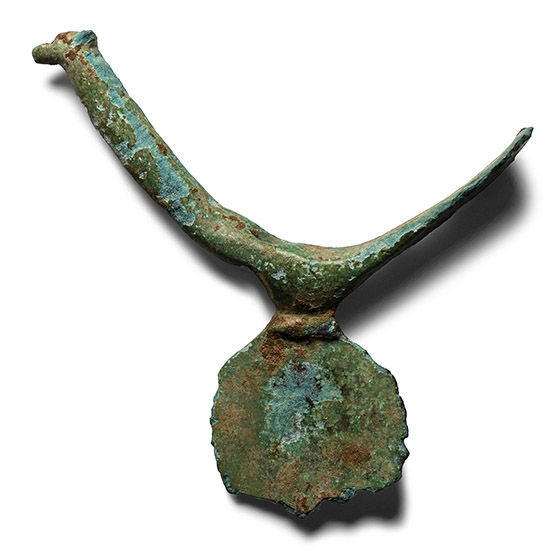
Greek Geometric Votive Gift in the Form of a Bird
8th century B.C.Sold for (Inc. bp): £72
Comprising a columnar neck with pinched detailing to the head and spatulate tail, discoid plate below. 8.47 grams, 46 mm
Acquired from a London auction house, circa 2001. Property of a Swiss gentleman. -
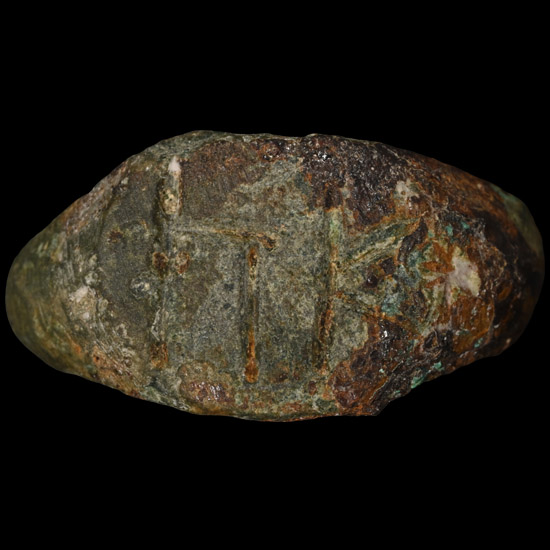
Graeco-Roman Bronze Ring with Inscription
1st century B.C.-1st century A.D.Sold for (Inc. bp): £33
A substantial ring with expanding shoulders, a large oval bezel with 'ΠK'. 9.03 grams, 26.58 mm overall, 18.68 x 16.06 mm internal diameter (approximate size British M, USA 6, Europe 12.46, Japan 12)
From the private collection of a European gentleman (1942-2024), formed since the 1970s.
