
Loading, please wait...
LOT 0526
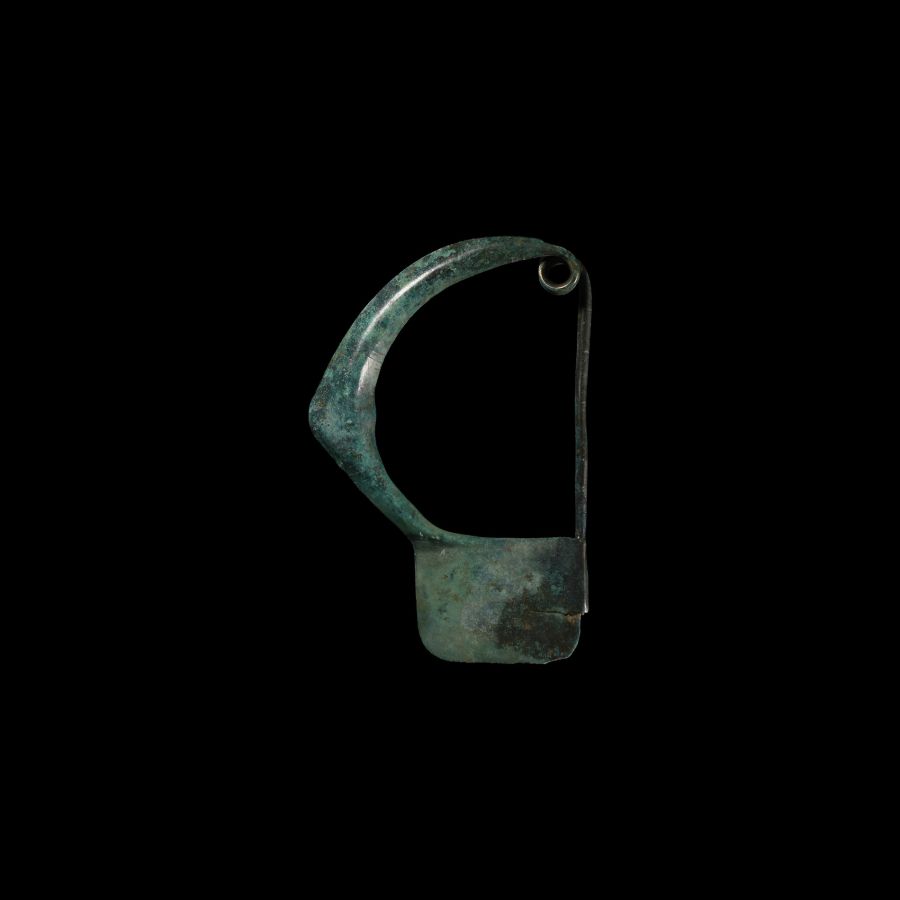
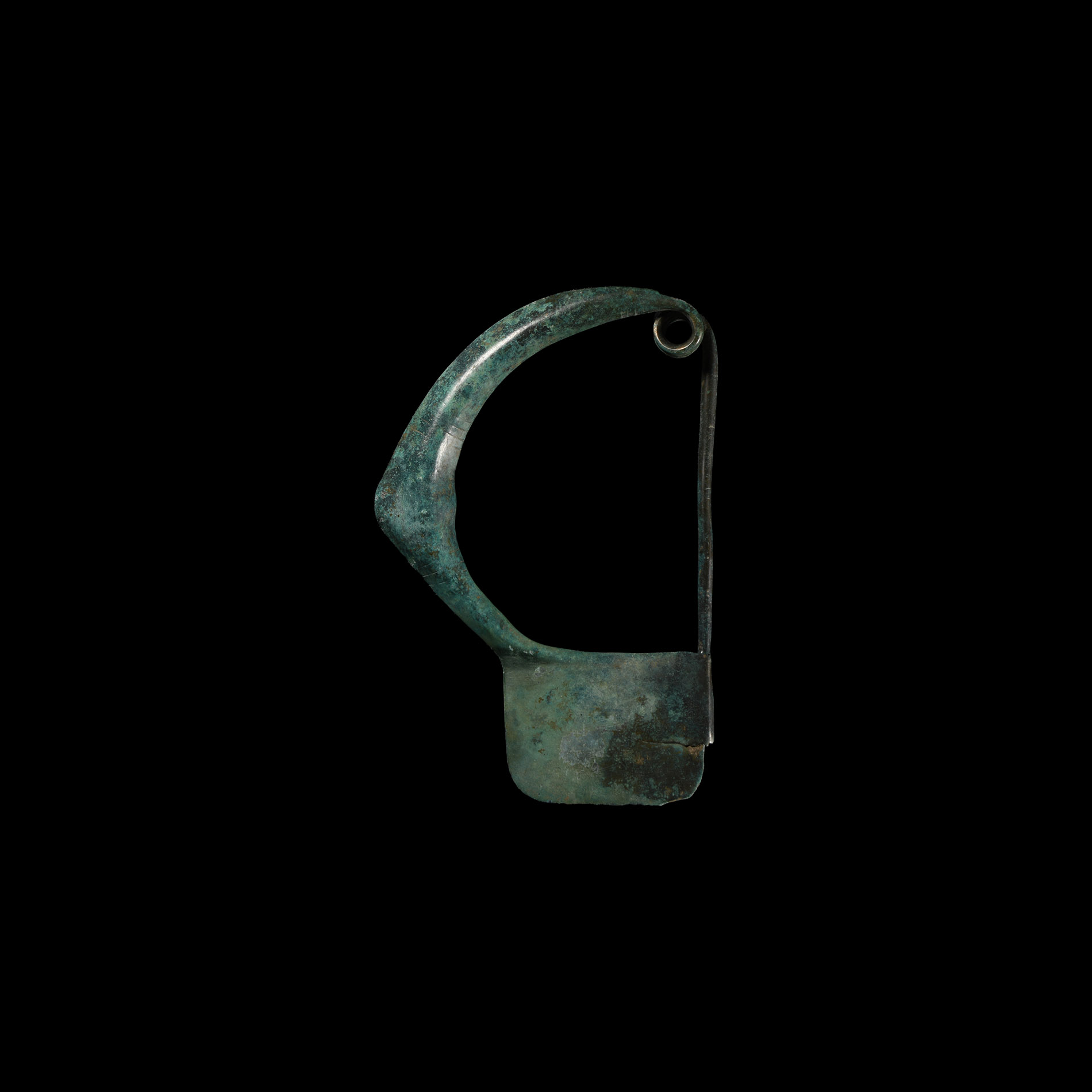
Greek Geometric Period Bow Brooch
8TH-7TH CENTURY B.C.
3 3/4 in. (55 grams, 95 mm).
Keeled bow with central bulb, integral pin and large, square catch plate. [No Reserve]
ProvenanceFrom the family collection of a Surrey gentleman since before 1960.
LiteratureCf. Moon-Ja, K., ‘A study on Ancient Fibulae’ in IJCC, vol.8, no.2, 2005, pp.71-84, fig.3, for the type.
FootnotesThe function of this type of fibula was utilitarian and decorative: they were used for woollen clothing (Herodotus V, 87) and they have been found in houses, tombs and as votive offerings in sanctuaries. This typology was introduced in South Italy by the Greeks, and was widespread in the Magna Graecia. Like all female fibulae, it functioned as a clothing fastener, usually worn as a pair on each shoulder.
CONDITIONTimeLine Auctions follows a vetting process to ensure the authenticity and legality of all items, reinforcing our commitment to integrity and responsible trading. Each antiquity, antique, and coin lot undergoes thorough examination by a vetting committee of at least ten external specialists, professional trade association members, scientists, and archaeologists: Our Vetting Process
AUCTIONS:
TimeLine is a leading auction house specialising in antiquities, ancient art, collectables, natural history, coins, medals, and books. Our auctions offer museums, collectors, historians, and enthusiasts the opportunity to acquire unique and historically significant pieces.
-
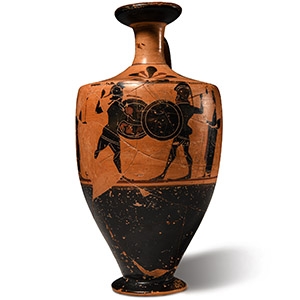
Greek Attic Black-Figure Lekythos with Fighting Hoplites
6th century B.C.Sold for (Inc. bp): £3,380
The piriform body tapering towards the splayed foot, D-section strap handle and calyx-shaped mouth with flat rim; the body painted with a scene of two duelling hoplites, dressed in full armour comprising shields, greaves and helmets, dressed in short chitons and assisted by their arbiters holding staffs and dressed in long himation; the shoulder with palmette decoration and facing figures of a man and a woman with long garments around the shoulder; restored. 381 grams, 23 cm high
Old Swiss collection. Acquired in Europe before 2011. Private collection, Europe. Accompanied by an academic report by Dr Raffaele D’Amato. This lot has been checked against the Interpol Database of stolen works of art and is accompanied by search certificate number no.11815-206482.
To the Greeks, lekythoi were containers for dispensing oil. The characteristics shape of this vessel was that of a long body, narrow neck, one handle and a cup-shaped mouth. The shape was fit for the function of the lekythos: the narrow neck prevented the unnecessary loss of oil by enabling small amounts to be distributed evenly and the mouth to collect the excess. The represented scene is probably taken from the Iliad and could represent the combat between Ajax and Hector, assisted by arbiters. -
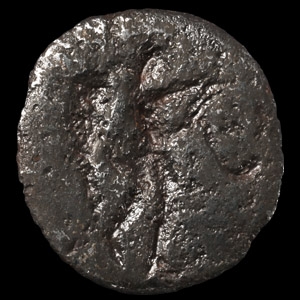
Greek Iron Ring with Figure
3rd-2nd century B.C.Sold for (Inc. bp): £39
Composed of a D-section hoop with slightly splayed arms and a large sub-oval bezel, engraved with a figure advancing right. 7.81 grams, 23.00 mm overall, 17.00 mm internal diameter (approximate size British N 1/2, USA 6 3/4, Europe 14.35, Japan 13)
Ex old English collection. London art market, 1980s. -
.jpg)
Greek Red-Figure Fragment with Athletes Attributed to the Euaion Painter
Circa 460 B.C.Sold for (Inc. bp): £3,900
From a kylix, the inside painted with two young naked athletes within a medallion, conversing and cleaning their bodies with a strigil, the edge of the medallion decorated with a series of meanders and four crosses; the outside with two naked athletes and other figures, divided by foliage ornaments and volutes. 121 grams, 15.2 cm
Acquired in before 2005. Private collection, Europe. This lot has been checked against the Interpol Database of stolen works of art and is accompanied by search certificate no.11805-206818.
The Euaion painter was a prolific artist of about 460 B.C. His painting - already in the manneristic period of the Attic red figures vases - was more nearly classical in style, although the ancestry of his small-headed, slim figures, is very evident. He introduced a high, sometimes patterned ground line for an upright two-figure group, and preferred the old elaborately patterned borders for tondos and the ground lines outside cups.
