
Loading, please wait...
LOT 0601
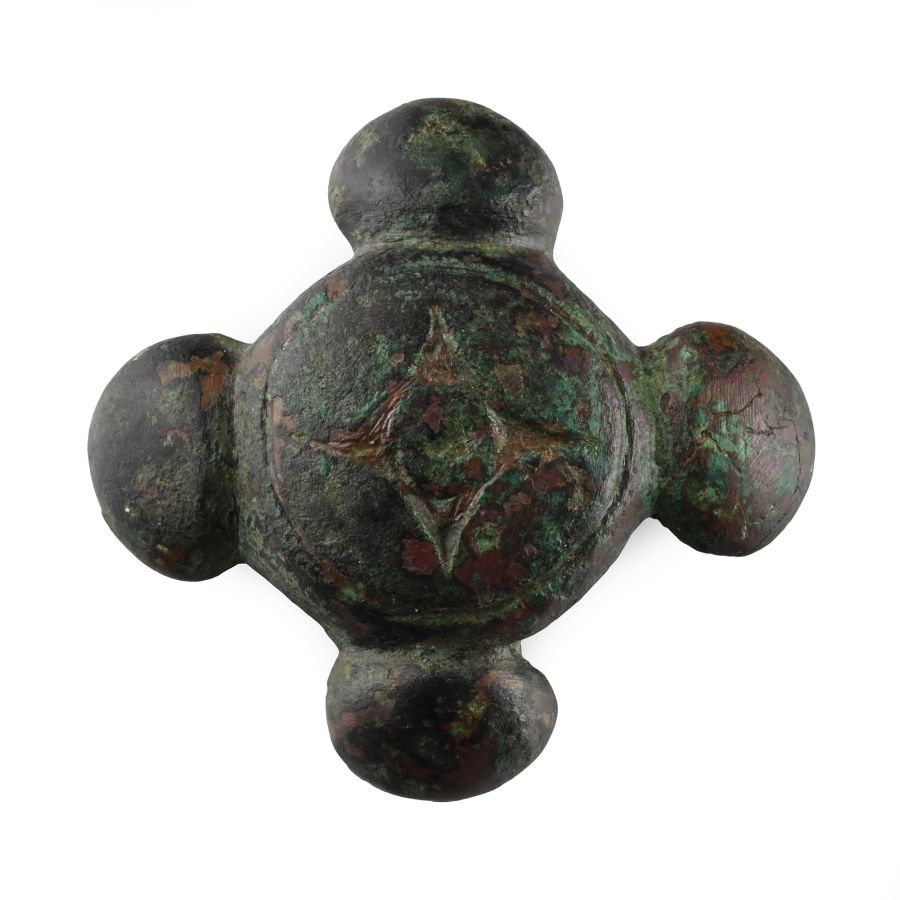
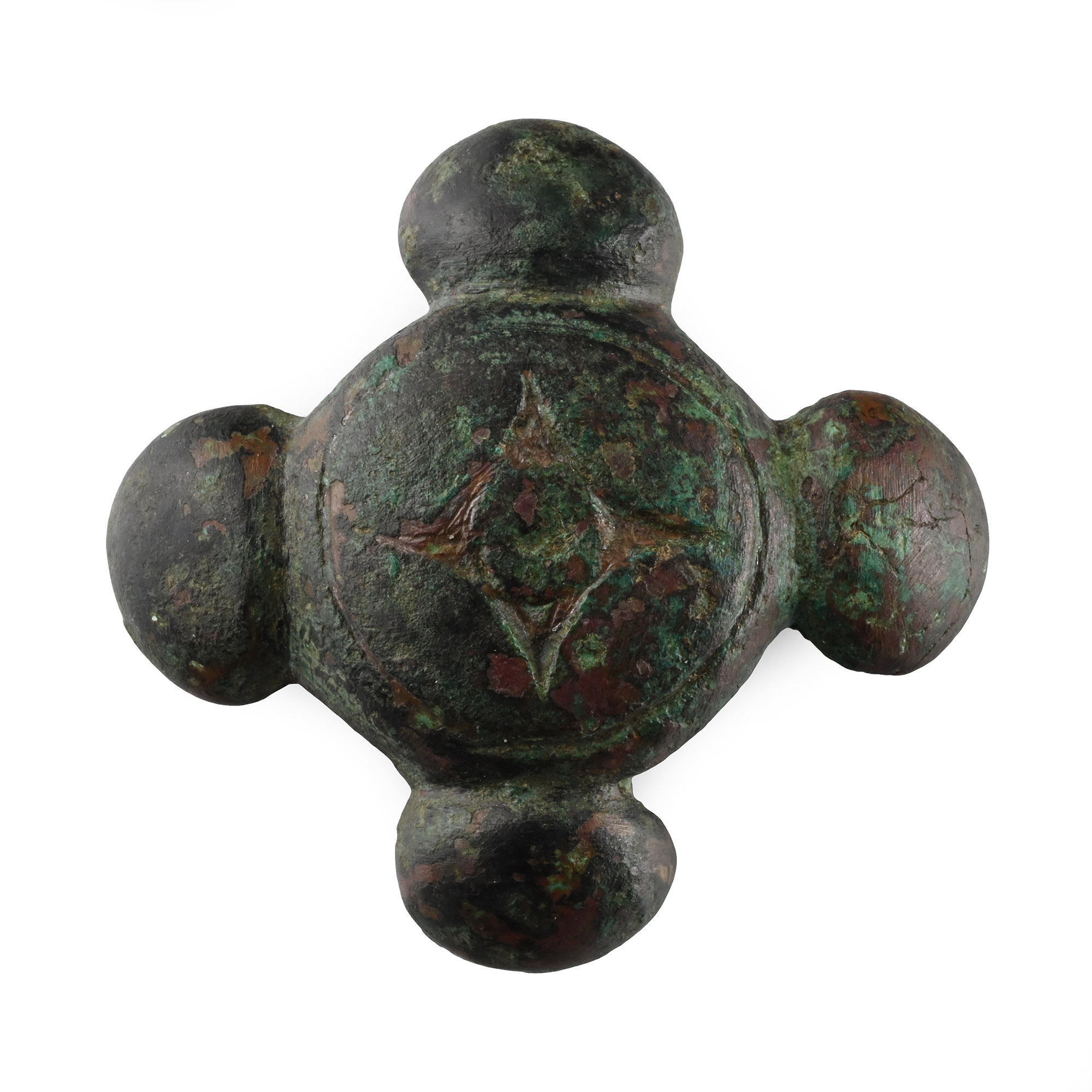
Greek Geometric Bronze Strap Distributor
8TH-7TH CENTURY B.C.
1 5/8 in. (30.1 grams, 40 mm).
Discoid in plan and hollow to the underside with four radiating lugs to the rim, cruciform band to the reverse; to the upper face an incised ring and central quatrefoil.
ProvenanceEx private collection.
with Gorny & Mosch, Munich, 17 June 2004, no.[TBC].
Private collection, Europe.
This lot is accompanied by an illustrated lot declaration signed by the Head of the Antiquities Department, Dr Raffaele D'Amato.
TimeLine Auctions follows a vetting process to ensure the authenticity and legality of all items, reinforcing our commitment to integrity and responsible trading. Each antiquity, antique, and coin lot undergoes thorough examination by a vetting committee of at least ten external specialists, professional trade association members, scientists, and archaeologists: Our Vetting Process
AUCTIONS:
TimeLine is a leading auction house specialising in antiquities, ancient art, collectables, natural history, coins, medals, and books. Our auctions offer museums, collectors, historians, and enthusiasts the opportunity to acquire unique and historically significant pieces.
-
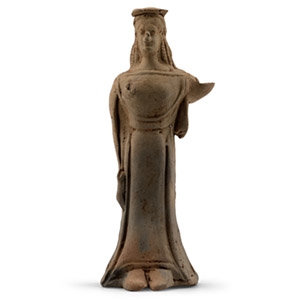
Greek Terracotta Figure of a Kore
5th century B.C.Sold for (Inc. bp): £715
Hollow-formed moulded figure of a maiden standing, wearing a long peplos robe, with carefully dressed hair in hanks; right arm holding a pouch, left arm absent. 173 grams, 18 cm
Acquired on the European art market in the early 2000s. with Galerie Rhéa, Zurich, Switzerland. This lot is accompanied by an illustrated lot declaration signed by the Head of the Antiquities Department, Dr Raffaele D'Amato. -
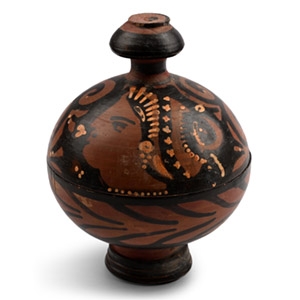
Greek Apulian Black-Glazed Lidded Pyxis with Lady of Fashion
South Italic, circa 325-300 B.C.Sold for (Inc. bp): £416
Squat and bulbous profile with broad body and domed lid with knop handle; black and red coloured bands and teardrops, profile bust of a lady of fashion with detailing picked out in cream and white; laurel leaf frond to the lower body; socle base; attributed to the Stoke-on-Trent Group: 'Pouting Lips' Sub-Group. 240 grams, 11.7 cm
From the private collection of a Canadian gentleman living in Essex, UK, formed since the 1920s-circa 1990. Property of an Essex lady until the late 1990s; thence by descent. From the private collection of an Essex gentleman since the late 1990s. This lot is accompanied by an illustrated lot declaration signed by the Head of the Antiquities Department, Dr Raffaele D'Amato. -
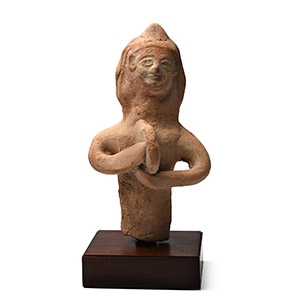
Greek Terracotta Musician Figure
Cyprus, 7th century B.C.Sold for (Inc. bp): £390
A musician wearing a broad leaf-shaped headdress, arms bent clasping a D-shaped rhoptron tambourine; red pigment to the headdress, carefully modelled ears, eyes and other facial features; mounted on a custom-made stand. 283 grams total, 16 cm including stand
Fine condition.
Formerly in an old Tokyo collection. Property of a Japanese gentleman, acquired early 1990s. with Timeline Auctions, London, 4 September 2019, no.904. Private collection of John Meredith, thence by descent. This lot is accompanied by an illustrated lot declaration signed by the Head of the Antiquities Department, Dr Raffaele D'Amato.
