
Loading, please wait...
LOT 0047
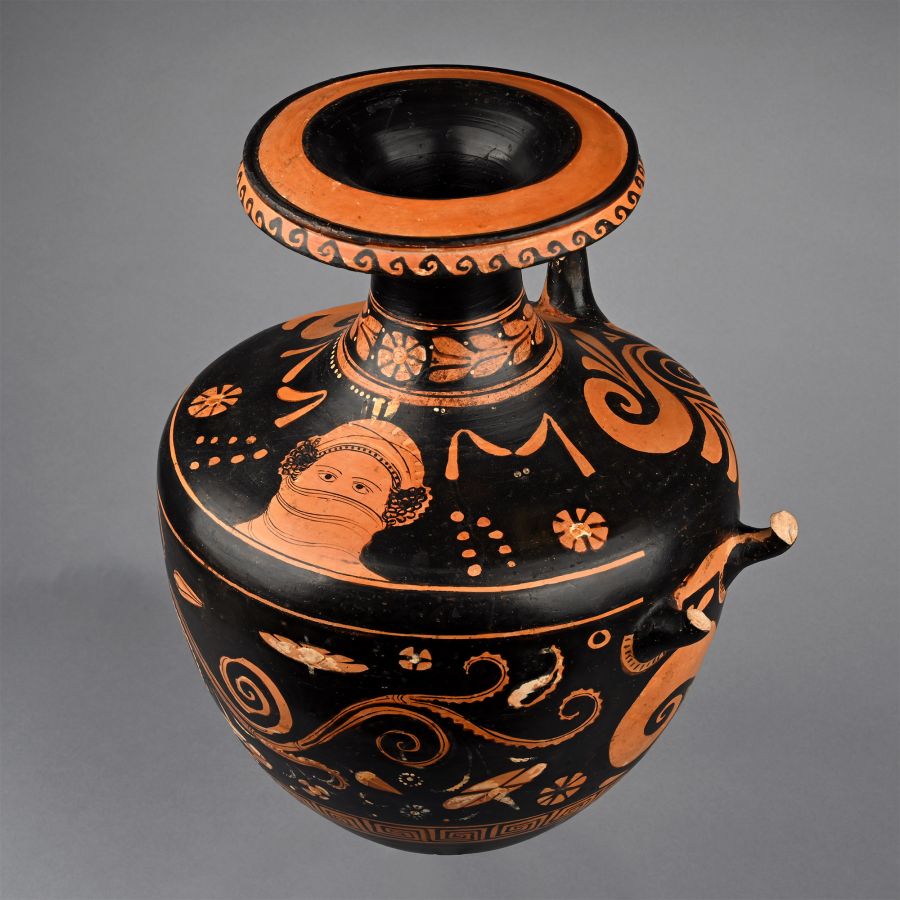
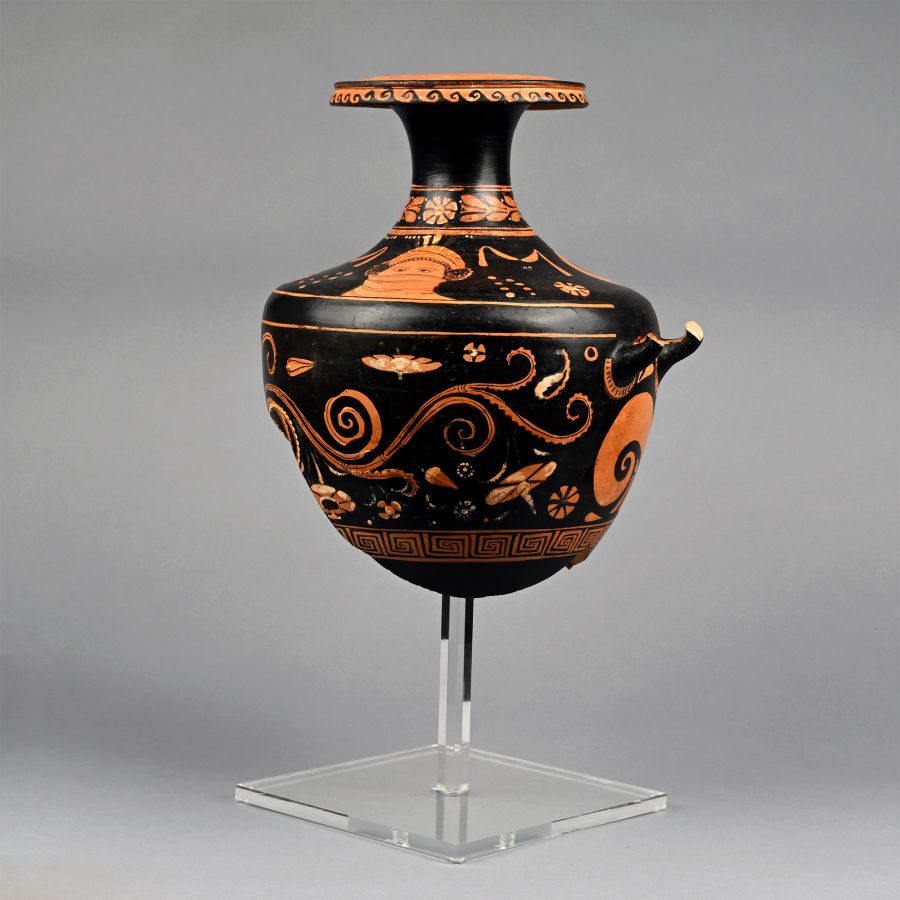
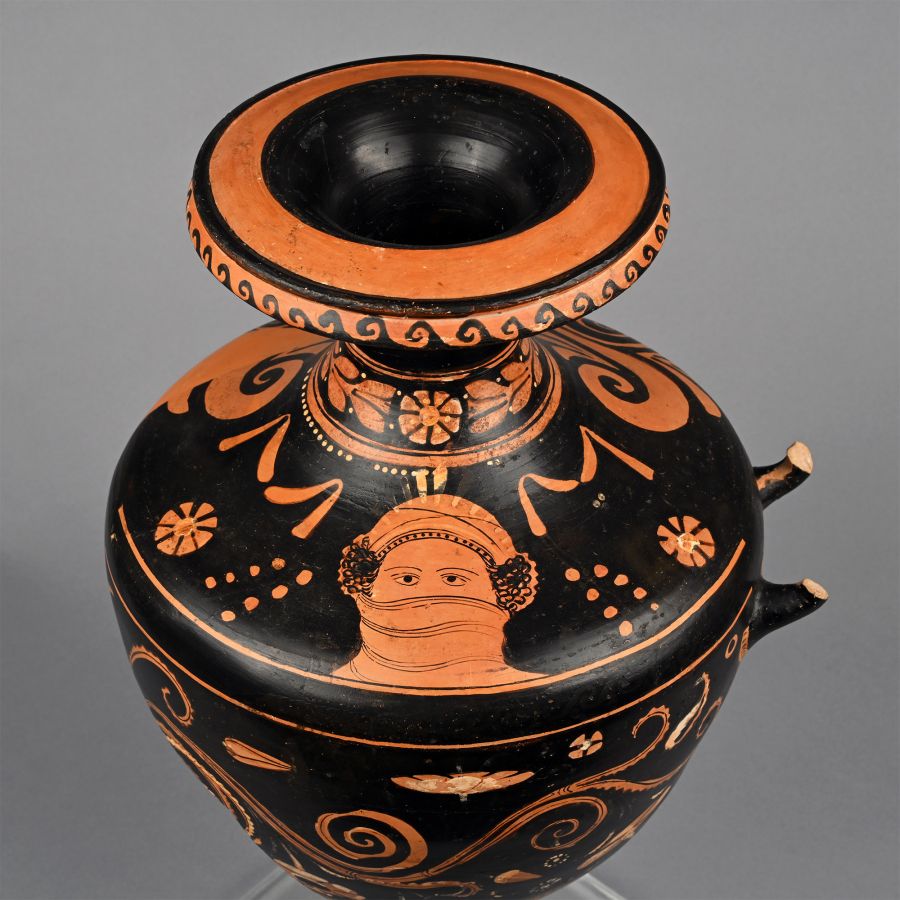
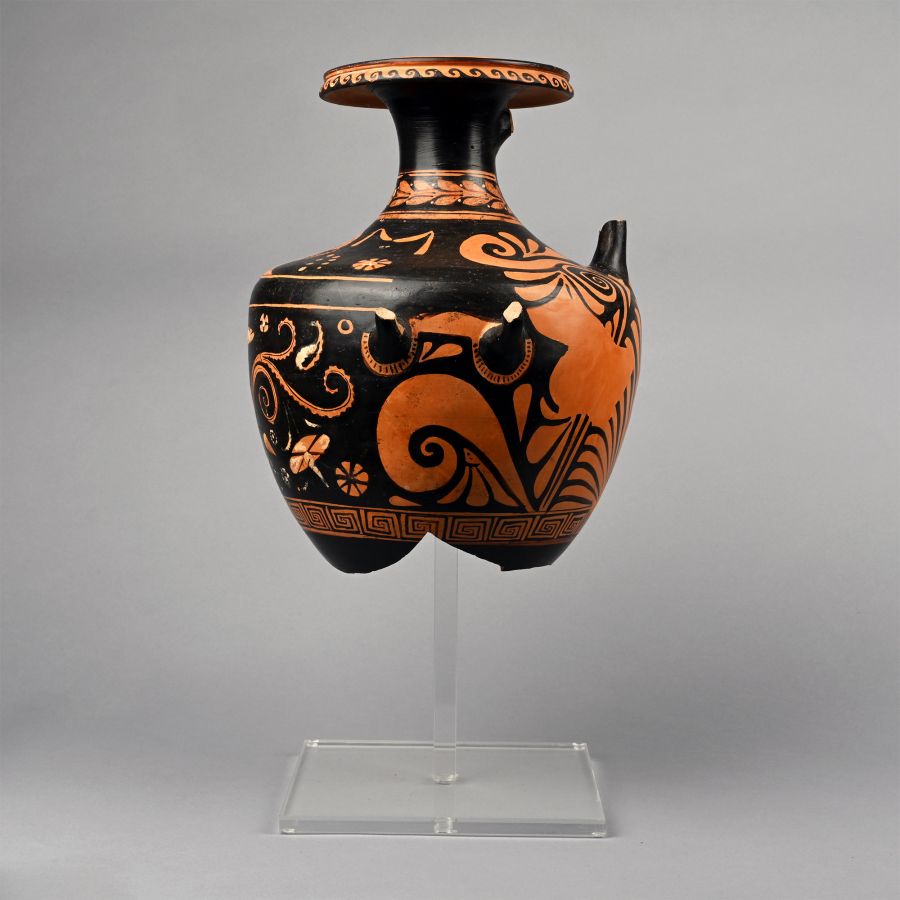
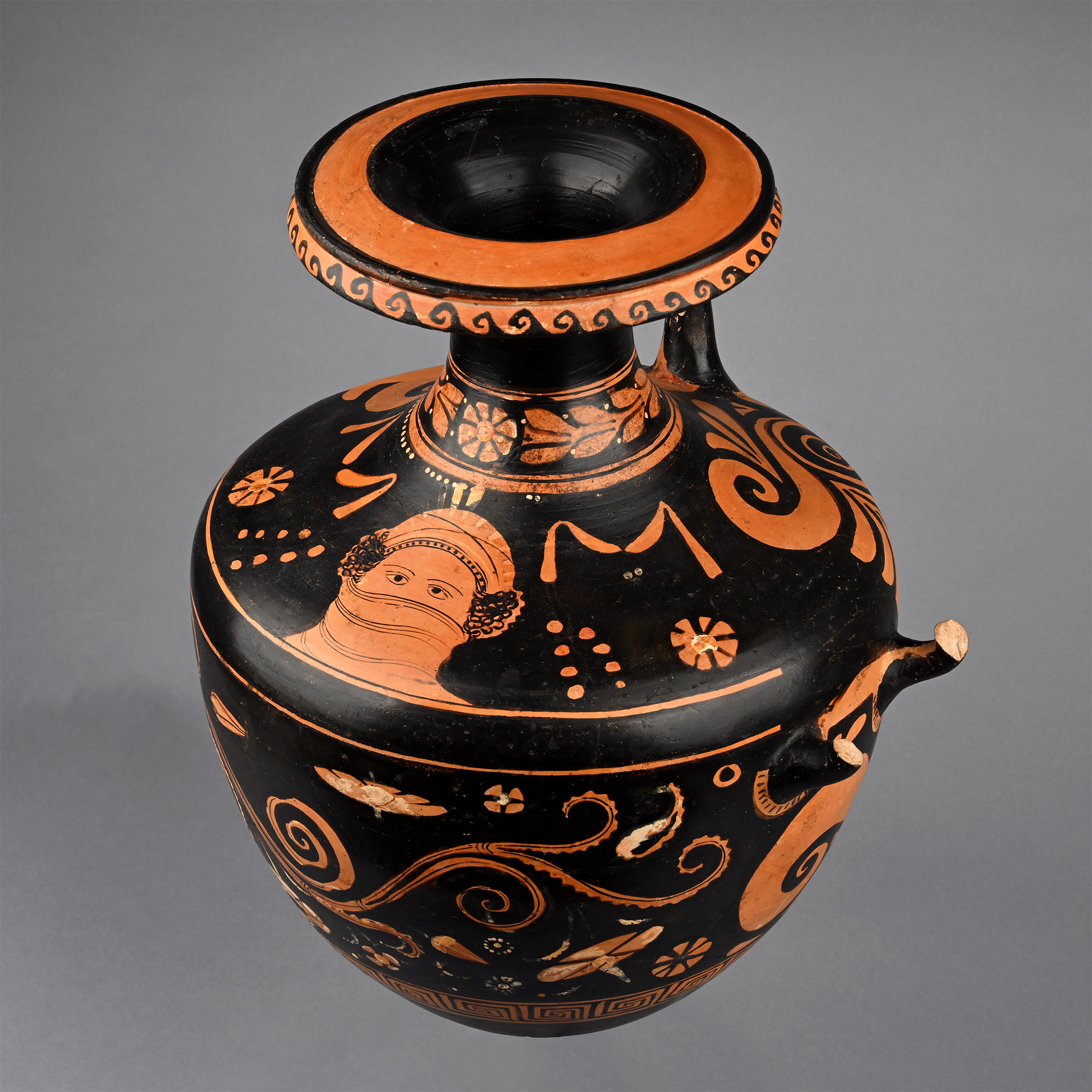
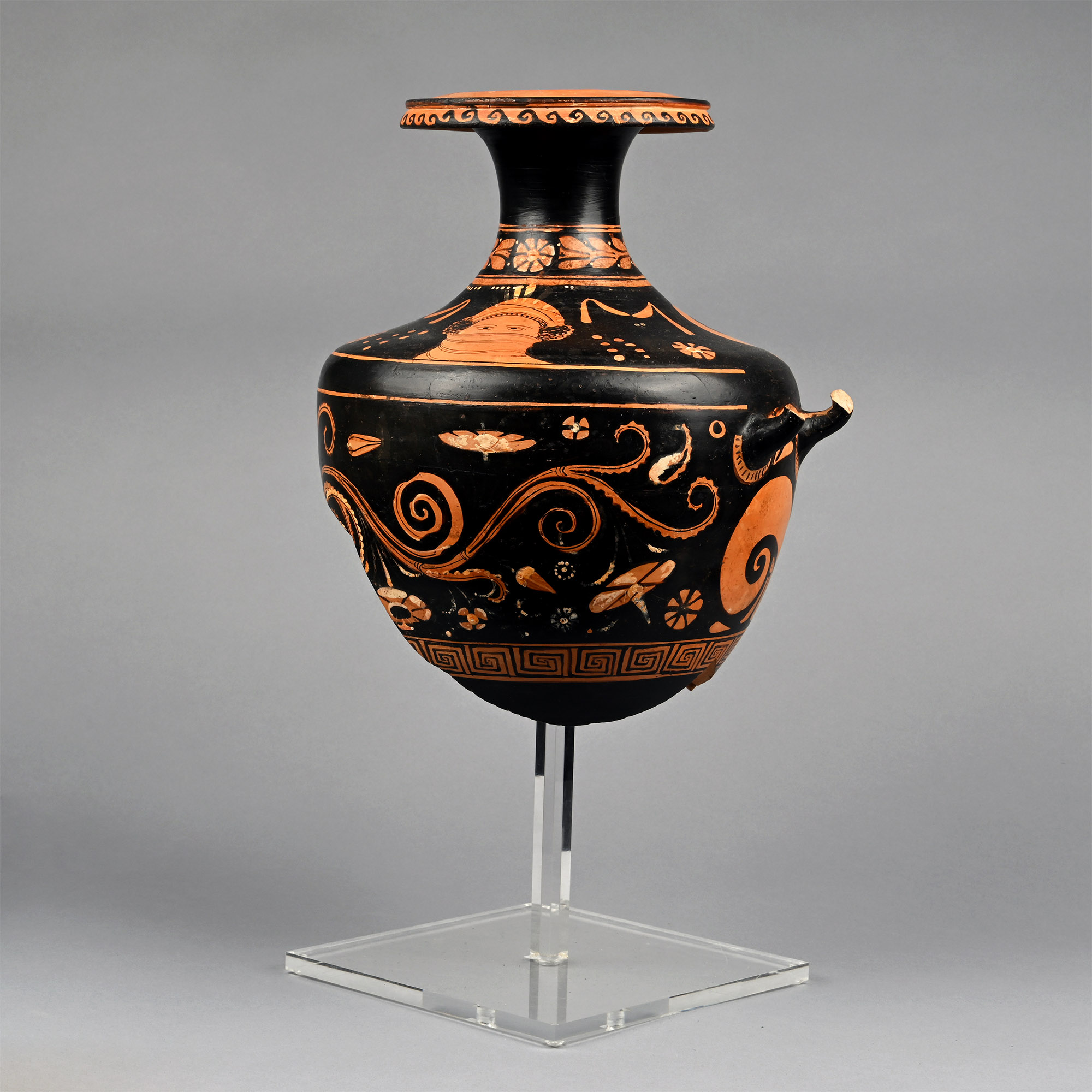
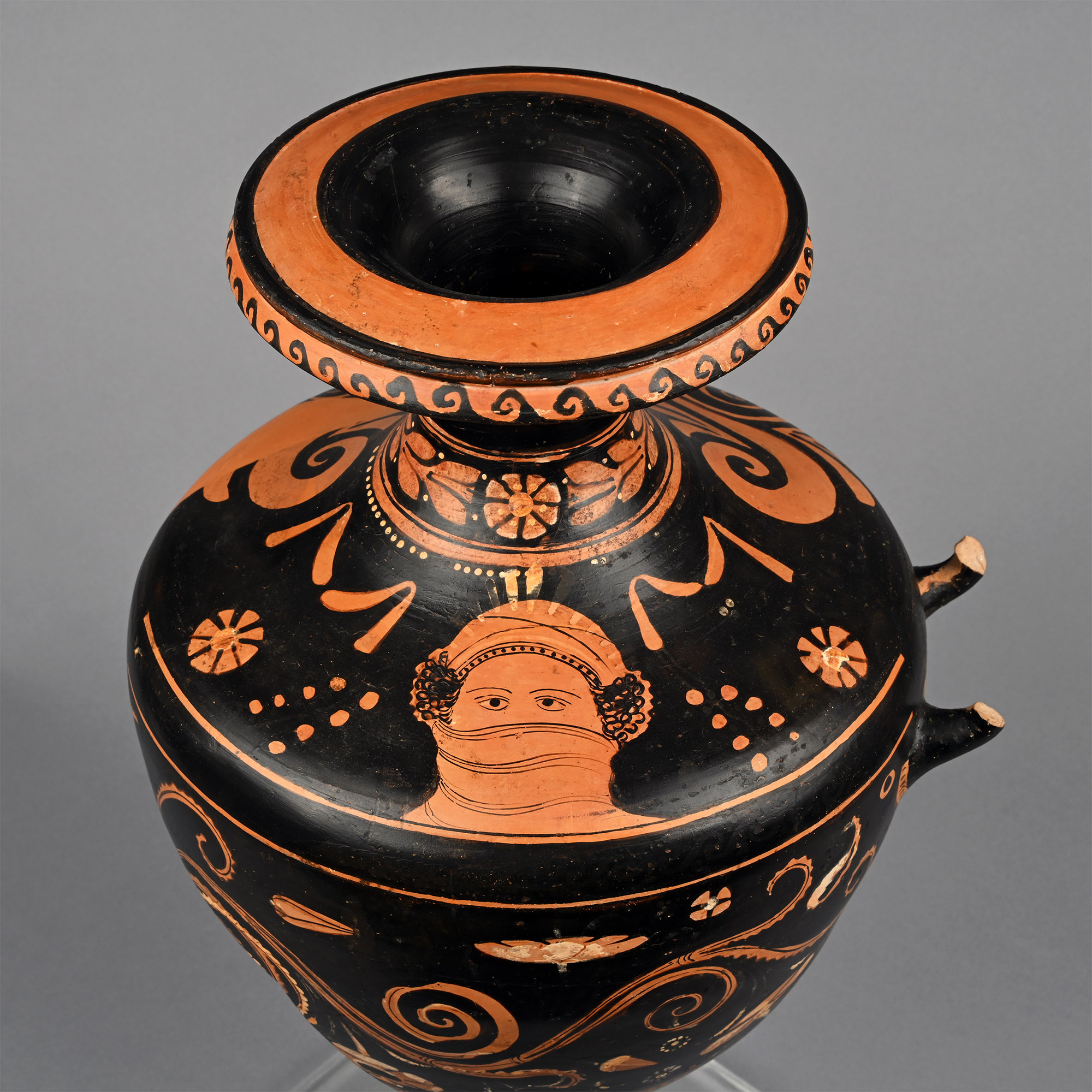
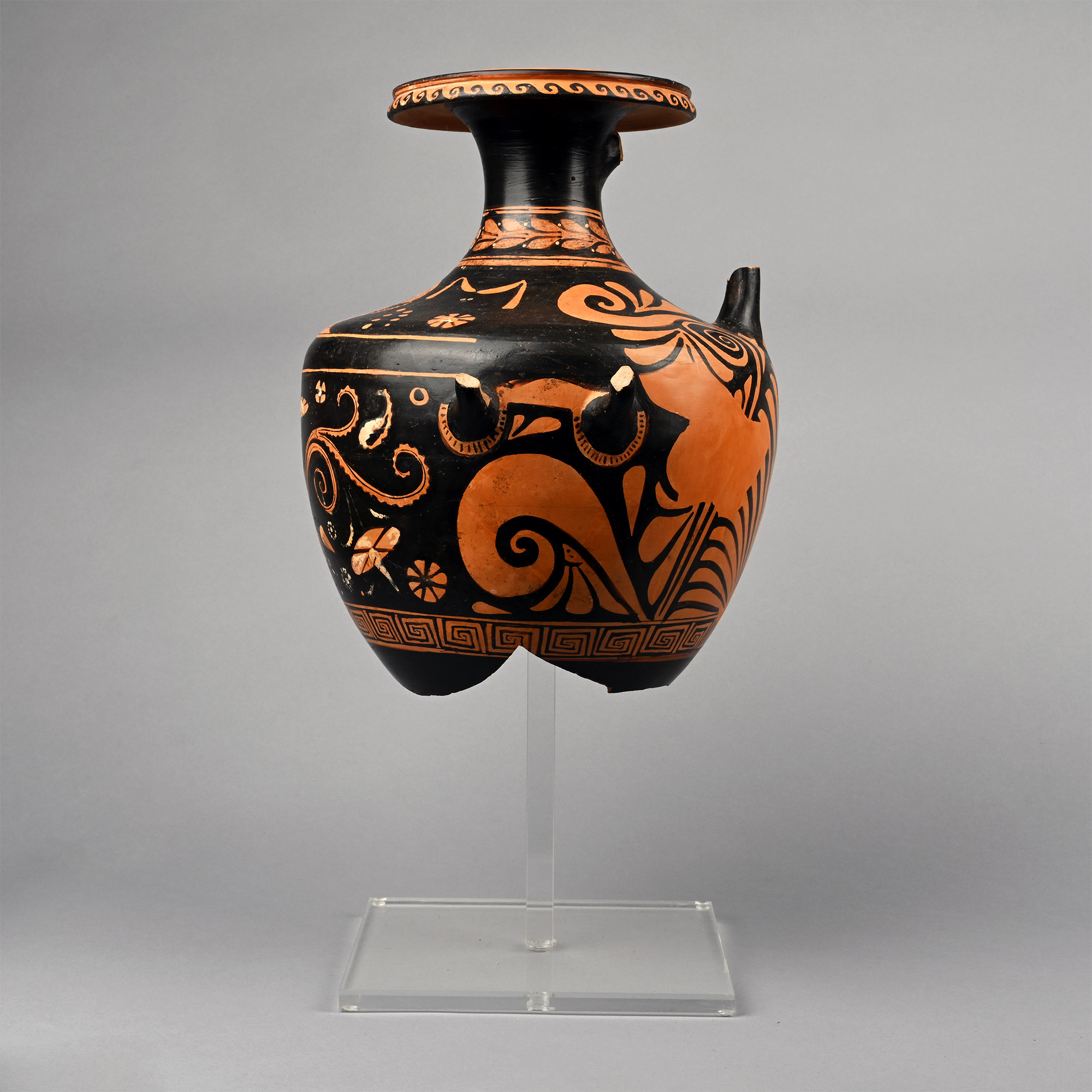
Greek Fragmentary Terracotta Red-Figure Hydria
PAESTAN OR APULIAN, 4TH CENTURY B.C.
12 1/4 in. (18 3/4 in.) (1.95 kg, 31 cm (2.6 kg total, 47.5 cm high including stand)).
Comprising the upper two thirds of the vessel; on the shoulder a facing woman's head with diadem and half-veiled face; rosettes to left and right, with suspended ribbons and dots; vine motif around the body with floral ornaments; to the reverse, palmettes and vines; band of laurel with rosettes around the neck and wavy band at the mouth; reassembled from various fragments with three large areas of restoration, only the beginnings of the handles preserved; mounted on a custom-made stand.
ProvenanceEx Herbert A. Cahn, Basel, 1990s.
This lot has been checked against the Interpol Database of stolen works of art and is accompanied by search certificate number no.12475-228738.
For veiled figures see Mount Holyoke College Art Museum, item MH 1913.1.B.SII; The Pushkin Museum, item number II.1.б 510.
FootnotesThe face-veiling gesture is a known marriage rite; the diadem may suggest that she is intended to represent Persephone. Alternatively, the veiled woman might be a dancer as many terracotta figurines of dancing women are shown with face-coverings. However, the floral ornaments could indicate a funeral or sepulchral context.
CONDITIONTimeLine Auctions follows a vetting process to ensure the authenticity and legality of all items, reinforcing our commitment to integrity and responsible trading. Each antiquity, antique, and coin lot undergoes thorough examination by a vetting committee of at least ten external specialists, professional trade association members, scientists, and archaeologists: Our Vetting Process
AUCTIONS:
TimeLine is a leading auction house specialising in antiquities, ancient art, collectables, natural history, coins, medals, and books. Our auctions offer museums, collectors, historians, and enthusiasts the opportunity to acquire unique and historically significant pieces.
LOT 0047
Greek Fragmentary Terracotta Red-Figure Hydria
Estimate £4,000 - 6,000€4,640 - 6,960 (for guidance only)$5,400 - 8,100 (for guidance only)
-
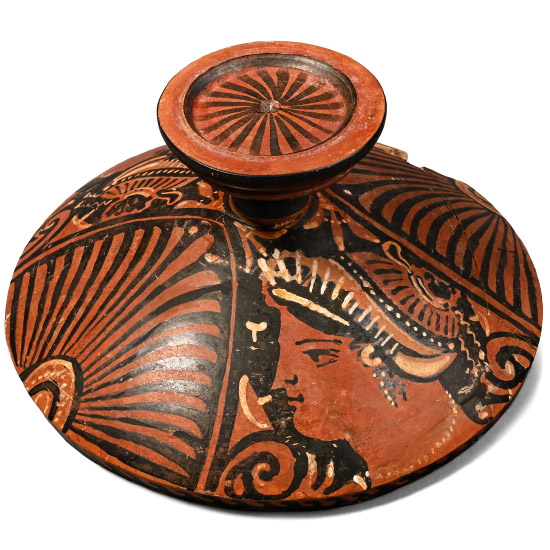
Very Large Greek Apulian Terracotta Lekanis Lid with Ladies of Fashion
South Italian, circa 5th century B.C.Sold for (Inc. bp): £416
Composed of a domed body with an inverted rim and a knop handle; the body decorated with two heads of ladies of fashion, palmettes between, waveband around the rim; repaired. 729 grams, 22 cm wide
From a UK collection formed in the 1980s. Property of an Essex, UK, gentleman. -
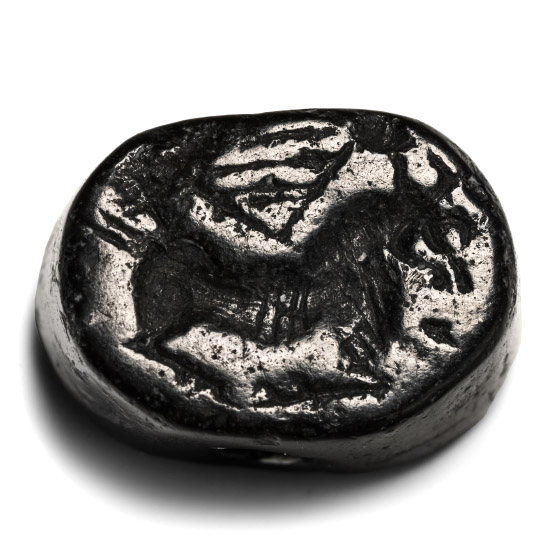
Greek Black Gemstone with Lion
4th-2nd century B.C.Sold for (Inc. bp): £85
Scaraboid type with incuse design to the underside of a bull with its legs folded beneath the body, decorative panel above; supplied with a museum-quality impression. 1.68 grams, 13 mm
From the private collection of a European gentleman (1942-2024), formed since the 1970s. -
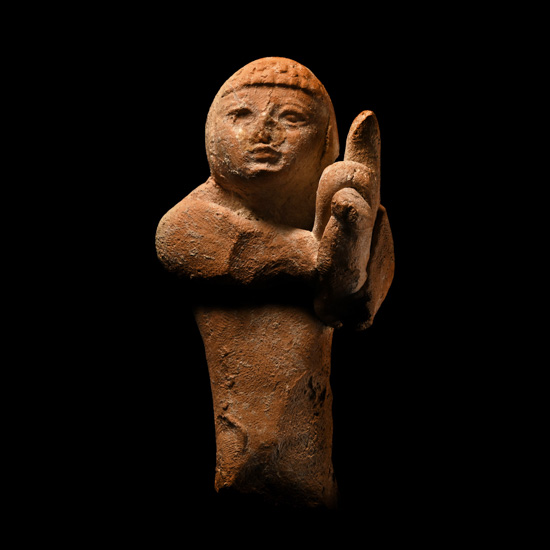
Greek Terracotta Citharode
6th-4th century B.C.Estimate: £1,200 - 1,700 (‡+bp*)
Opening Bid: £600
D-shaped in section with close-cut hairstyle, standing, holding a cithara supported on the left arm, strumming with the right hand. 62 grams, 86 mm
Ex Shlomo Moussaieff (1925-2015), Israel. European private collection. This lot has been checked against the Interpol Database of stolen works of art and is accompanied by search certificate number no.13107-246791.
The cithara was the instrument of the ‘virtuosi’, the principal concert instrument of the ancient Greeks. Its sound box was made of wood and was much bigger than that of the lyra. Strips of copper or horn were commonly incorporated into it, which resonated in sympathy with the strings, giving a great breath of sound.
