
Loading, please wait...
LOT 1087
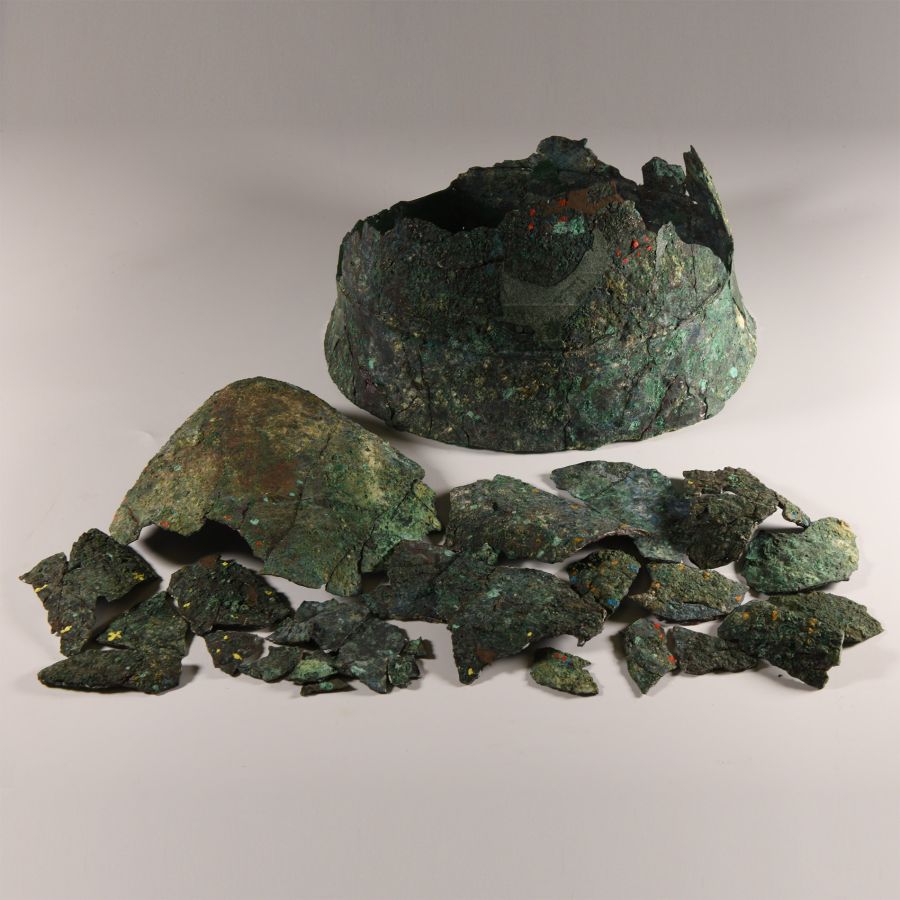
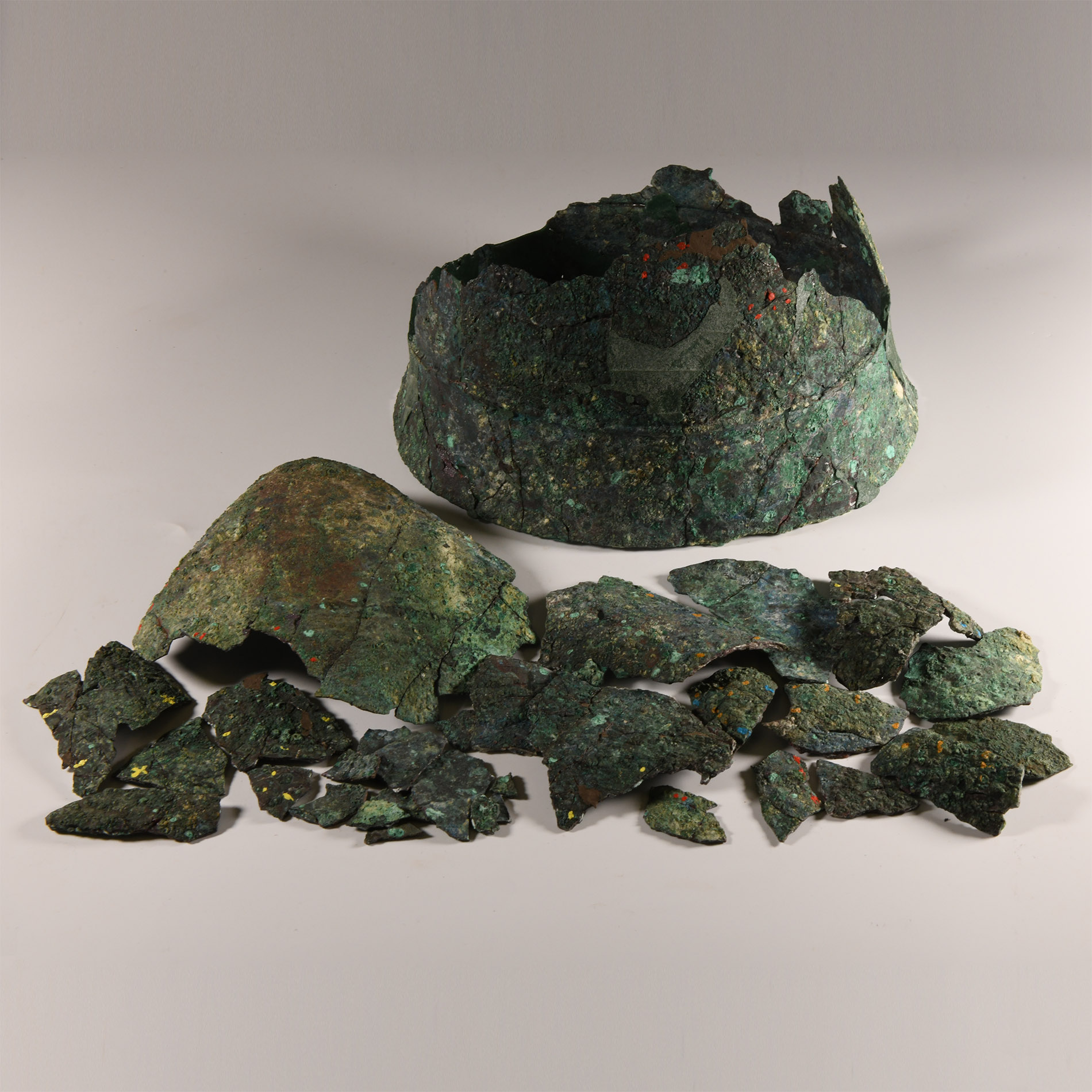
Greek Fragmentary Bronze Pilos Helmet
5TH-4TH CENTURY B.C.
3/8 - 9 5/8 in. (951 grams total, 1-24.5 cm).
Conical in shape, comprising a thick hammered bowl and broad rim with carination to the upper edge; remains of crest at brow and rear; a restoration project. [No Reserve]
ProvenanceEx Axel Guttmann Collection of Ancient Arms and Armour, Germany [1944-2001].
with Hermann Historica, 13 October 2010, lot 2169 [Part].
Cf. Waurick, G., 'Der Pilos-Typ' in Antike Helme, RGZM Monographien 14, Mainz, 1988, pp.151-158, spec. no.K48, p.437; Connolly, P., Greece and Rome at war, London, 1981, pp.66,70; Sekunda, N., The ancient Greeks, Armies of Classical Greece 5th and 4th centuries BC, London, 1986, pp.25-26, 30-31, 47-48, 56-57, pls.F,G,H; Hixenbaugh, R., Ancient Greek Helmets, a complete guide and catalogue, New York, 2019, figs.H185ff.
FootnotesThis type of helmet (called ‘bell-helmet’ by Connolly, 1981, p.70), named pilos after the Greek felt cap (in the Laconian shape, but distinguished from the cap by the noticeable point and the shape of the rim), had a conical shape and was pointed or rounded at the top. Its introduction was linked with the streamlining of Hoplite equipment, and it soon the replaced the closed Corinthian helmet. The helmet was widespread in the Greek and Mediterranean world from the last quarter of the 5th century B.C. and was widely used by continental Greeks, South Italian Greeks and Italic people, Etruscans, and even Romans.
CONDITIONTimeLine Auctions follows a vetting process to ensure the authenticity and legality of all items, reinforcing our commitment to integrity and responsible trading. Each antiquity, antique, and coin lot undergoes thorough examination by a vetting committee of at least ten external specialists, professional trade association members, scientists, and archaeologists: Our Vetting Process
AUCTIONS:
TimeLine is a leading auction house specialising in antiquities, ancient art, collectables, natural history, coins, medals, and books. Our auctions offer museums, collectors, historians, and enthusiasts the opportunity to acquire unique and historically significant pieces.
-
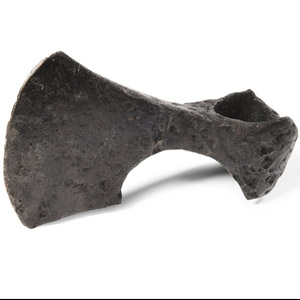
Viking Age Iron Bearded Axehead
9th century A.D.Sold for (Inc. bp): £338
Hand-forged with triangular-section narrow blade widening to a broad bevelled edge with square chin, socket with lateral flanges and rounded panel to the rear. 359 grams, 12.4 cm
From the private collection of a London gentleman, from his grandfather's collection formed before the early 1970s.
The axe seems to belong to the typology of Viking side axes of Wheeler type B (Wheeler III / Rygh 559). Usually these bearded axeheads (skeggöks) had a longer edge, designed to split tree trunks into planks and beams, or heads in two parts. Some of the bearded axes were known as halfÞynna öx, the neck on such 'half thin axe' was thinly forged, to make it lighter. -
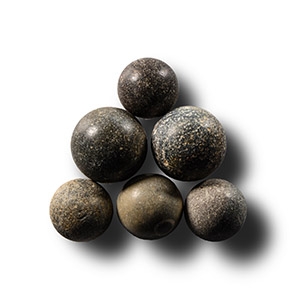
Post Medieval Stone Grapeshot Ammunition Collection
Circa 17th-18th century A.D.Sold for (Inc. bp): £20
Group of spherical grapeshot balls of various sizes. 32 grams total, 14-17 mm
Private collection formed in the 1990s. Acquired from a central London gallery. Property of an Essex gentleman. -
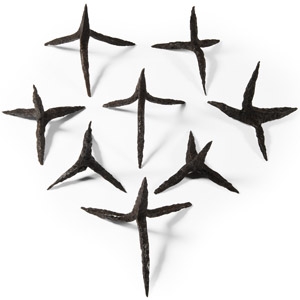
Medieval Iron Anti-Cavalry Caltrop Group
13th-15th century A.D.Sold for (Inc. bp): £221
Comprising eight caltrops, hand-forged with square-section spikes. 398 grams total, 76-95 mm
From the private collection of a London gentleman, from his grandfather's collection formed before the early 1970s.
