
Loading, please wait...
LOT 0518
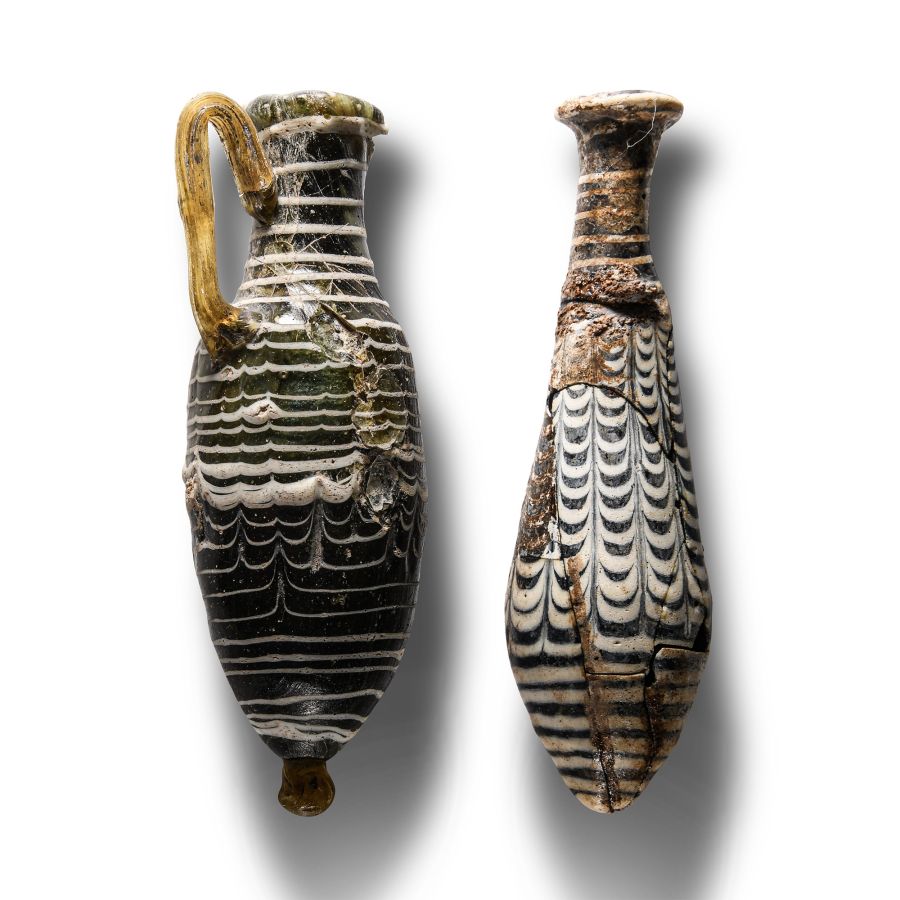
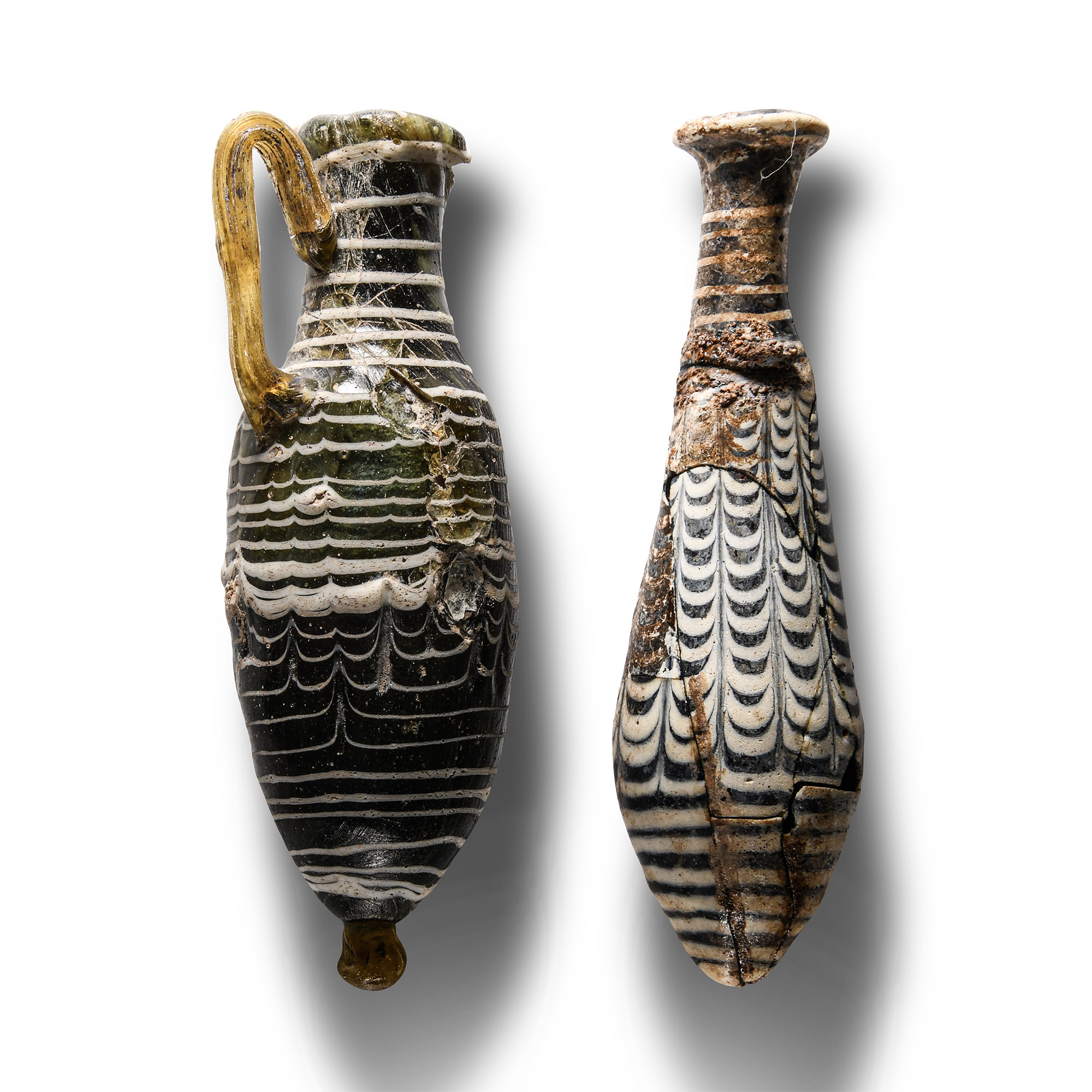
Greek Festooned Glass Vessel Group
2ND-1ST CENTURY B.C. AND LATER
5 3/8 - 5 1/2 in. (213 grams total, 13.6-14 cm high).
The pair comprising: an opaque blue alabastron with white spiralling trails to base and neck, marvering between; a green-amber coloured amphoriskos decorated with white trails, knop foot and remains of one applied handle; both fragmentary. [2]
ProvenanceAcquired early 1990s.
Ex private American collection; thence by descent.
Private collection since 1998.
Cf. The Metropolitan Museum, accession numbers 74.51.320 and 17.194.579, for similar.
CONDITIONTimeLine Auctions follows a vetting process to ensure the authenticity and legality of all items, reinforcing our commitment to integrity and responsible trading. Each antiquity, antique, and coin lot undergoes thorough examination by a vetting committee of at least ten external specialists, professional trade association members, scientists, and archaeologists: Our Vetting Process
AUCTIONS:
TimeLine is a leading auction house specialising in antiquities, ancient art, collectables, natural history, coins, medals, and books. Our auctions offer museums, collectors, historians, and enthusiasts the opportunity to acquire unique and historically significant pieces.
LOT 0518
Greek Festooned Glass Vessel Group
Estimate £300 - 400€350 - 460 (for guidance only)$410 - 540 (for guidance only)
-
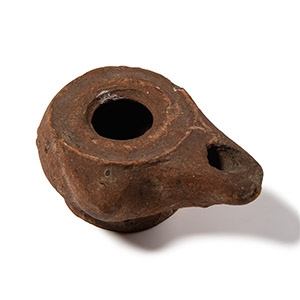
Greek Attic Terracotta Lamp
Circa 6th-5th century B.C.Sold for (Inc. bp): £111
Squat terracotta bowl with large discus and broad nozzle, lateral lug handle. 55 grams, 69 mm
Ex P. A., Hertfordshire, UK, specialist collection of Greek art, 1980-1990s. c -
.jpg)
Nuragic Bronze Head of a Tribal Chief
Circa 8th century B.C.Sold for (Inc. bp): £546
The head covered by a small low-top cap; sharp and pronounced nose, prominent eyebrows and eyes, small swollen mouth; the hair divided into two braids; mounted on a custom-made display stand. 55.8 grams total, 91 mm including stand
Ex Frank Sternberg collection, Zürich, Switzerland, circa 1980-1985. Property of an East Sussex, UK, private collector.
Despite being stylised representations, these bronzes detail the material culture of warriors, tribal leaders, priests, athletes, men and women of the late Bronze Age and Iron Age Sardinian society. -
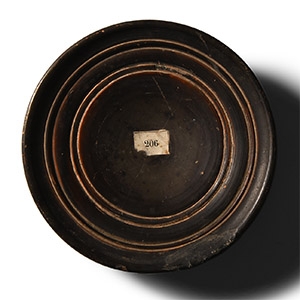
Greek Black Glazed Dish
4th century B.C.Sold for (Inc. bp): £286
With tiered foot, thick rim and ribbed upper face; old collector's ticket number '206'. 325 grams, 16 cm wide
From the collection of Louis-Gabriel Bellon (1819-1899), Saint-Nicolas-lez-Arras and Rouen, thence by descent. with Millon & Associes Auctions, Paris, 6th December 2021, lot 29.
