
Loading, please wait...

LOT 0542
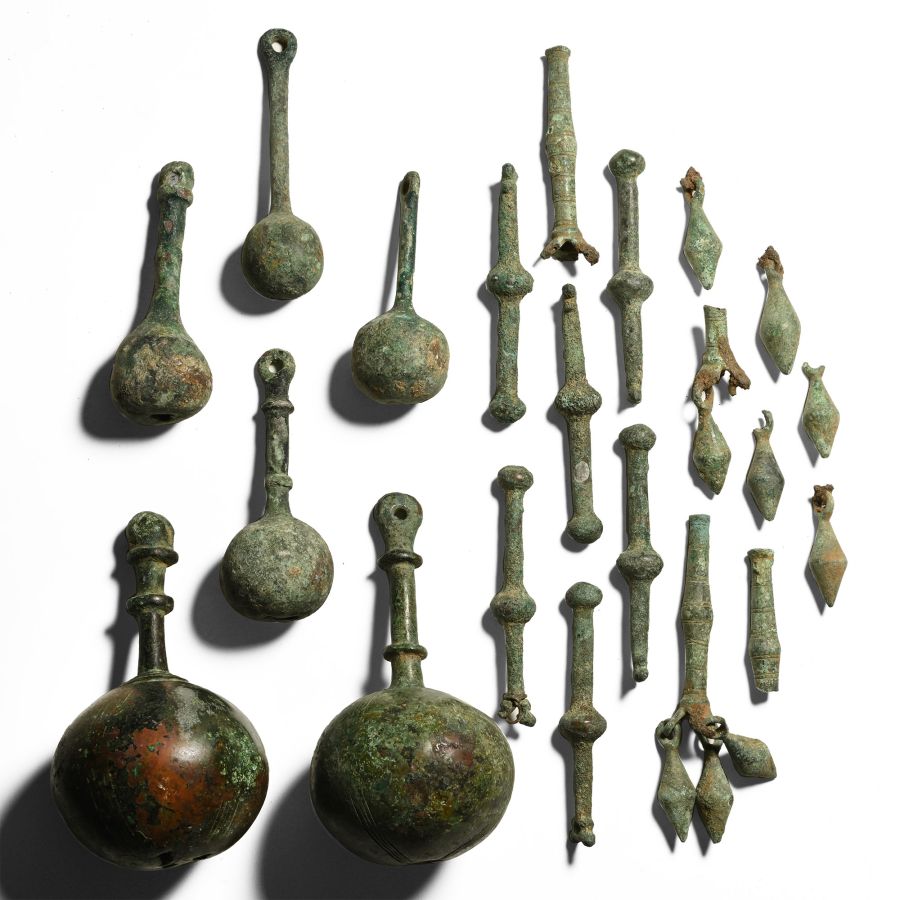
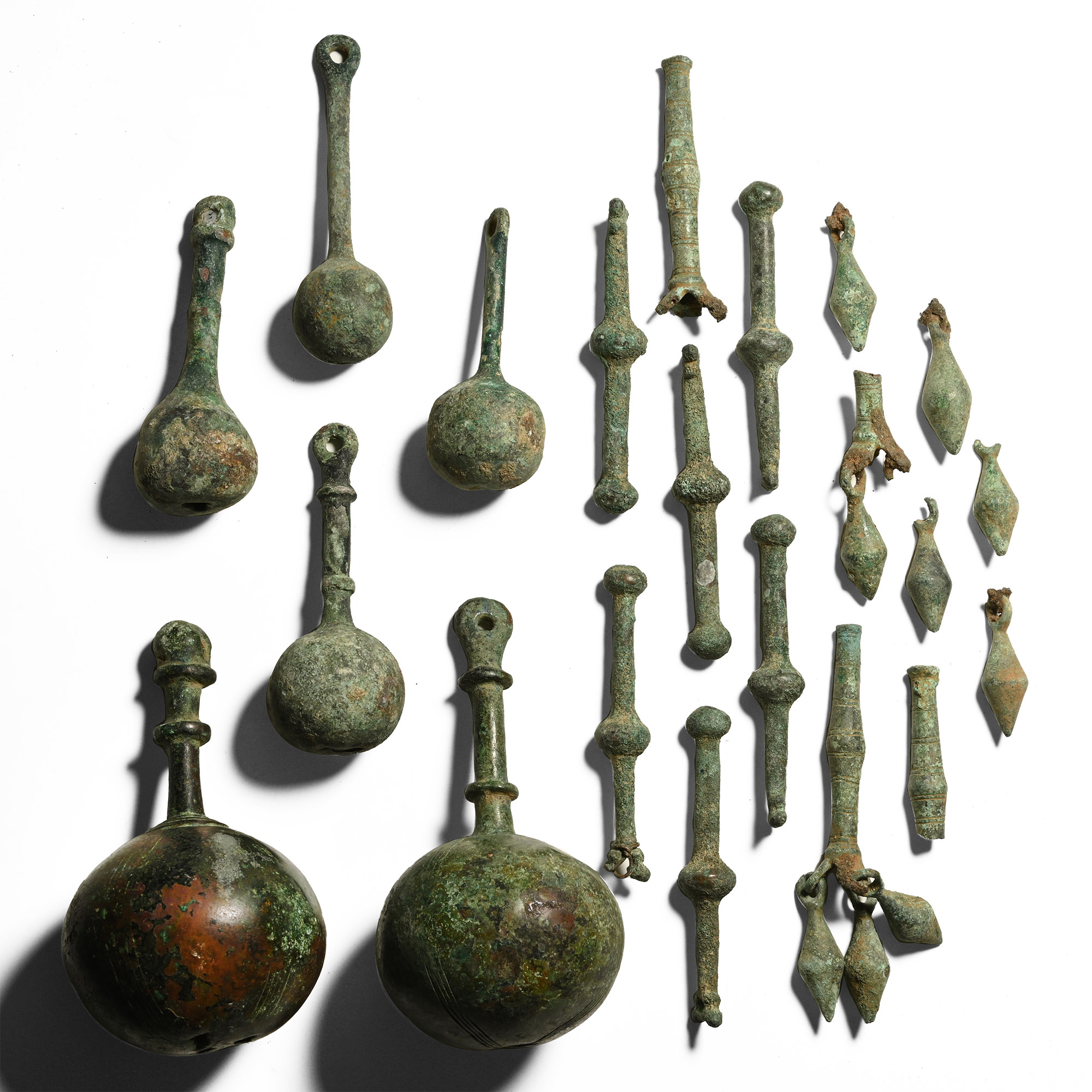
Greek Ensemble of Bronze Pendants
9TH-6TH CENTURY B.C.
1 1/2 - 4 5/8 in. (1.61 kg total, 3.7-11.8 cm).
Comprising large bulbous types with collars to the shank, and others. [20]
Provenancewith H.A.C., Basel, prior 1999.
This lot is accompanied by an illustrated lot declaration signed by the Head of the Antiquities Department, Dr Raffaele D’Amato.
TimeLine Auctions follows a vetting process to ensure the authenticity and legality of all items, reinforcing our commitment to integrity and responsible trading. Each antiquity, antique, and coin lot undergoes thorough examination by a vetting committee of at least ten external specialists, professional trade association members, scientists, and archaeologists: Our Vetting Process
AUCTIONS:
TimeLine is a leading auction house specialising in antiquities, ancient art, collectables, natural history, coins, medals, and books. Our auctions offer museums, collectors, historians, and enthusiasts the opportunity to acquire unique and historically significant pieces.
-
Greek Terracotta Fragment Group
4th century B.C. and laterSold for (Inc. bp): £65
Including a trumpet-shaped pot lid, D-section model animal and other items. 120 grams total, 39-73 mm
Acquired 1979-1999. London collection of the late Mr S.M., thence by descent. This lot is accompanied by an illustrated lot declaration signed by the Head of the Antiquities Department, Dr Raffaele D’Amato. -
Greek Terracotta Black Glazed Kantharos
Boeotia, 5th century B.C.Estimate: £800 - 1,000 (‡+bp*)
Opening Bid: £360
With a tall flared foot, tapering body and two lateral high strap handles, the sidewall set off from the foot by a carination; reassembled from fragments. 360 grams, 19.5 cm wide
Ex Mr Bohler, Bern, Switzerland, prior 2001. Accompanied by a copy of an Art Loss Register certificate no.S00074898. This lot is accompanied by an illustrated lot declaration signed by the Head of the Antiquities Department, Dr Raffaele D’Amato. -
.jpg)
Parthian Hammered Silver Drinking Vessel
2nd-1st century B.C.Estimate: £400 - 600 (+bp*)
Opening Bid: £150
Squat bowl with integral raised foot, incised line beneath the rim. 171 grams, 16 cm
London, UK gallery, 1971-early 2000s. This lot is accompanied by an illustrated lot declaration signed by the Head of the Antiquities Department, Dr Raffaele D’Amato.
